Modern food processing complexes, pharmaceutical formulation plants, and temperature-controlled logistics hubs share a non-negotiable architectural mandate: total isolation of the interior production atmosphere from outdoor contaminants, humidity, and thermal fluctuations. However, while cleanrooms and cold rooms both rely on modular composite sandwich panels, their engineering parameters differ significantly. As defined under international cleanroom standard ISO 14644-1 (https://www.iest.org/Standards-RPs/ISO-Standards/ISO-14644-Series) and cold chain guidelines from the Global Cold Chain Alliance (GCCA) (https://www.gcca.org/magazine-article/driving-the-cold-chain/), selecting the wrong core or joint profile can cause failed regulatory audits, microbial contamination, or severe condensation.
| Controlled Environment Metric | Pharmaceutical ISO Cleanroom System | Food & Cold Chain Envelope System |
| Governing Compliance Standard | ISO 14644-1 (Class 5–8) & EU GMP Annex 1 | HACCP, FDA FSMA & GCCA Cold Chain |
| Optimal Core Material Selection | Rock Wool (Handmade), MOS, Aluminum Honeycomb | High-Index Closed-Cell PIR / PU (42–45 kg/m³) |
| Joint & Surface Geometry | 100% Flush Middle-Aluminum or Four-Side Keel | Deep Double Tongue-and-Groove + Cam-Lock |
| Sanitation & Coating Specification | Anti-static / 70% PVDF (VHP sterilization) | Food-safe HDP, PVDF, or 304 Stainless Steel |
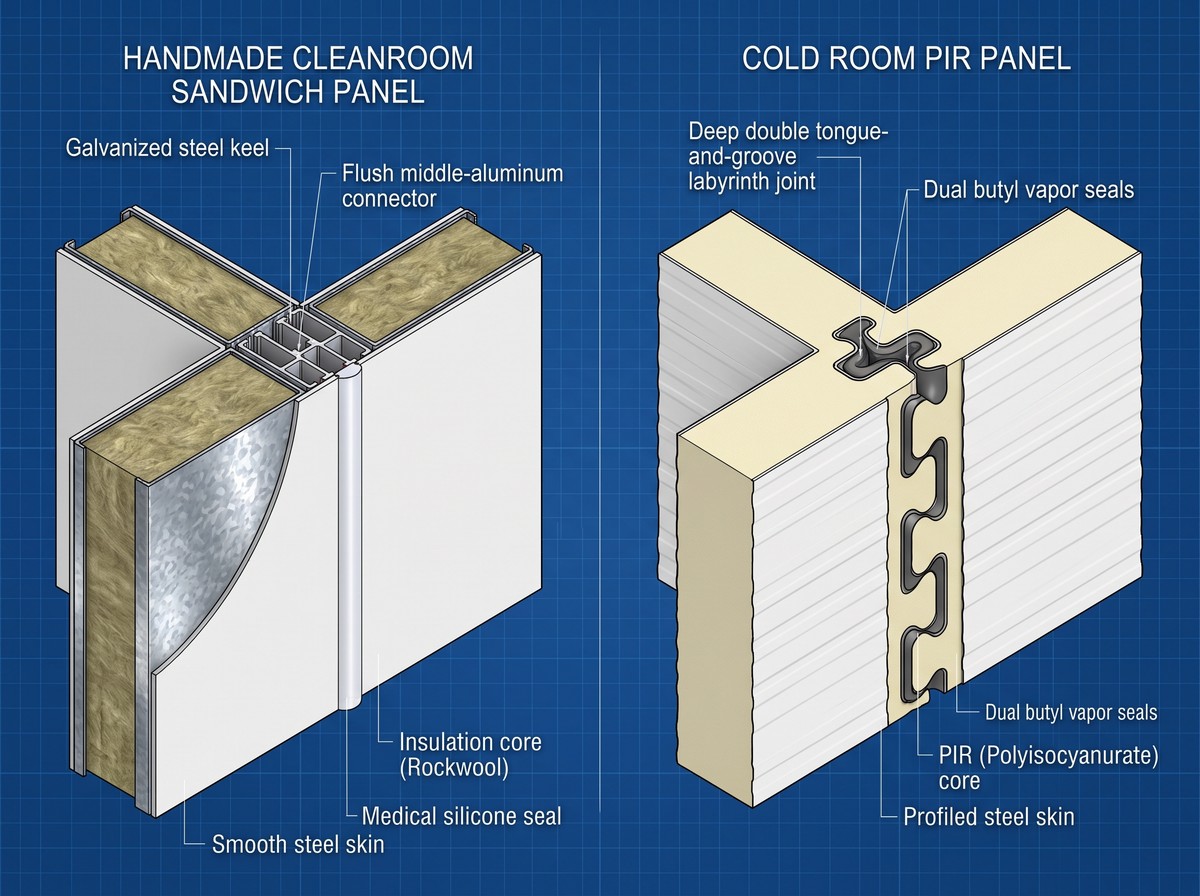
In pharmaceutical cleanrooms, medical device suites, and microelectronics facilities, the primary engineering objectives are zero particle shedding, positive pressure containment (10 to 50 Pa), Class A non-combustible fire safety, and resistance to chemical bio-decontamination. Rock Wool Handmade Clean room Sandwich Panel utilize a precision four-side cold-formed galvanized steel perimeter keel surrounding a non-combustible basalt rock wool, Magnesium Oxysulfate (MOS), or aluminum honeycomb core. This rigid box-frame construction allows flush double-glazed windows, cleanroom doors, and pre-embedded electrical conduits to sit 100% coplanar with the wall surface, eliminating horizontal ledges where bacteria or particles could settle.
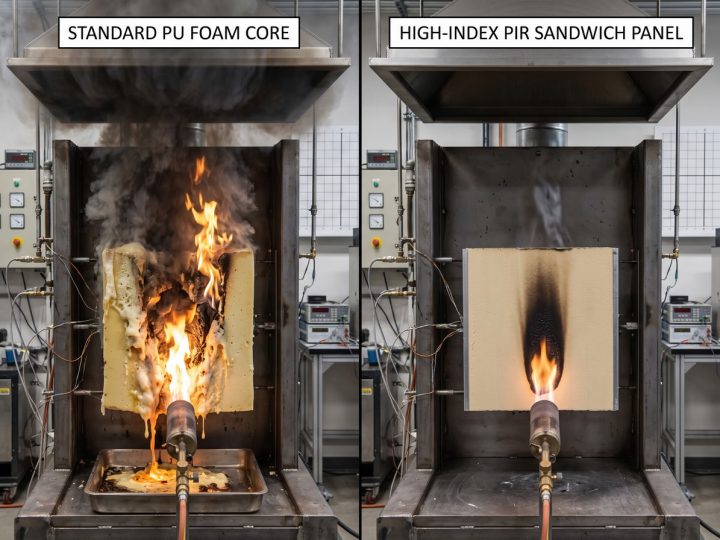
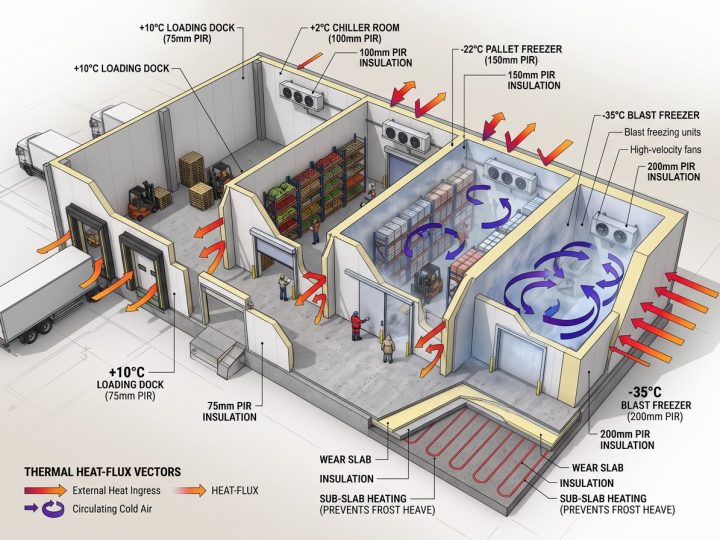
Conversely, in cold storage warehouses, meat and seafood processing plants, and refrigerated logistics hubs, the dominant engineering challenge is stopping conductive heat transfer and moisture vapor infiltration across steep temperature gradients (+35°C ambient outside versus -25°C inside). Here, open-fiber mineral wool cores are unsuitable for sub-zero zones due to vapor pressure drive. Instead, high-density closed-cell Polyisocyanurate (PIR) and Polyurethane (PU) panels (closed-cell ratio ≥ 95%, λ ≤ 0.020 W/m·K) provide an impermeable moisture barrier and superior R-value per inch.
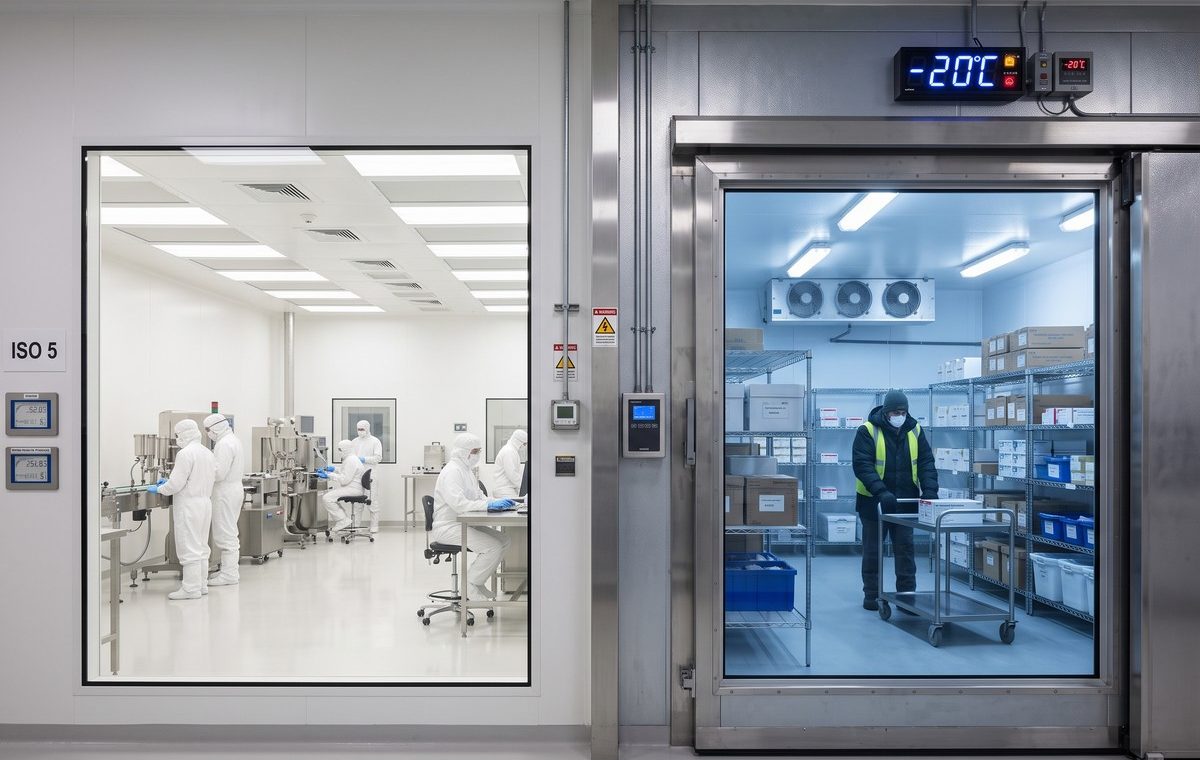
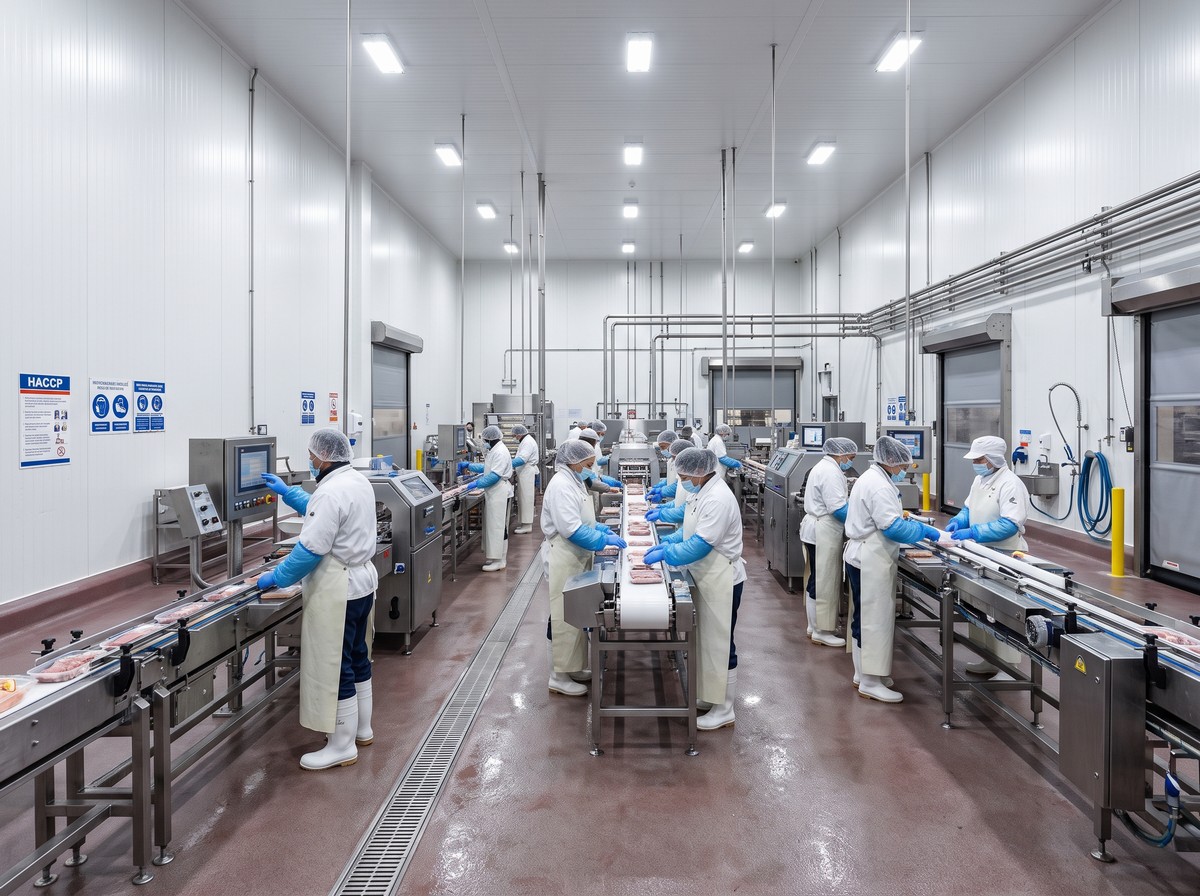
For hybrid facilities—such as sterile cold-chain vaccine storage (+2°C to +8°C) or ready-to-eat HACCP food clean rooms—engineers combine hygienic non-porous coatings with hermetic joint sealing. Specifying food-safe High-Durability Polyester (HDP), 70% Kynar 500 PVDF, or AISI 304 stainless steel facings alongside rounded aluminum cove corners ensures that walls withstand daily high-pressure caustic washdowns and Vaporized Hydrogen Peroxide (VHP) sterilization without blistering or rusting.
Frequently Asked Questions (Top 5 Google Search Q&As):
Q: What is the main difference between a cleanroom sandwich panel and a cold room sandwich panel?
A: Cleanroom sandwich panels prioritize surface flatness, non-combustibility (rock wool, MOS, or aluminum honeycomb cores), zero particle shedding, and 100% flush joints for positive-pressure sterility under ISO 14644-1. Cold room sandwich panels prioritize ultra-low thermal conductivity (closed-cell PIR/PU cores, λ ≤ 0.020 W/m·K) and vapor-tight labyrinth tongue-and-groove joints to prevent sub-zero heat gain and ice buildup.
Q: Why are handmade rock wool panels with four-side keels preferred in pharmaceutical cleanrooms?
A: Unlike continuous machine-made panels with cut edges, handmade cleanroom panels enclose the mineral core inside a four-sided galvanized steel perimeter frame. This prevents fiber exposure during installation, increases flexural rigidity, and allows factory pre-engineering of flush window openings and internal electrical conduits.
Q: What surface coating is required for food processing and meat/seafood cold storage panels?
A: Food processing facilities require non-toxic, USDA/HACCP-compliant coatings that resist blood, salts, organic acids, and daily high-pressure chemical washdowns. High-Durability Polyester (HDP), 70% PVDF fluorocarbon, PVC food-safe plastisol film, or AISI 304 stainless steel facings are recommended.
Q: How do pharmaceutical cold rooms (+2°C to +8°C) meet both GMP cleanliness and thermal insulation codes?
A: Medical and vaccine cold rooms use hybrid specifications: high-density B1 flame-retardant PIR sandwich panels (75mm–100mm thick) finished with antibacterial PVDF or stainless steel skins, integrated with flush cleanroom coved corners and airtight cam-lock or labyrinth joints.
Q: Can cleanroom and cold room panels be demounted and relocated during facility expansion?
A: Yes. Both modular cleanroom panels (using removable aluminum splines or cam-locks) and cold room panels are dry-assembled systems. They can be cleanly disassembled and reconfigured when production lines expand, avoiding the messy demolition dust of drywall or masonry.