In modern cold-chain logistics, thermal control is unforgiving. For high-value frozen proteins, fresh seafood, imported biologics, and premium pharmaceuticals, maintaining an unbroken cold chain is a legal and commercial mandate. According to global logistics liability reports published by the National Law Review (https://natlawreview.com/press-releases/cold-storage-construction-market-2026-expanding-food-logistics) and storage compliance frameworks from the Global Cold Chain Alliance (GCCA) (https://www.gcca.org/magazine-article/driving-the-cold-chain/), a minor temperature excursion of just +2°C outside mandated tolerances can prompt health authorities to order immediate commercial condemnation of entire warehouse bays, resulting in millions of dollars in uninsured inventory losses.
| Risk & Failure Factor | Deficient / Leaking Envelope | Engineered Hermetic PIR Envelope |
| Seam Air Infiltration | Convective thermal bleed at joints | Continuous tongue & groove + gaskets |
| Door Threshold Heat Ingress | Unconditioned loading docks | Automated fast-fold heated airlocks |
| Ceiling Ice & Icicle Hazard | Warm air condensation on cold deck | Zero thermal bridge PVC breaks |
| Product Loss Risk Exposure | High (Regulatory condemnation) | Zero-tolerance thermal stability |
Catastrophic thermal excursions rarely stem from sudden refrigeration compressor breakdowns; industrial chillers are engineered with redundant backup compressors and emergency generator circuits. Instead, over 80% of unmanageable heat gains trace directly to chronic building envelope failures. In poorly constructed warehouses, microscopic fissures in panel joints allow warm, moisture-laden ambient air to infiltrate continuously. As humid air enters sub-zero zones, water vapor precipitates out, generating thick ice accumulations along ceiling junctions and frost blankets over stored pallets. Overworked refrigeration coils freeze over into solid blocks of ice, triggering emergency defrost cycles that spike interior temperatures and degrade product quality.
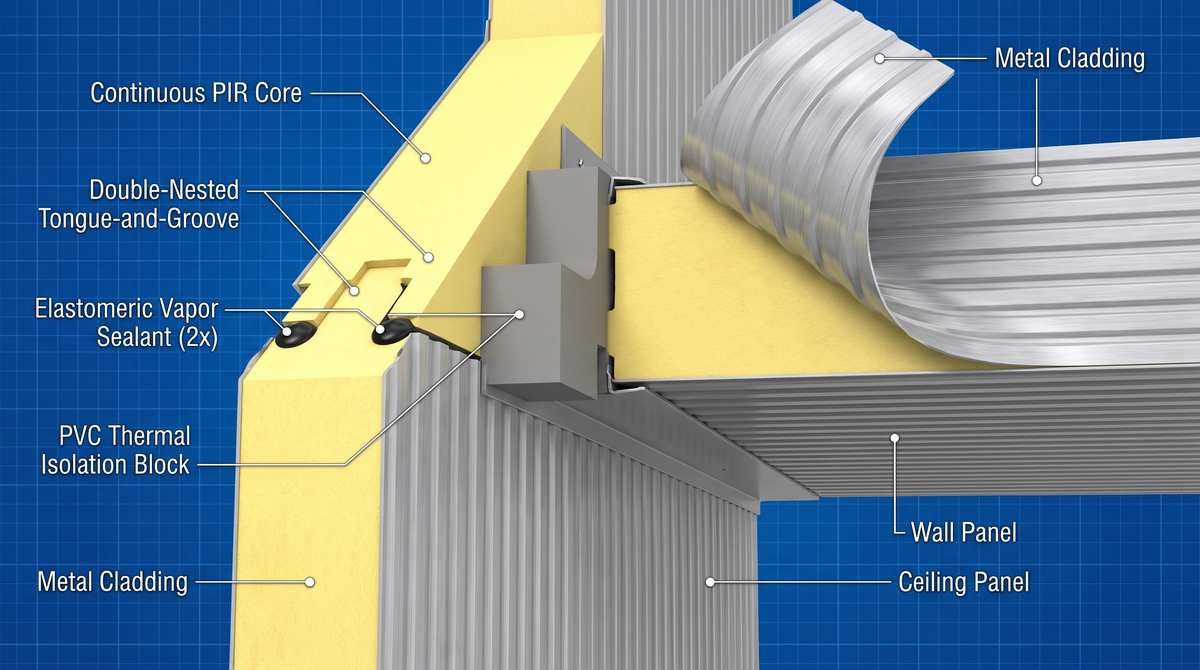
Preventing thermal compromise requires absolute continuity in the thermal insulation envelope (Continuous Insulation – c.i.). Cold room panels establish an unbroken barrier using high-index closed-cell Polyisocyanurate (PIR) cores (λ ≤ 0.020 W/m·K). The panels utilize deep double-nested tongue-and-groove interlocking profiles with factory-injected continuous silicone seal tracks. When panels are clamped tight, the joint mechanically eliminates convective airflow channels. Furthermore, high-density non-conductive PVC thermal break profiles isolate the outer structural steel frame from the interior refrigerated envelope, eliminating structural cold-bridging.
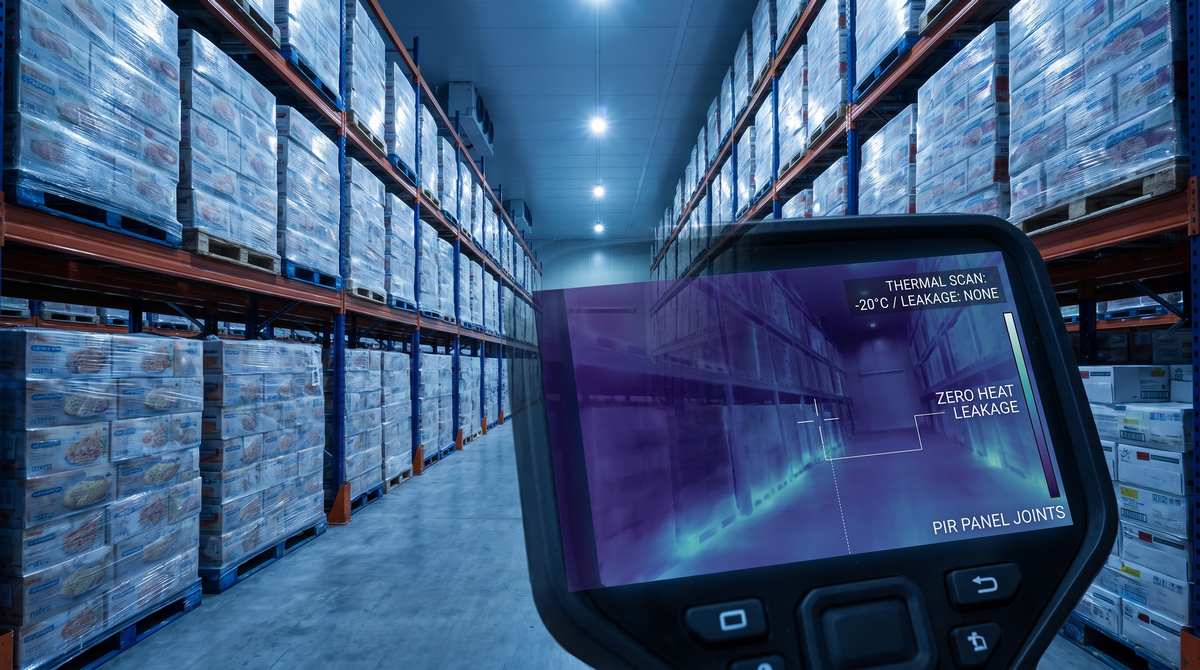
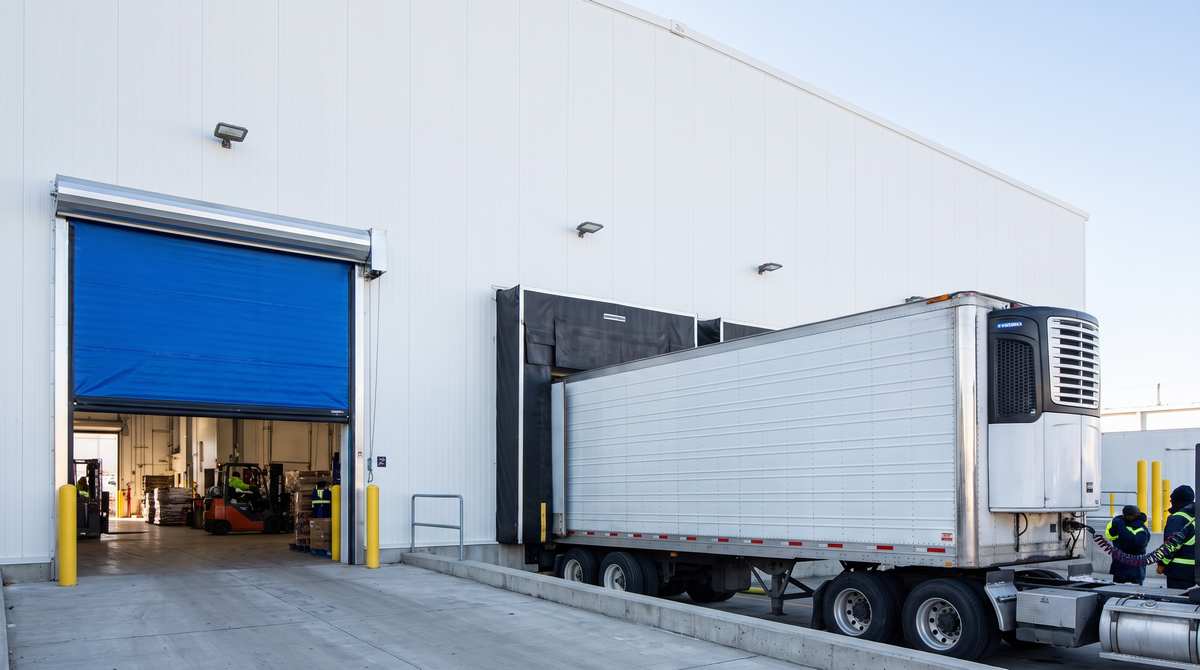
Thermal integrity extends to critical loading dock transitions. Ambient heat rushes in every time dock doors cycle open to receive refrigerated trailers. Next-generation facilities isolate these zones with conditioned refrigerated staging vestibules and automated high-speed insulated spiral roll-up doors with integrated electric defrost perimeter heaters. By procuring a complete, factory-engineered envelope package—including ceiling suspension systems, insulated floor panels, and precision-mitered corner elements—logistics operators can easily verify zero air leakage via infrared thermal imaging audits, guaranteeing compliance with strict FSMA (Food Safety Modernization Act) and European GDP directives.