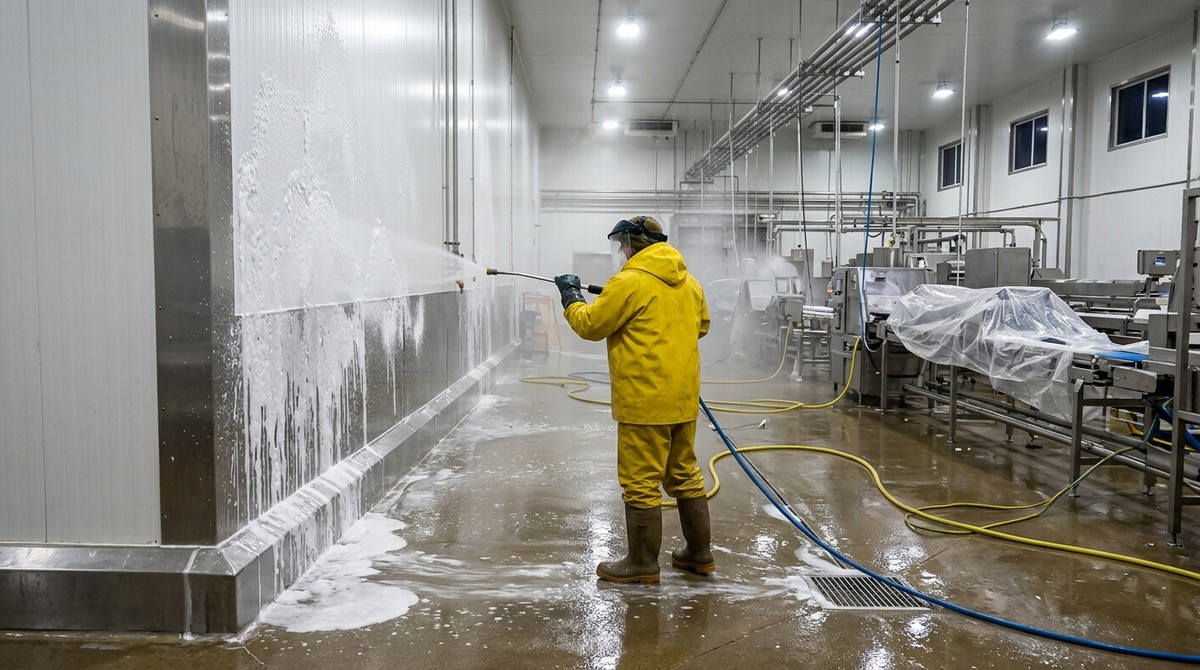
Walk into a meat cutting hall or a dairy cold room at 11:00 PM and you will see the cleanup crew hosing down every wall with 60°C water and alkaline foam. At 5:00 AM, the chillers kick back on and pull that same room down to +2°C. Very few building materials can take that kind of thermal and moisture abuse every day without cracking.
Painted drywall molds within six months. Ceramic tiles pop off the wall when the mortar freezes, and the grout lines turn into black traps for Listeria. Insulated metal panels took over food processing facilities because a single board handles both the refrigeration load and the washdown hygiene.
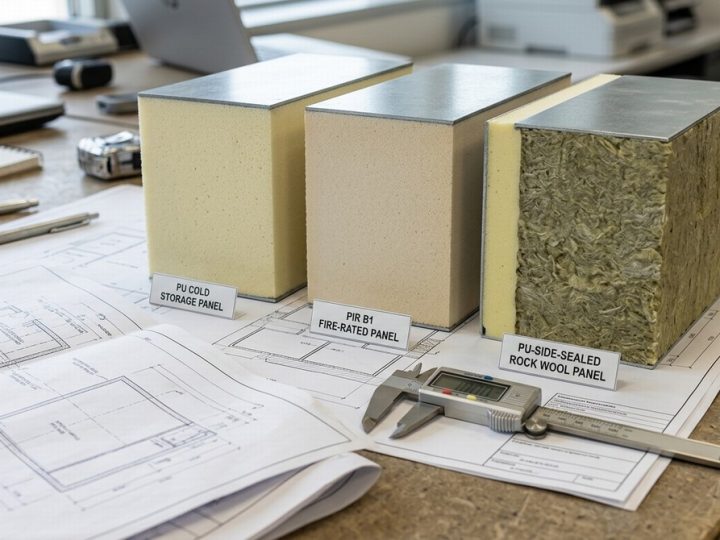
Inside the panel, the core stops heat and water vapor from moving between rooms. In high-humidity rooms like aquatic processing halls or poultry chillers, you cannot use porous cores that drink water. Untreated mineral wool or low-density white foam absorbs moisture whenever a seal cracks, gets heavy, and loses its R-value. Closed-cell Polyurethane (PU) and Polyisocyanurate (PIR) cores keep a closed-cell rate above 90% to 95%. Even if a forklift scratches the inner skin, water stays on the surface instead of soaking through the wall.
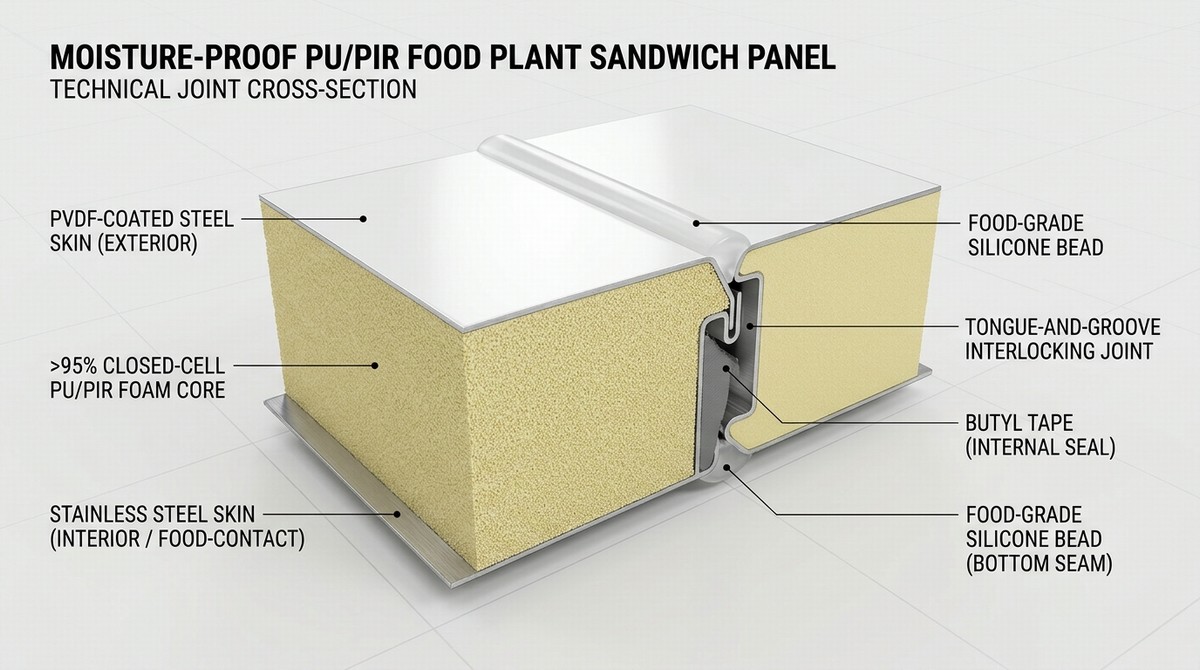
The metal skin on the outside of the foam is your actual barrier against rust and acid. For boxed frozen storage where humidity stays low, galvanized or aluminum-zinc steel with a 25-micron PVDF or food-safe polyester coat holds up well for 15 to 20 years. For wet processing lines where blood, brine, or fruit acid splashes directly onto the partition, we build the cold room panels with 304 or 316L stainless steel faces. And in dry baking halls or spice packaging rooms where fire inspectors forbid organic foam, factories switch to rock wool handmade cleanroom panels sealed with four-side galvanized keels so zero rock wool fibers ever touch the food.
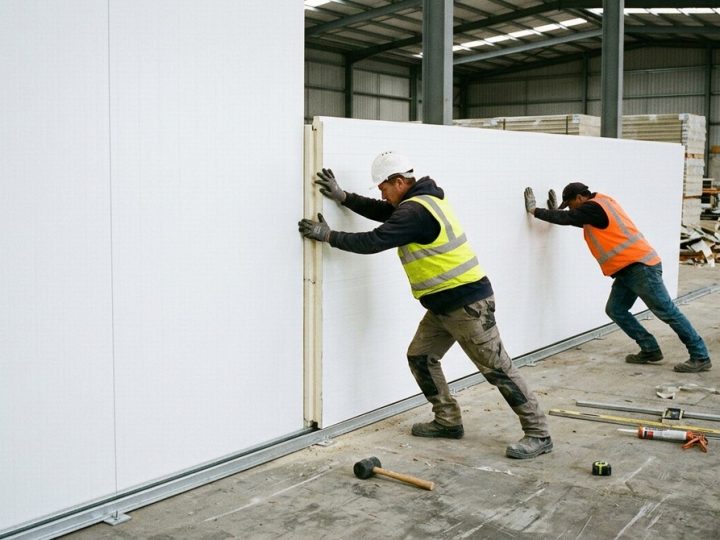
Joint sealing finishes the job. Every tongue-and-groove seam on our food-grade wall panels gets sealed with neutral anti-fungal silicone or butyl tape during erection, and all 90-degree floor corners are covered with curved aluminum coving so wash water runs straight to the floor drain.
Frequently Asked Questions (FAQ)
Q: Can sandwich panels be used in high-humidity food processing rooms?
A: Yes, provided you pick a closed-cell, non-absorbent core like PU, PIR, or high-density XPS, pair it with PVDF-coated galvanized steel or 304 stainless steel skins, and seal all tongue-and-groove joints and screw heads with waterproof silicone or butyl sealant.
Q: Why do food inspectors reject tiled walls in modern meat and dairy plants?
A: Tiles have hundreds of meters of porous cement grout lines that absorb blood and fat, making them nearly impossible to sterilize. Thermal cycling in cold rooms also causes tiles to crack and fall into food lines, whereas metal sandwich panels form a smooth, unbroken sheet.
Q: How do you prevent condensation water inside enclosed food factory walls?
A: Match the panel thickness to the temperature drop (such as 100mm PIR for +2°C chillers and 150mm for -20°C freezers), seal the warm outer side of every joint to block humid air entry, and leave a 50mm–100mm ventilation gap where interior partitions meet hot exterior masonry walls.
Q: What screws should be used to fix panels in wet food plants?
A: Always use 304 or 316 stainless steel screws or heavy hot-dip galvanized fasteners fitted with EPDM waterproof rubber washers, or use concealed-fastener panels so washdown sprays never hit bare screw threads.
Q: How often should sealant joints be checked in a food processing cold room?
A: Inspect silicone seams, door gaskets, and floor coving every 6 months. High-pressure washdown wands can nick silicone beads over time; re-caulking a 10cm nick takes five minutes and stops moisture from creeping into the joint.