⚠️ Indonesia Earthquake Fact File (2026 Data)
📍 Location: Flores Island, East Nusa Tenggara Province (near Ende), Indonesia
🎚️ Magnitude: Mw 7.7 (Shallow depth of 10.0 km)
⏱️ Date & Depth: August 15, 2026. The extremely shallow focal depth tragically amplified high-frequency surface destruction.
💥 Impact: At least 108 fatalities and over 1,600 injured. Extensive destruction of coastal logistics hubs, processing plants, and local commercial structures.
🏚️ Failure Mode: Shallow tectonic ruptures generated intense high-frequency surface accelerations that effortlessly shattered rigid concrete frames and unreinforced masonry infill walls via brutal shear cracking.
🏗️ Reconstruction: An immediate structural transition to lightweight, highly ductile Pre-Engineered Steel Buildings (PEB) strictly compliant with SNI 1726. Building walls must feature lightweight PIR sandwich panels to permanently avoid adding top-heavy mass, paired with high-capacity continuous welded roofs to survive Indonesia’s extreme monsoon rains.
The tragic Mw 7.7 earthquake that struck Flores Island in Indonesia’s East Nusa Tenggara province on August 15, 2026, served as a catastrophic and deadly reminder of Indonesia’s extreme seismic vulnerability. With an extremely shallow focal depth of just 10 km, the earthquake generated intensely violent, high-frequency surface accelerations that instantly destroyed rigid infrastructure across Ende and vital coastal zones, claiming 108 lives and injuring over 1,600.
In Indonesia, conventional industrial building designs relying on rigid reinforced concrete columns and heavy precast masonry infill walls consistently fail catastrophically via shear cracking and deadly out-of-plane wall blowouts. To ensure absolute operational security in the highly volatile Sunda Arc collision zone, smart manufacturers are permanently shifting to lightweight, high-ductility Pre-Engineered Steel Buildings.
The fundamental structural mechanics of advanced PEB framing are strictly tailored for absolute compliance with SNI 1726 (Indonesian Seismic Building Code). By utilizing premium high-strength Q345B steel plate welded into highly optimized, slender tapered I-sections, the gravitational dead-weight of the entire structure is drastically minimized. This significant structural mass reduction directly decreases the lethal base shear force transferred into building foundations during sudden, shallow seismic ground motion. Engineers rigorously incorporate specialized heavy-duty seismic bracing bays utilizing Grade 35 round steel tension rods. These vital components act as high-performance elastic dampers, gracefully absorbing destructive inter-story lateral drift without inducing any permanent structural tilt.
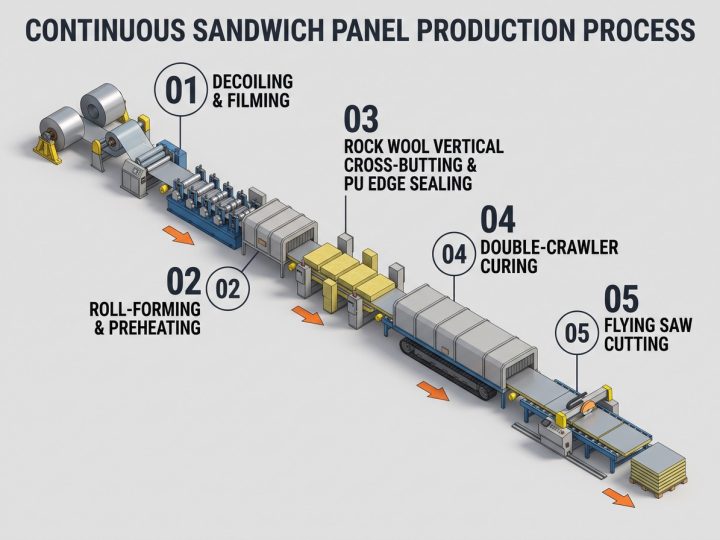
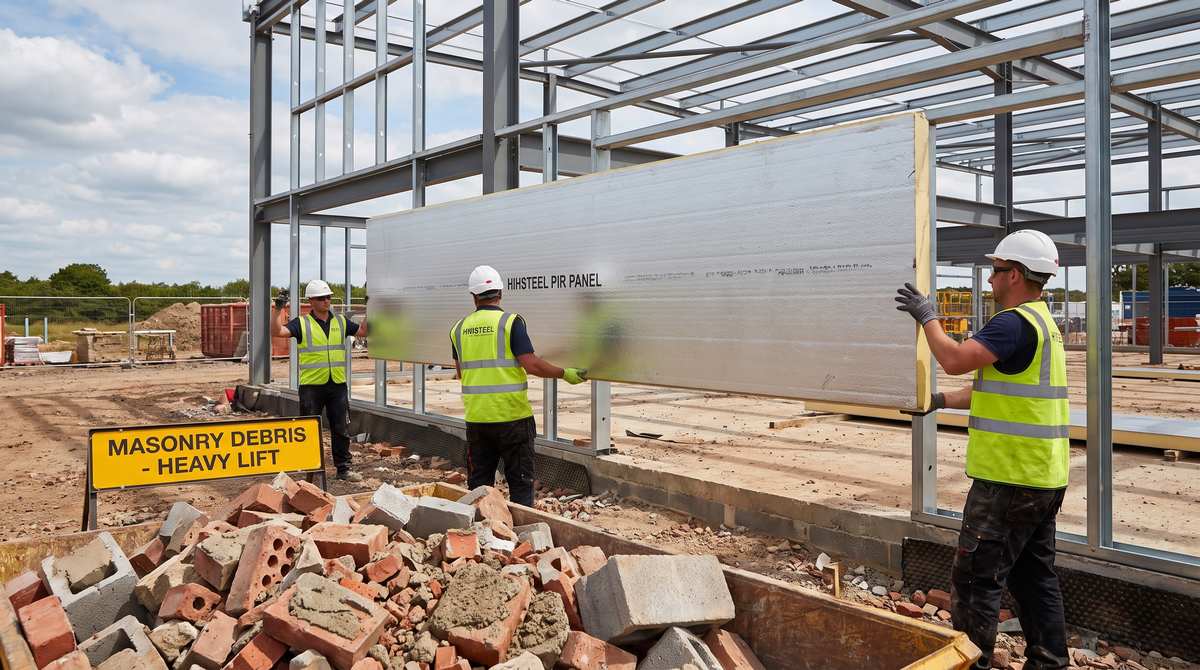
For the building envelope in a brutally hot, tropical archipelago, extreme thermal management and weight reduction are paramount. We mandate integrating high-performance Polyisocyanurate (PIR) Sandwich Panels for all exterior walls. PIR is a highly advanced thermoset plastic core that provides the absolute highest R-value for thermal insulation among commercial materials. By dead-stopping the intense equatorial heat from entering, facilities can drastically slash expensive cooling costs.
Most importantly for a violent seismic zone like Flores Island, the PIR sandwich panel is exceptionally lightweight. By thoroughly replacing heavy, deadly brick infill walls with rigid PIR sandwich panels, the overall top-heavy inertial mass of the building drops dramatically, vastly multiplying the structure’s earthquake survivability.
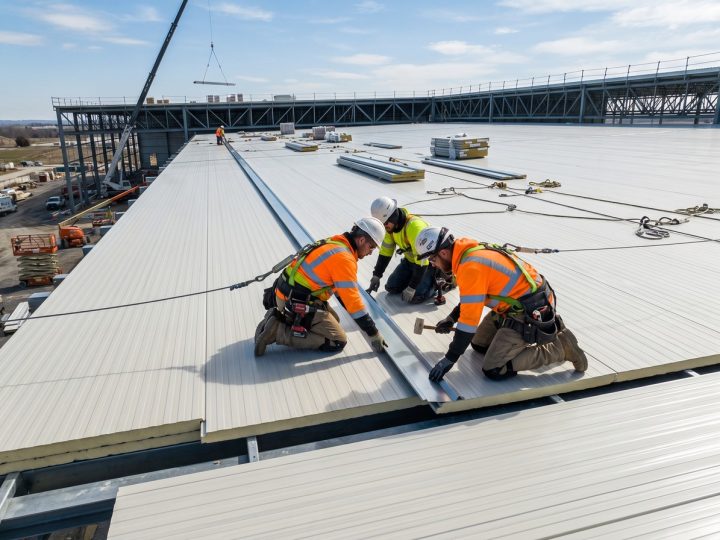
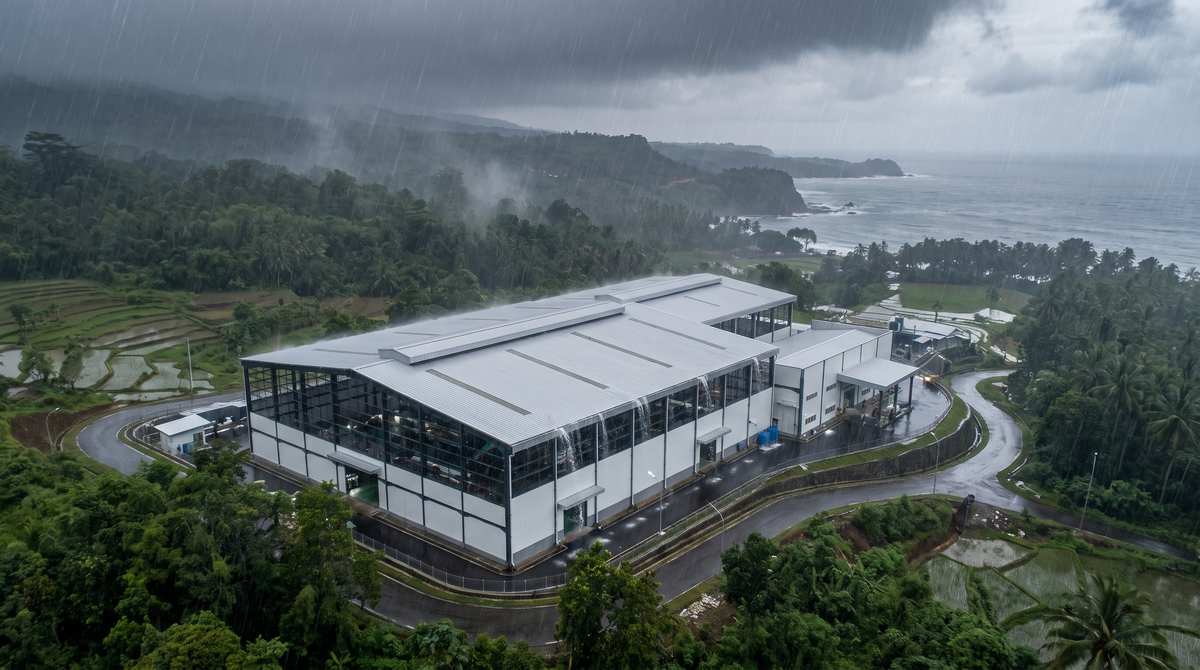
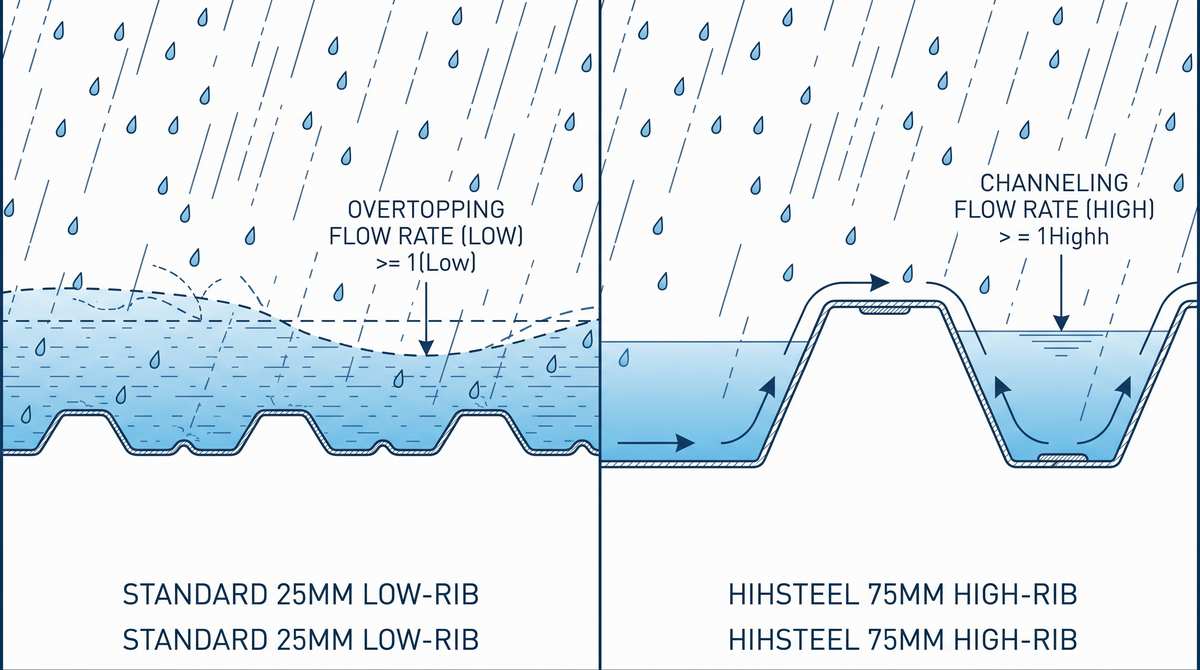
Furthermore, a major earthquake in Indonesia is often immediately followed by torrential, flooding monsoon downpours. The continuous standing seam stainless steel roofing system provides uncompromising, absolute waterproofing for extreme equatorial environments. Its massive 75mm tall vertical standing rib profile delivers an industry-leading water drainage capacity of 54.32 L/s per panel. Utilizing an automated 360-degree mechanical continuous longitudinal weld, this heavy-duty roof guarantees zero water penetration. Anchored via robust, movable stainless steel sliding clips that effortlessly adjust to extreme equatorial thermal expansion, this system delivers complete structural integrity and flawless watertight performance across Indonesia’s entire Ring of Fire.