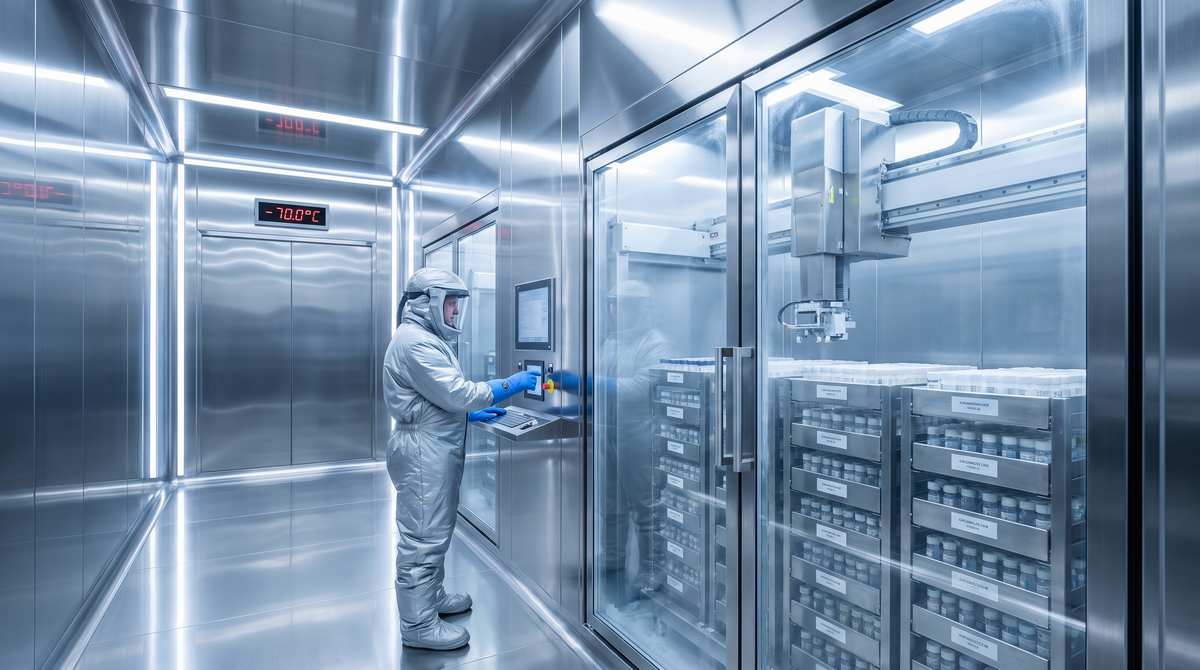
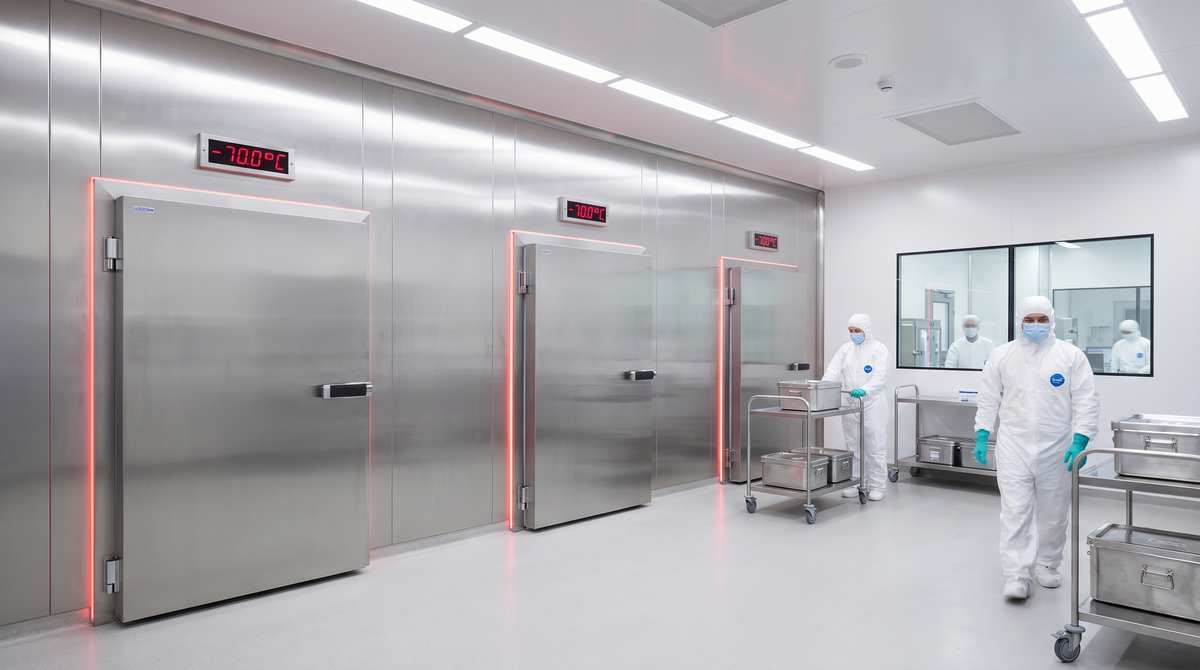
The rapid global commercialization of advanced biologic therapeutics, mRNA-based vaccines, and cell-and-gene therapies (CGT) has pushed pharmaceutical temperature-control requirements into unprecedented deep-freeze regimes. As documented in specialized biopharma logistics briefings from RealCold (https://realcold.com/company-news/) and facility design standards by the Global Cold Chain Alliance (GCCA) (https://www.gcca.org/magazine-article/driving-the-cold-chain/), cold-chain infrastructure is shifting from standard chilled rooms (+2°C to +8°C) to industrial deep-freeze suites operating between -40°C and -70°C. At these cryogenic thresholds, standard commercial cold storage materials suffer severe physical embrittlement, catastrophic seal delamination, and sub-slab frost heaving.
| Critical Cryogenic Metric | Standard Commercial Cold Panel | Medical-Grade Stainless PIR Envelope |
| Operating Temperature Floor | Down to -20°C (Food cold storage) | Sustained -40°C to -70°C (Biologics) |
| Metal Facing Specification | Standard Polyester coated steel | Medical-grade AISI 304 / 316L SS |
| Core Insulation Thickness | 100 mm – 150 mm | 200 mm – 250 mm High-Index PIR |
| Hygiene & Washdown Rating | Degrades under harsh sanitisers | 100% resistant to caustic CIP wash |
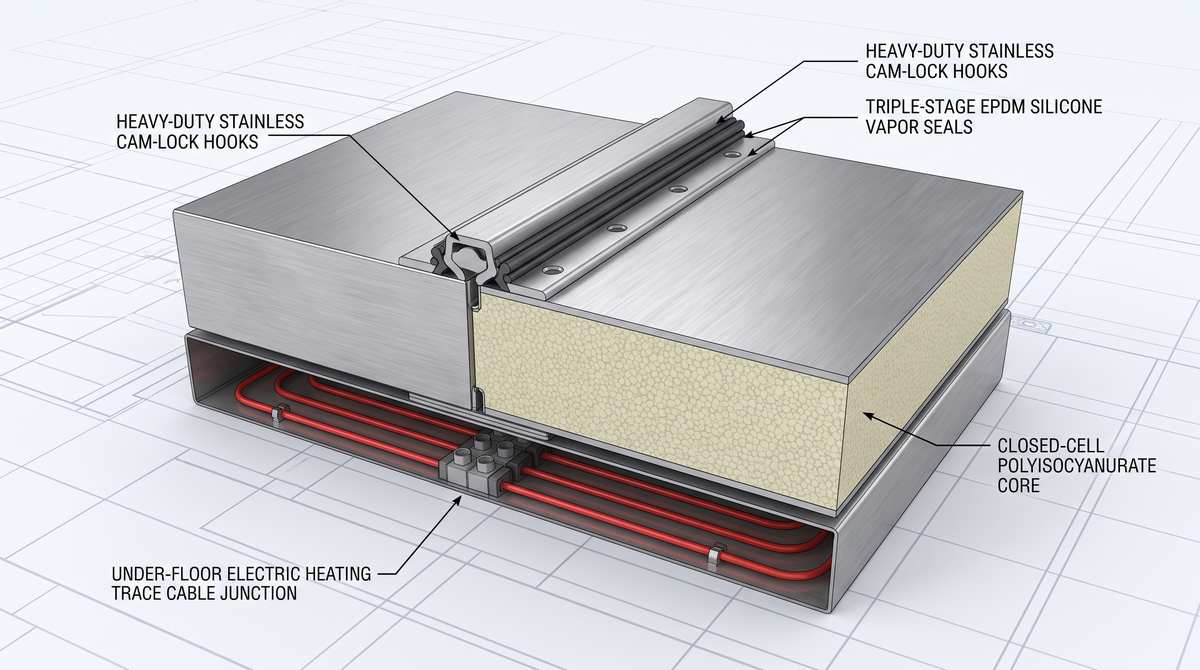
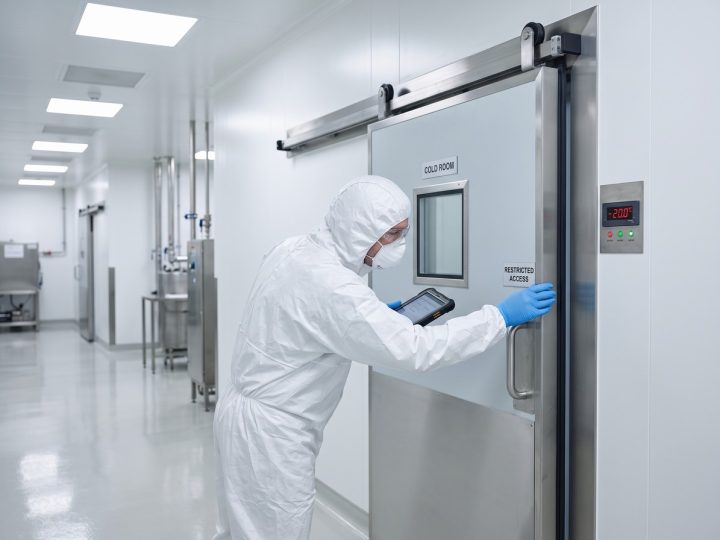
The thermodynamic challenges of ultra-low temperature (ULT) facilities begin at the molecular level. Under an extreme temperature gradient exceeding 95°C between ambient summer air and a -70°C interior, standard painted steel skins contract violently, creating micro-cracks along panel joints. Furthermore, standard cold room liners cannot tolerate the aggressive caustic agents and alcohol-based wipe-downs mandated by pharmaceutical validation protocols. Factory-engineered panels from hihsteel.com (https://hihsteel.com/category/product/) overcome these vulnerabilities by utilizing 0.6 mm to 0.8 mm surgical-grade AISI 304 or 316L stainless steel facings, ensuring permanent chemical passivity, zero rust pitting, and total biological cleanability.
Core insulation density and cryogenic stability form the second critical barrier. Conventional polyurethane foams experience cell shrinkage and matrix fracturing when subjected to rapid thermal shock during pull-down cycles. Advanced medical-grade panels utilize specialized high-index Polyisocyanurate (PIR) formulations achieving a closed-cell ratio > 96% and a core thermal conductivity of 0.019 to 0.021 W/(m·K). Manufactured in thicknesses up to 200 mm or 250 mm, these panels maintain rigid dimensional stability without cell wall rupture, preventing internal void formation that accelerates catastrophic thermal leakage.
Equally vital is foundation engineering. Uncontrolled downward thermal conduction steadily freezes soil beneath the concrete floor slab; as sub-soil moisture freezes into expanding ice lenses, frost heaving physically lifts and cracks the entire facility. Medical-grade deep freeze suites integrate insulated floor panel assemblies with high-density load-bearing PIR cores and pre-engineered conduits for electric sub-floor heating mats. Combined with dual-eccentric cam-lock fasteners and food-grade silicone compression seals, the system delivers an unbroken hermetic envelope that guarantees compliance with WHO Good Distribution Practices (GDP) and FDA 21 CFR Part 11 validation rules.