Single-skin metal roof sheets look like a bargain on paper. Five dollars a square meter. Roll them out, screw them down, call it a day. Then the first summer thunderstorm hits, and the factory owner calls you in a panic because they can’t hear themselves think and water is dripping onto their CNC machines.
That water isn’t even a roof leak. It is indoor rain. When warm, humid factory air hits a bare 0.5mm steel sheet cooled by night rain, the ceiling sweats like an ice-cold soda can. Without insulation bonded directly to the metal, your roof turns into an indoor sprinkler system.
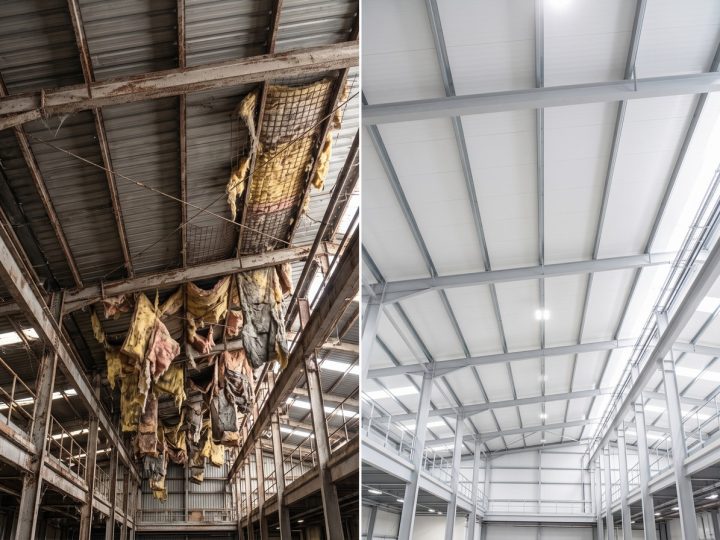
Some contractors try to fix a single-skin roof by stretching chicken wire and rolling loose fiberglass wool underneath. I have torn off dozens of those roofs. Here is what actually happens: where the fiberglass roll crosses every steel purlin, the screws squash the wool flat to five millimeters. You get a thermal bridge every 1.5 meters. Worse, within three years, the plastic vapor film tears, birds nest in the wool, and the soggy blanket sags between the wires.
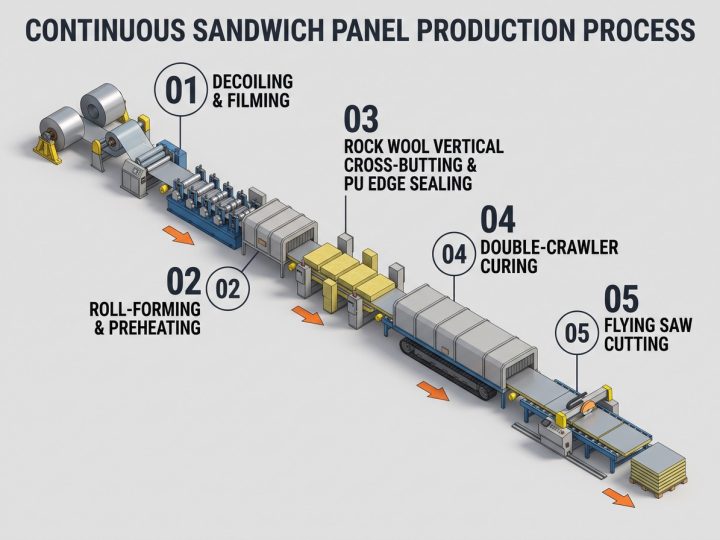
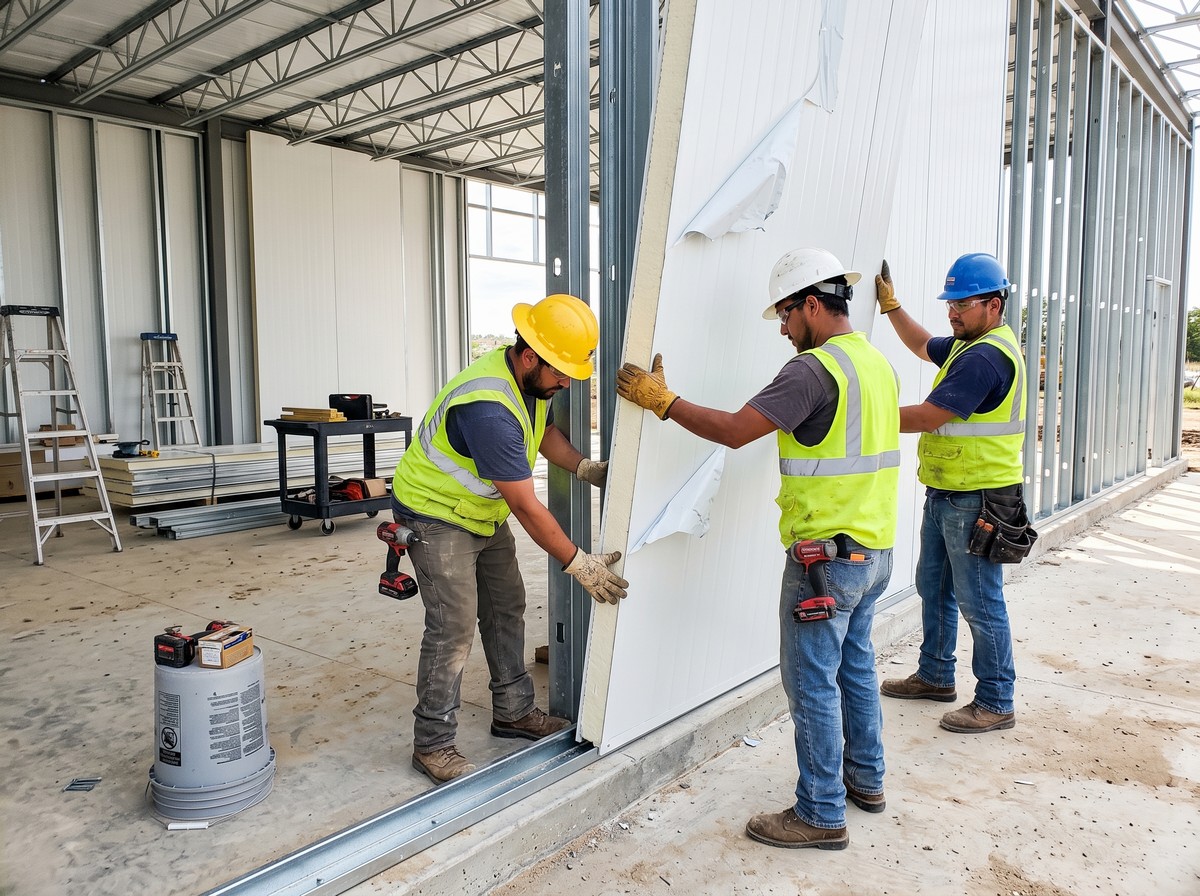
Factory-made insulated sandwich roof panels solve the problem in one crane lift. Two steel skins. One solid core. Zero air gaps between the metal and the insulation. Because the foam or mineral wool is bonded under continuous crawler pressure at the plant, there is no cold cavity where moisture can condense.
You also get real structural span strength. A 75mm or 100mm sandwich roof panel acts like a composite deck, carrying snow and wind loads across wide purlin spans while keeping deflection strictly under f ≤ L/240. At Hihsteel, we roll both Cap Type 950 profiles (where a snap-on steel cap hides the top screws) and Overlap Type 950/980 profiles for fast industrial shedding. Pick EPS for budget farm sheds and dry warehouses, PU-side-sealed rock wool for Class A fire safety, or high-density PIR when you want the lowest electric bill possible. Do the roof once. Do it right.
Frequently Asked Questions (FAQ)
Q: When does a single-skin corrugated metal roof actually make sense?
A: Single-skin corrugated steel sheets only make sense for unheated, open-air canopies, carports, or dry storage sheds where indoor temperature, condensation dripping, and rain noise do not matter.
Q: What is the difference between Cap-Type and Overlap-Type sandwich roof panels?
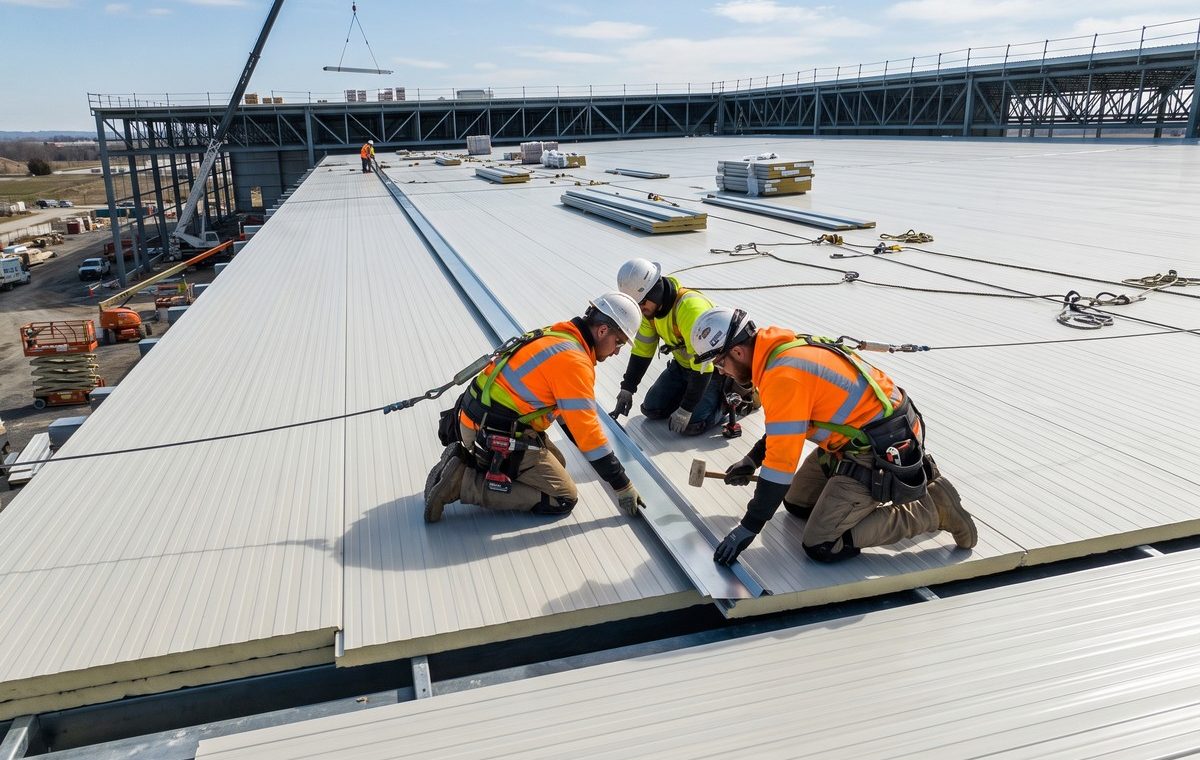
A: In an Overlap-Type (950/980mm) roof panel, the side rib of one panel laps directly over the adjacent panel’s rib and is fixed with gasketed screws. In a Cap-Type (950mm) roof panel, the two panel ribs meet and a separate snap-on metal cap covers the joint, shielding the fasteners from weather.
Q: Can sandwich roof panels be installed over an existing old metal roof?
A: Yes. Because insulated roof panels weigh only 10 to 25 kg/m², they can often be installed directly over an intact old metal roof using lightweight sub-purlins—cutting renovation time by over 50% and avoiding tear-off debris costs.
Q: How much quieter is a sandwich panel roof compared to a single-skin steel roof during heavy rain?
A: A bare single-skin metal roof amplifies rain impact like a drum (often exceeding 75–80 dB indoors). A 75mm–100mm rock wool, glass wool, or EPS sandwich roof panel absorbs vibration and cuts rain and外部 traffic noise by 35 to 42+ dB.
Q: What is the maximum purlin span for a 100mm insulated roof sandwich panel?
A: Under an allowable deflection limit of f ≤ L/240 and a standard live load of 1.0 kN/m², a 100mm EPS or PIR sandwich roof panel can safely span up to 4.5 to 7.5 meters depending on steel skin thickness, though 1.5m to 2.5m purlin spacing is standard in high-wind zones.