
Modern life science research facilities, biopharmaceutical R&D incubators, and precision analytical laboratories are highly dynamic operational environments. Unlike fixed commercial production halls, research laboratories continually reconfigure analytical workbenches, mass spectrometers, automated robotic liquid handlers, and bio-containment enclosures to accommodate evolving research pipelines. As highlighted in global cleanroom industry reports by National Law Review (https://natlawreview.com/press-releases/clean-room-panels-market-triple-2035-driven-demand-across-apac-europe-usa) and design analyses from Cleanroom Technology (https://cleanroomtechnology.com/what-is-happening-with-the-cleanroom-market-in), specifying non-demountable, wet-built drywall partitions cripples laboratory operational agility, resulting in expensive demolition cycles, toxic gypsum dust hazards, and months of unbudgeted downtime.
| R&D Lab Partition Factor | Traditional Stud & Drywall Wall | Machine-Made Modular Clean Panel |
| Wall Reconfigurability | Sledgehammer demolition (100% loss) | 100% Demountable & Re-usable |
| Utility Services Routing | Field-chasing & messy core cutting | Factory-formed concealed raceways |
| Particle Shedding Rating | Prone to paint flakes & plaster dust | ISO Class 3 – 5 Non-shedding finish |
| Acoustic Sound Attenuation | Low density transmission (STC ~32) | High-density rock wool (STC ≥ 42 dB) |

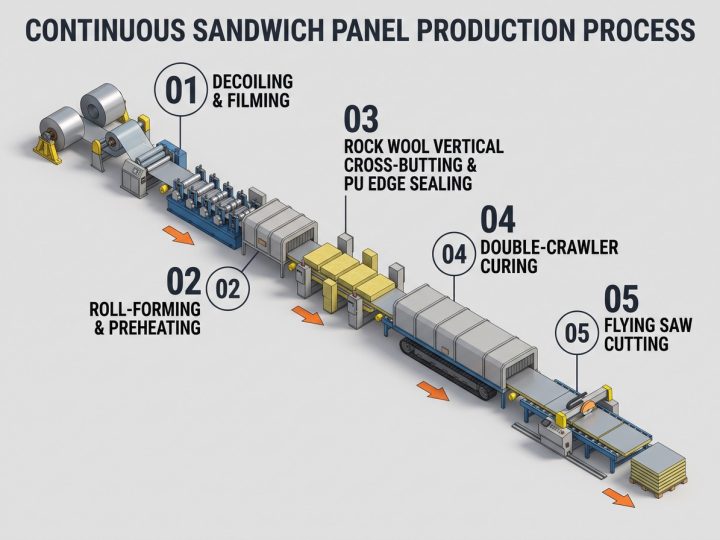
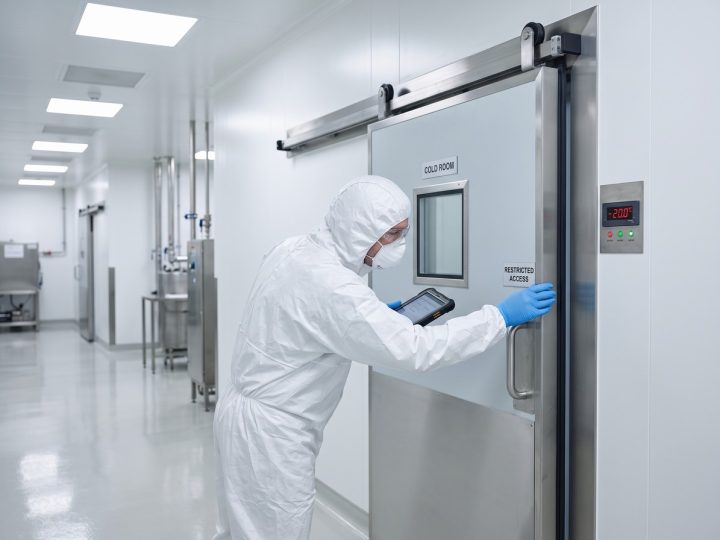
The fundamental requirement for research clean partitions is the total elimination of surface porosity and micro-particle shedding. Laboratory environments operate under strict ISO 14644 cleanliness baselines (typically ISO Class 5 to Class 7); trace paint flecks or gypsum dust from wall micro-cracks will ruin sensitive chromatography runs or cross-contaminate cell culture incubators. Machine-made cleanroom panels from the hihsteel.com Clean Room Series resolve this through continuous hot-dip galvanized steel facings (0.6 mm to 0.8 mm) coil-coated with anti-static, chemically inert fluorocarbon or polyester finishes. Baked under high temperatures in automated clean lines, the skin resists regular wipe-downs with isopropyl alcohol (IPA), quaternary ammonium, and bleach without surface crazing.

Acoustic insulation and core safety are equally critical in modern research campuses. High-throughput laboratories house noisy mechanical equipment—such as vacuum pumps, centrifuges, and continuous fume hood exhaust systems. Machine-made panels integrating high-density natural basalt rock wool cores (≥ 120 kg/m³) deliver certified acoustic transmission loss exceeding 42 dB (STC 42), isolating sensitive balance rooms from mechanical vibration and noise while providing non-combustible Class A fire safety (melting point > 1000°C). Alternatively, for microelectronics R&D requiring structural lightness and walkability, structural aluminum honeycomb cores provide superior flexural strength with zero outgassing.
Furthermore, laboratory flexibility hinges on integrated MEP utility integration. Machine-made modular partitions incorporate precision-engineered concealed aluminum splines (‘middle-aluminum connectors) that conceal structural fixings while serving as internal vertical raceways. Pre-engineered electrical conduits, gas supply tubing, and network data cables can be routed directly inside wall voids to power workbench consoles. Sourcing directly from an established manufacturing plant guarantees precision-machined cutouts for flush observation windows, interlocked dynamic pass-through boxes, and full containerized export crating.