⚠️ Ecuador Earthquake Fact File
📍 Location: Balao, Guayas Province, Ecuador (impacting Guayaquil)
🎚️ Magnitude: Mw 6.8
⏱️ Date & Depth: March 18, 2023 (Focal depth: 66km)
💥 Impact: Widespread cracking and subsidence in older masonry structures and port terminal warehouses across the major commercial city of Guayaquil.
🏚️ Failure Mode: Coastal alluvial soft soils experienced significant seismic settlement and liquefaction. Heavy reinforced concrete structures exerted massive downward pressure, leading to foundation failure, compounded by severe equatorial salt fog degradation.
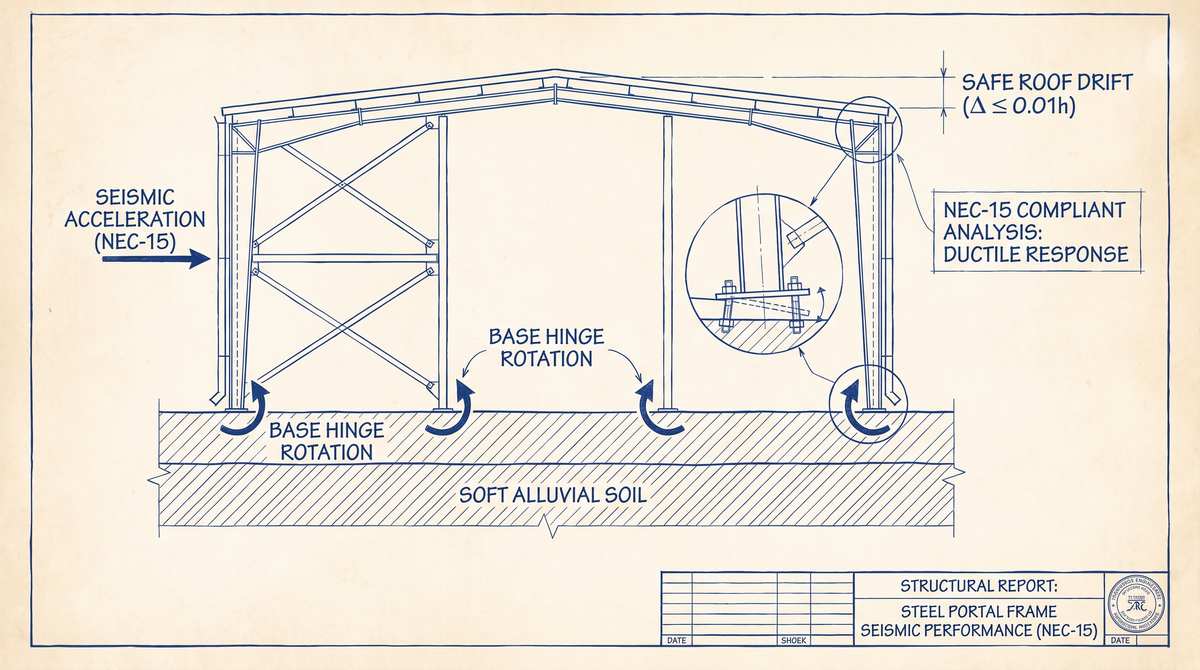
🏗️ Reconstruction: Strict compliance with Norma Ecuatoriana de la Construcción (NEC-15). Utilizing lightweight steel frames with pinned-base foundations to alleviate soft soil pressure, topped with marine-grade 316L welded roofs to survive aggressive coastal humidity and salt.
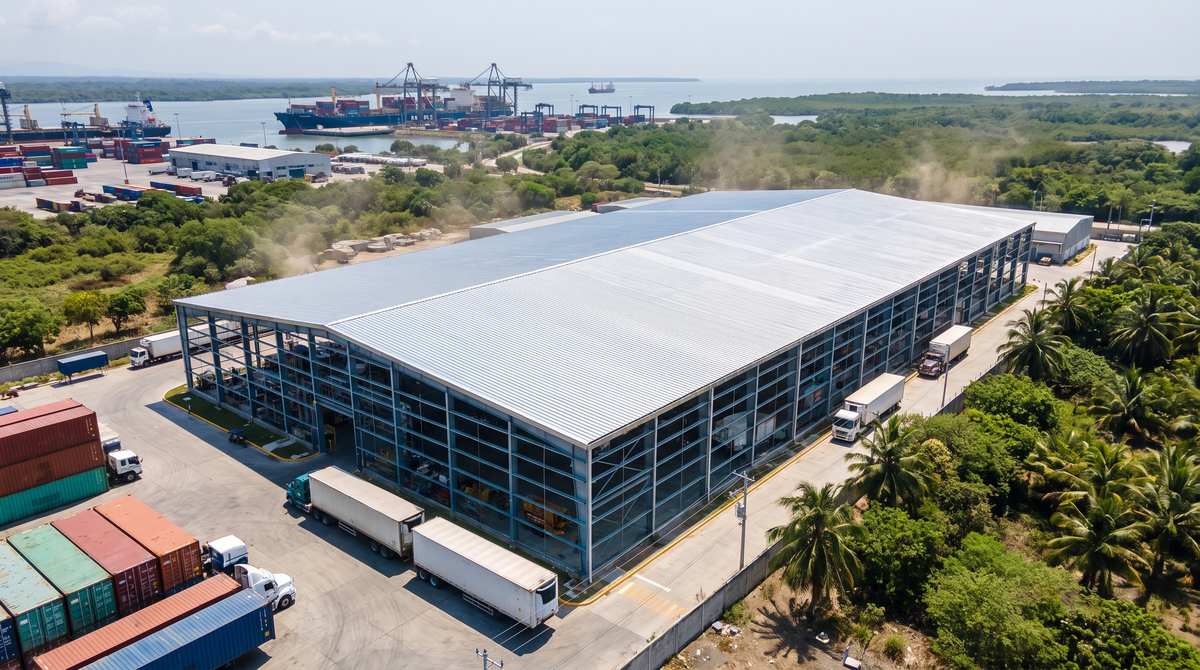
On March 18, 2023, a destructive Mw 6.8 subduction earthquake struck off the coast of Balao in Ecuador’s Guayas Province. The shaking caused extensive damage across the nation’s primary industrial and port hub, Guayaquil, as well as El Oro and surrounding coastal districts. Forensic evaluations revealed severe structural fracturing in reinforced concrete buildings, riverfront port depots, and shrimp processing facilities. This was drastically exacerbated by the liquefaction and settlement of saturated alluvial soils along the Guayas River delta. For industrial investors and international B2B logistics operators navigating customs in coastal Ecuador, rebuilding strictly under the Norma Ecuatoriana de la Construcción (NEC-15) requires lightweight, high-ductility Pre-Engineered Steel Buildings engineered to perform on shifting soils.
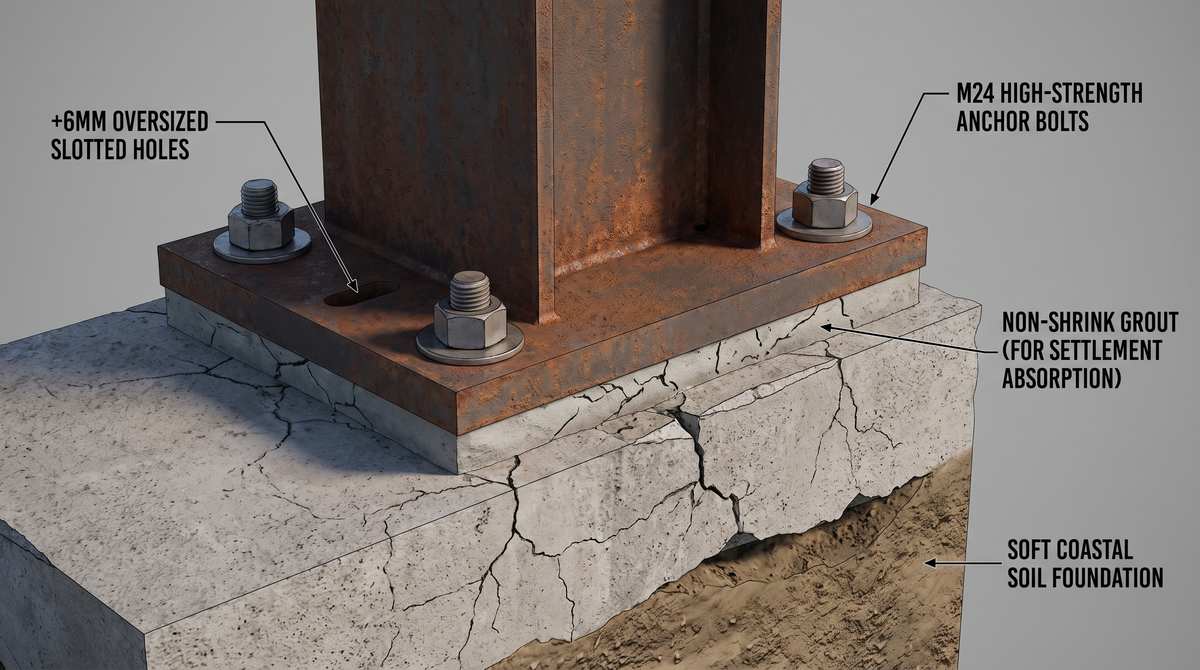
We supply custom-engineered industrial steel buildings designed specifically to overcome the challenging geotechnical conditions of coastal Latin America. Under NEC-15 seismic provisions, minimizing dead load is vital for mitigating foundation settlement. Our Q345B steel portal frames weigh up to 60% less than concrete equivalents, drastically reducing vertical soil pressures and horizontal base shear. To protect the building against minor differential settlement on soft estuarine ground, column base plates are engineered with pinned-base connections utilizing oversized anchor bolt holes (+6.0 mm clearance) and high-strength J-bolt anchors. This design provides structural rotational flexibility without transferring destructive bending moments into deep concrete piles.
In the equatorial port environment of Guayaquil and Esmeraldas, seismic resilience must be paired with durable marine corrosion protection. Constant relative humidity over 80%, high ambient temperatures, and maritime salt spray rapidly destroy standard coated metal roofing.
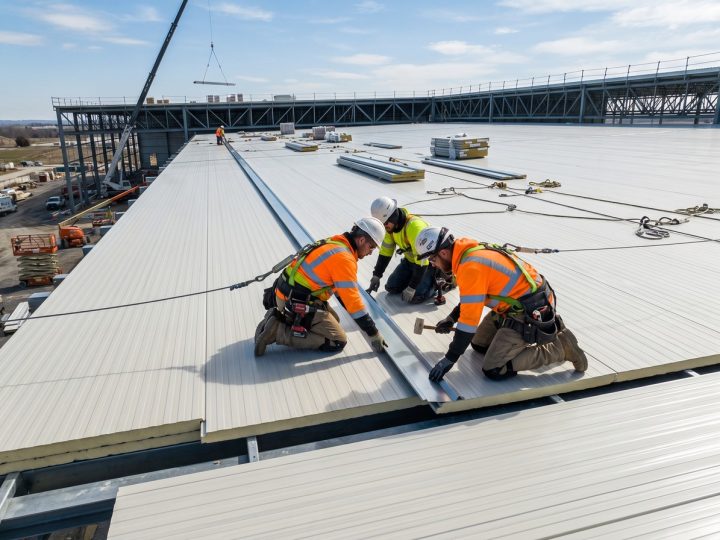
The continuous welded stainless steel roofing system solves this vulnerability permanently. Roll-formed from marine-grade austenitic 316L stainless steel, the material forms a durable, self-healing chromium oxide film that completely prevents chloride-induced pitting.
The 75mm tall vertical standing ribs are joined via an automated 360-degree mechanical Pittsburgh double lock and sealed with continuous longitudinal seam welds. This creates an impermeable, monolithic roof diaphragm that eliminates through-roof screw holes entirely. Anchored via movable stainless steel sliding clips with polymer thermal isolators, the roof accommodates up to ±32 mm of thermal expansion and lateral seismic drift without panel buckling. With a certified wind uplift resistance of -13.3 kPa and expansive drainage channels capable of handling extreme tropical deluges, this advanced system provides lasting security for Ecuador’s seafood exporters, logistics hubs, and heavy manufacturing facilities.