⚠️ Philippines Earthquake Fact File
📍 Location: Hinatuan, Surigao del Sur, Mindanao, Philippines
🎚️ Magnitude: Mw 7.4
⏱️ Date & Climate: December 2, 2023. This region constantly battles the dual threats of massive subduction earthquakes and Category 5 super-typhoons.
💥 Impact: Widespread structural fracturing across ports, coastal warehouses, and regional logistics depots.
🏚️ Failure Mode: Rigid structures failed under intense tectonic drift. Furthermore, subsequent tropical storms easily tore off standard single-skin metal roofs whose screw holes were ovalized and weakened during the quake.
🏗️ Reconstruction: Upgrading to ductile steel frames combined with highly rigid, interlocking Polyurethane (PU) metal composite sandwich panels. This minimizes seismic dead weight while drastically multiplying wind uplift resistance and thermal insulation.
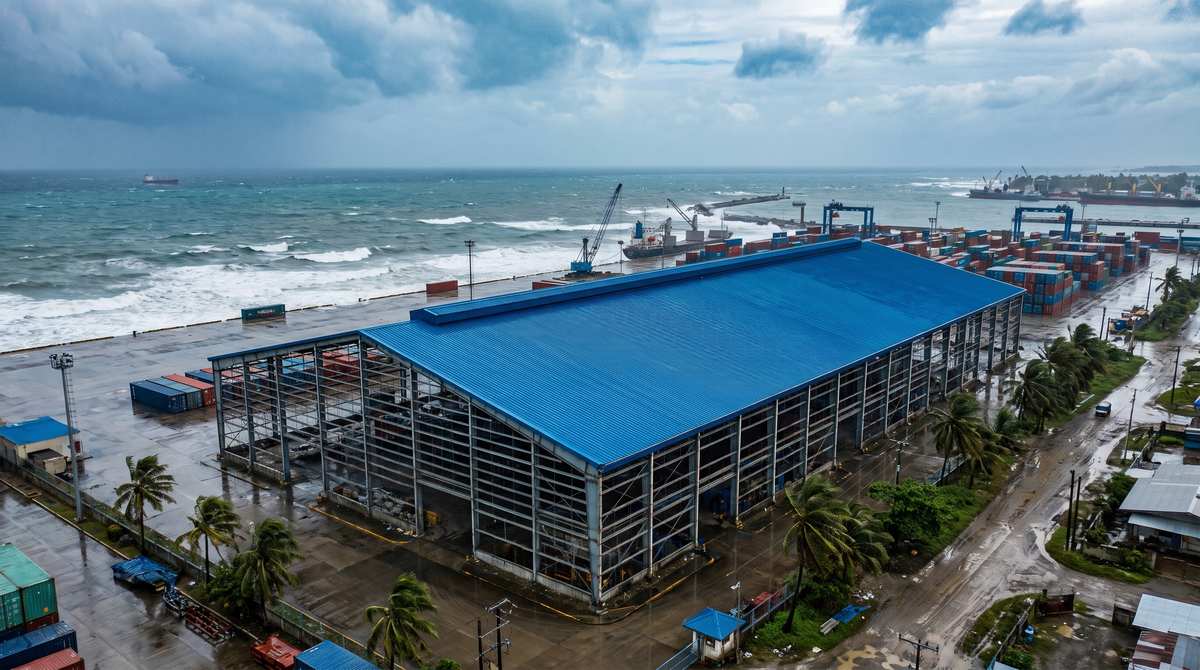
On December 2, 2023, a massive Mw 7.4 subduction earthquake struck off the eastern coast of Mindanao, Philippines, with an epicenter near Hinatuan. The extreme tectonic forces shook commercial centers across the island, triggering catastrophic structural failures across vital ports and warehouses.
In the Philippines, industrial facilities face a brutally unforgiving combination of natural hazards: high-magnitude tectonic tremors coupled immediately with recurrent Category 5 super-typhoons delivering sustained winds over 260 km/h. Standard single-skin corrugated metal roofs are exceptionally vulnerable in this environment. When an earthquake racks the building laterally, the differential movement shears standard roof fasteners and ovalizes the screw holes. Days later, subsequent typhoon winds easily exploit these weakened points, peeling the roof cladding off entirely and drowning the interior.
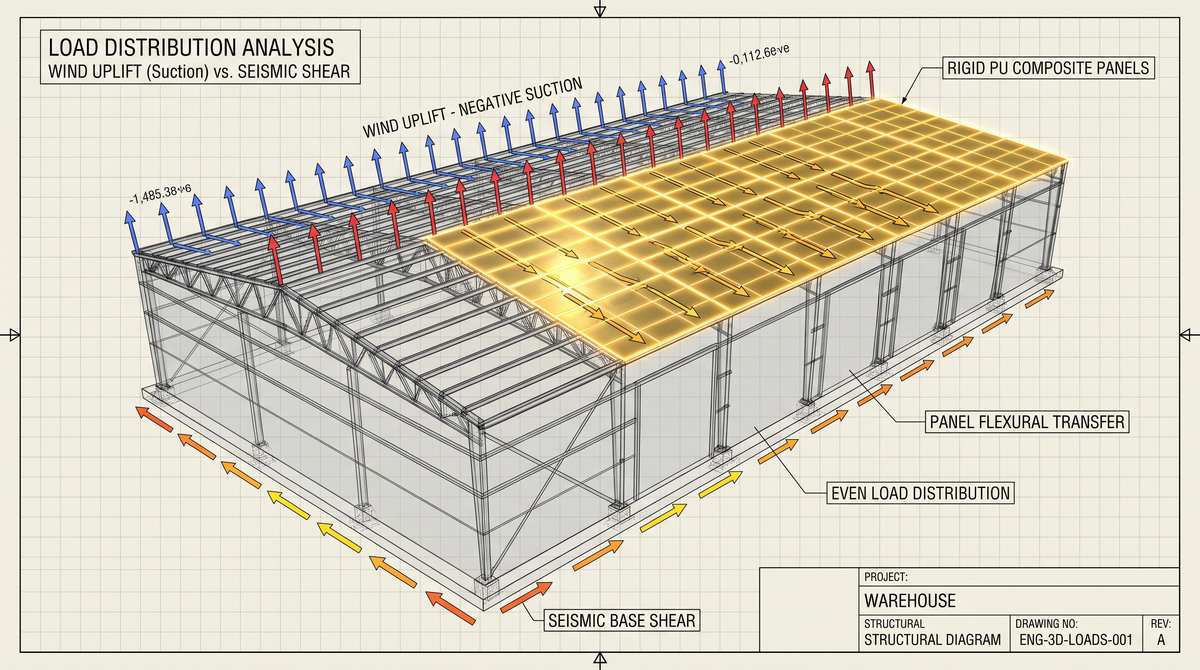
To deliver advanced building materials globally, we provide integrated structural solutions engineered specifically for the extreme conditions of Southeast Asia. Our primary structural frames feature heavy-section Q345B steel columns and rafters integrated with continuous horizontal and vertical bracing networks. By utilizing Grade 10.9S high-strength bolts, the friction-type moment connections dissipate cyclic seismic energy safely through controlled yielding. This completely prevents catastrophic frame collapse during major subduction events.
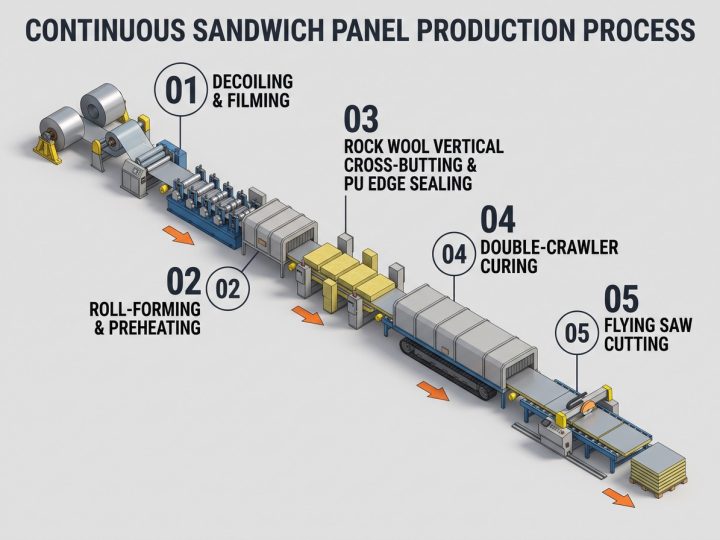
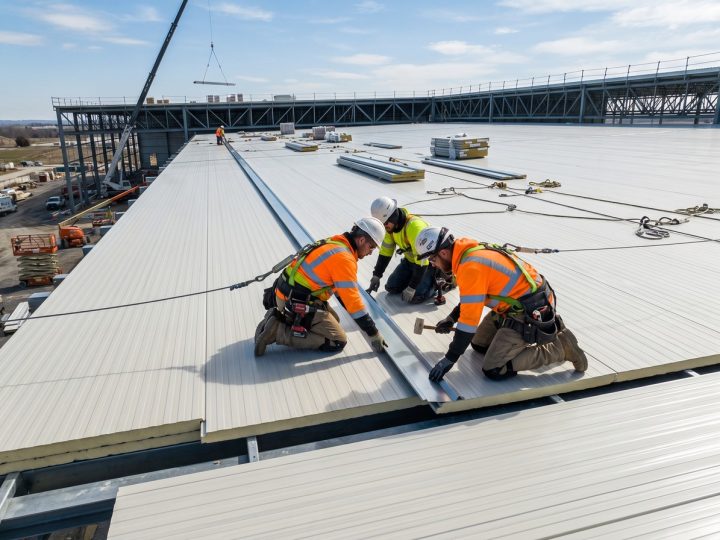
To permanently solve the dual threat of seismic deformation and typhoon uplift, we strongly mandate replacing fragile single-skin sheets with Polyurethane (PU) Composite Metal Roof Panels. These advanced architectural sandwich panels consist of a high-density, fire-rated PU foam core injected under immense pressure between two layers of high-tensile galvanized or stainless steel skin.
The sheer structural rigidity of the PU composite panel is a game-changer for coastal warehouses. Because the dense PU core chemically binds the upper and lower steel skins into a unified composite block, the roof achieves exceptional flexural strength. This allows the roof diaphragm to withstand extreme negative wind uplift pressures during typhoons without buckling, bending, or tearing at the concealed fastener points.
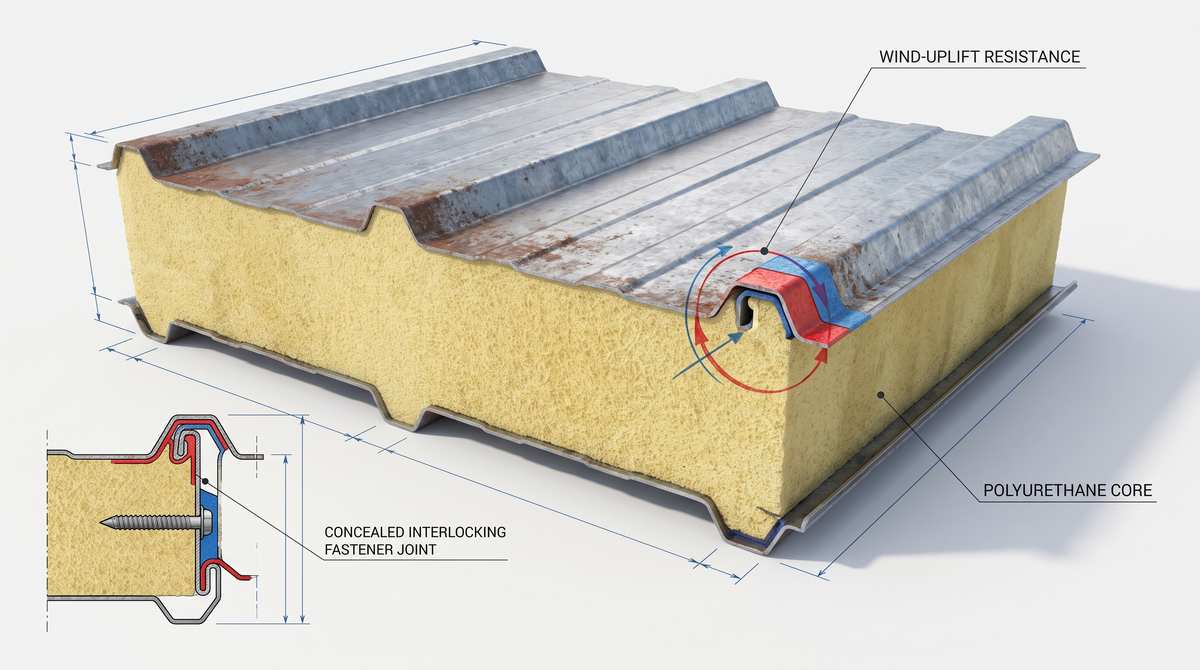
Furthermore, PU offers the absolute lowest thermal conductivity among commercial insulation cores, drastically slashing indoor temperatures under the blistering tropical sun while adding virtually zero seismic dead-weight to the building. Equipped with deep interlocking side joints and hidden fasteners, these PU sandwich panels ensure that Philippine warehouses remain fully insulated, structurally invincible, and 100% waterproof regardless of the weather.