When international buyers source sandwich panels, 80% of their attention focuses on the core material. Meanwhile, dishonest suppliers quietly exploit the single component that makes up over 60% of the panel’s manufacturing cost: the metal skin. By shaving nominal steel thickness from 0.5mm down to an actual 0.42mm, or substituting exterior PVDF fluoropolymer paint with cheap interior-grade polyester, rogue factories pocket huge margins while your building’s exterior starts chalking, fading, and rusting in less than three years. we stand for absolute transparency. Here is how to specify and verify your steel skins like a veteran metallurgist.
1. Steel Thickness Trap: Nominal vs. Actual (Tolerance Warfare)
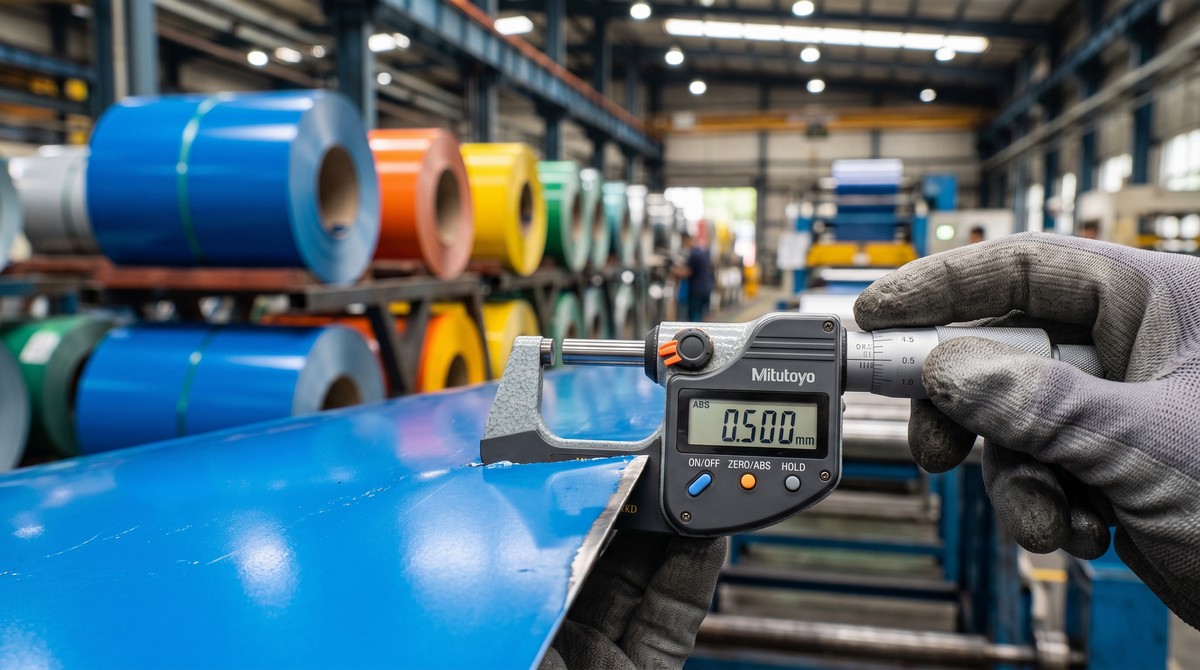
Never write simply ‘0.5mm steel’ on a purchase contract. Rogue brokers will exploit China’s national mill tolerances to deliver 0.43mm steel labeled as ‘nominal 0.5mm.’
- The Structural Danger: A 15% reduction in steel skin gauge slashes the sandwich panel’s flexural bending strength and span load capacity by over 30%!
- HIH Steel Commitment: We provide guaranteed Actual Caliper Thickness (BMT – Base Metal Thickness or TCT – Total Coated Thickness) verified with digital micrometers and certified Mill Test Certificates (MTCs). For heavy industrial projects, we recommend 0.5mm to 0.6mm external skin and 0.4mm to 0.5mm internal skin.
2. The Zinc Barrier: Galvanized (GI) vs. Galvalume (GL/Aluzinc)
Steel rusts when exposed to oxygen and moisture. The sacrificial metallic coating applied before painting determines your building’s lifespan:
- Hot-Dip Galvanized (GI): Pure zinc layer (Z100 to Z275 g/m²). Standard for interior partitions and general environments.
- Galvalume (GL / Aluzinc): 55% Aluminum, 43.4% Zinc, and 1.6% Silicon alloy (AZ100 to AZ150 g/m²). Galvalume delivers 3x to 6x greater corrosion resistance than standard galvanized steel in aggressive outdoor coastal and acid-rain environments.
3. Paint Resin Systems: From Economical PE to Bulletproof PVDF
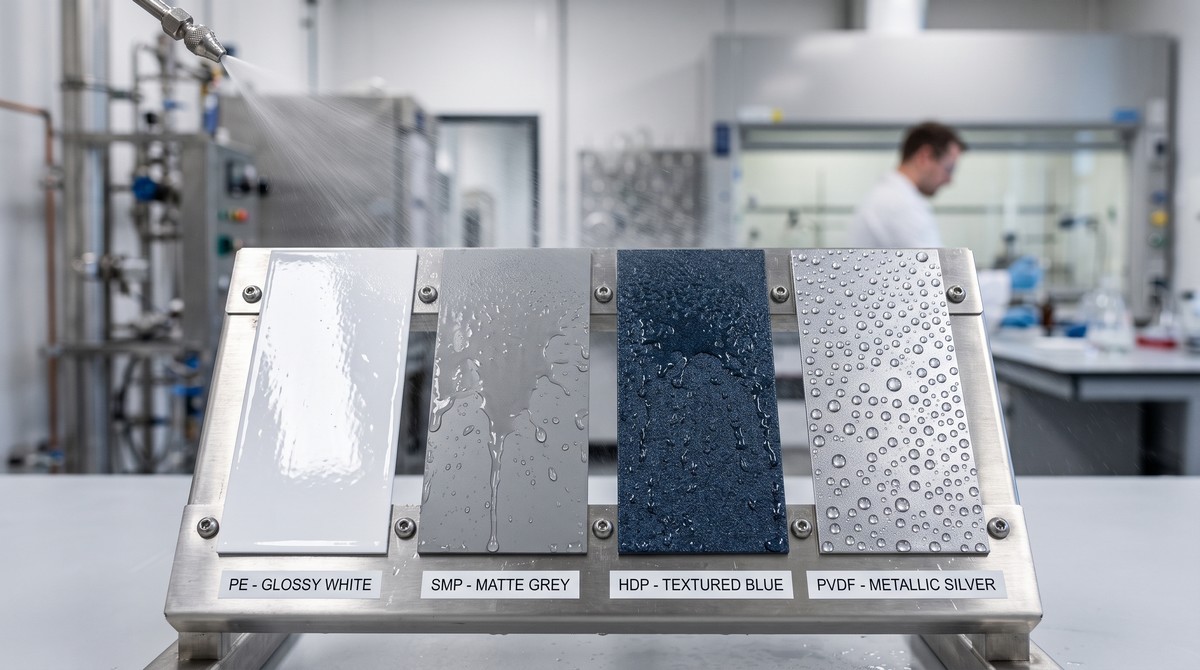
The top organic coating protects the steel against UV radiation, color fade, and chemical attack. Choosing the right paint resin depends on environmental corrosivity categories (C1 to C5 as defined in ISO 12944 (https://www.iso.org)):
| Paint Coating System | Resin Chemistry | Topcoat Thickness | UV / Weather Warranty | Best Architectural Application |
| PE (Regular Polyester) | Modified polyester resin | 15 – 20 µm | 5 – 7 Years | Dry indoor areas, temporary buildings, warehouses |
| SMP (Silicone Modified) | Silicon-crosslinked polyester | 20 – 25 µm | 10 – 12 Years | High-sunlight regions, agricultural buildings |
| HDP (High Durability) | High molecular weight polyester | 25 µm | 15 Years | Humid tropical environments, commercial centers |
| PVDF (Fluoropolymer) | 70% Kynar 500 / Hylar 5000 | 25 – 30 µm | 20 – 25 Years | Coastal facilities, industrial chemical zones, airports |
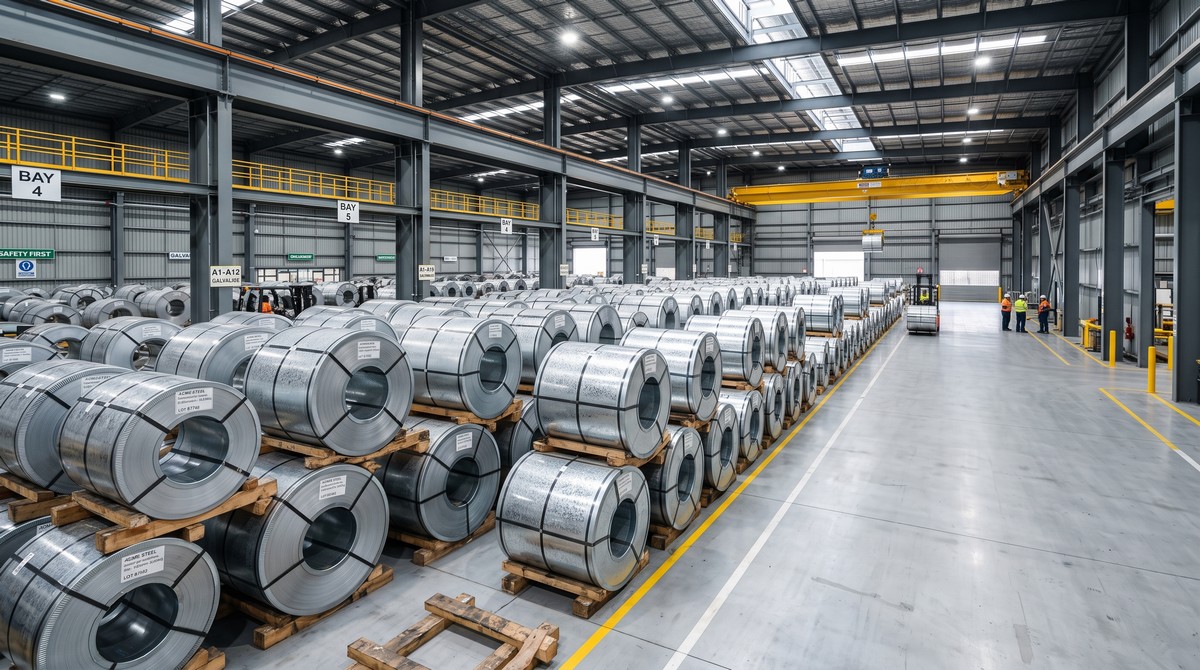
Protect your investment. Partner with HIH Steel—we source exclusively from tier-1 steel mills (Baosteel, Guanzhou, Yehui) and provide complete spectrophotometer color-matching and salt-spray test reports for every single export order!