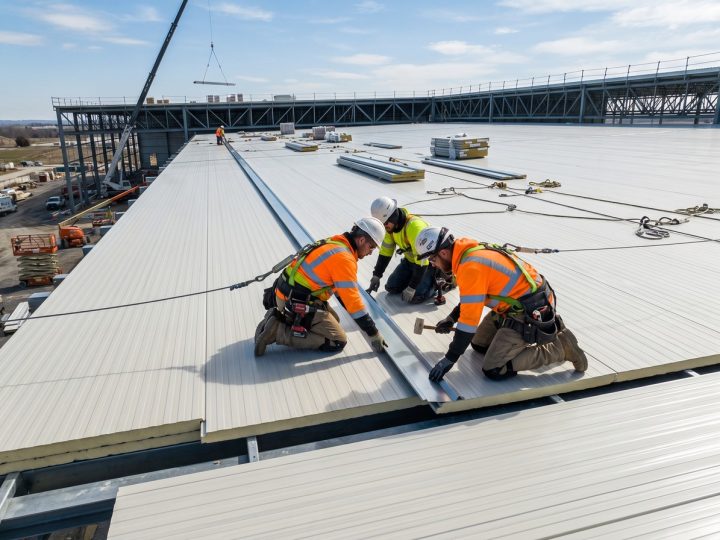
When structural engineers and general contractors specify non-combustible building envelopes for industrial warehouses, exhibition centers, and logistics hubs, the choice frequently narrows down to two premier mineral fiber cores: Glass Wool and Rock Wool (Stone Wool). Both deliver Class A fire resistance and superior thermal performance, but their mechanical properties, density profiles, and acoustic damping characteristics diverge significantly. Selecting the wrong core can result in either excessive structural steel costs or inadequate fire compartmentalization.
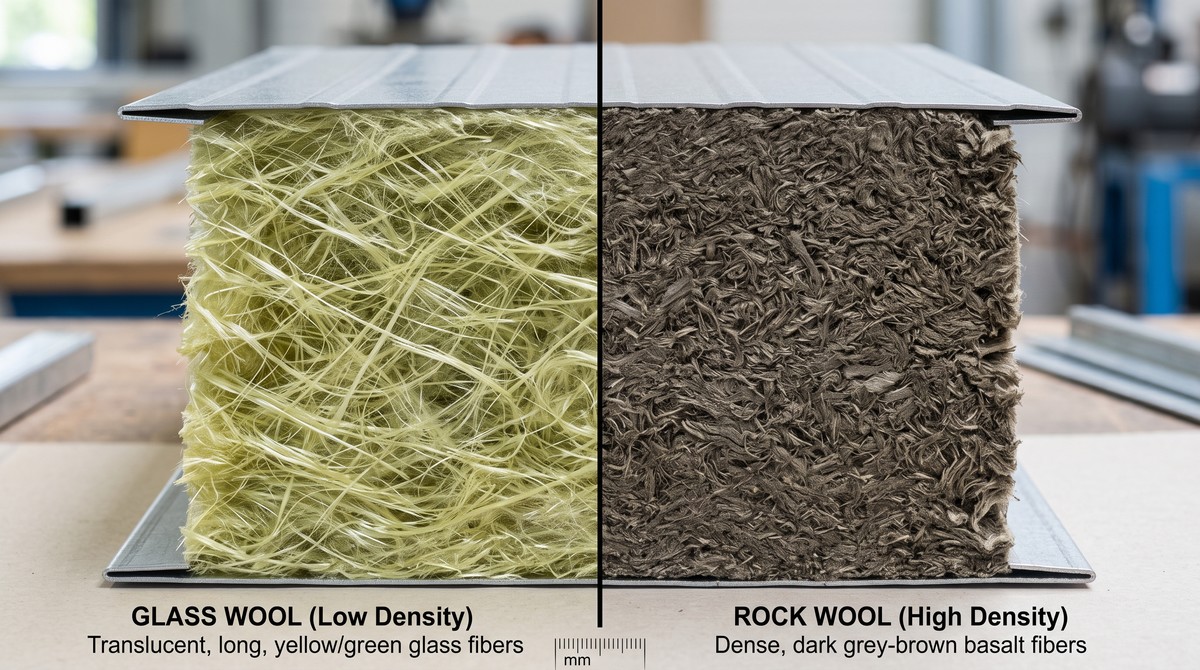
According to technical evaluations referenced by hihsteel, the fundamental distinction begins at raw fiber morphology and bulk density. Industrial glass wool panels utilize high-purity spun borosilicate glass fibers bonded with thermosetting resins at densities typically ranging from 48 kg/m³ to 64 kg/m³. In contrast, basalt-based rock wool panels feature dense volcanic stone fibers compressed at 100 kg/m³ to 140 kg/m³. This substantial weight variance directly impacts structural dead load calculations: substituting rock wool with glass wool on a 20,000 m² industrial roof reduces dead load by over 35%, allowing structural designers to optimize purlin spacing, secondary trusses, and overall foundation tonnage.
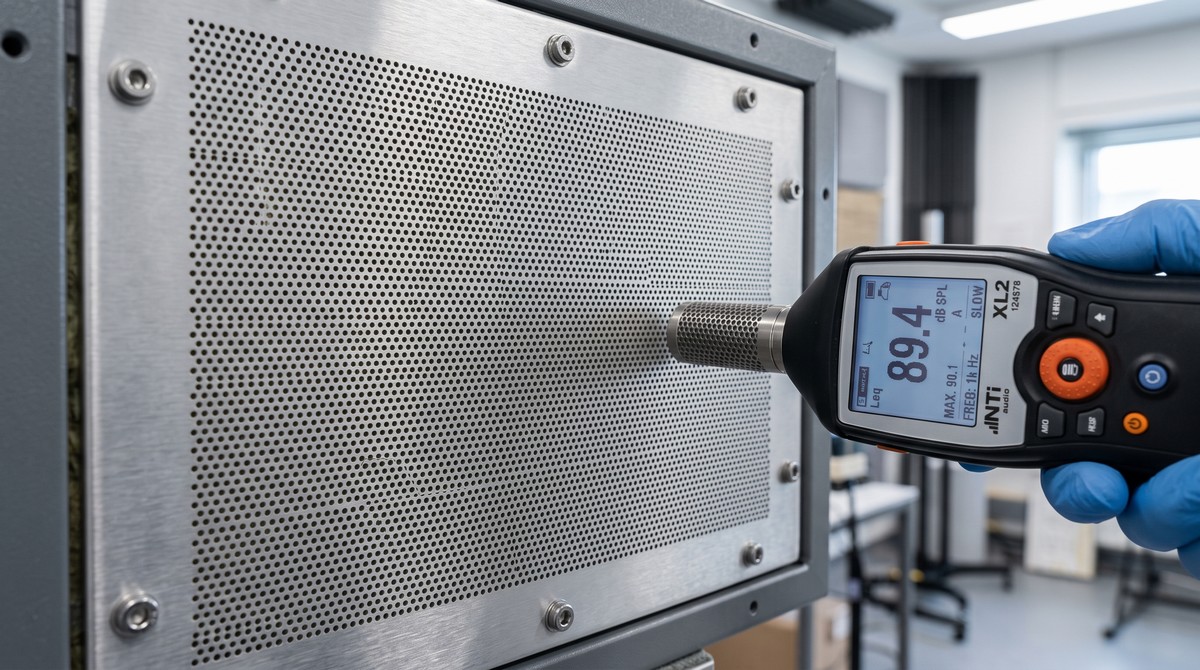
In acoustic performance, glass wool holds a distinct advantage for high-noise manufacturing facilities, power stations, and convention halls. Its elongated, flexible fiber architecture provides exceptional sound absorption, achieving a Noise Reduction Coefficient (NRC) of 0.85 to 0.95 across mid-to-high frequency bands (500 Hz to 4000 Hz). When fabricated into perforated acoustic wall and ceiling panels with micro-perforated facing steel and acoustic scrim tissue, glass wool panels dramatically suppress reverberation time in compliance with ISO 354 and ASTM C423 standards.
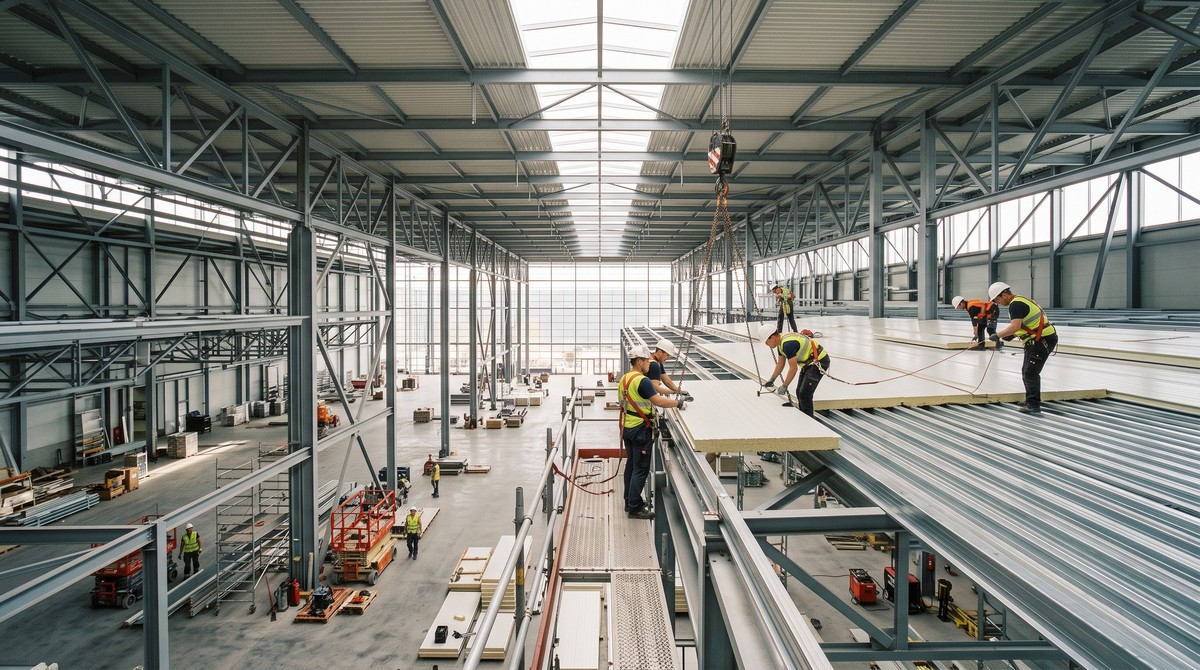
However, for extreme fire resistance and structural integrity under direct flame, rock wool remains unmatched. As documented in international testing under EN 13501-1 and ASTM E119, rock wool fibers exhibit a sintering melting point exceeding 1000°C, maintaining load-bearing capacity for up to 240 minutes (EI 240). Glass wool fibers melt at approximately 400°C to 500°C, making them ideal for lightweight non-combustible thermal barriers (EI 30 to EI 60) where extreme furnace exposure is not mandated. Additionally, HIH Steel incorporates hydrophobic silicone treatments into both core matrices, ensuring water absorption stays below 1.0% by volume under ASTM C1104 immersion conditions.
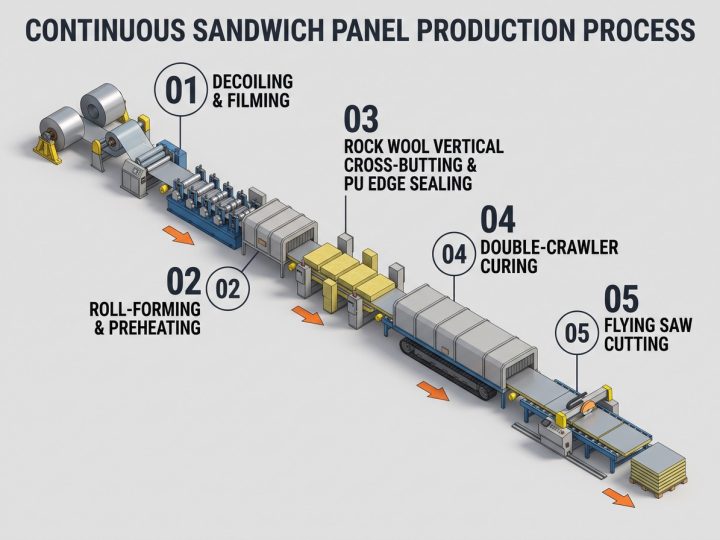
As a direct B2B manufacturer and exporter, HIHSteel operates automated continuous double-belt lamination lines capable of producing both glass wool and rock wool sandwich panels with polyurethane (PU/PIR) edge sealing. By sealing the longitudinal fiber edges with high-density PIR foam, HIHSteel eliminates fiber shedding, prevents moisture ingress, and boosts joint tensile strength by 45%. Explore our certified product ranges and engineering specifications at hihsteel.com.
Engineering Comparison: Glass Wool vs. Rock Wool Sandwich Panels
| Technical Parameter | Glass Wool Sandwich Panel | Rock Wool Sandwich Panel | Engineering Implication |
| Core Bulk Density | 48 – 64 kg/m³ | 100 – 140 kg/m³ | Glass wool reduces structural roof dead load by >35% |
| Thermal Conductivity (λ) | 0.032 – 0.036 W/m·K | 0.038 – 0.044 W/m·K | Glass wool provides slightly higher thermal resistance per mm |
| Fiber Melting Point | ~400°C – 550°C | > 1000°C (Basalt) | Rock wool delivers up to 4-hour fire rating (EI 240) |
| Fire Classification | Class A1 / Class A Non-combustible | Class A1 Non-combustible | Both comply with EN 13501-1 & ASTM E84 Class A |
| Acoustic Absorption (NRC) | 0.85 – 0.95 (Perforated) | 0.75 – 0.85 (Perforated) | Glass wool is superior for acoustic dampening & echo suppression |
| Edge Sealing Technology | PIR / PU Edge Sealing | PIR / PU Edge Sealing | Prevents moisture ingress & enhances joint pull-out strength |
| Recommended Applications | Large-span roofs, acoustic halls, logistics hubs | Firewall barriers, boiler rooms, high-risk industrial plants | Balances structural dead weight vs extreme fire separation |