Why Stainless Steel Carts Dent Ordinary Cleanroom Walls (And How MgO Liners Stop It)
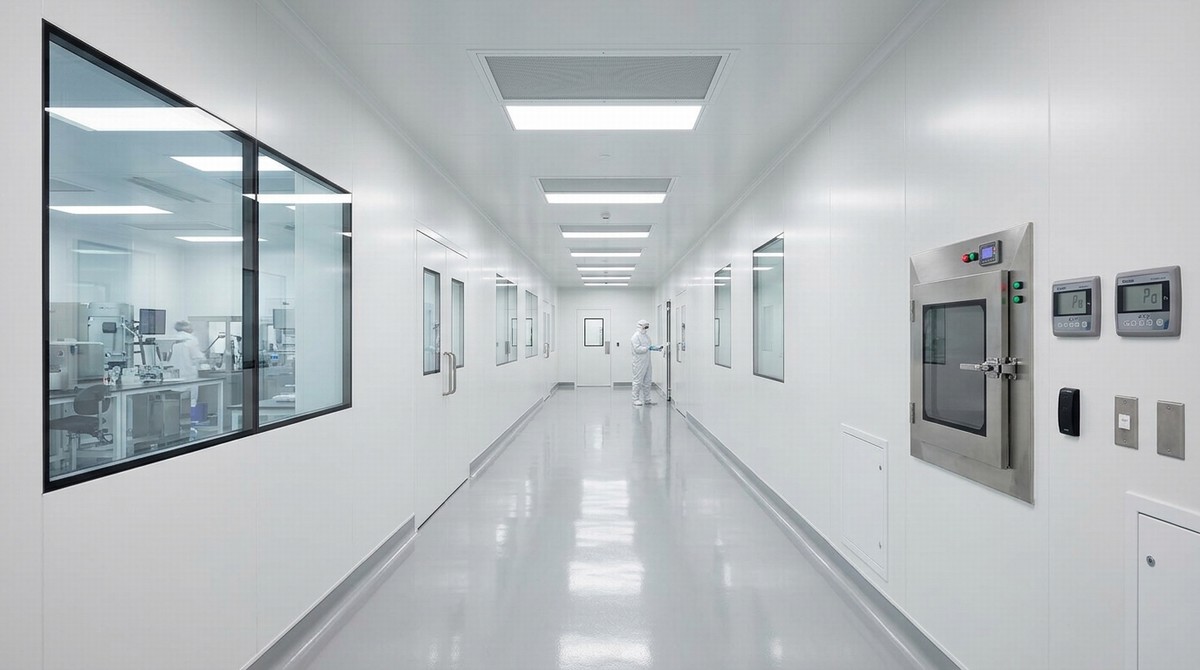
Walk down the main corridor of an older pharmaceutical factory and look at waist height. You will see dozens of shallow dents where technicians bumped stainless steel vial trolleys into the wall. Even a tiny crease cracks the antibacterial coating and traps microbial spores.
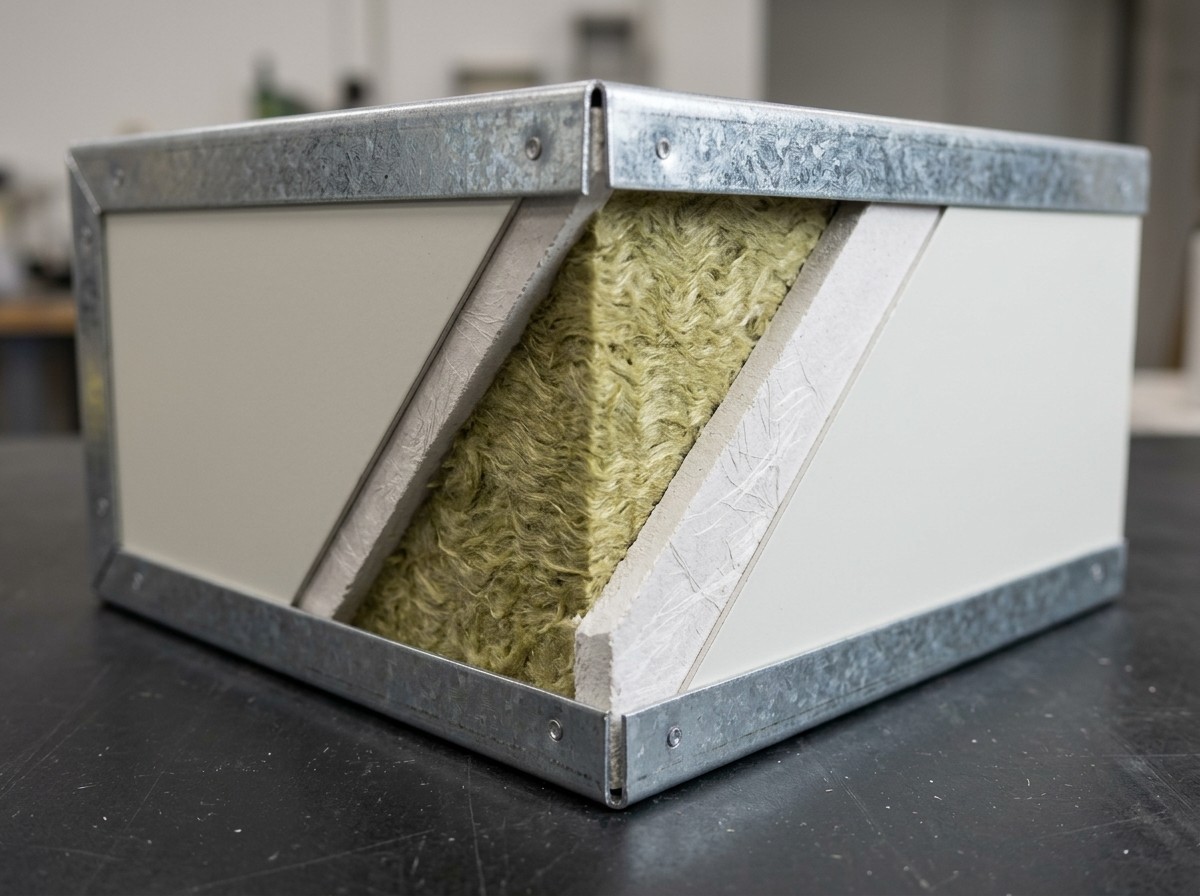
Standard rock wool cleanroom boards bond a 0.5mm painted steel skin directly onto mineral wool fibers. Steel dents easily. While 120 kg/m³ basalt wool stops fire, mineral fibers still compress slightly under a sharp point impact. To build an impact-proof pharmaceutical cleanroom, we laminate a 5-millimeter-thick high-density glass magnesium (MgO) board directly behind the 0.5mm steel skin on both sides of a rock wool core. That 5mm stone-hard MgO liner distributes impact loads across the entire board face. Better yet, when used as a walkable cleanroom ceiling deck above HEPA filter housings, maintenance crews can walk across Double MgO Rock Wool panels to change filters without denting the ceiling plenum.
| Cleanroom Panel Type | Core & Liner Structure | Fire Rating | Impact & Point Stiffness | Best Cleanroom Zone |
|---|---|---|---|---|
| Machine-Made Rock Wool (50mm) | 0.5mm PPGI + 100kg Rock Wool | Euroclass A1 | Moderate (Dents under cart impact) | ISO 7-8 packaging halls, general electronics |
| Handmade Rock Wool (50mm) | Galvanized Frame + 0.6mm PPGI + 120kg Wool | Euroclass A1 | High (Perimeter steel frame) | GMP corridors, medical device assembly |
| Double MgO Rock Wool (50mm) | 0.5mm PPGI + 5mm MgO Board + Rock Wool | Euroclass A1 (2+ hr) | Superior (Zero skin denting, walkable ceiling) | ISO 5-6 sterile pharma filling, biosafety labs |
| Hollow Glass Magnesium (50mm) | 0.5mm PPGI + Double 5mm MgO + MgO Ribs | Euroclass A1 | Very High (Rigid grid core) | High-humidity wash bays, battery dry rooms |
Handmade Channel-Framed Panels vs Machine-Made Tongue-and-Groove Boards
Should you specify continuous machine-made boards or manual channel-framed panels? Match the joint precision to your ISO cleanliness class.
In ISO Class 5 to Class 7 sterile rooms running at +15 to +30 Pascals of positive air pressure, ordinary tongue-and-groove seams leak conditioned air and fail pharmaceutical validation. Our handmade cleanroom sandwich panel wraps the entire four-sided perimeter of every 1180mm-wide module inside a precision-punched 0.8mm galvanized steel C-channel frame. On site, two adjacent panels slide over a hidden aluminum H-spline or square tube post, leaving a uniform 3mm flush seam that installers fill with non-outgassing neutral medical silicone. Flush double-glazed windows and steel cleanroom doors drop straight into the 50mm panel thickness with zero dust-catching ledges.
Surviving Daily VHP Hydrogen Peroxide Fumigation Without Paint Blistering
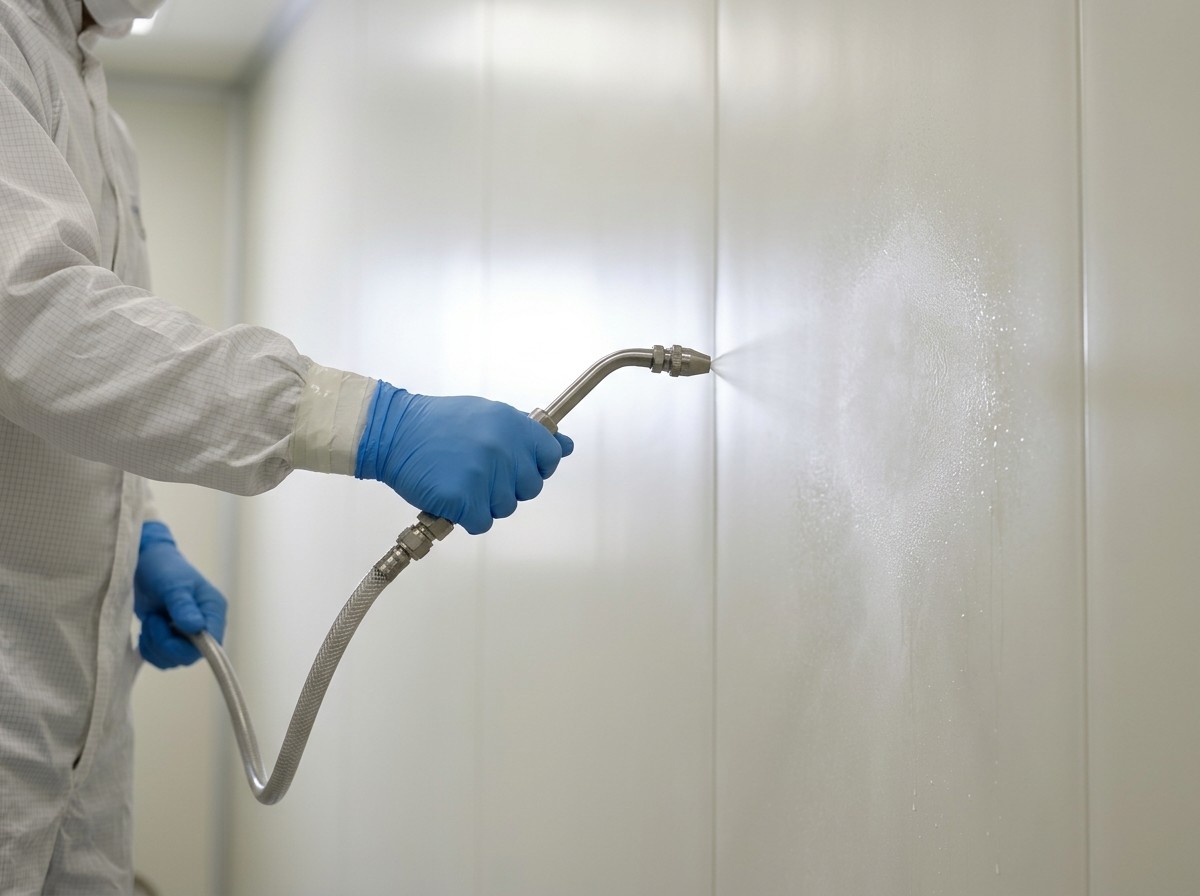
Modern vaccine and biologics suites sterilize rooms every week with Vaporized Hydrogen Peroxide (VHP), chlorine dioxide, or 75% isopropyl alcohol sprays. Standard polyester paint blisters and turns yellow after six months of VHP gassing.
For sterile filling zones, we laminate cleanroom boards using a zero-spangle Z275 galvanized steel base coated with chemical-resistant PVDF fluorocarbon film, antibacterial silver-ion HDP paint, or brushed 304 stainless steel. Every electrical conduit and interlocking pass-box cutout is factory-sealed inside the perimeter frame so mineral wool fibers never touch the sterile air stream.
Frequently Asked Questions (FAQ)
Q1: What is the standard width and thickness of a GMP handmade cleanroom panel?
A: The global GMP standard thickness is 50mm (so panels fit flush with 50mm cleanroom door frames and double-glazed windows), with a standard modular width of 1180mm or 980mm.
Q2: Why do cleanroom ceilings prefer glass magnesium rock wool panels?
A: Because the 5mm glass magnesium (MgO) liner beneath the steel skin prevents boot heels from denting the panel surface when technicians walk across the ceiling plenum to service HVAC ducts and HEPA filters.
Q3: Do glass magnesium cleanroom panels absorb moisture or warp in humid weather?
A: Low-grade chloride-heavy MgO boards can sweat in high humidity (‘halogen return’). We use strictly sulfate-based halogen-free water-resistant MgO liners sealed inside a galvanized perimeter frame so they never sweat or warp.
Q4: Can cleanroom sandwich panels be removed individually to move cleanroom machinery?
A: Yes. Because handmade cleanroom panels connect side-by-side using removable internal aluminum splines rather than overlapping tongue-and-groove lips, a single wall panel can be unsealed and lifted out to roll an autoclave or freeze-dryer into the room.
Q5: What fire rating do rock wool and glass magnesium cleanroom panels achieve?
A: Both rock wool and glass magnesium cores are 100% inorganic and non-combustible, achieving Euroclass A1 fire performance and 60 to 120+ minutes of fire integrity.