⚠️ Afghanistan Earthquake Fact File
📍 Location: Herat Province (Zinda Jan district), Western Afghanistan
🎚️ Magnitude: A relentless sequence of four Mw 6.3 earthquakes
⏱️ Date & Climate: October 2023. This arid desert region faces freezing winters, blistering summers, and the ferocious “Wind of 120 Days” bringing violent sandstorms.
💥 Impact: Over 1,400 fatalities. Entire communities of traditional sun-dried mud-brick (kham-khesh) domes were completely leveled within seconds.
🏚️ Failure Mode: Heavy sun-dried mud blocks completely lack the tensile and shear strength required to withstand intense, shallow lateral tectonic vibrations.
🏗️ Reconstruction: A mandatory shift to engineered steel framing combined with fully sealed Rock Wool composite wall panels and continuously welded roofs to prevent both seismic collapse and the intrusion of ultra-fine desert dust.
In October 2023, a devastating series of four Mw 6.3 earthquakes struck western Afghanistan’s Herat Province, with the epicenter in Zinda Jan leveling entire communities within seconds. More than 1,400 people perished as heavy sun-dried mud-brick (kham-khesh) walls and unreinforced clay domes collapsed entirely under intense shallow lateral vibrations.
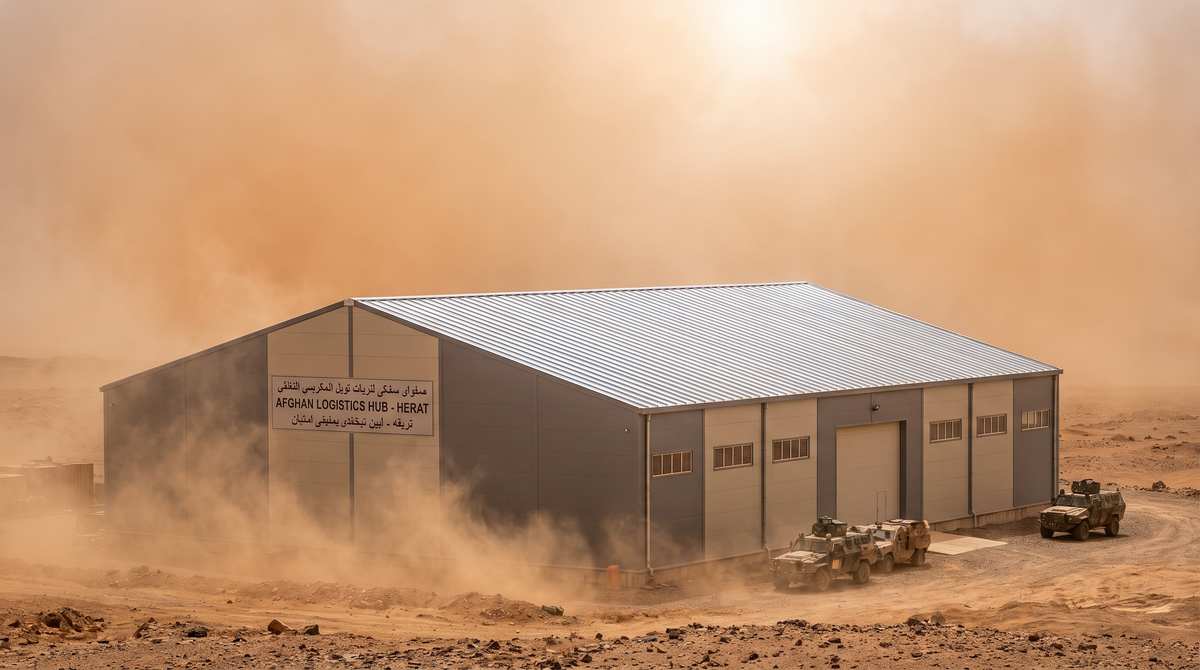
Beyond the direct seismic shock, survivors and emergency responders in Herat face extreme environmental exposure: blistering summer heat, biting winter freezes down to -15°C, and the ferocious seasonal “Wind of 120 Days”, which whips blinding sandstorms across the arid landscape at velocities exceeding 120 km/h. Rebuilding vital agricultural storage, community healthcare facilities, and disaster supply warehouses in Herat requires a permanent structural paradigm shift toward airtight, dust-proof, and earthquake-engineered steel buildings.
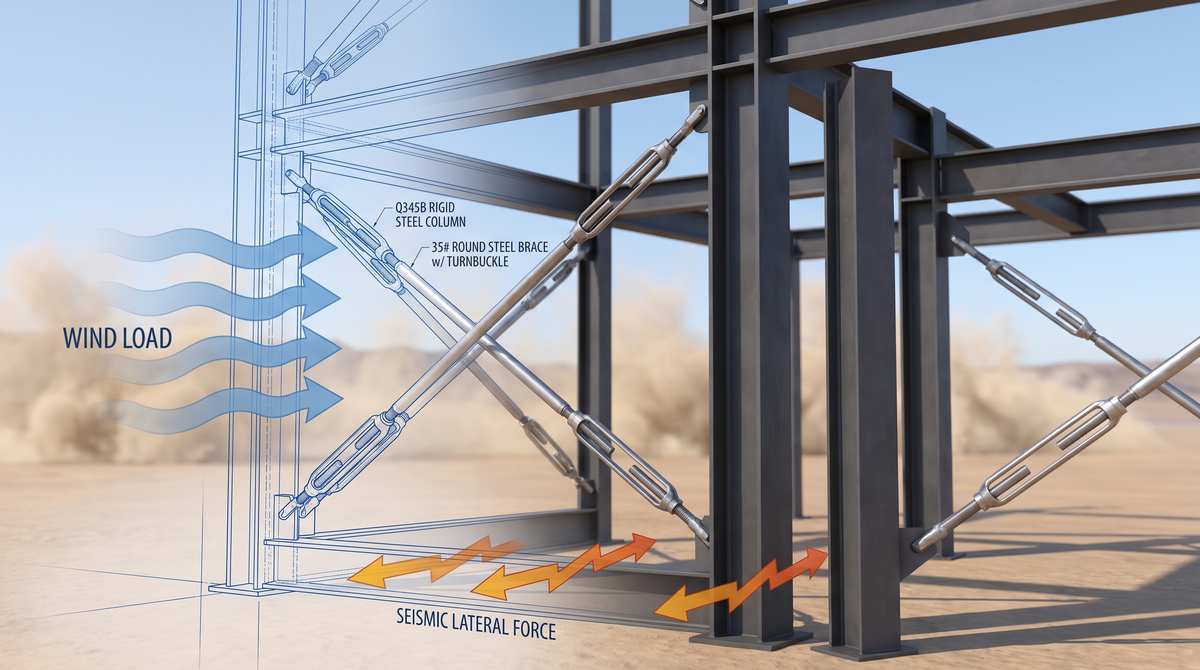 We engineer lightweight, high-tensile steel structural kits specifically configured for challenging arid-zone disaster recovery. To survive Herat’s violent windstorms while remaining fully compliant with international seismic codes, our portal frame designs incorporate rigid Q345B steel columns connected by diagonal 35# round steel brace rods equipped with forged clevises and heavy-duty turnbuckles. This dual-action structural bracing system strictly resists extreme horizontal wind forces and brutal ground-motion shear without racking.
However, a robust frame is useless in the deep desert if the cladding fails. Standard corrugated metal enclosures in desert zones frequently fail due to severe sand penetration. Microscopic dust particles effortlessly infiltrate traditional lap joints, clogging life-saving medical equipment and spoiling emergency grain reserves.
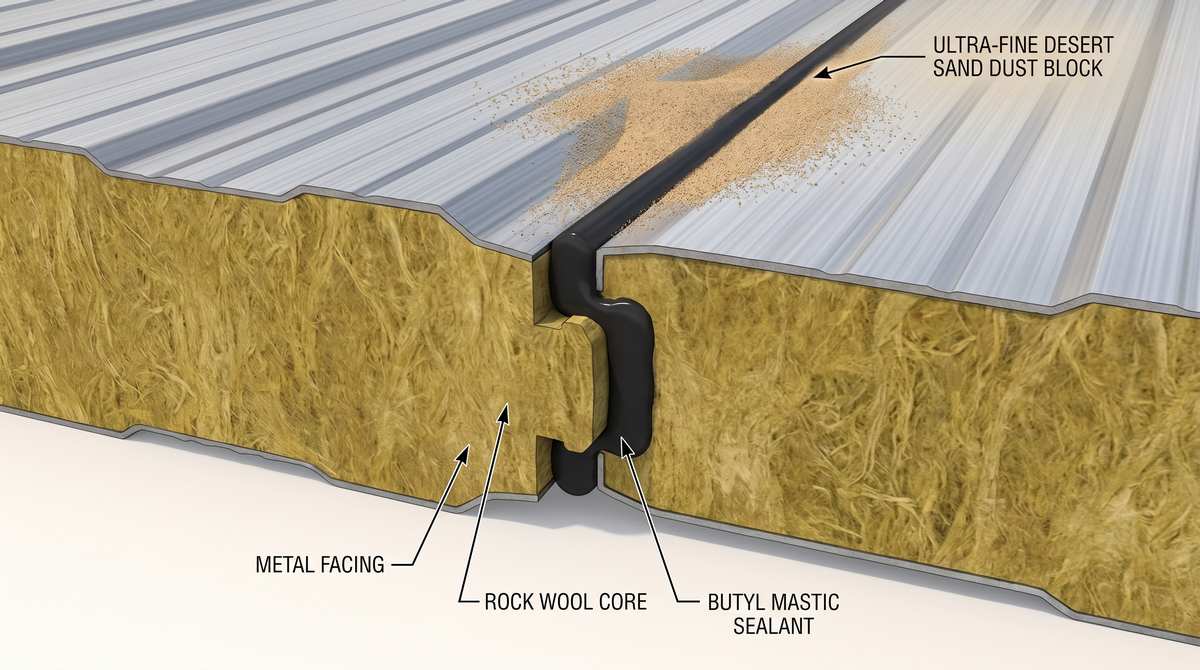
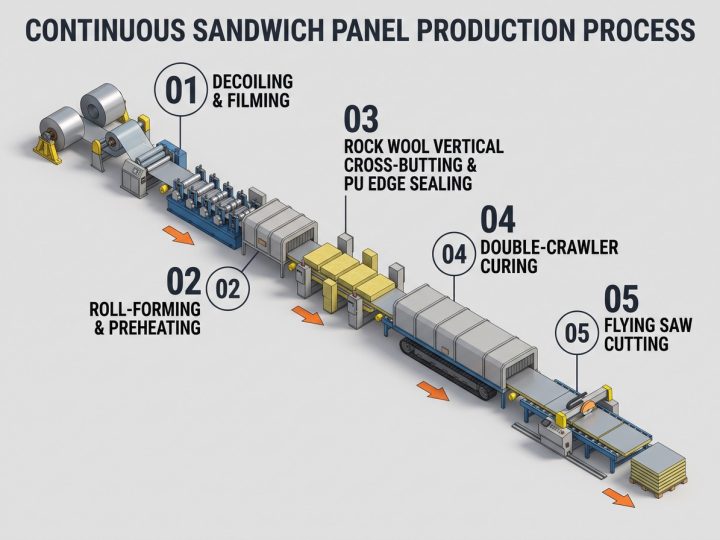
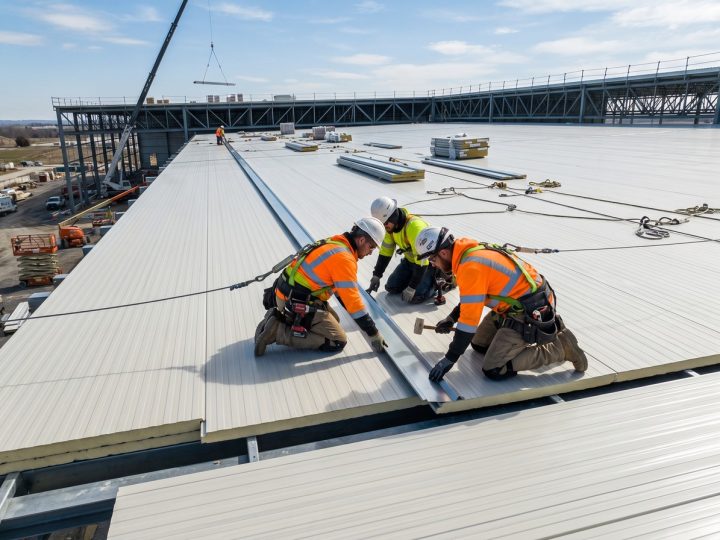
To overcome this, we employ high-density Rock Wool composite sandwich panels for the entire building envelope. These panels feature a non-combustible fibrous core tightly bonded under immense pressure between two structural steel skins. The precision tongue-and-groove joint design of the sandwich panels, when locked and sealed with specialized butyl mastic, creates a completely airtight barrier against ultra-fine desert dust. Furthermore, the rock wool core provides exceptional fire resistance (Class A1) and buffers the interior against the extreme 40°C day-to-night temperature swings typical of the Afghan desert.
For the roof, the standing seam stainless steel roofing system completely solves the dust crisis with its 360-degree mechanical Pittsburgh seam profile and automated laser weld lines, creating an impervious hermetic seal. Constructed with ferritic 445J2 or 443 grade stainless steel—materials exhibiting exceptionally low linear thermal expansion coefficients—the roof effortlessly tolerates severe thermal shock without shearing fasteners. Combined with the airtight rock wool walls, these advanced steel buildings maintain perfectly stable interior conditions, protecting vital emergency supplies from heat, blinding sandstorms, and massive seismic devastation.