
Across major global maritime gateways—from Tokyo Bay and Singapore to Rotterdam and the US West Coast—cold chain infrastructure is grappling with a massive structural crisis: aging legacy facilities. According to industrial property research published by CBRE Japan Insights (https://www.cbre.co.jp/en/insights/viewpoints/japan-2026-cold-storage-update) and facility management surveys from the Global Cold Chain Alliance (GCCA) (https://www.gcca.org/magazine-article/driving-the-cold-chain/), over 50% of operating cold warehouses in critical port clusters were constructed over thirty years ago. These legacy facilities utilize obsolete expanded polystyrene (EPS) or early-generation urethane insulation that has become heavily waterlogged, causing severe joint icing, ceiling sagging, and electricity bills that run 30% to 40% higher than modern facilities.
| Retrofitting Parameter | Demolition & Full Rebuilding | Modular PIR In-Situ Retrofitting |
| Facility Downtime | 12 – 18 Months (Complete shutdown) | Phased / Weekend fit-out (Zero shut) |
| Capital Expenditure (CAPEX) | 100% (High concrete demolition) | 35% – 45% of new build cost |
| Thermal Performance (R-Val) | Achieves current code standards | High-Index PIR delivers R-40 to R-50 |
| Moisture Barrier Continuity | Rebuilt from ground up | Continuous dual EPDM vapor barrier |

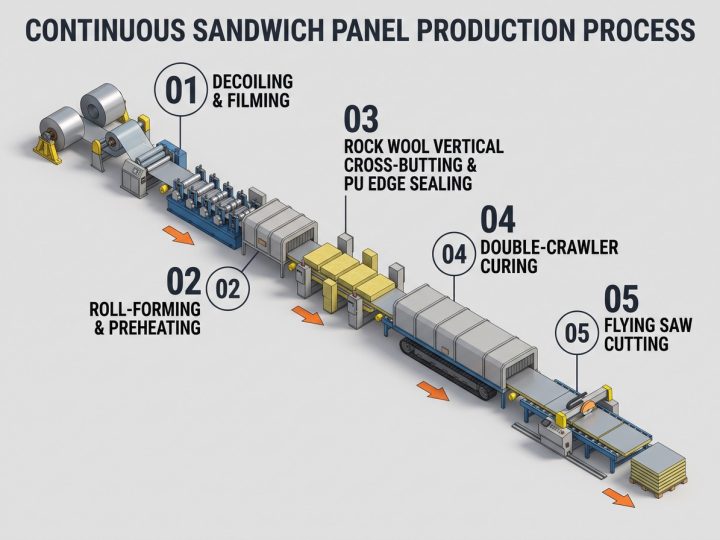
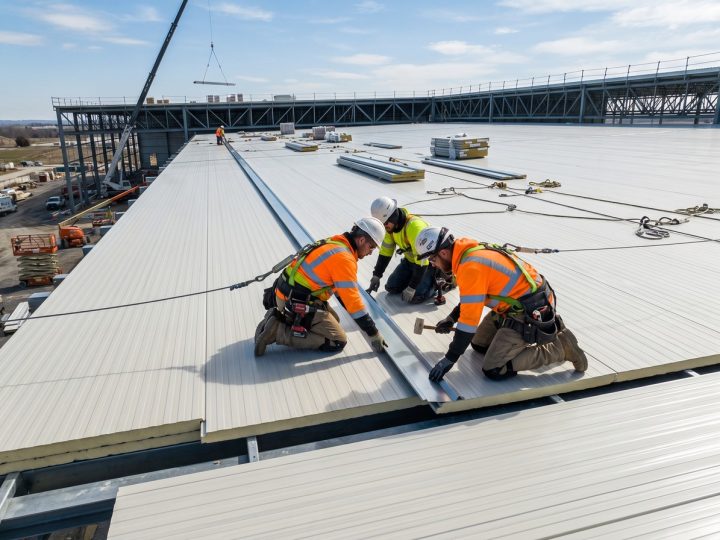
The fundamental obstacle facing cold storage operators is the catastrophic revenue loss associated with full-facility shutdowns. Demolishing an aging concrete freezer to erect a new building takes 12 to 18 months, forcing operators to break long-term supply-chain contracts. In-situ modular retrofitting resolves this challenge. By installing a high-efficiency insulated envelope inside the existing structural concrete or steel shell, facility managers can modernize thermal performance section-by-section. Utilizing pre-engineered continuous Polyisocyanurate (PIR) sandwich panels allows contractors to encapsulate crumbling masonry with a completely sealed thermal envelope over scheduled weekend shifts.

Moisture remediation is the first critical step in envelope restoration. Decades of micro-leaks cause liquid moisture to accumulate behind legacy interior liners; if simply covered over, trapped water freezes and destroys new assemblies. Retrofit engineering specifies moisture-scavenging sub-frame channels combined with closed-cell PIR sandwich panels (thickness 120 mm to 150 mm). Featuring a closed-cell ratio exceeding 95% and thermal conductivity down to 0.020 W/(m·K), modern PIR panels deliver equivalent thermal resistance in half the thickness of degraded legacy insulation, preserving critical interior vertical clearance for automated forklift operations.
Equally vital is joint hermeticity at wall-to-ceiling connections. Old timber ceiling suspensions frequently rot under chronic condensation, creating lethal collapse hazards. Engineered retrofitting utilizes stainless steel thermal-break suspension rods anchoring deep tongue-and-groove PIR ceiling panels directly to overhead structural trusses. When locked tightly with internal eccentric cam fasteners and sealed with food-grade non-hardening sealants, the new envelope permanently halts warm-air infiltration. Sourcing directly from an automated manufacturing plant guarantees customized panel lengths cut precisely to fit restricted freight elevators, rapid container shipments, and certified B1 fire-retardant compliance.