In semiconductor wafer manufacturing, an invisible speck of airborne dust or a micro-voltage electrostatic discharge (ESD) can destroy millions of dollars worth of processed sub-micron microchips. As reported by EIN News (https://www.einnews.com/pr_news/939317799/cleanroom-technology-market-to-reach-usd-21-55-billion-by-2035-at-7-26-cagr) and global facility analyses from Cleanroom Technology (https://cleanroomtechnology.com/what-is-happening-with-the-cleanroom-market-in), massive global capital investments driven by the CHIPS Act are pushing cleanroom technology markets toward $21.5 billion. For advanced lithography and wafer fabrication facilities operating under ISO Class 1 to ISO Class 4 cleanliness, traditional gypsum partitions and low-rigidity foam panels are strictly prohibited. The industry has standardized on ultra-flat, non-combustible aluminum honeycomb sandwich panels.
| Clean room Performance Factor | Standard Composite Wall Board | Aluminum Honeycomb Cleanroom Panel |
| Structural Core Material | Mineral wool or polymer foam | Hexagonal aeronautical aluminum foil |
| Fire Safety Rating | Class A / Class B | Class 0 / Class A (100% Metallic) |
| Surface Resistivity (ESD) | Non-conductive (> 10¹² Ω/sq) | Static Dissipative: 10⁶ – 10⁹ Ω/sq |
| Outgassing (VOCs) Risk | Trace adhesives / binder fumes | Zero VOC, baked solvent-free bonding |
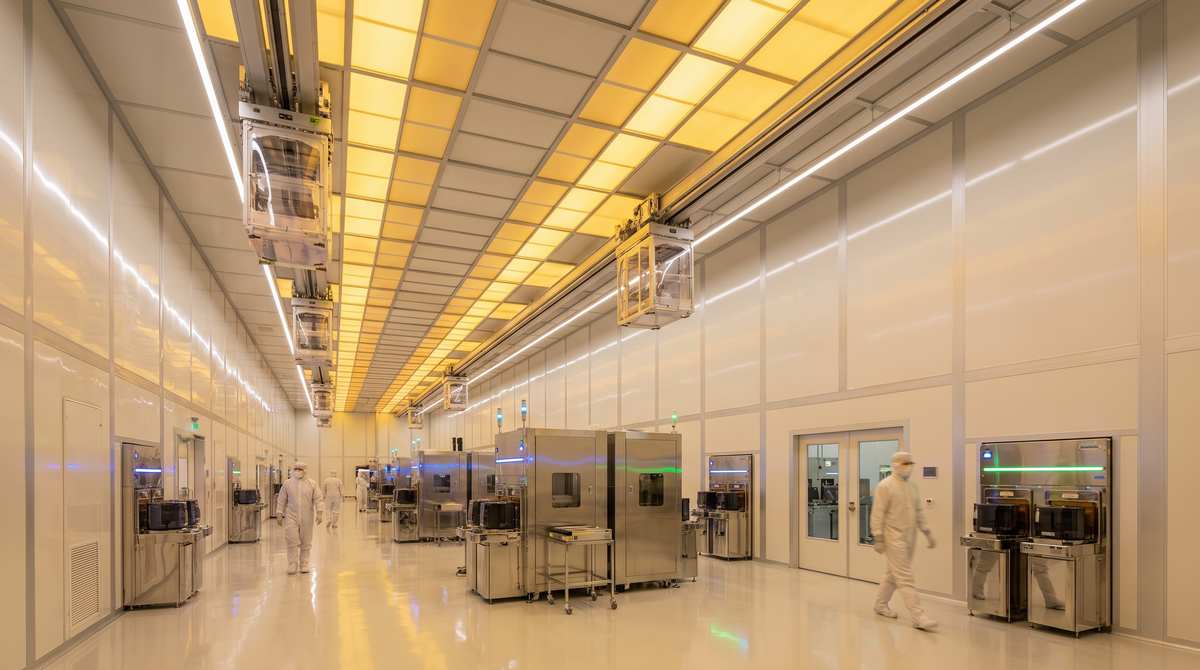
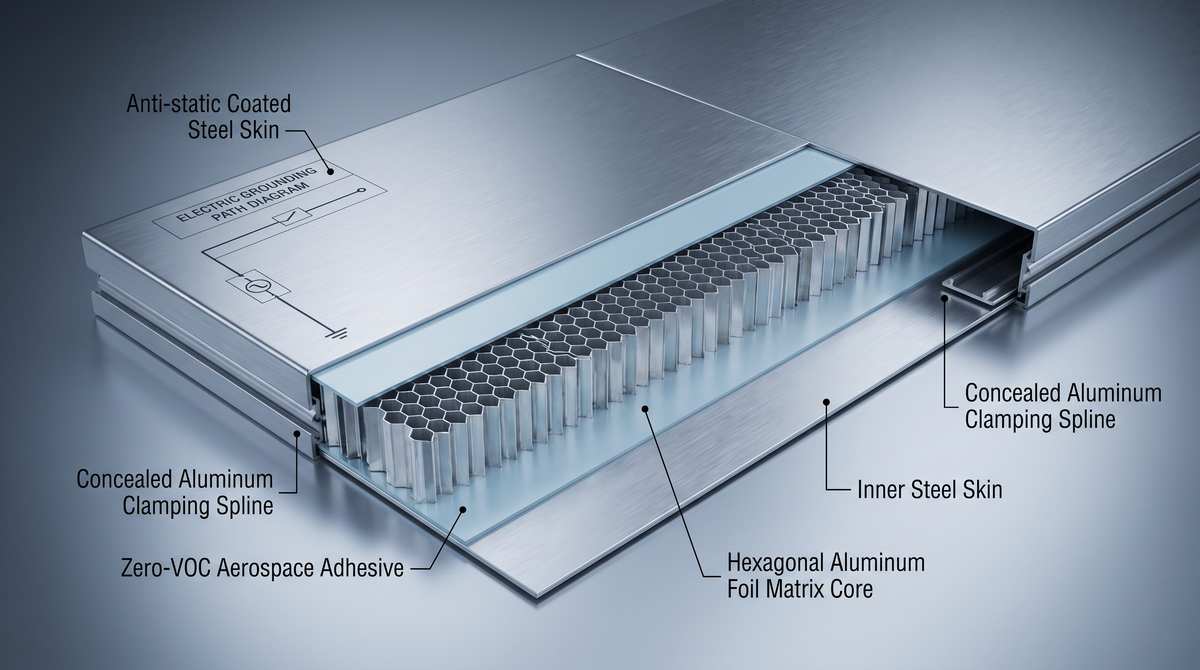
The engineering superiority of aluminum honeycomb starts with structural stiffness-to-weight ratios. Utilizing hexagonal aeronautical-grade aluminum alloy foil cores bonded under continuous heat and pressure to double-sided steel or aluminum face sheets, these panels provide near-zero surface deflection across large vertical spans. In high-velocity recirculating laminar airflow environments—where ceiling Fan Filter Units (FFUs) create continuous air pressure pulses—flexible walls vibrate, creating micro-cracks along panel seals that release airborne particulates into photolithography tracks. Rigid aluminum honeycomb eliminates airflow flutter completely.
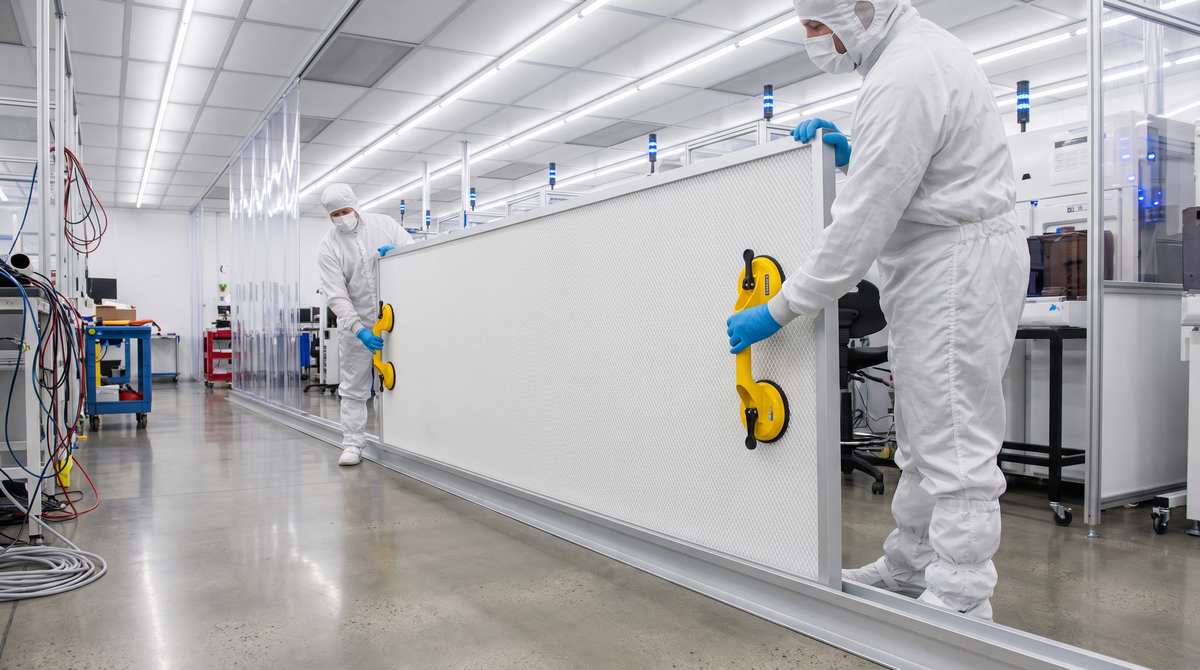
Even more critical is electrostatic dissipation. Friction between circulating dry air and wall linings naturally generates static charges exceeding tens of thousands of volts. Uncontrolled static discharges not only fry micro-circuits directly, but also act as electro-magnetic magnets that violently attract airborne sub-micron particles onto wafer cassettes. Premium semiconductor cleanroom wall panels supplied by hihsteel.com Clean Room Series feature custom conductive coatings engineered with a stable surface resistivity of 10⁶ to 10⁹ Ω/sq. This allows static electrical charges to bleed off safely into grounding busbars in milliseconds without sparking.
Moreover, megafabs operate strictly under zero-outgassing guidelines. Trace molecular airborne contamination (AMC), such as volatile organic compounds (VOCs) or silicone vapors off-gassed by low-grade adhesives, can coat EUV lithography optical mirrors, resulting in permanent machine degradation. Factory-engineered aluminum honeycomb panels use solvent-free, high-temperature cured epoxy polymers, ensuring complete chemical neutrality. For semiconductor EPC contractors and facility engineers, partnering directly with a high-capacity OEM manufacturer ensures precision CNC-milled utility cutouts for HEPA return plenums, seamless flush window integration, and rapid worldwide container freight.