Why Dull Rotary Slitter Knives Ruin Roll-Forming Tooling
You can buy the best Z275 steel substrate in the world, and a sloppy slitting shop will ruin the coil in ten minutes (Huanhai Zhongke Slitting Tolerance Guide). If the slit edge feels like a hacksaw blade when you run a fingernail across it, stop the machine.
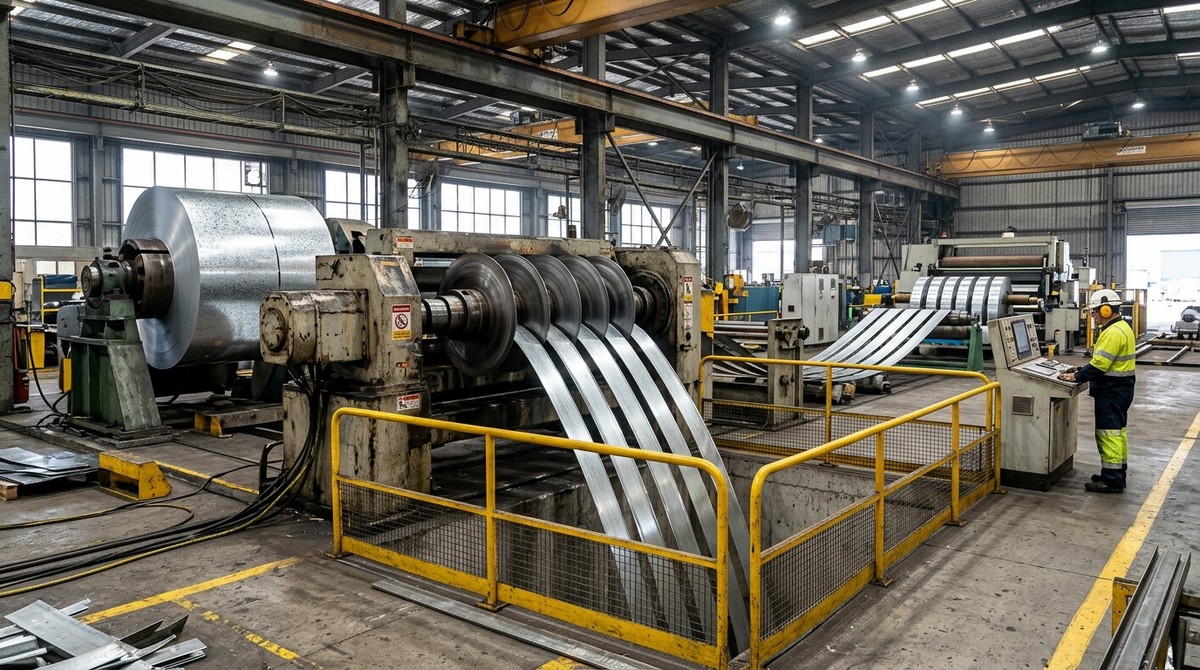
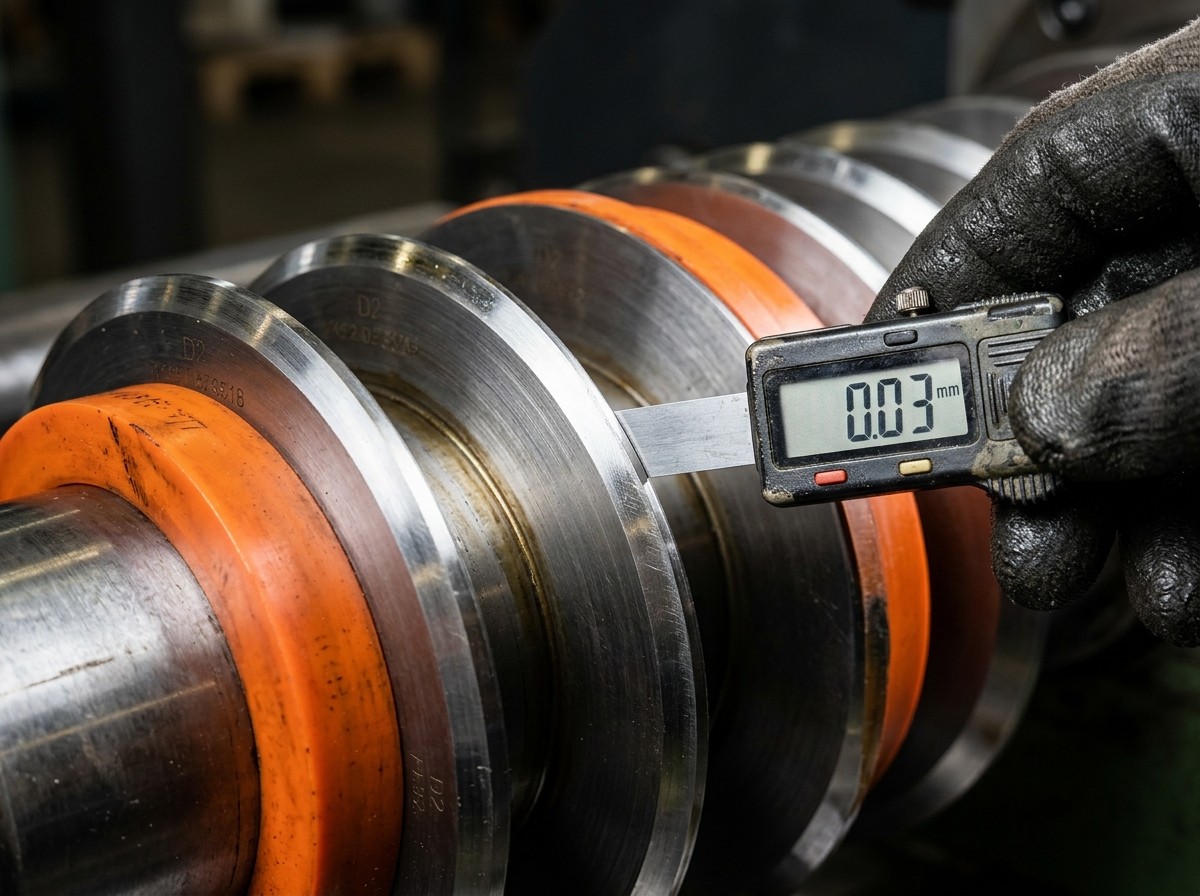
Rotary coil slitting does not cut metal like scissors; it pinches the strip up to its elastic limit (~20% to 30% penetration) and snaps the remaining 70% along a clean fracture plane (Maxwell Slitters Burr Troubleshooting). If the horizontal gap between the upper and lower D2 or SKD11 tool-steel rotary knives is set 0.03mm too wide, the steel tears instead of fracturing cleanly, pulling down a sharp downward burr over 0.06mm tall. On our slitting lines in Boxing, operators set horizontal knife clearance using computerized shimless spacer software to exactly 7% to 9% of strip thickness. Keeping burr under 0.015mm on 0.50mm color-coated steel coils prevents edge rust and stops abrasive burrs from grooving your roll-forming guide rollers.
| Strip Thickness (mm) | Horizontal Knife Clearance | Target Width Tolerance | Max Allowable Edge Burr | Max Camber (per 2,000mm) |
|---|---|---|---|---|
| 0.25 – 0.50 mm (Thin PPGI/GI) | 0.020 – 0.040 mm (7%-8% of t) | +/- 0.10 mm | <= 0.015 mm | <= 1.0 – 1.5 mm |
| 0.55 – 1.00 mm (Cladding/Deck) | 0.045 – 0.085 mm (8%-9% of t) | +/- 0.15 mm | <= 0.025 mm | <= 1.5 mm |
| 1.20 – 2.00 mm (Purlin Strip) | 0.100 – 0.180 mm (9%-10% of t) | +/- 0.20 mm | <= 0.035 mm | <= 1.5 – 2.0 mm |
| 2.20 – 3.20 mm (Heavy Structural) | 0.220 – 0.350 mm (10%-11% of t) | +/- 0.25 mm | <= 0.050 mm | <= 2.0 mm |
Eliminating Strip Camber (Banana Curve) and Edge Wave
Unroll six meters of poorly slit purlin strip onto a flat concrete floor. If the strip curves sideways like a banana instead of lying straight along a chalk line, you are looking at camber (Lotosslitting Precision Metal Slitting).
Camber exceeding 2 millimeters per 2 meters of length forces a C-purlin or shutter slat to twist like a corkscrew as it exits the roll-former. What causes banana camber during slitting? Either the master parent coil had uneven crown thickness from the cold-rolling mill (thick in the center, thin on the edges), or the polyurethane stripper rings on the slitter arbors were worn unevenly, pulling one edge of the strip faster than the other. We place a 6-high precision leveler and a looping pit before the recoiler tension pad so every narrow strip winds onto the mandrel under uniform hydraulic back-tension without stretching the edges.
Preventing Coil Telescoping During Sea Container Braking
A slit coil that looks tidy on the recoiler mandrel can arrive in South America looking like a pushed-out spyglass if winding tension was too loose.
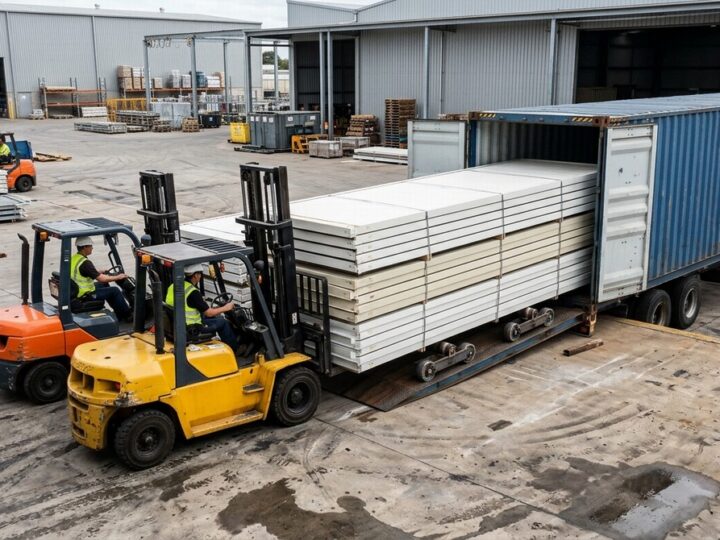
When narrow strips (such as 180mm or 250mm purlin strips) are slit from a 1250mm wide master coil, the center strips are slightly thicker by 0.008mm than the edge strips due to mill crown. Without a looping pit and differential felt/roller tension bridle, the outer edge strips wind loosely and telescope sideways when a crane lifts the bundle. We separate every narrow slit mult with moisture-resistant fiberboard spacers and lock them with four radial through-the-eye steel straps so your metal cladding systems and purlin lines feed smoothly.
Frequently Asked Questions (FAQ)
Q1: What is the acceptable edge burr height on slit PPGI and GI steel coils?
A: For 0.30mm to 0.80mm PPGI and GI coils, edge burr height should never exceed 0.015mm to 0.025mm (or <= 5% of total strip thickness) when measured with an edge micrometer.
Q2: What is camber in a slit steel coil and how is it measured?
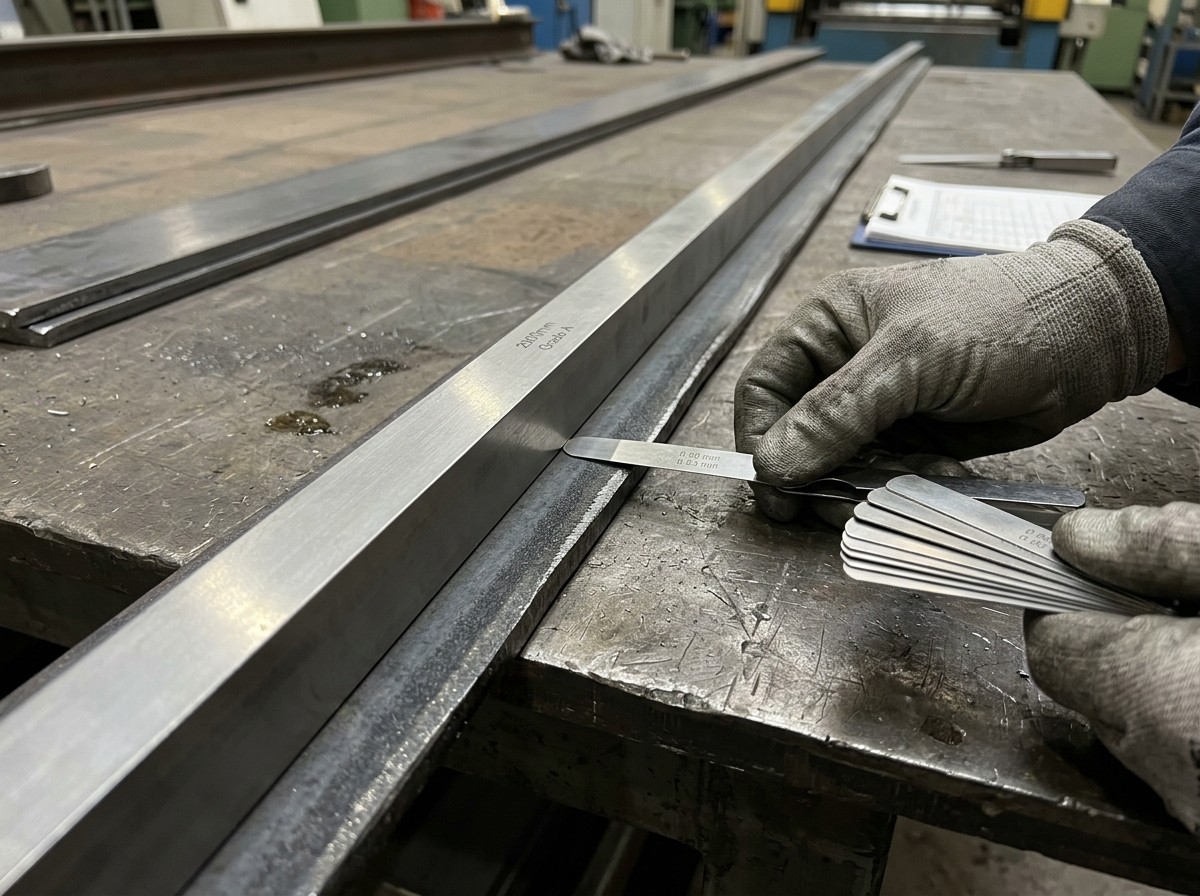
A: Camber is the lateral deviation (sideways curve) of a slit strip edge from a straight line. It is measured by laying a 2-meter straightedge against the concave side of the uncoiled strip and measuring the maximum gap with a feeler gauge (standard limit <= 1.5mm per 2m).
Q3: How do you protect painted PPGI surfaces from scratches in the slitter tension unit?
A: Instead of dragging painted PPGI strips through dry felt friction pads that trap grit and scratch the topcoat, we use non-marking polyurethane S-bridle tension rollers and apply a 40-micron PE protective film inline during slitting.
Q4: What is the minimum strip width a precision steel coil slitting line can cut?
A: Our precision rotary slitting lines slit coils from 1250mm master width down to narrow strips as small as 22mm to 30mm wide (used for shutter slats, cable armor, and drywall tracks), pulling up to 24 mults simultaneously.
Q5: Why do slitting mills trim 5mm to 10mm of scrap edge ribbon off both sides of a master coil?
A: Edge trimming (‘side trimming’) removes rough mill edges, zinc build-up beads on the outer 3mm of galvanized coils, and minor transport dings so every finished coil has a square, uniform width.