Why Indoor Rain Starts at the Dew Point, Not From a Roof Leak
Every winter we get a call from a warehouse manager swearing his brand-new roof is leaking, even though it has not rained outside for three days. Climb up on a scissor lift, and you find water droplets hanging in neat straight lines along the ridge cap and screw heads. That is not rain. That is indoor condensation (Metal Formers Preventing Condensation Guide).
Warm indoor air holds invisible moisture vapor produced by gas heaters, wet washdowns, paper stock, and breathing workers. Whenever that warm, humid air touches an interior metal surface whose temperature has dropped below the dew point, airborne vapor condenses instantly into liquid water (Structural Panels Thermal Bridging Guide). Single-skin corrugated metal sheets sweat nonstop because bare 0.5mm steel conducts outdoor freezing cold straight into the room. Upgrading your building envelope to 75mm or 100mm closed-cell PIR or rock wool sandwich panels keeps the interior steel sheet warm (above the indoor dew point) even when outside temperatures plunge to -15°C.
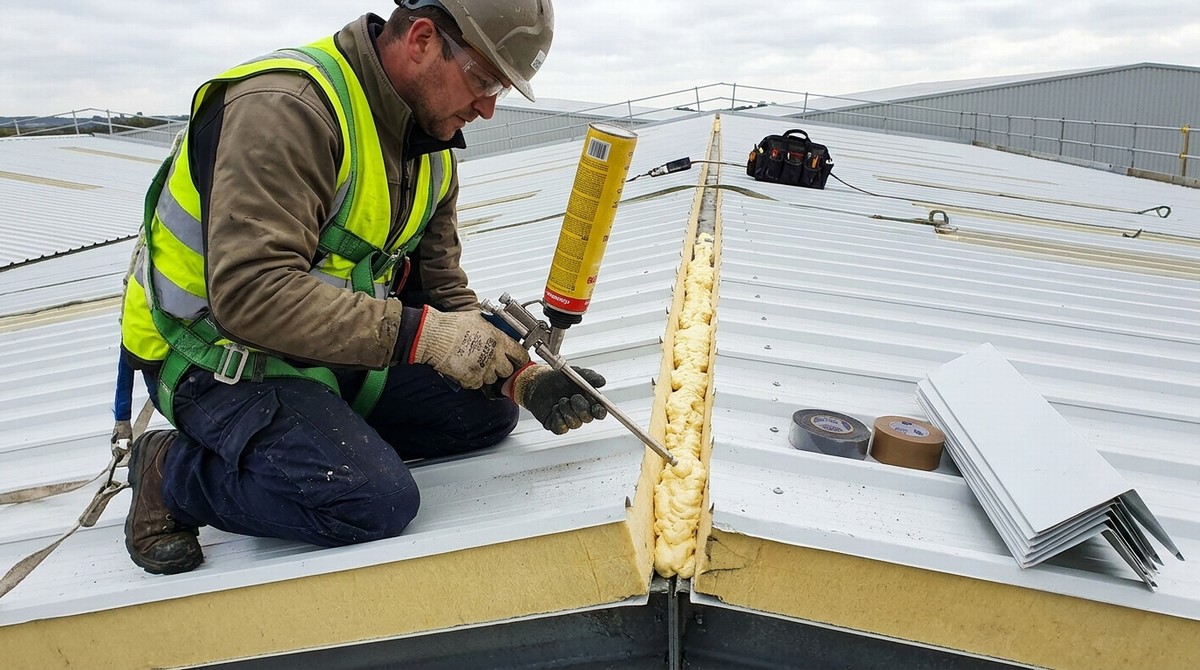
Foaming the Ridge Gap: Where 80% of Roof Condensation Actually Forms
Even a 100mm PIR roof panel will drip down the center aisle if the installers left an empty 50-millimeter air gap between the left and right roof slopes under the metal ridge cap (Greenspan Profiles Solving Thermal Bridging).
Look at the peak of a gable roof. Left-slope panels and right-slope panels meet at the ridge with a 40mm to 80mm gap between their cut ends. If roofers simply rivet a single-skin 0.5mm metal ridge cap over the top without insulating the hollow trench underneath, warm rising factory air hits the underside of that freezing single-skin ridge flashing, condenses into ice, and drips onto the pallets below all morning. Before riveting the top ridge cap down, crews must stuff the ridge gap full of closed-cell mineral wool or gun-applied low-expansion polyurethane spray foam, then seal the underside ceiling joint with an interior flashing trim and continuous butyl rubber tape.
Breaking Through-Fastener Cold Bridges in High-Humidity Plants and Cold Rooms
What about textile mills, paper plants, indoor swimming pools, or a sub-zero cold storage warehouse where vapor pressure is extreme?
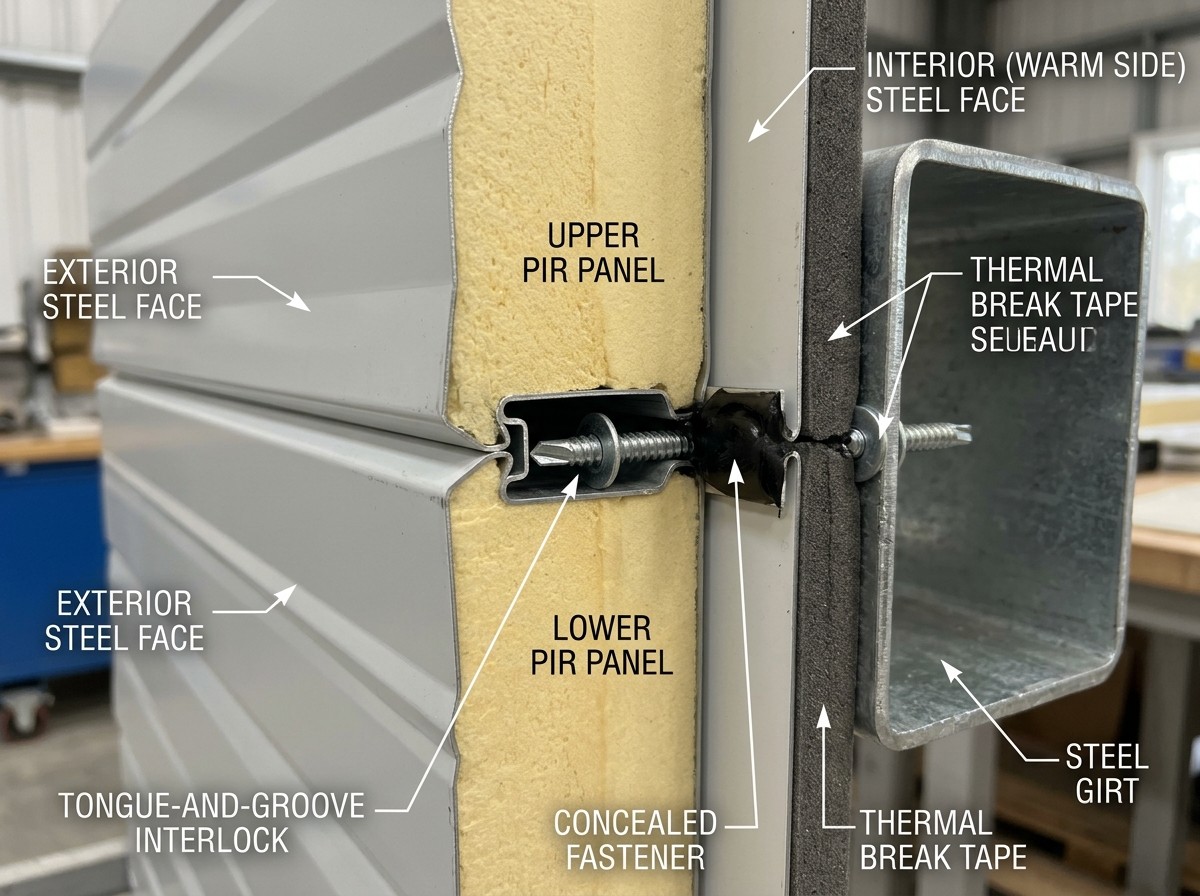
In a room running at 80% relative humidity or -20°C, a steel self-drilling screw that penetrates all the way from the exterior skin into an interior steel purlin acts like a miniature ice rod, growing a frost ball on the screw tip inside the room. To eliminate fastener thermal bridges, use concealed-fix tongue-and-groove panels where the screw head sits buried inside the insulated foam labyrinth rather than touching the exterior metal sheet, and stick a 3mm x 50mm closed-cell polyethylene thermal-break tape across the face of every steel purlin and girt before hanging the boards.
Frequently Asked Questions (FAQ)
Q1: What sandwich panel thickness stops roof condensation in winter?
A: For standard heated warehouses (indoor +18°C, 50% relative humidity, outdoor -15°C), a 60mm to 80mm PIR roof panel or 100mm rock wool roof panel keeps the inner metal surface temperature well above the +7.4°C dew point.
Q2: Why are water drops forming only on the screw heads inside my building?
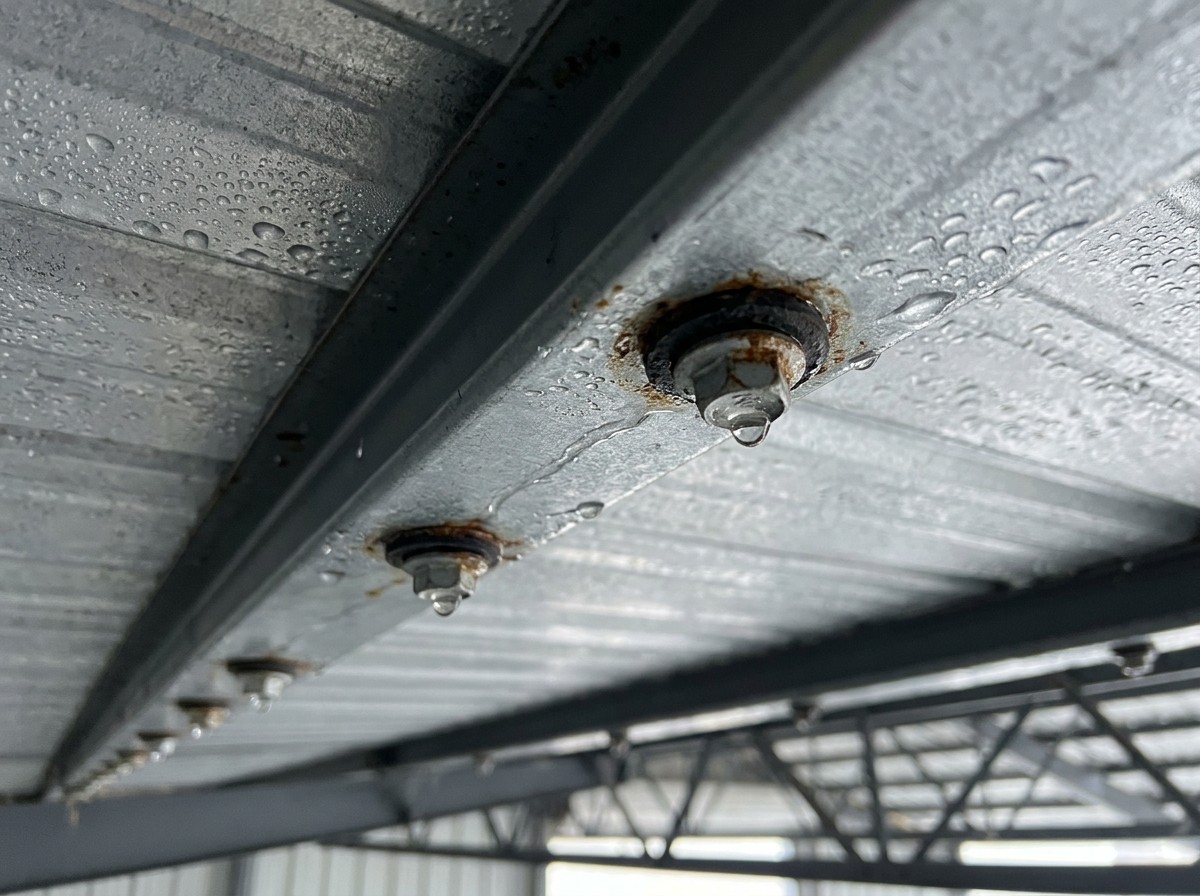
A: Because the steel screw shaft penetrates from the freezing outdoor top skin into the indoor purlin, creating a metal-to-metal thermal bridge. Switching to concealed-screw panels or capping interior screw tips with plastic thermal caps stops screw-head sweating.
Q3: Should the vapor barrier seal be on the warm side or cold side of a sandwich panel?
A: Always place the continuous air-and-vapor butyl mastic seal inside the tongue-and-groove joint on the warm, humid side of the panel (the interior joint in cold climates, or the exterior joint on air-conditioned / cold-storage buildings in hot climates).
Q4: How do you stop condensation around translucent FRP skylight panels?
A: Single-skin FRP skylights sweat heavily in winter. For insulated sandwich panel roofs, specify double-skin insulated cassette skylights or hollow polycarbonate (PC) daylight panels that match the thermal profile of the surrounding roof boards.
Q5: Can roof ventilation fans reduce condensation in a steel warehouse?
A: Yes. Installing ridge turbine ventilators or powered exhaust fans removes stagnant warm moisture vapor trapped near the ceiling peak before it can reach the dew point.