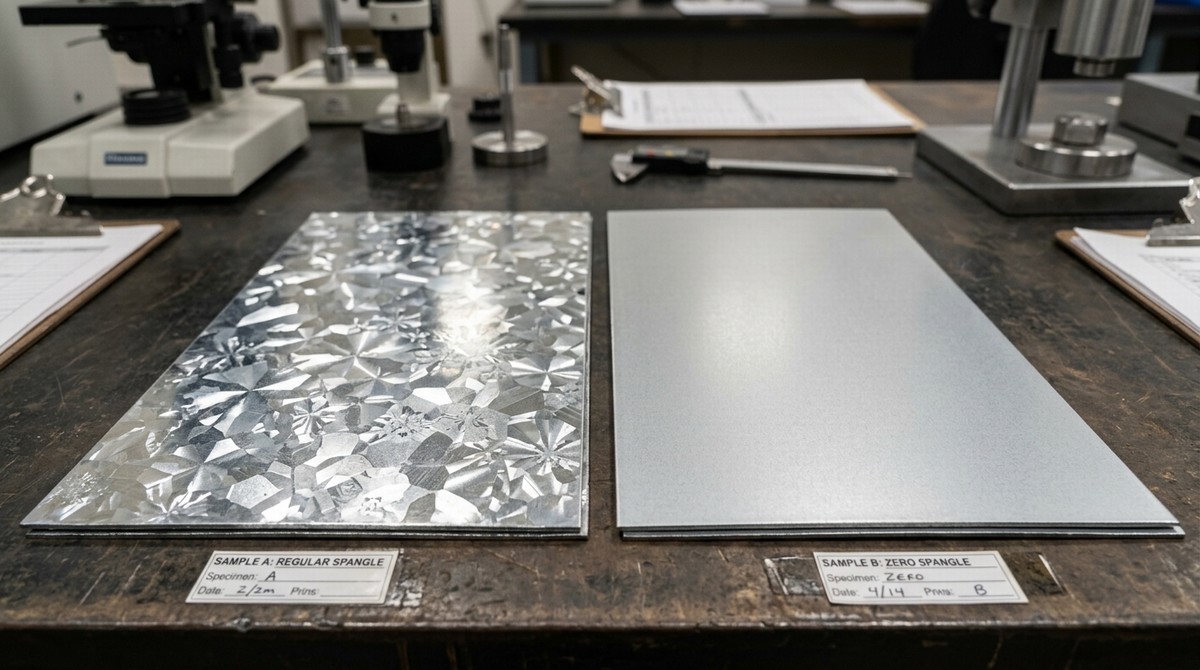
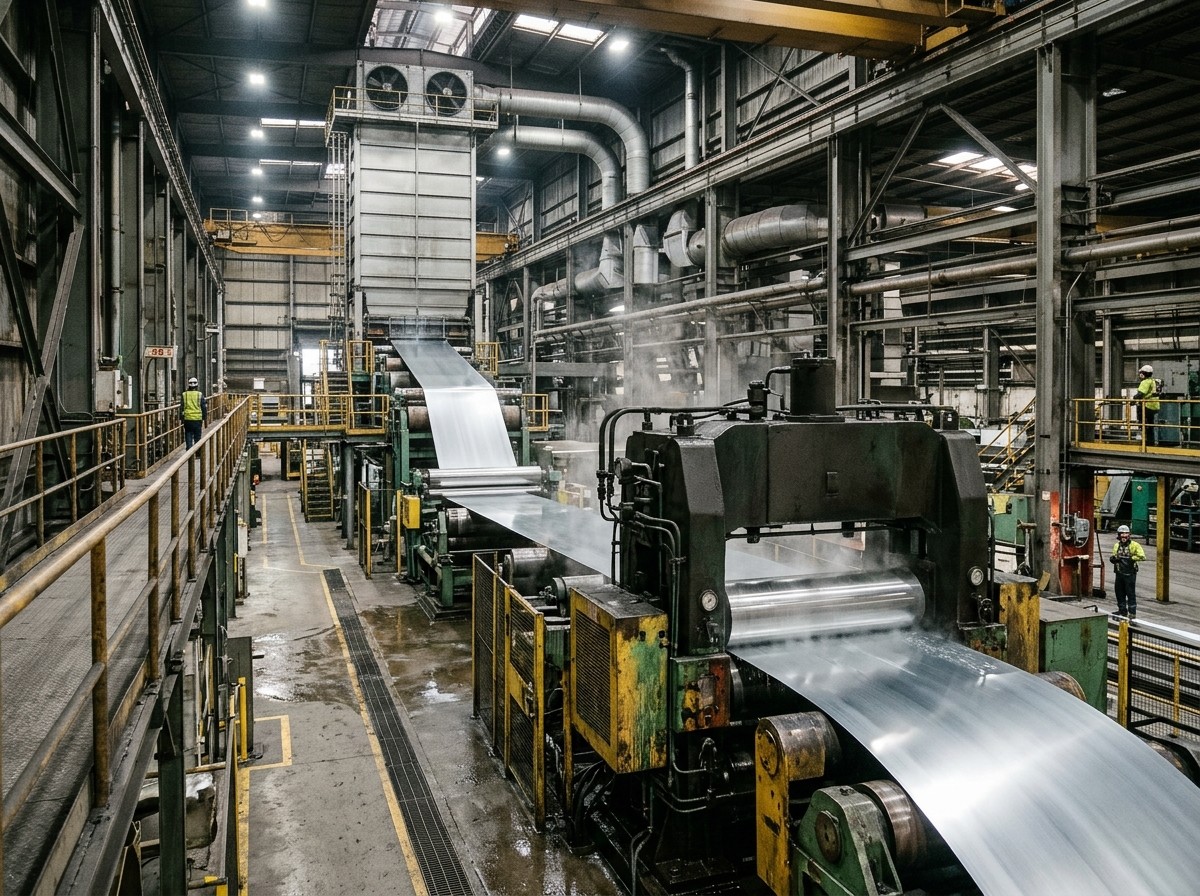
What Is the Difference Between Zero Spangle and Regular Spangle GI Coil? How Zinc Bath Chemistry Creates Snowflake Crystals vs Matte Steel Walk up to an older galvanized barn wall or HVAC duct and you will immediately spot those shiny, six-sided metallic snowflakes across the steel. Steel traders call that pattern regular spangle. Those snowflake crystals do not mean the steel has more zinc. They form when molten zinc cools slowly on the steel strip and trace amounts of lead or antimony (0.03% to 0.08%) in the 460°C zinc pot trigger dendritic crystal growth. Modern environmental regulations such as RoHS and REACH restrict lead content in appliances and electronics. To produce lead-free zero spangle galvanized steel coils, continuous hot-dip galvanizing lines eliminate lead from the bath and run the strip through a wet skin-pass mill right after the cooling tower. That light 0.8% to 1.5% elongation roll crushes microscopic crystal peaks into a smooth, uniform satin finish. Both regular spangle and zero spangle coils carry the exact same Z120 to Z275 zinc coating mass when verified by our X-ray thickness gauges.
| Feature | Regular Spangle GI Coil | Minimized Spangle GI Coil | Zero Spangle (Skin-Passed) GI |
|---|---|---|---|
| Crystal Appearance | Visible 4-12mm snowflake crystals | Fine 1-2mm pinpoint crystal grain | Uniform matte metallic finish |
| Zinc Bath Alloying | Trace lead/antimony nucleation | Controlled air/steam cooling quench | Lead-free bath + skin-pass mill |
| Surface Roughness (Ra) | 1.5 – 2.8 microns (Uneven at grain boundaries) | 1.0 – 1.6 microns | 0.6 – 1.1 microns (Mirror-flat for painting) |
| Best B2B Applications | Purlins, agricultural bins, roof decks | Electrical cabinets, general ducting | Appliance shells, high-gloss PPGI, deep stamping |
Why Paint Lines and Deep-Drawing Presses Reject Regular Spangle
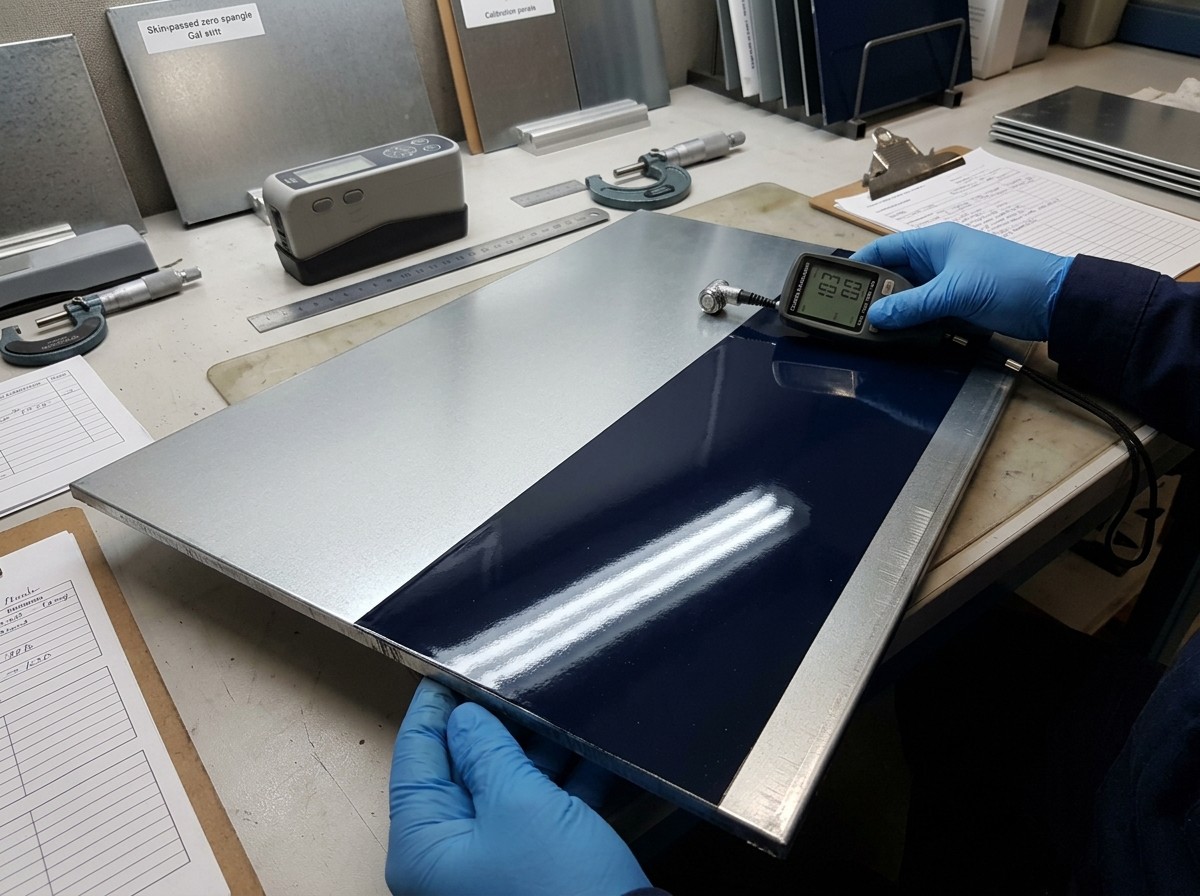
Try spraying a 20-micron high-gloss polyester coat over a big regular-spangle GI sheet. The finished panel looks like orange peel. Where two large zinc crystals meet on a regular-spangle sheet, a microscopic step sits along the grain boundary. Under a thin primer and topcoat, that crystal relief telegraphs straight through the paint film. Even worse, when a roll-former bends a regular-spangle sheet over a tight radius, coarse zinc grains slip along their crystal planes and cause micro-cracking. That is why every high-end appliance manufacturer, cleanroom board laminator, and automotive stamping shop specifies skin-passed zero-spangle substrate. Conversely, if you are roll-forming heavy structural purlins, grain silos, or unpainted corrugated steel sheets where bright metallic flash appeals to hardware buyers, regular spangle runs $10 to $18 per ton cheaper because it skips the skin-pass rolling stage. Does Spangle Size Change Corrosion Life in Wet Environments? Many hardware importers still believe bigger spangles mean thicker zinc. That old myth costs buyers money every week. In salt-spray chamber tests under ASTM B117, corrosion life depends on total zinc mass in grams per square meter (such as Z180 or Z275), not crystal diameter. In fact, lead-free zero-spangle zinc coatings often outlast old lead-bearing big-spangle sheets in humid coastal air because lead segregates at the crystal boundaries and triggers intergranular black spots over time. Whether you order 0.40mm strips for drywall framing or 1.2mm coils for cable trays, match the spangle type to your surface finish and lock the zinc weight in the mill test certificate.
Frequently Asked Questions (FAQ)
Q1: Is zero spangle galvanized steel more rust-resistant than regular spangle?
A: At the same zinc coating weight (for example, Z275 or 275 g/m²), both offer similar sacrificial protection, though lead-free zero spangle resists intergranular dark staining slightly better in humid coastal air.
Q2: Why do PPGI color coating lines prefer zero spangle GI base coils?
A: Zero spangle GI has a skin-passed surface roughness of 0.6 to 1.1 microns with no raised crystal boundaries, preventing spangle telegraphing through the 20-to-25-micron paint film.
Q3: Does zero spangle GI coil cost more than regular spangle GI coil?
A: Yes, skin-passed zero spangle GI typically costs $10 to $20 more per metric ton due to strict lead-free zinc bath refining and the inline skin-pass mill rolling step.
Q4: Can regular spangle GI coil be used for C and Z structural purlins?
A: Yes. Structural C and Z purlins, floor decks, and highway guardrails rarely require high-gloss painting, making regular spangle Z275 GI coil the standard cost-effective choice.
Q5: How do you verify whether a zero spangle coil is hot-dip galvanized (GI) or electro-galvanized (EG)?
A: Check the coating weight with a magnetic gauge and read the Mill Test Certificate: hot-dip zero spangle GI reaches Z120 to Z275 (85 to 200+ g/m² per both sides), whereas electro-galvanized steel rarely exceeds 20 to 40 g/m².