Why 55% Aluminum-Zinc Outlasts Pure Zinc by 2x to 3x in Salt Air
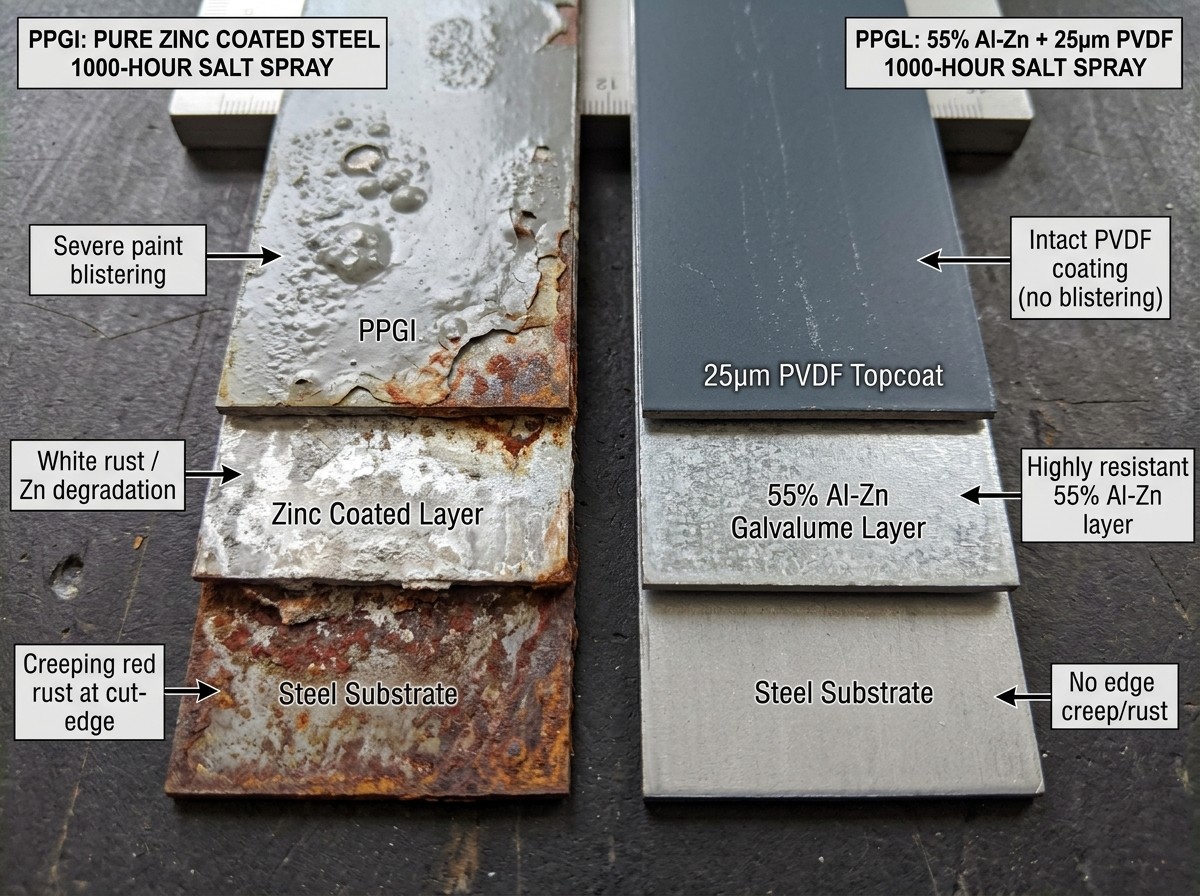
Put a standard Z120 PPGI roof sheet two kilometers from the Pacific Ocean or the Red Sea, and red rust creeps up from the eaves within five years. Put an AZ150 PPGL sheet right next to it, and the panel still looks clean twenty years later.
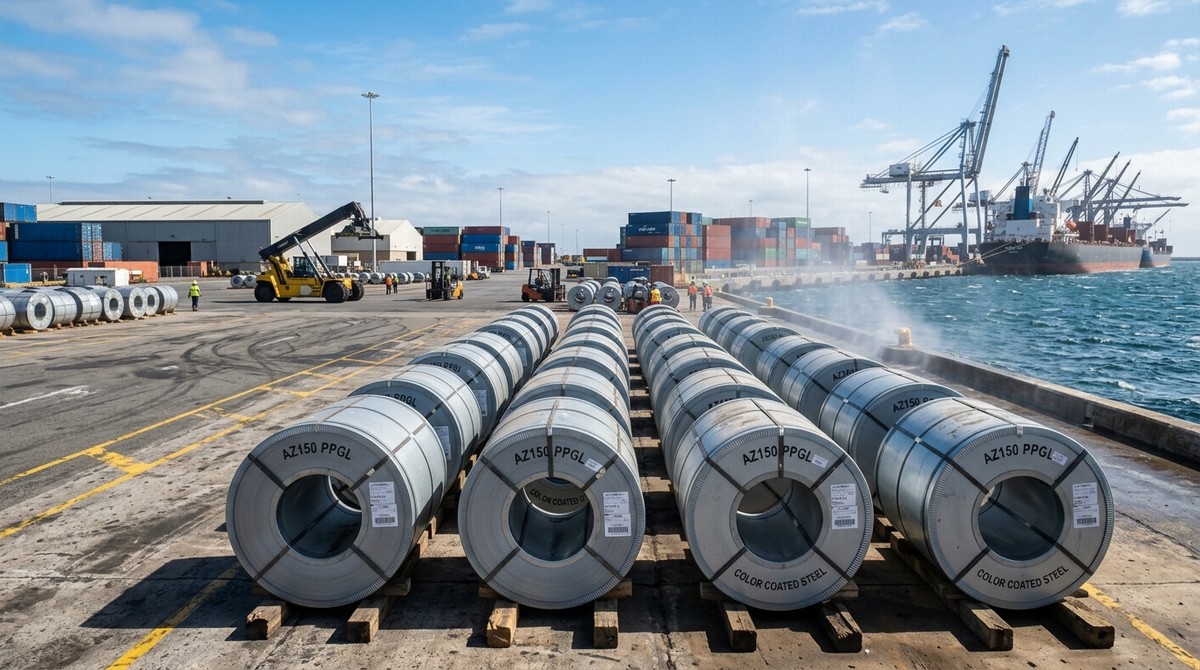
The secret sits directly underneath the paint primer. PPGI (Prepainted Galvanized Iron) coats cold-rolled steel with pure zinc before painting. PPGL (Prepainted Galvalume) uses a hot-dipped alloy of 55% aluminum, 43.4% zinc, and 1.6% silicon. In marine salt mist, the aluminum forms an ultra-dense, passive aluminum oxide barrier that blocks chloride ions, while the 43.4% zinc fraction still provides sacrificial galvanic protection at small scratches. Across our export color-coated steel coils, upgrading from Z180 PPGI to AZ150 PPGL doubles coastal roof service life while adding less than 5% to total landed cost per square meter because aluminum’s lower density yields more linear meters per metric ton.
| Specification | PPGI (Prepainted Galvanized) | PPGL (Prepainted Galvalume) |
|---|---|---|
| Metallic Substrate Alloy | 99% Pure Zinc (Z100 – Z275) | 55% Aluminum + 43.4% Zinc + 1.6% Silicon (AZ100 – AZ150) |
| Coastal Service Life | 10 – 18 Years (Z275 + HDP/PVDF) | 20 – 30+ Years (AZ150 + HDP/PVDF) |
| Max Continuous Heat Limit | Up to 230 C (Discolors above 250 C) | Up to 315 C (High thermal reflectivity) |
| Cut-Edge & Concrete Contact | Strong sacrificial zinc edge protection; OK near mortar | Weaker alkaline resistance; avoid wet cement contact |
| Wholesale FOB Price Delta | Baseline ($/ton) | +$40 to +$80 / metric ton higher (3%-6% more sqm/ton) |
Where PPGI Actually Beats PPGL: Wet Concrete and Livestock Barns
Does that mean PPGL wins every single project? Not at all. Aluminum has a chemical kryptonite: high-pH alkalis.
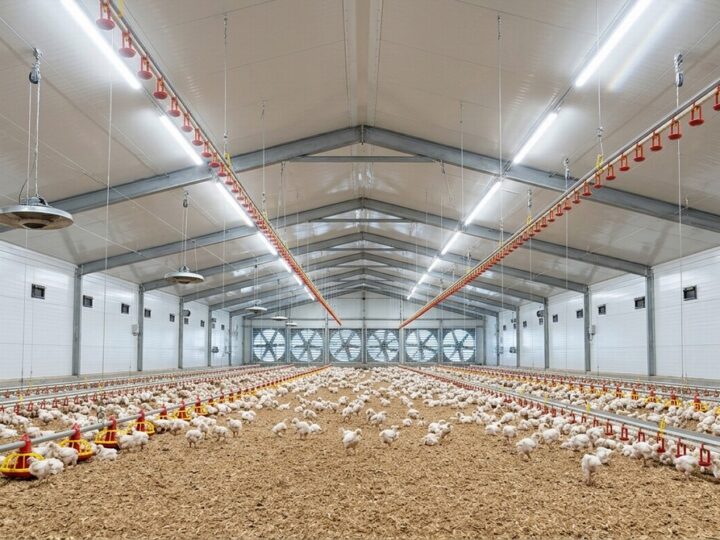
Whenever a coated steel sheet sits directly against wet alkaline cement mortar, lime dust, or ammonia-heavy poultry and pig manure, the aluminum fraction in PPGL corrodes rapidly, faster than pure zinc! That is why smart cladding contractors still buy heavy Z275 PPGI for agricultural barns, cement plants, and lower wall trims that rest directly on concrete curbs. For dry coastal factories, desert solar roofs operating at +75°C surface heat, and architectural sandwich roof panels, PPGL wins hands down.
Matching Paint Film Thickness to Your Substrate Before Slitting
Never waste an expensive AZ150 Galvalume substrate by covering it with a flimsy 12-micron cheap PE topcoat. When the cheap paint chalks off in four years, your building looks terrible even though the metal is intact.
We pair AZ150 PPGL substrates with a 25-micron HDP or 70% PVDF topcoat over a 7-micron corrosion-inhibiting primer, backed by salt-spray and adhesion logs from our quality assurance lab so both the paint finish and the metallic core age evenly past 25 years.
Frequently Asked Questions (FAQ)
Q1: How much more does PPGL steel coil cost per ton than PPGI?
A: PPGL typically costs $40 to $80 more per metric ton FOB than PPGI of the same thickness. However, because aluminum is much lighter than zinc, 1 ton of PPGL yields 3% to 6% more square meters of sheet than 1 ton of PPGI, narrowing the real cost gap per square meter.
Q2: Can PPGL color-coated steel be used within 1 km of the ocean?
A: Yes. Specifying AZ150 (150 g/m² Al-Zn) PPGL paired with a 25-micron PVDF fluorocarbon topcoat is the global benchmark for coastal ports, island warehouses, and marine terminals.
Q3: Why should PPGL sheets never touch wet concrete or mortar?
A: Wet cement is strongly alkaline (pH 12-13), which chemically dissolves the 55% aluminum layer in Galvalume. Always separate PPGL wall panels from concrete curbs with an EPDM drip gasket or bitumen barrier tape.
Q4: Which has better cut-edge rust protection: PPGI or PPGL?
A: Thick Z275 PPGI offers slightly stronger sacrificial galvanic ‘throw’ across wide exposed cut edges in inland environments, while AZ150 PPGL resists surface perforation 2 to 3 times longer in coastal salt spray.
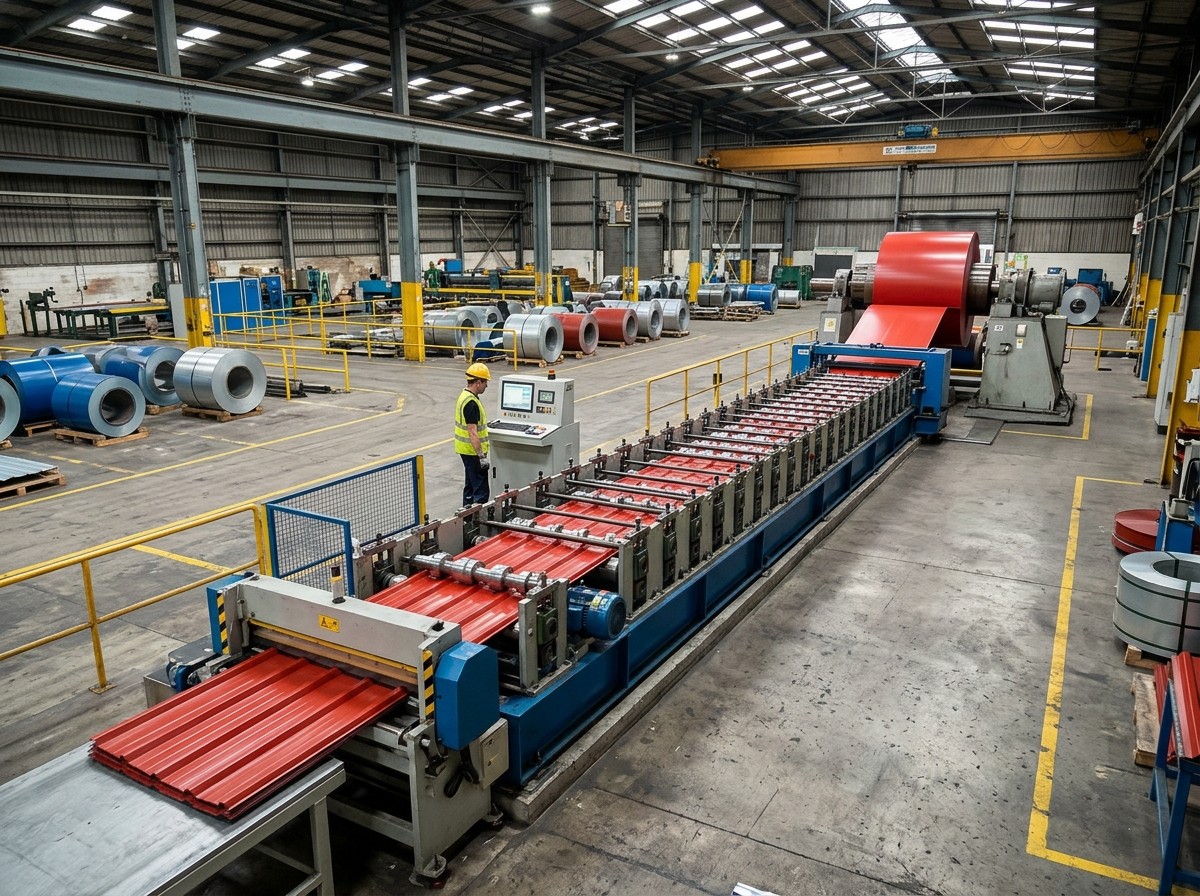
Q5: Can PPGL steel coils be roll-formed on the same machines as PPGI?
A: Yes. Both PPGI and PPGL run on identical roll-forming and continuous sandwich panel lines, though operators should keep rollers clean so aluminum-zinc micro-spangle does not gall on tight bends.