How Panel Thickness and Core Shear Modulus Control Purlin Spacing
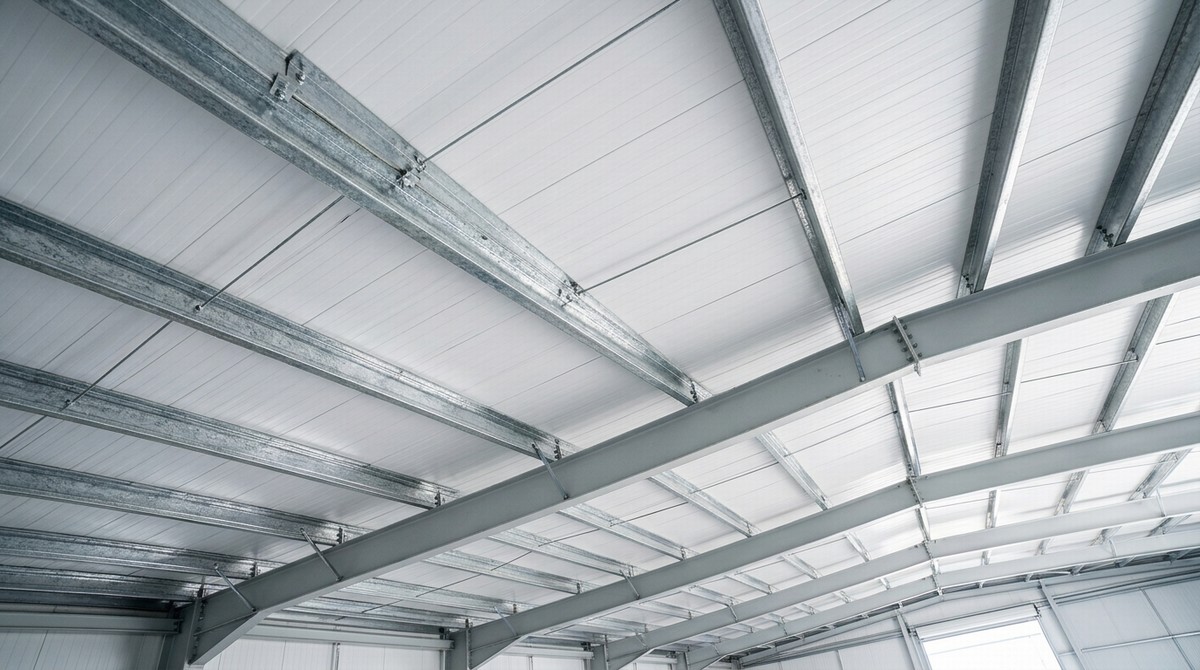
Structural engineers love wide purlin spacing because dropping two rows of C-purlins off a 10,000-square-meter roof saves 18 tons of secondary steel. Push that spacing half a meter too far, however, and your roof panels will sag between supports or crease during the first winter blizzard (Bingfa Steel 4m Purlin Span Guide).
An insulated sandwich panel works exactly like an I-beam: the top and bottom 0.5mm steel sheets act as the tension and compression flanges, while the rigid insulation core acts as the shear web holding those two skins apart (Ruukki Sandwich Panel Load Tables). Doubling the foam core thickness from 50mm to 100mm more than doubles the bending stiffness of the panel. Under a standard 1.0 kN/m² snow load and an L/200 deflection limit, a 50mm corrugated PIR roof board spans 1.8 to 2.2 meters between roof purlins, whereas a 100mm PIR roof board easily spans 2.8 to 3.4 meters.
| Panel Thickness & Type | Roof Purlin Span (1.0 kN/m2 Snow) | Roof Purlin Span (1.5 kN/m2 Heavy) | Wall Girt Spacing (1.0 kN/m2 Wind) | Wall Girt Spacing (1.5 kN/m2 Coastal) |
|---|---|---|---|---|
| 50mm PIR / PU (0.5/0.4mm Steel) | 1.8 m – 2.2 m | 1.4 m – 1.7 m | 2.4 m – 3.0 m | 1.8 m – 2.2 m |
| 75mm PIR / PU (0.5/0.5mm Steel) | 2.4 m – 2.8 m | 1.8 m – 2.2 m | 3.0 m – 3.8 m | 2.4 m – 2.8 m |
| 100mm PIR / PU (0.5/0.5mm Steel) | 2.8 m – 3.4 m | 2.2 m – 2.6 m | 3.8 m – 4.5 m | 2.8 m – 3.4 m |
| 100mm Rock Wool (120kg, 0.5/0.5mm) | 1.8 m – 2.2 m | 1.5 m – 1.8 m | 2.4 m – 3.0 m | 1.8 m – 2.2 m |
Why PIR Foam Spans 35% Wider Than Rock Wool or EPS at the Same Thickness
Never use a polyurethane span table to space wall girts for rock wool or low-density EPS panels. Core shear strength varies hugely across materials (Welldone Steel Sandwich Panel Guide).
During continuous foaming, liquid polyisocyanurate (PIR) chemically bonds itself to every square millimeter of the top and bottom primer coats, reaching a shear strength above 120 kPa. That monolithic chemical bond lets 100mm PIR wall panels span 3.8 to 4.5 meters vertically between horizontal wall girts in moderate wind zones. Rock wool panels rely on two-part polyurethane glue applied to cut mineral wool lamellas; because basalt fibers have a lower shear modulus than rigid closed-cell PIR, we space wall girts at 2.0 to 2.8 meters on rock wool facades and tighten roof purlins to 1.5 meters on heavy agricultural steel facilities.
Thermal Bowing on Dark Walls: The Hidden Limit on Span Length
Wind and snow are not the only loads bending your panels. Afternoon sunlight bends dark walls all by itself.
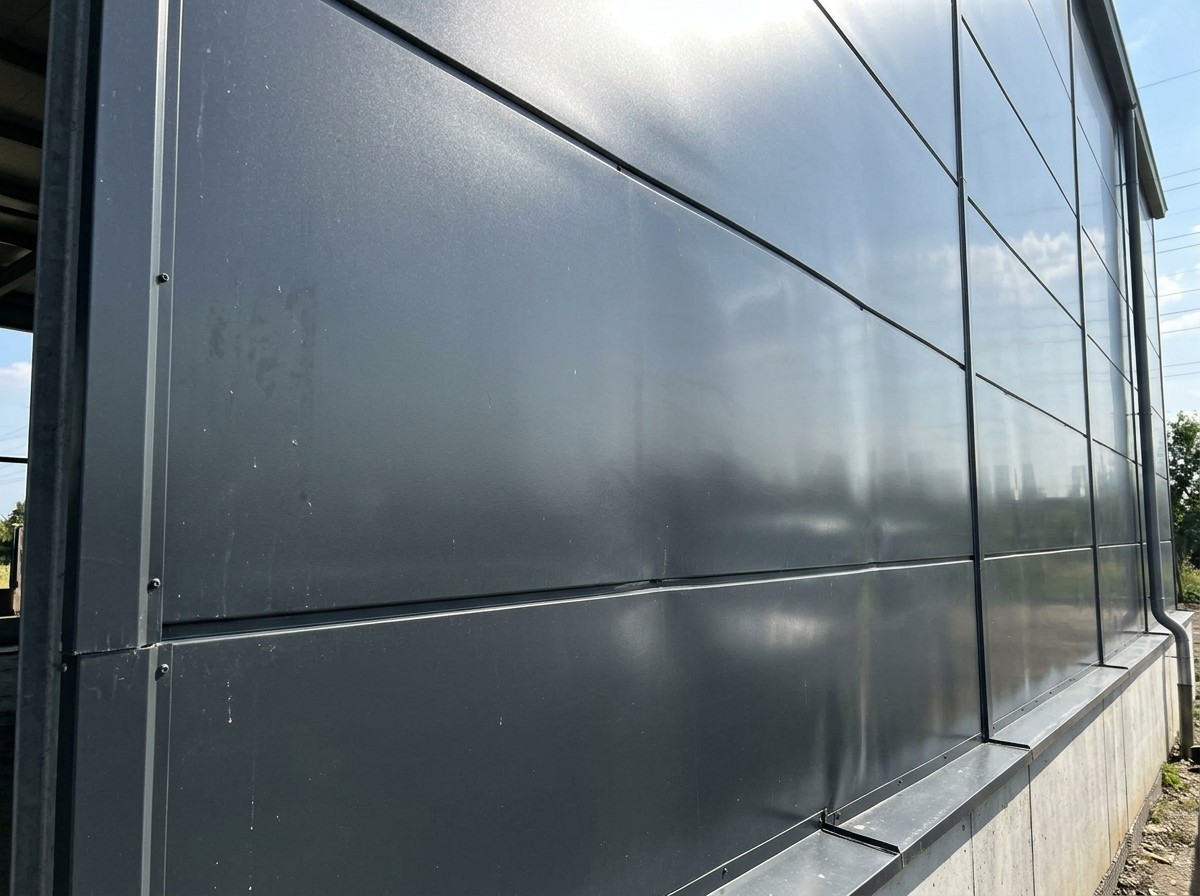
When a dark anthracite grey (RAL 7016) exterior wall skin heats up to +75°C in summer while the air-conditioned interior skin stays at +20°C, the hot outer steel sheet expands by 0.6 millimeters per meter more than the cold inner sheet. That temperature differential causes the panel to bow outward between girts (thermal deflection). On dark exterior walls or cold storage envelopes with a >40°C temperature delta, engineers shorten girt spacing by 20% and add minimum 60mm wide purlin bearing flanges so thermal bowing never pops the concealed screw clips.
Frequently Asked Questions (FAQ)
Q1: What is the standard purlin spacing for industrial warehouse sandwich roof panels?
A: Regardless of maximum theoretical span, 85% of pre-engineered steel warehouses space roof C or Z purlins at 1.5 meters on center so installers can walk safely along the purlin lines and standard 50mm to 100mm panels have a high safety factor.
Q2: Can a 100mm PIR wall panel span 4 meters vertically without intermediate wall girts?
A: Yes, in inland wind zones (up to 1.0 kN/m² wind pressure), a 100mm PIR panel with 0.5mm/0.5mm steel skins can span 4.0 meters between floor slab and eave beam, or horizontally from column to column on a 4m bay.
Q3: What minimum bearing width is required where a sandwich panel rests on a steel purlin?
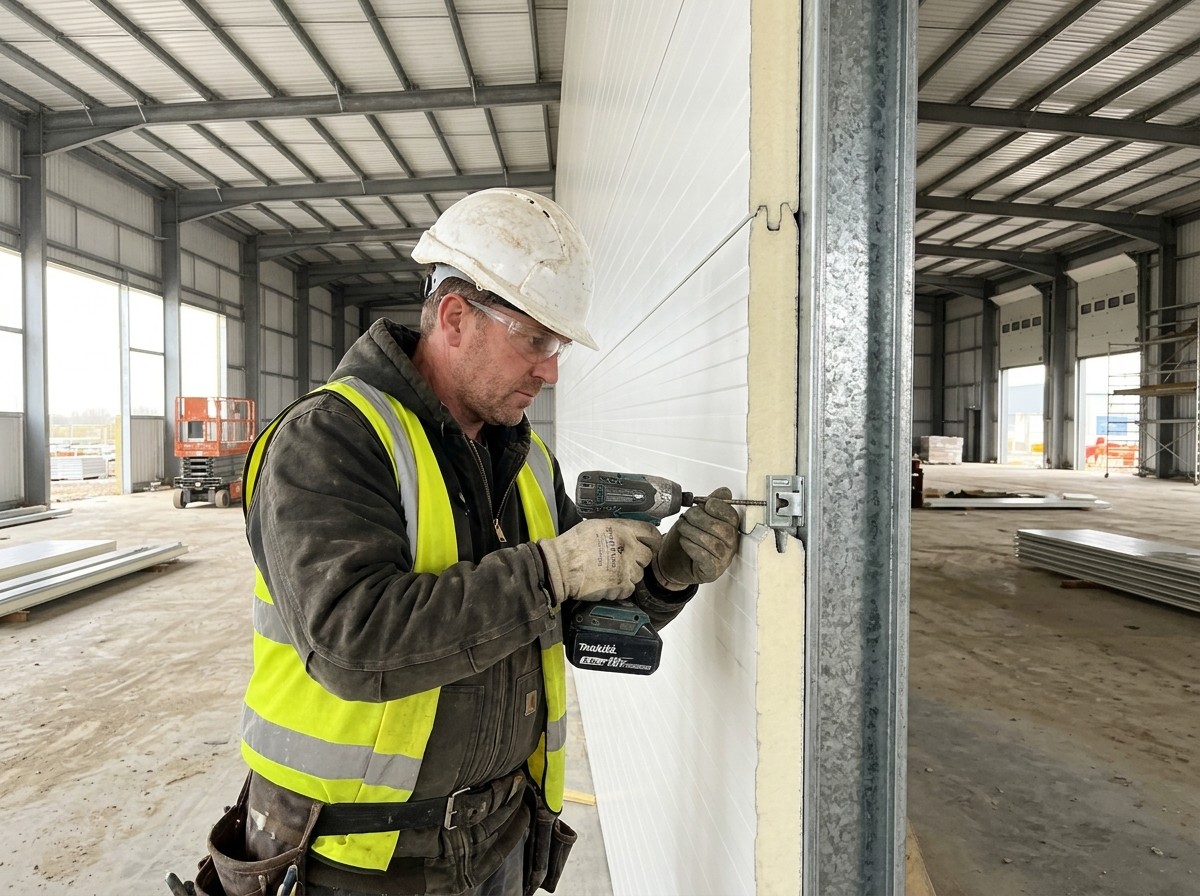
A: Intermediate support purlins require a minimum flange bearing width of 50mm to 60mm, while end-support purlins or longitudinal step-lap purlins require at least 60mm to 80mm.
Q4: Does increasing steel skin thickness from 0.4mm to 0.6mm increase span capacity?
A: Yes. Upgrading from 0.40mm to 0.60mm steel face sheets increases the wrinkling resistance of the compression skin by roughly 35% to 45%, preventing sudden local skin buckling over intermediate purlin supports.
Q5: Why do multi-span continuous panels deflect less than single-span panels?
A: A 9-meter-long panel bolted across three 3-meter purlin bays acts as a continuous multi-span beam, reducing mid-span positive deflection compared to a short 3-meter single-span panel, though negative bending over the center purlin must be checked.