Why Tapered Welded H-Beams Beat Fixed Hot-Rolled Beams Past 20 Meters
Steel costs money by the ton. Carry dead weight where the structure feels zero bending stress and you throw cash straight onto the roof.
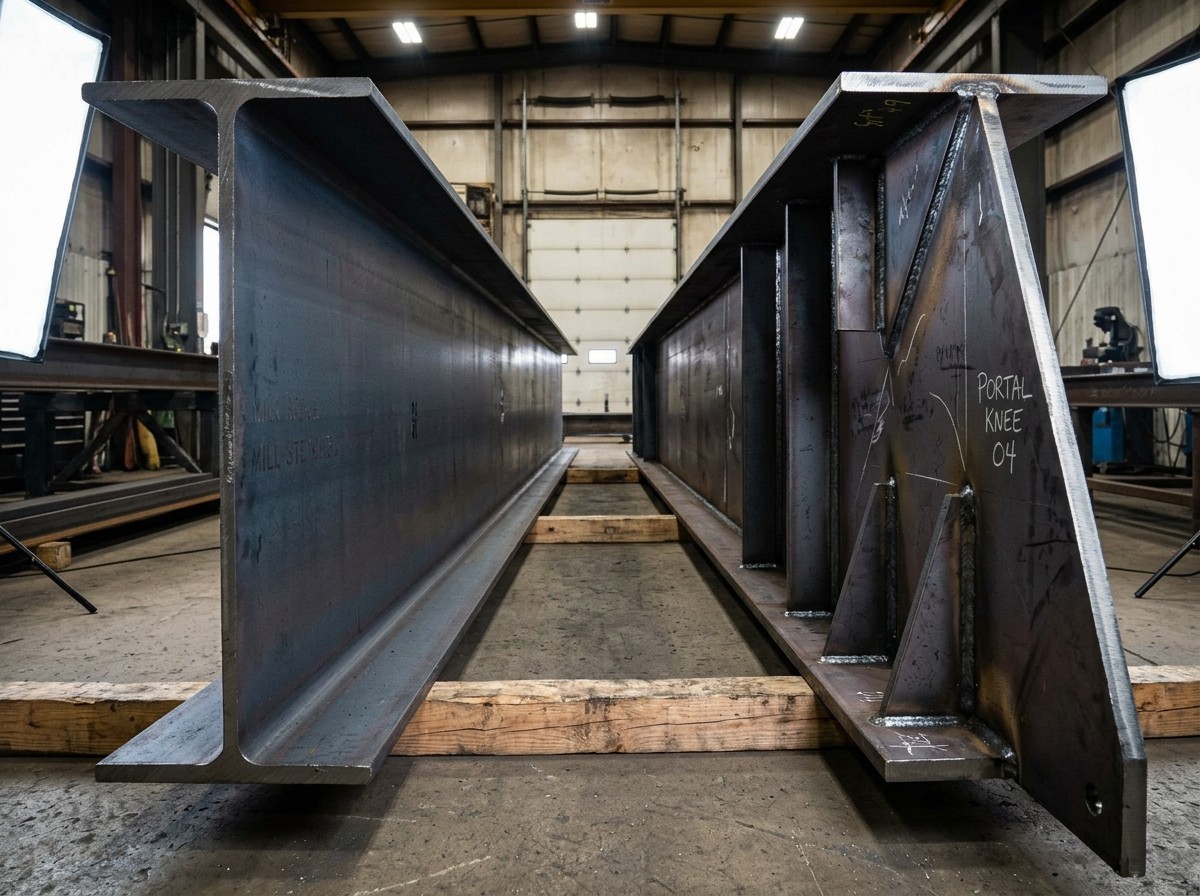
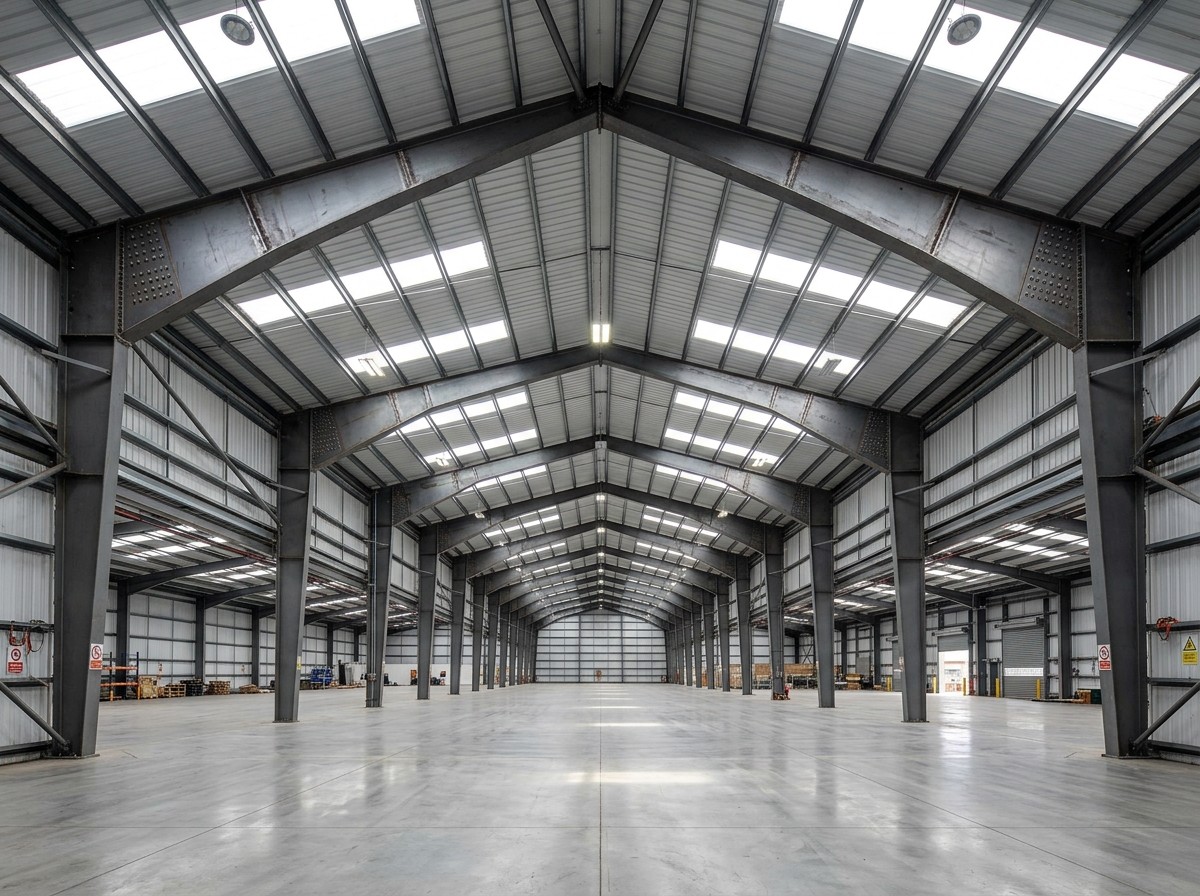
Hot-rolled H-beams come out of the rolling mill as one uniform prismatic bar from end to end. On a 30-meter clear-span portal warehouse, bending moment peaks sharply at the column-to-rafter knee haunch and drops near zero around the quarter-span inflection point. If you build that 30-meter frame out of fixed-depth hot-rolled steel, you have to buy a massive 600mm-deep beam across the entire span just to satisfy the peak knee stress. By switching to CNC-cut welded built-up sections on our portal frame steel structure line, engineers taper the web from 900mm at the knee down to 400mm at mid-span. That tailored geometry trims 15% to 25% of primary steel tonnage off every container.
| Engineering Factor | Hot-Rolled H-Beam (HW / HM / HN) | Welded Built-Up H-Beam (Tapered PEB) |
|---|---|---|
| Manufacturing Process | Rolled from one solid red-hot billet | CNC plasma-cut Q355B plates + submerged arc welding |
| Section Geometry | Uniform depth from end to end (Fixed mill catalog) | Variable tapered web depth matching bending moment |
| Steel Weight Savings (24m+ Span) | Baseline (Heavier in low-stress zones) | Saves 15% – 25% total primary frame tonnage |
| Best Structural Application | Mezzanine joists, small sheds <18m, crane beams | Wide-span 20m-60m portal warehouses & workshops |
Where Hot-Rolled H-Beams Still Win on Fabrication Speed and Fatigue
Does that mean welded beams replace hot-rolled steel everywhere? Not a chance.
Hot-rolled sections have zero longitudinal fillet welds and minimal residual welding stress. For narrow spans under 15 meters, secondary mezzanine floor joists, and heavy dynamic crane runway girders inside heavy industrial steel plants, hot-rolled H-beams fabricate faster because they skip plate slitting, tack assembly, and flange straightening. On high-cycle overhead crane beams, a smooth rolled fillet between web and flange also resists dynamic wheel fatigue better than an unground fillet weld.
How Automated Submerged Arc Welding Guarantees Welded Beam Integrity
Buyers sometimes worry that welded H-beams might split along the web-to-flange seam under heavy snow or seismic shock. Hand-welded beams from backyard shops deserve that skepticism.
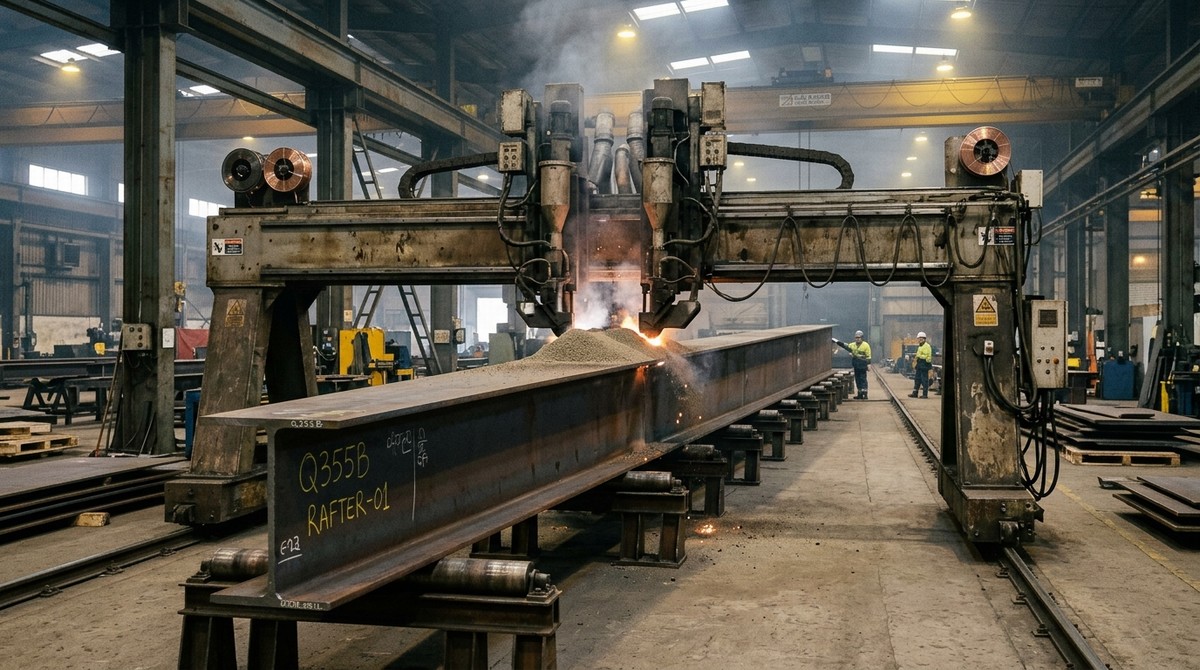
Inside our automated factory, Q355B steel plates are tacked in hydraulic H-beam assembly machines, welded continuously on twin-head gantry submerged arc welding (SAW) lines, corrected on hydraulic flange straighteners, and verified via ultrasonic testing (UT) in our quality control program so every welded section performs identically to rolled steel.
Frequently Asked Questions (FAQ)
Q1: How much steel weight do welded tapered H-beams save compared to hot-rolled H-beams?
A: On pre-engineered warehouses spanning 20 to 50 meters, tapered welded H-beam portal frames typically cut primary structural steel weight by 15% to 25% compared to uniform hot-rolled sections.
Q2: Are welded H-beams as strong as hot-rolled H-beams?
A: Yes. When fabricated from Q355B or ASTM A572 Gr.50 steel plates using automated submerged arc welding (SAW) and ultrasonic inspection (AWS D1.1), welded H-beams meet identical structural strength and ductility standards.
Q3: When should I choose hot-rolled H-beams for my steel building?
A: Choose hot-rolled H-beams for small spans under 15 to 18 meters, multi-storey floor secondary joists, wind columns, and high-duty crane runway beams where uniform standard sections fabricate faster.
Q4: Why can’t rolling mills produce tapered hot-rolled H-beams?
A: Hot-rolling mills push red-hot billets through fixed-gap universal rollers, which can only extrude a constant cross-section along the entire length of the bar.
Q5: Do welded H-beams cost more per ton to fabricate than hot-rolled H-beams?
A: Fabrication labor per ton is slightly higher for welded H-beams due to plasma cutting and submerged arc welding, but the 15% to 25% reduction in total steel tonnage makes the finished warehouse significantly cheaper overall.