Why Hidden-Screw Joints Outlast Exposed Fasteners by 10+ Years
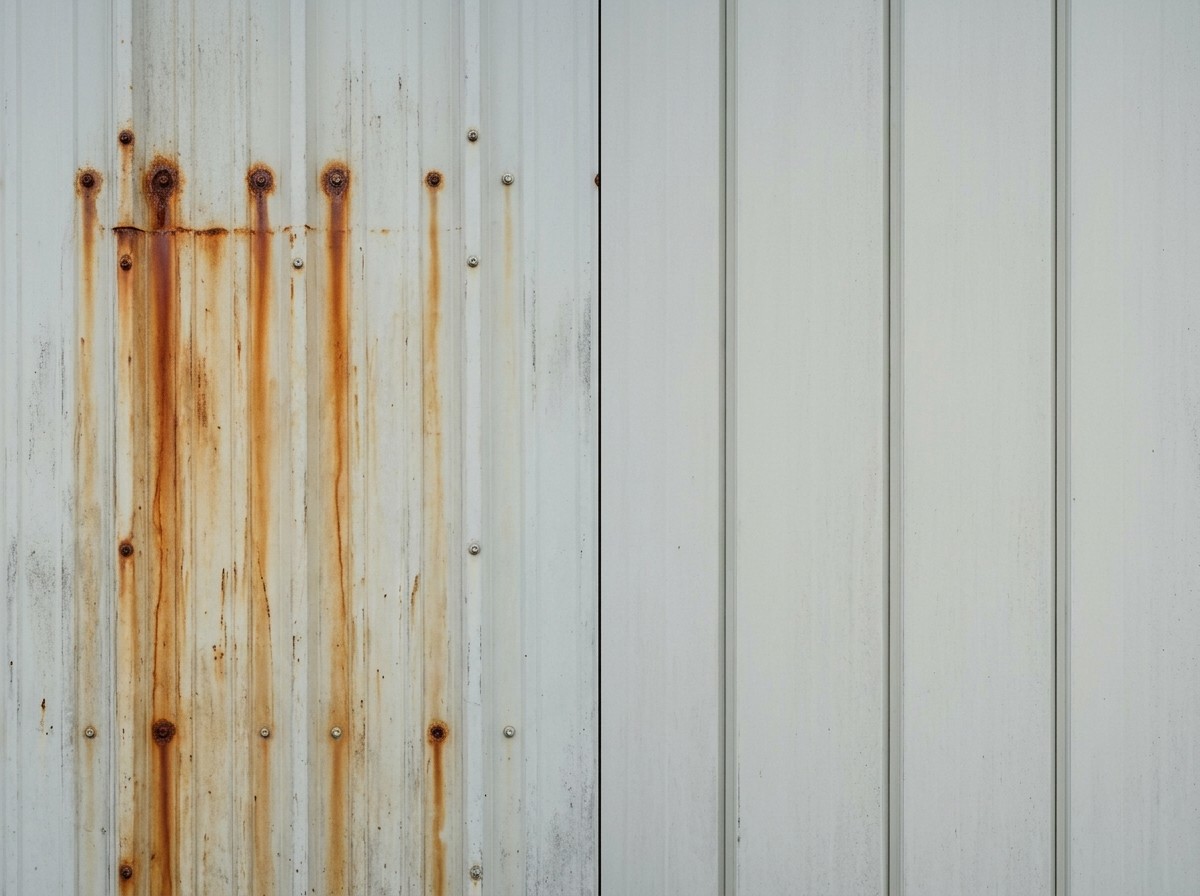
Walk past a ten-year-old warehouse clad in exposed-screw wall panels. Even if the PVDF steel skin looks spotless, you will spot vertical rows of brown rust streaks bleeding down from hundreds of weathered screw heads.
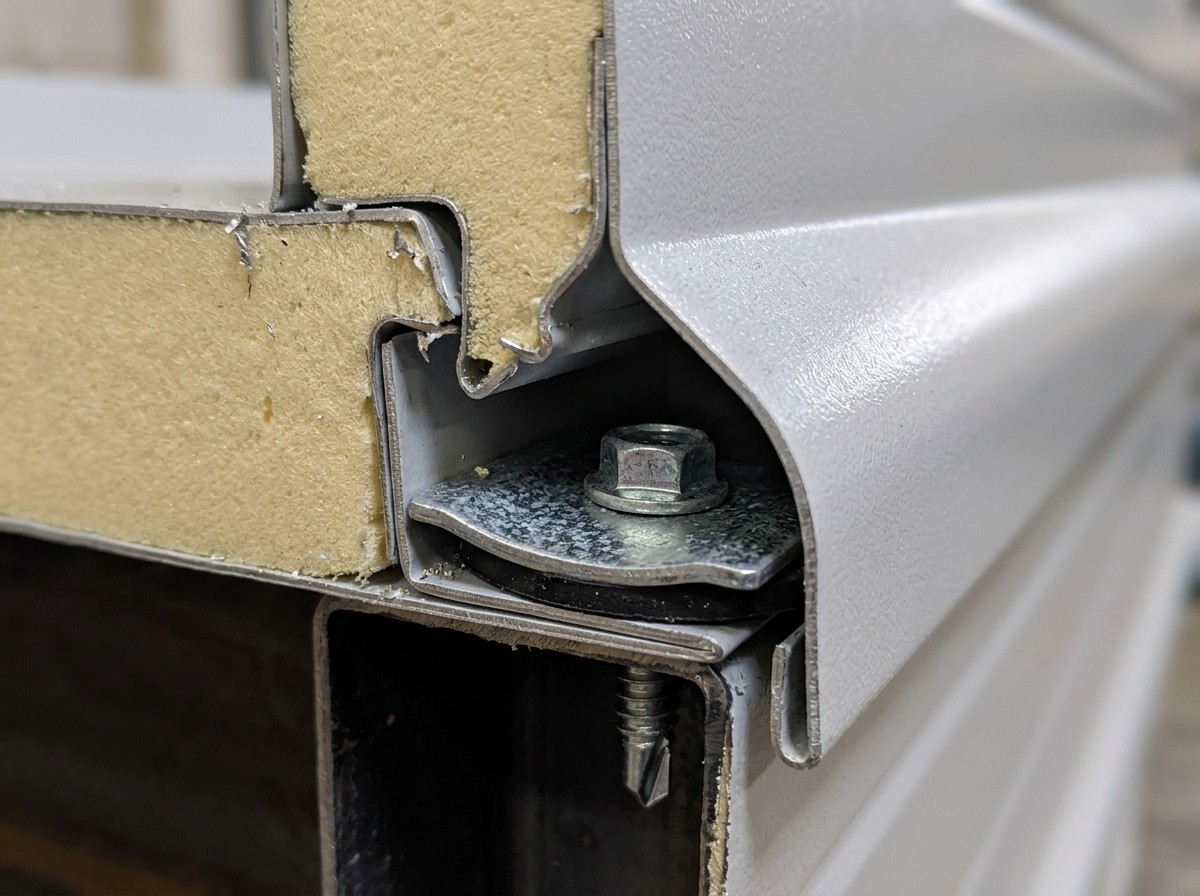
On an exposed-screw panel, every self-drilling fastener punches straight through the exterior painted face into the steel girt, leaving the metal hex head and rubber EPDM washer baked by ultraviolet sun and washed by acid rain every day. On a concealed-fix (hidden screw) sandwich wall panel, installers drive the fastener through an extended interior metal lip inside the tongue-and-groove joint, and then slide the overlapping nose of the next panel right over the screw head. Because 100% of fasteners stay tucked inside the dry, shaded joint cavity, screws never rust, EPDM washers never dry-rot, and thermal movement never wallows out exposed holes.
Architectural Aesthetics: Turning Industrial Sheds Into Corporate Landmarks
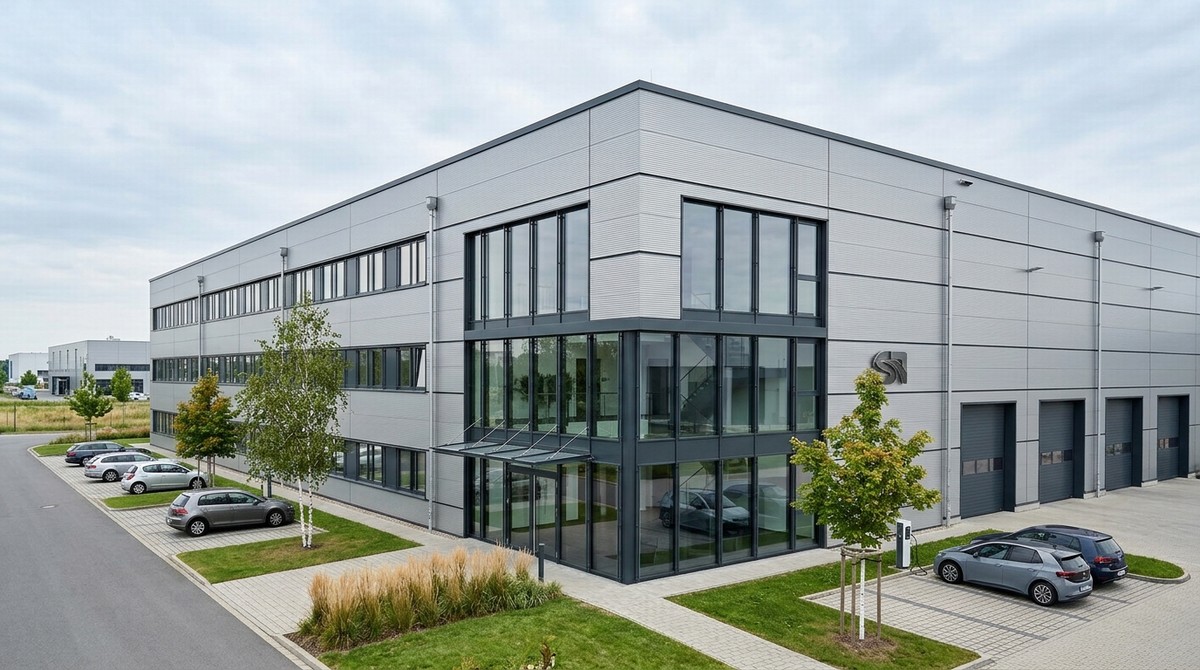
Twenty years ago, factory walls were just grey boxes. Today, EV battery makers, cold-chain headquarters, and a glass-and-steel automotive showroom want clean, architectural curtain-wall lines without paying $250 per square meter for aluminum composite panels.
Hidden-screw micro-ribbed, smooth-flat, or wide-flute insulated panels deliver a sleek, smooth facade with crisp 10mm or 20mm horizontal shadow reveals and zero visible screw dots. Better yet, you can install hidden-screw panels horizontally from column to column across a 6-meter bay, eliminating intermediate vertical studs and giving the facade a modern European corporate look.
When Exposed-Screw Panels Still Make Sense on Tight Budgets
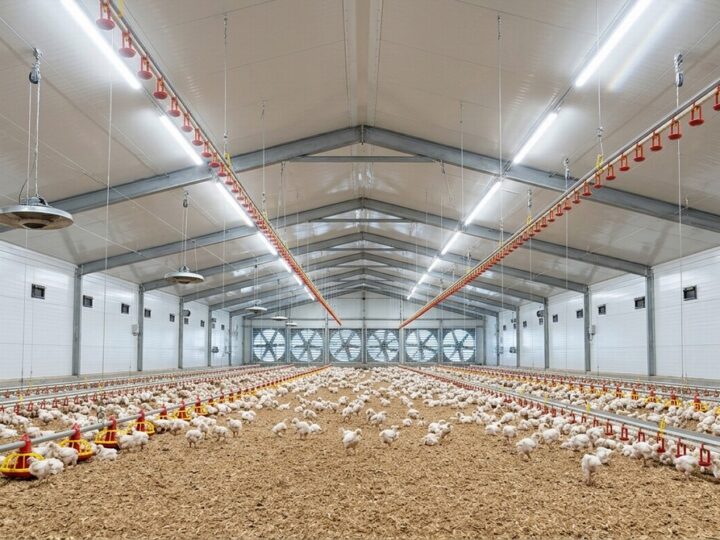
Hidden-screw panels typically cost just $0.80 to $1.50 per square meter more than exposed-screw boards because the stepped labyrinth lip uses slightly more coil width. So when should you stick with exposed screws? Only in ultra-high typhoon suction zones (where engineers want two direct through-fasteners per girt for maximum pull-out resistance on 100mm panels) or on back-of-house agricultural sheds and interior partition walls where appearance does not matter. For any street-facing facade, hidden-screw concealed fasteners are the easiest upgrade in industrial cladding.
Frequently Asked Questions (FAQ)
Q1: How much more do hidden-screw sandwich wall panels cost than exposed-screw panels?
A: Hidden-screw (concealed fastener) sandwich wall panels typically cost only $0.80 to $1.50 more per square meter FOB, less than a 5% premium for a dramatically cleaner facade and protected fasteners.
Q2: Are hidden-screw wall panels strong enough in high wind zones?
A: Yes. Each concealed joint uses a wide galvanized steel load-spreading saddle clip (washer plate) under the screw head to prevent wind-suction pull-through, easily meeting 1.5 to 2.0 kN/m² coastal wind loads.
Q3: Can hidden-screw sandwich wall panels be installed both vertically and horizontally?
A: Yes. Vertical installation fastens panels to horizontal wall girts; horizontal installation fastens panels directly to main steel columns (up to 6m span) or vertical sub-girts, creating modern horizontal architectural lines.
Q4: What is the difference between S-socket and H-socket concealed wall panels?
A: S-socket panels overlap tightly with a minimal hairline seam (~2mm) for a smooth continuous look, while H-socket (or architectural reveal) panels form a deliberate crisp 10mm to 20mm recessed shadow groove between panels.
Q5: Can you replace a single damaged hidden-screw wall panel in the middle of a wall?
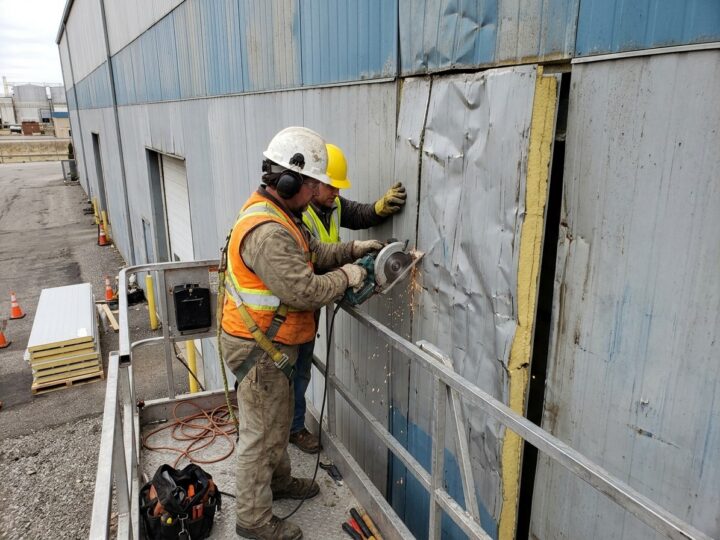
A: Because the overlapping lip locks onto the adjacent panel, replacing one middle panel requires slitting the outer lip of the damaged board with a circular saw, sliding in a new trimmed board, and securing the final seam with color-matched pop rivets or cover trim.