Why Ordering G550 Full-Hard Coil for a Lock-Seam Machine Snaps the Steel
Every year a new buyer orders 100 tons of cheap G550 steel coil because ‘550 MPa sounds stronger than 250 MPa,’ then calls in a panic when the strip snaps in half inside their gutter folding brake. Strength and ductility live on opposite ends of the annealing furnace.
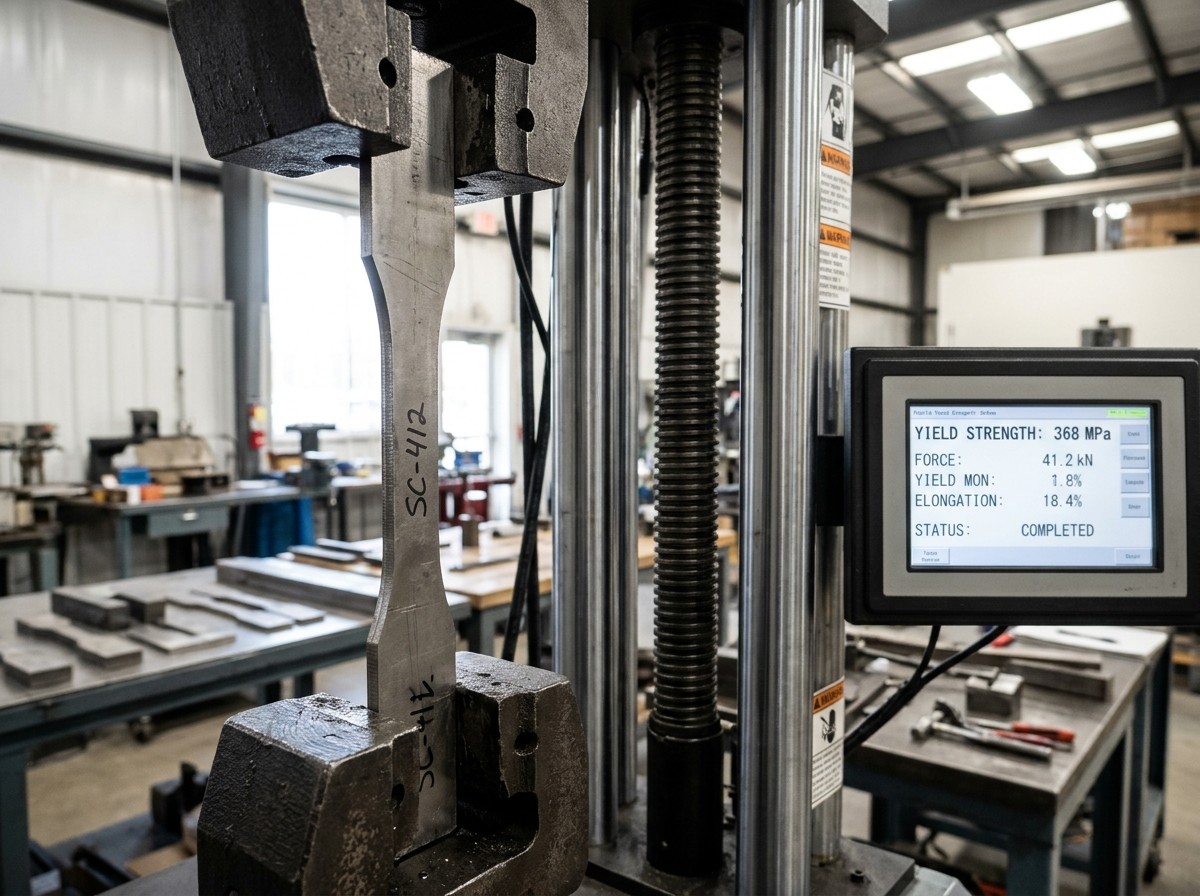
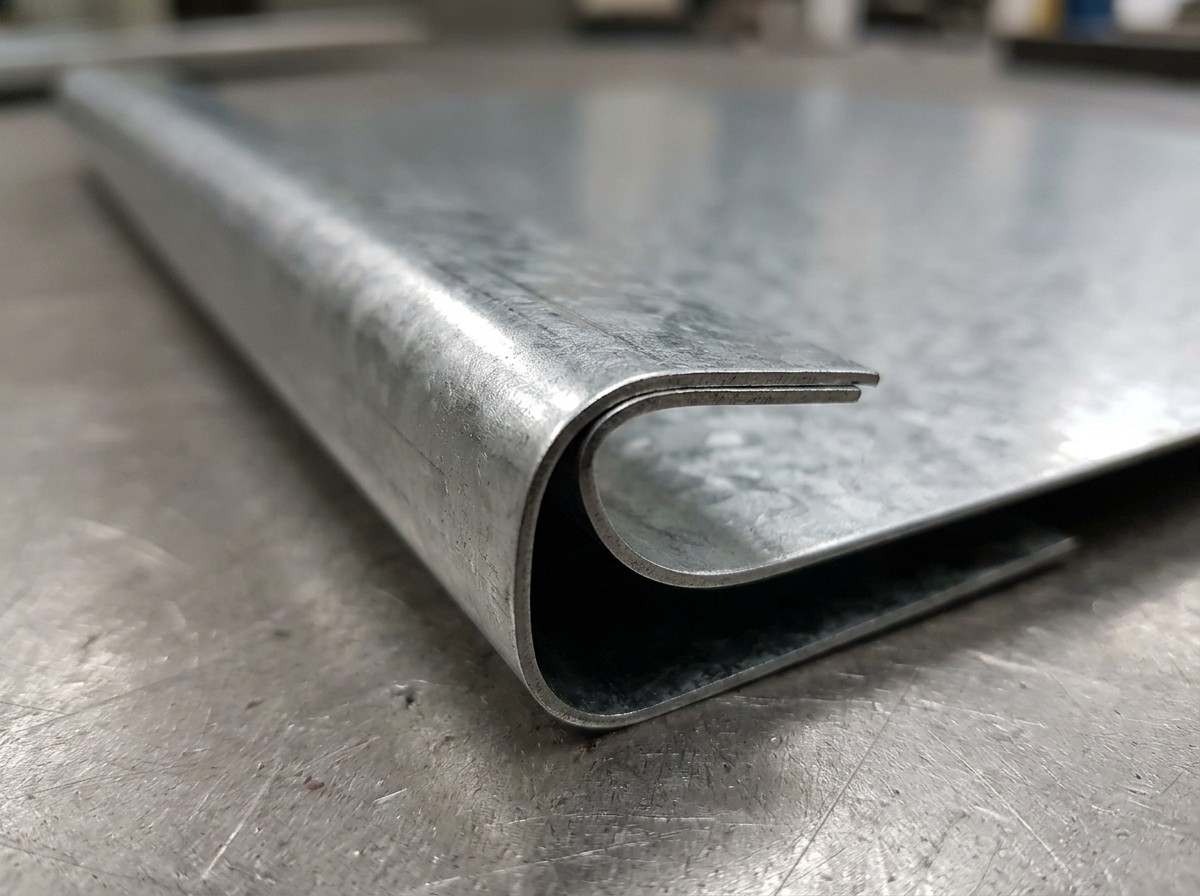
When cold-rolled steel exits the tandem rolling mill, the grains are crushed flat and work-hardened to a yield strength above 550 MPa with almost zero elongation (only 2% to 6%). If the galvanizing line keeps the annealing furnace temperature low so the steel stays unrecrystallized, you get G550 full-hard steel. G550 is fantastic for rolling thin 0.30mm to 0.42mm shallow-wave roof sheets in Africa, Southeast Asia, or Australia because the board feels stiff as spring steel and resists hail dents. However, if you try to fold G550 around a tight 180-degree Pittsburgh lock seam or stamp a deep ridge tile, the brittle grain fractures along the bend line.
| Steel Grade (EN / ASTM) | Yield Strength (MPa) | Elongation (A80 %) | Bending & Springback | Target B2B Roll-Forming Use |
|---|---|---|---|---|
| DX51D+Z / CS Type B | 140 – 300 MPa (Soft) | >= 22% | Bends flat (0T-1T) with minimal springback | Sandwich panel skins, HVAC lock-seams, gutters |
| DX52D+Z / DX53D+Z | 140 – 260 MPa (Deep Draw) | >= 26% – 30% | Extreme stretch without necking or tearing | Stamped appliance doors, ridge caps, electrical boxes |
| S350GD+Z / SS Grade 50 (G350) | >= 350 MPa (Structural) | >= 16% | Moderate springback, high load stiffness | C/Z roof purlins, floor decks, solar mounting rails |
| S550GD+Z / SS Grade 80 (G550) | >= 550 MPa (Full-Hard) | 2% – 8% (Low) | High springback (Cracks if bent past 90 deg) | Thin 0.30-0.42mm high-tensile corrugated roof sheets |
When to Specify DX51D Soft Commercial Steel vs S350GD Structural Grade
For 80% of architectural cladding (including flat-face sandwich panels, rainwater downspouts, standing-seam trays, and flashings), EN 10346 DX51D+Z (equivalent to ASTM A653 CS Type B or JIS SGCC) is the right call.
Because DX51D runs through a full recrystallization annealing cycle at 750°C+, its yield strength sits between 180 and 280 MPa with over 22% elongation. It bends around tight corners without springback and lays dead-flat on continuous polyurethane laminators. On the other hand, if you are rolling 1.5mm to 3.0mm load-bearing galvanized C and Z purlins or structural floor decking, soft DX51D will sag under snow loads. Structural engineers require S350GD+Z (minimum 350 MPa yield strength with >= 16% elongation), which gives you both guaranteed structural load capacity and enough ductility to roll 90-degree lip flanges without cracking.
Controlling Roll-Forming Springback When Switching Between Grades
Operators hate it when a purchasing department switches coil mills mid-month without warning.
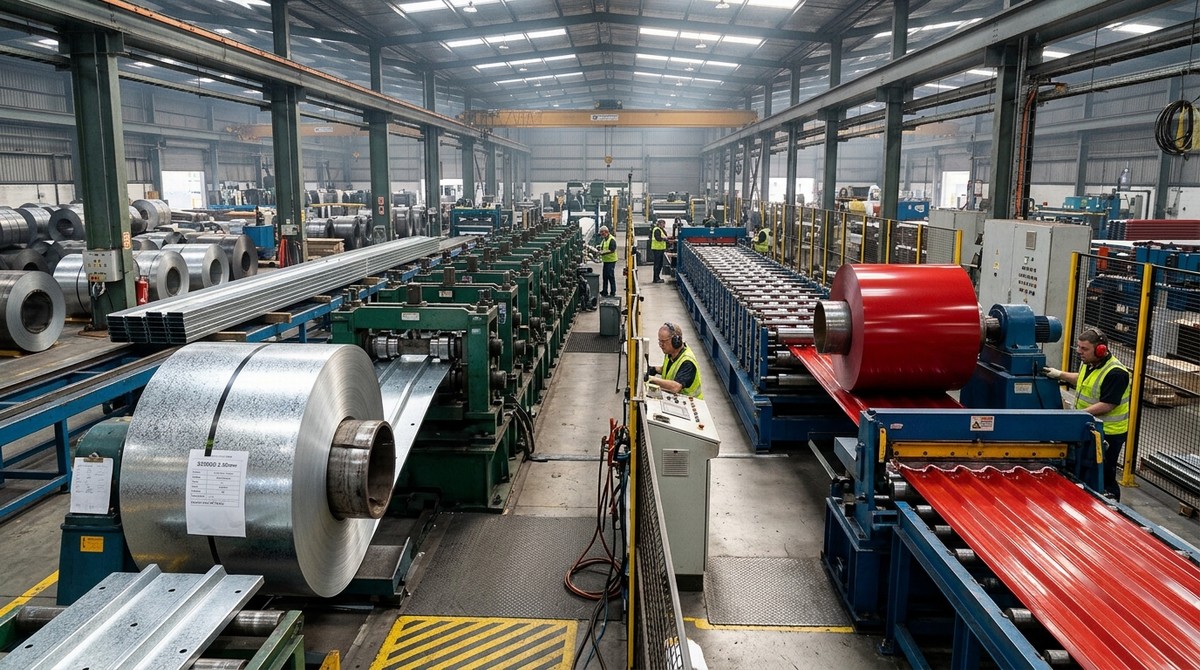
If Monday’s coil has a yield strength of 240 MPa and Wednesday’s coil jumps to 360 MPa, the higher-yield strip springs back 3 to 5 degrees wider after exiting each roller station on your corrugated roofing sheet line. That springback widens the finished sheet coverage width by 8 millimeters so side laps no longer match on the roof. We group and label every export coil shipment by tested yield strength range so your roll-forming tooling stays dialed in from coil one to coil twenty.
Frequently Asked Questions (FAQ)
Q1: Which steel coil grade is best for making polyurethane or rock wool sandwich panels?
A: Always specify DX51D+Z (or DX51D+AZ) with a controlled yield strength of 220 to 280 MPa. It decoils flat without coil set memory, bonds uniformly to foam, and folds cleanly at the tongue-and-groove edges without cracking.
Q2: Why do 0.30mm and 0.35mm thin roofing sheets use G550 full-hard steel?
A: At 0.30mm to 0.35mm thickness, soft DX51D steel feels flimsy and bends under foot weight. Using G550 (550 MPa high-tensile full-hard steel) makes a thin 0.35mm corrugated roof sheet rigid enough to span purlins without buckling.
Q3: Can S350GD structural galvanized coil be roll-formed into C and Z purlins without cracking?
A: Yes. Unlike brittle G550 full-hard steel, S350GD is fully annealed structural steel with at least 16% elongation, allowing it to bend cleanly into 90-degree C and Z purlin lips at 1.5mm to 3.2mm thickness.
Q4: What is the difference between DX51D and DX52D/DX53D galvanized steel?
A: DX51D is standard commercial lock-forming quality, whereas DX52D and DX53D are low-carbon deep-drawing grades with higher elongation (26% to 30%+) designed for hydraulic stamping presses that press curved roof tiles or appliance doors.
Q5: How can I tell if a supplier shipped DX51D instead of S350GD?
A: Check the tensile test section on the Mill Test Certificate (MTC) or pull a dog-bone coupon in a tensile tester: S350GD must show a minimum yield strength (ReH / Rp0.2) of 350 MPa and tensile strength >= 420 MPa.