How Container Sweat Turns Pure Zinc Into Chalky White Powder
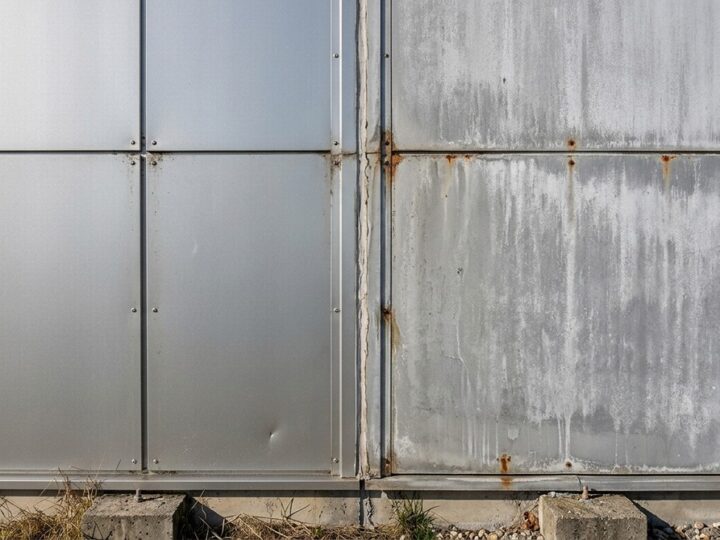
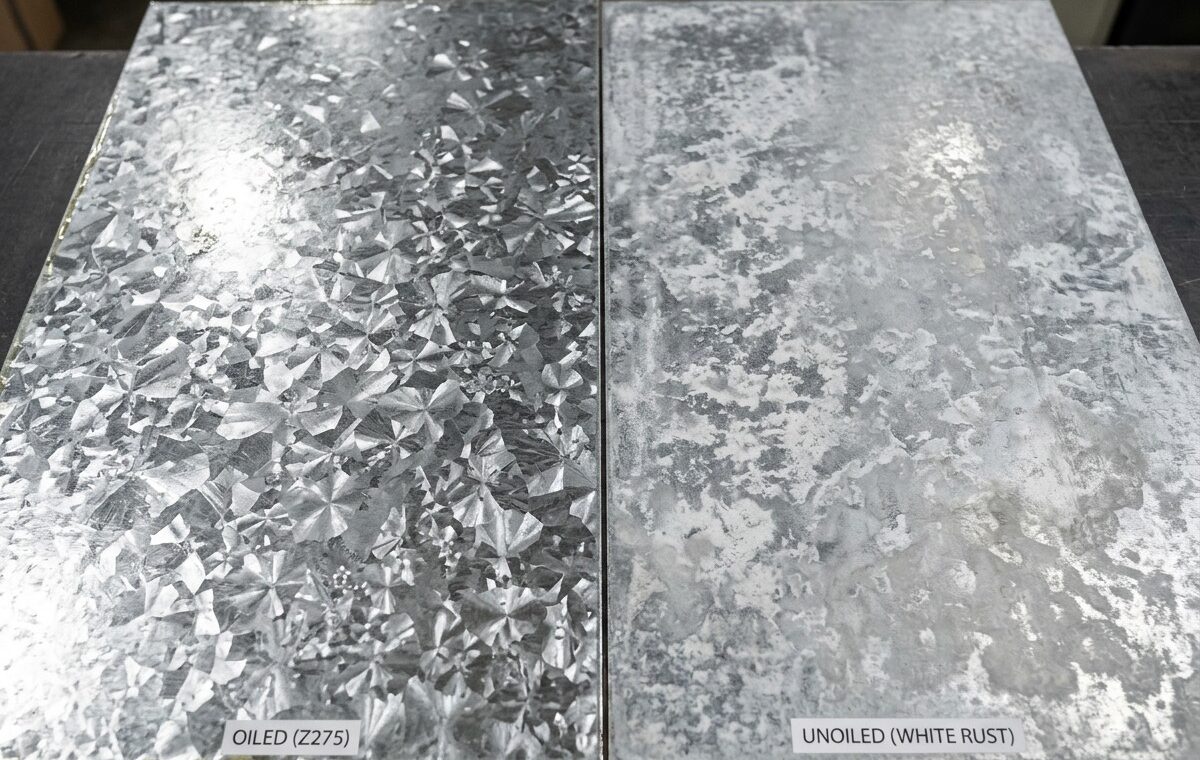
Nothing ruins a Monday morning faster than opening a 20-foot container of fresh galvanized steel coils at destination port and finding chalky white rings bleeding out from the coil edges. That powdery crust is white rust, known in metallurgy as wet storage stain ([SBT GI White Rust Technical Guide]).
Freshly galvanized zinc stays stable only when carbon dioxide from open air can circulate across the dry surface to form a tight, invisible film of basic zinc carbonate. Inside a tightly wound steel coil, the overlapping metal wraps trap a razor-thin capillary gap with almost zero air circulation. When a vessel sails from a cool northern Chinese port across the equator toward South America, Southeast Asia, or Africa, daytime container temperatures swing from +50°C down to +18°C at night. Humid marine air condenses into pure distilled water droplets (‘container sweat’) that wick between the tightly wound steel laps by capillary action ([Jianhui Steel White Rust Analysis]. Deprived of carbon dioxide, the trapped water reacts with the zinc layer within 48 hours to form porous, voluminous zinc hydroxide (white rust), eating away the sacrificial coating before the coil ever reaches your decoiler.
Why Passivation Plus Light Anti-Rust Oiling Beats Dry Passivation on Long Voyages
Importers who buy galvanized coil to roll-form roof sheets or drywall studs often specify ‘chromate passivated, dry (unoiled)’ because they do not want oil residue on their rollers. On a 35-day ocean voyage across two climate zones, ordering unoiled GI coil is a gamble. Salt air always finds a gap.
Chemical passivation (hexavalent-free trivalent chromium Cr3+ or acrylic resin passivation) creates a thin barrier that slows down oxidation during brief domestic trucking, but chemical film alone cannot block capillary water suction for five weeks at sea. Ordering ‘Passivated + Lightly Oiled’ (1.0 to 2.5 grams per square meter of electrostatic volatile anti-rust oil) creates a hydrophobic film that physically blocks condensation droplets from wetting the zinc spangle. Volatile electrostatic oil evaporates cleanly within a few days of uncoiling or wipes off effortlessly, and for coils feeding continuous laminators that make sandwich roof panels or sandwich wall panels, we match the surface treatment to your adhesive primer line.
Four-Layer Seaworthy Coil Packaging and Port Unloading Rules
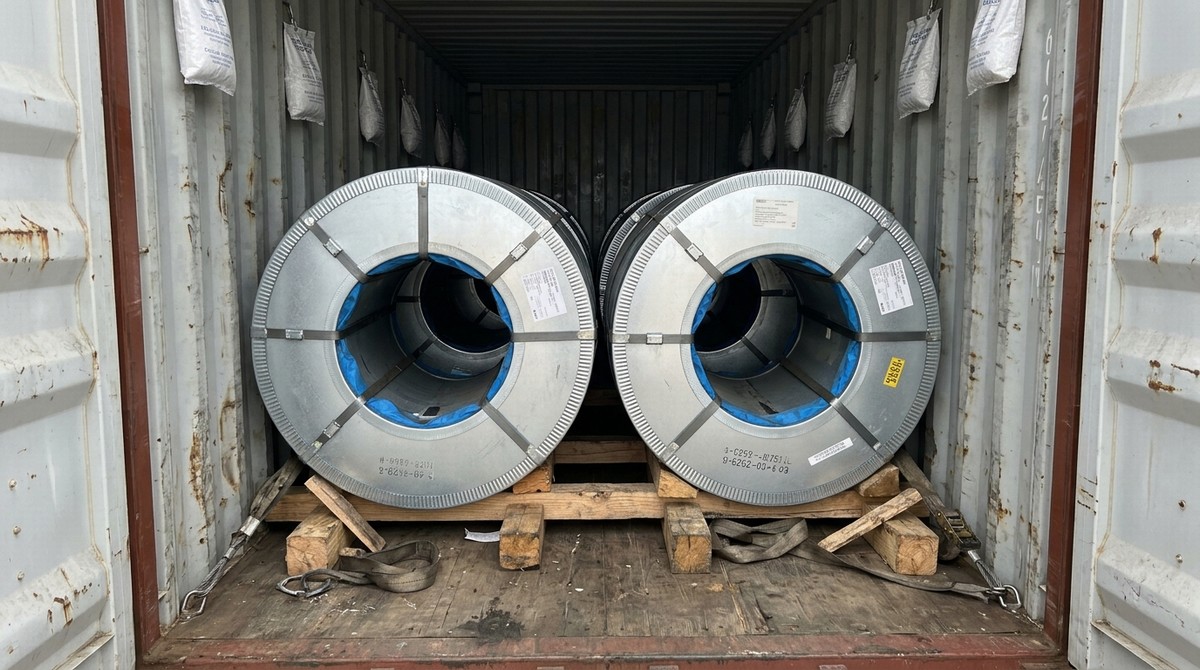
Even oiled coils will stain if seawater spray or container roof condensation drips through torn paper wrapping. Bare paper fails fast. Our export packing line uses a four-layer armor envelope before a coil ever touches a wooden pallet.
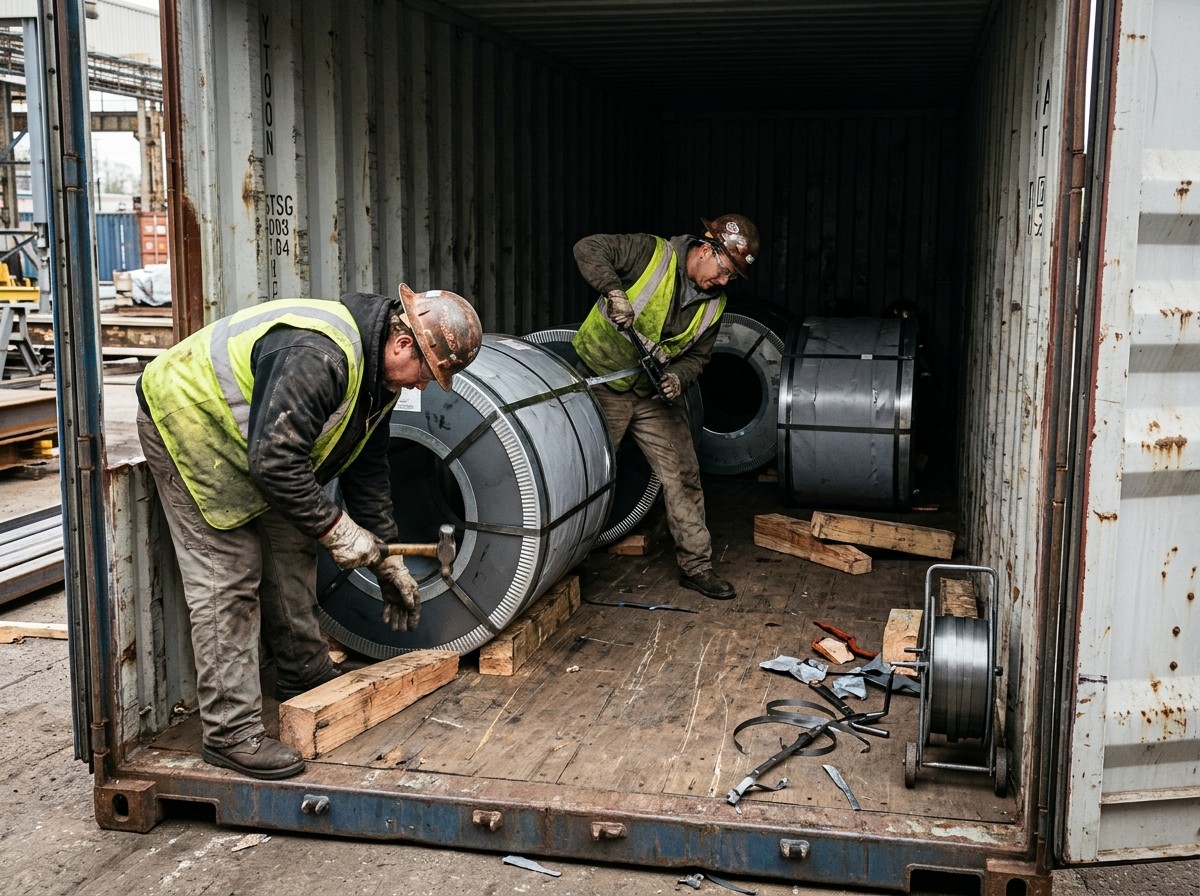
First, workers wrap the bare coil eye and outer circumference in volatile corrosion inhibitor (VCI) anti-rust paper, which releases protective vapor molecules into the microscopic gaps between steel laps. Second, a heat-sealed polyethylene (PE) plastic bladder and woven polypropylene moisture barrier lock out humid air. Third, heavy galvanized steel outer wrapper sheets, inner bore sleeves, and stamped donut edge rings are cinched tight with four radial and three circumferential steel straps. Inside every 20GP container, we hang 12 to 16 one-kilogram calcium chloride desiccant poles along the container corrugations to drink up airborne moisture. Once the ship docks, unload the coils into a dry, ventilated warehouse immediately and never leave warm coils sitting on damp concrete floors where ground moisture condenses under the pallet.
Frequently Asked Questions (FAQ)
Q1: Can you still use galvanized steel coil that has light white rust?
A: If the white powder is light and superficial without dark grey or black spots, you can wipe it dry with a stiff bristle brush and a cloth soaked in mineral spirits or weak 5% acetic acid, rinse, and dry immediately with compressed air. Heavy black/red under-film corrosion means the zinc layer is gone.
Q2: What is the difference between white rust and red rust on GI steel?
A: White rust is zinc hydroxide formed when the zinc coating corrodes in trapped moisture without air. Red rust is iron oxide, meaning the protective zinc layer has been completely consumed and the underlying carbon steel core is rusting.
Q3: Should I order chromate passivated or oiled GI coil for ocean shipping?
A: For voyages longer than 15 days or shipping through humid tropical ports, always order combined ‘Chromate-Free Passivated + Lightly Oiled (C+O)’ rather than dry passivation alone.
Q4: Why shouldn’t you use an acid wash to remove white rust?
A: Strong acids dissolve the remaining healthy zinc coating along with the white rust stain, stripping away the sacrificial corrosion protection you paid for.
Q5: How should galvanized coils be stored after arriving at the factory?
A: Store coils indoors on dry wooden skids at least 150mm off the floor in a ventilated bay, keep them away from open bay doors where rain blows in, and process older stock first (FIFO).