Why Standard 50mm EPS Container Units Turn Into Ovens at +48°C
Step inside a budget flat-pack container office in Riyadh or Western Australia at 2:00 PM in July and the wall sheet feels like a hot skillet. Even with an 18,000 BTU split air conditioner running full blast, the room stays sticky at 31°C.
Why does the AC lose the fight? Two reasons: thin insulation and unshaded single-layer metal roofs ([Lyroe Group Container House Insulation Guide]). Standard domestic site cabins use 50mm low-density EPS foam with a thermal conductivity of 0.038 W/m·K or loose glass wool that sags inside the wall cavity. Under direct desert solar radiation, an unpainted or dark roof deck hits +72°C by midday, radiating heat straight through the thin ceiling board. For desert oilfield camps and tropical dormitories like our modular housing projects, we upgrade the wall envelope to 75mm or 100mm closed-cell PIR polyurethane panels (0.022 W/m·K) or high-density 100 kg/m³ rock wool boards. Swapping 50mm EPS for 75mm PIR cuts conductive heat gain through the walls by more than 55%.
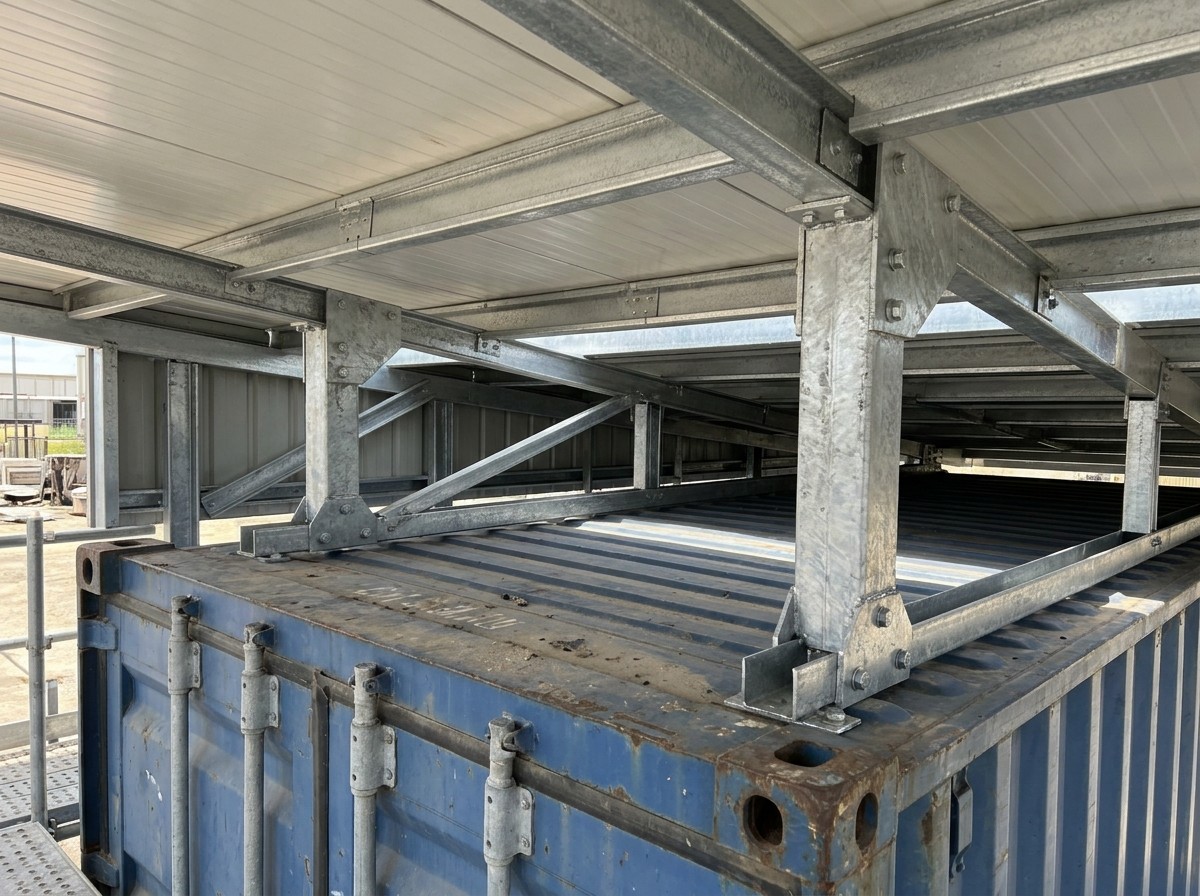
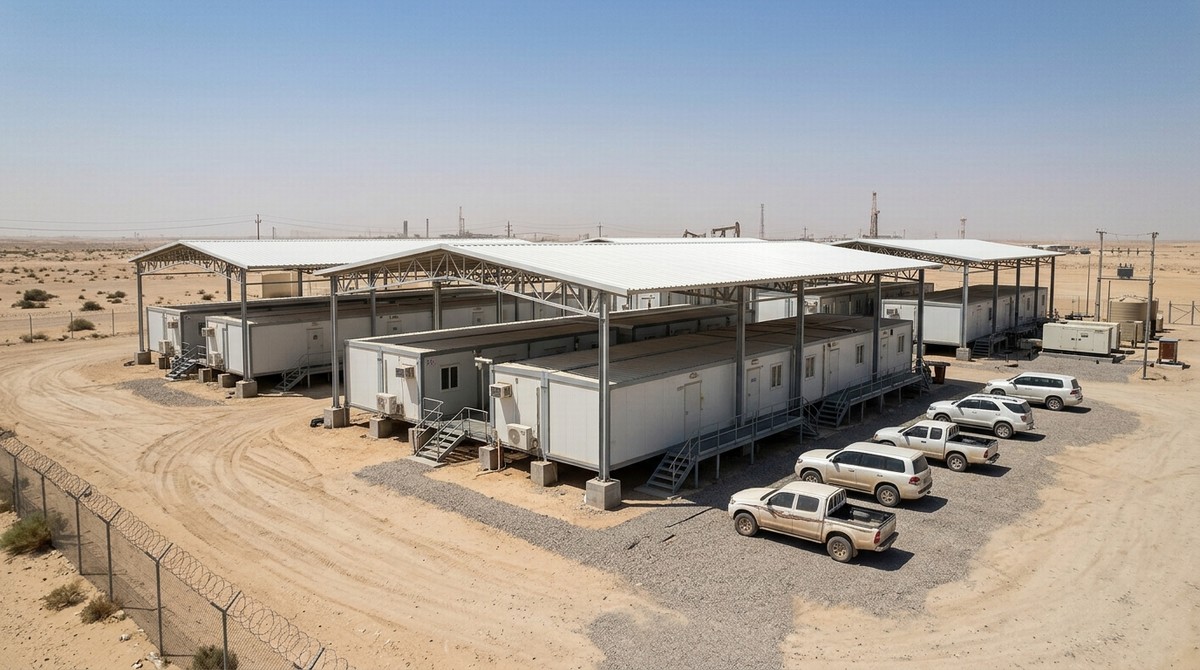
Adding a Secondary Ventilated Truss Roof Over Flat-Pack Camps
If you only have budget for one desert upgrade on a multi-unit camp, spend it on a secondary ventilated shade roof. Nothing drops indoor temperatures faster.
A standard flat-pack container roof sits just 100 millimeters above the sleeping quarters. When solar radiation hammers that flat top steel sheet all afternoon, the ceiling plenum superheats. By bolting light-gauge galvanized steel trusses onto the top corner castings and laying reflective white sandwich roof panels 600 to 900 millimeters above the container deck, you put the entire building in permanent shade. Better yet, prevailing desert breezes blow right through that open 800-millimeter air gap between the secondary truss roof and the container ceiling, carrying away solar heat before it ever touches the living envelope. In our field measurements on Middle Eastern mining camps, adding a ventilated pitched over-roof with wide 500mm eave overhangs drops peak afternoon ceiling surface temperatures by 14°C to 18°C and cuts air-conditioning diesel generator fuel burn by a third.
Solar-Reflective White PVDF Skins and Thermal-Break Window Frames
Color choice is not just branding in hot climates. Ordering dark grey, navy blue, or forest green exterior panels in the tropics is a self-inflicted wound.
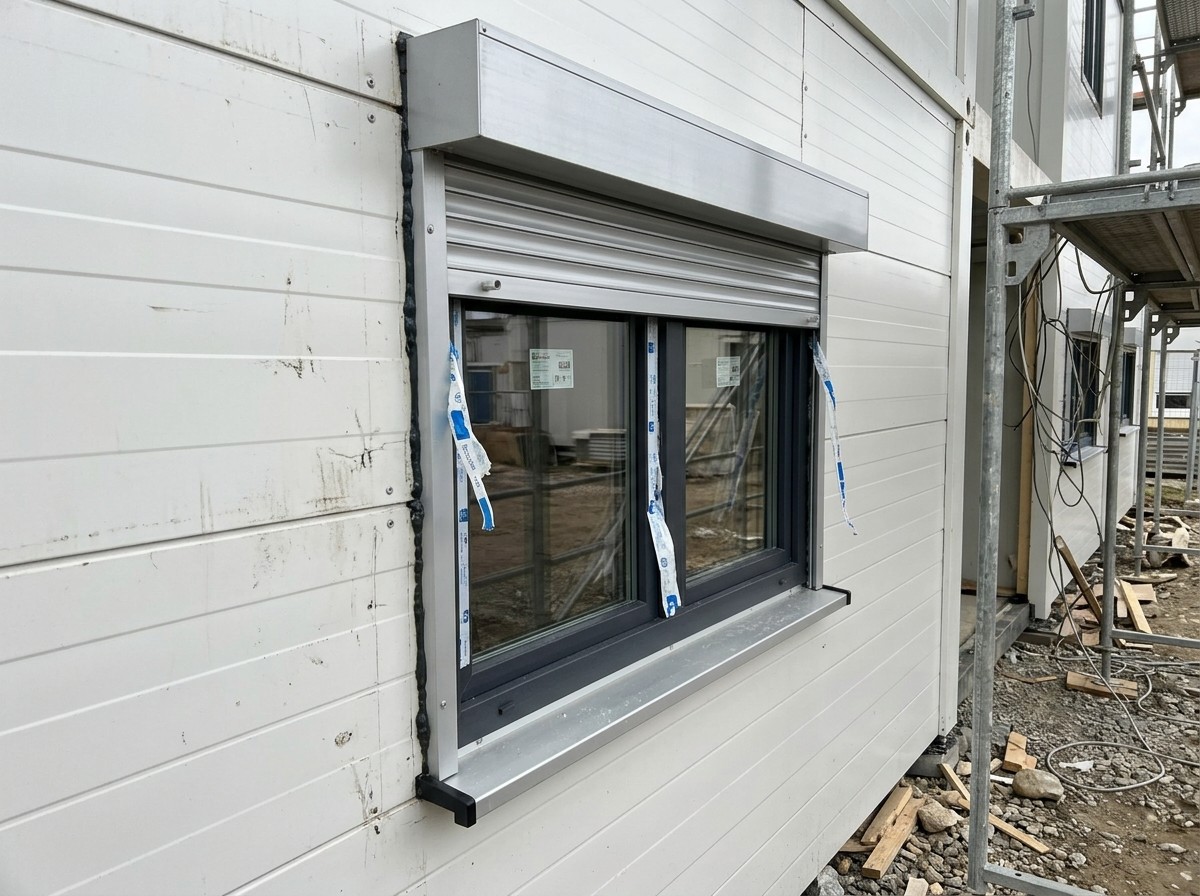
Bright traffic white (RAL 9016) or oyster white (RAL 9002) PVDF and HDP coil coatings reflect up to 75% of incoming solar radiation, whereas dark exterior sheets absorb over 80% of solar energy and bake the foam core. For external walls exposed to sandstorms and brutal UV index levels, we manufacture exterior sandwich wall panels in high-reflectance white PVDF. Finally, plug the glazing and thermal-bridge leaks: replace cheap single-pane sliding aluminum windows with double-glazed low-E argon windows (5mm+9A+5mm) fitted with external aluminum roller shutters, and tape closed-cell EPDM foam strips over interior steel post junctions so desert heat cannot bypass the insulated wall panels through the corner columns.
Frequently Asked Questions (FAQ)
Q1: What wall panel thickness is best for modular houses in Middle East or African heat?
A: Specify at least 75mm to 100mm PIR/PU sandwich panels (0.022 W/m·K) or 100mm high-density rock wool panels instead of standard 50mm EPS or glass wool.
Q2: How much electricity does a secondary shade roof save on a container camp?
A: Adding a ventilated pitched secondary steel roof over flat-pack containers typically reduces split-AC cooling loads and diesel generator power consumption by 25% to 35% during peak summer months.
Q3: Is rock wool or PIR better for hot-climate modular worker dormitories?
A: PIR provides nearly double the thermal insulation per millimeter (0.022 vs 0.040 W/m·K), while rock wool provides Euroclass A1 non-combustible fire safety. Many strict oil-and-gas camps use 100mm rock wool walls paired with a PIR-insulated secondary pitched roof.
Q4: How do you stop condensation from dripping inside air-conditioned container houses?
A: Seal all steel frame column-to-panel joints with polyurethane expanding foam and internal PVC trim covers containing EPDM gaskets so humid outside air never touches cold interior steel posts.
Q5: What size air conditioner is needed for a well-insulated 20ft modular office?
A: A 20ft (14.4 sqm) modular unit built with 75mm PIR panels and double-glazed windows typically cools comfortably with a 9,000 to 12,000 BTU split AC, even in +45°C ambient temperatures.