Why Cheap Steel Frames Rust From Underneath the Paint
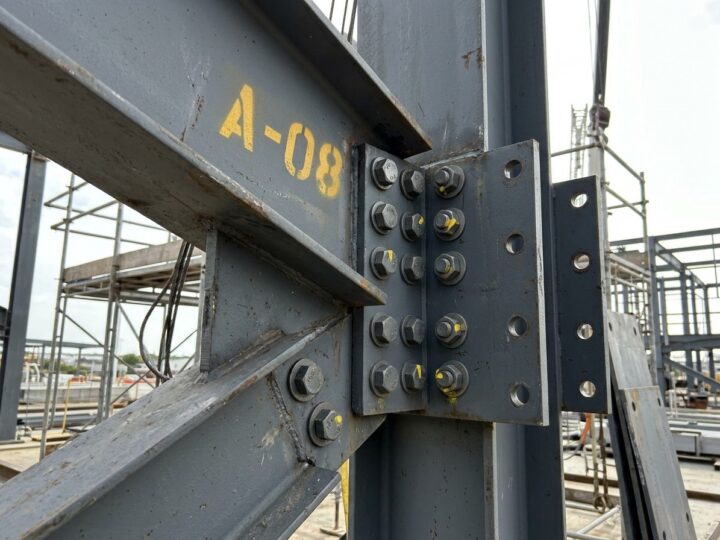
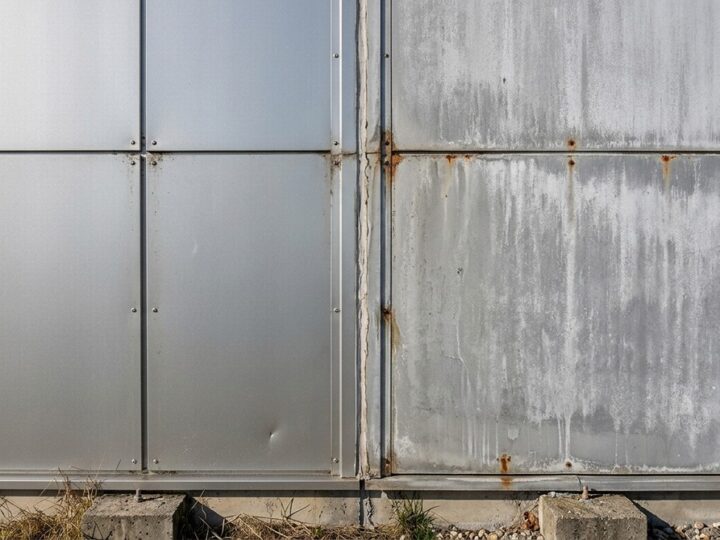
Walk into a poorly built three-year-old steel warehouse and you will see brown rust blisters bubbling up along the H-beam webs. The owner always blames the paint brand. Ninety percent of the time, the paint was fine, but the mill painted straight over blue mill scale.
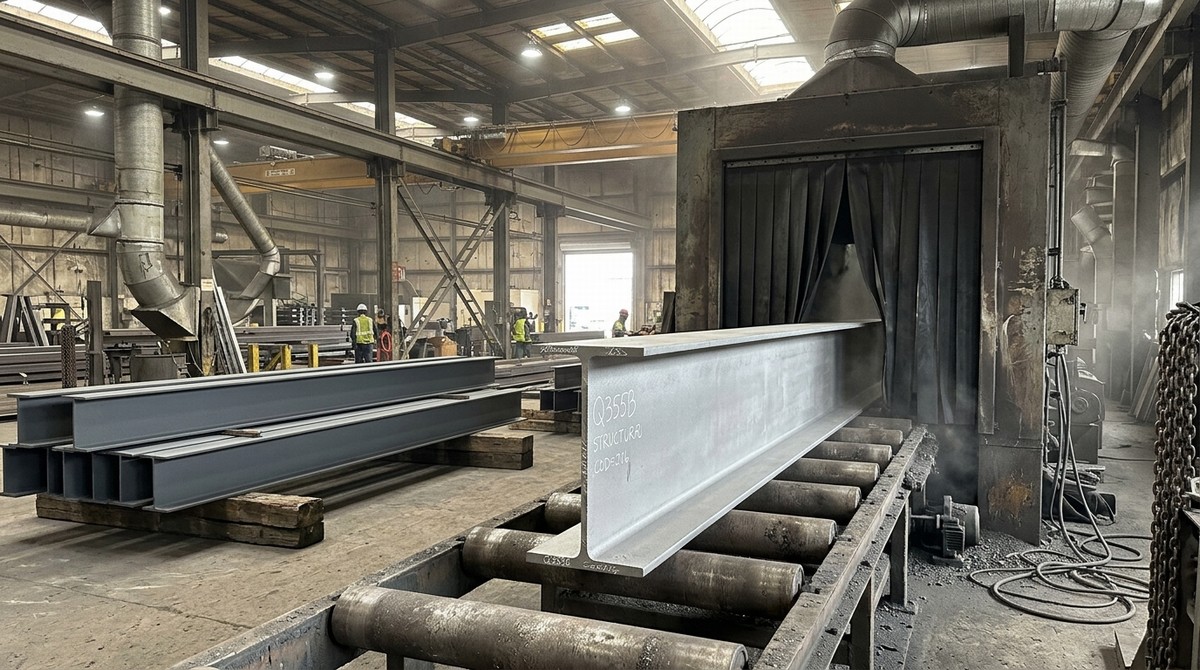
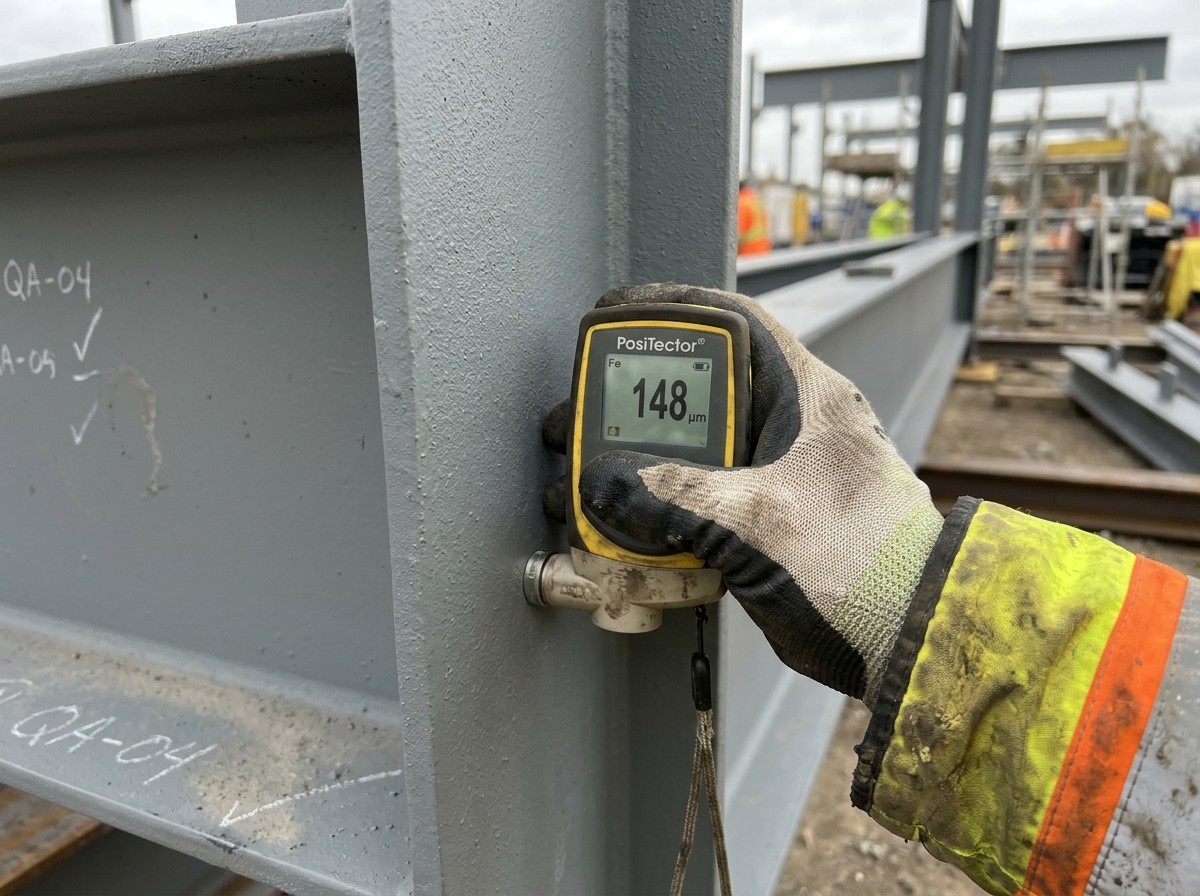
Hot-rolled Q355B steel plates leave the rolling mill covered in a brittle oxide layer called mill scale. If a small fabrication workshop wipes the beam with a solvent rag and sprays alkyd red oxide primer over that scale, moisture creeps underneath and pops the paint off in sheets within 24 months ([Prestige Steel Structures Maintenance FAQ]). Before a single drop of primer touches our columns or rafters, every welded H-beam runs through an automated 8-impeller shot-blasting tunnel using cast steel grit to reach ISO 8501-1 Sa2.5 near-white metal cleanliness. That blasting creates a 40-to-60-micron surface anchor profile. Within four hours of blasting, spray painters apply 75 microns of epoxy zinc-rich primer followed by an epoxy micaceous iron oxide intermediate coat and polyurethane topcoat. You can inspect how we protect overseas industrial frames across our completed steel projects.
Painted Epoxy Systems vs Hot-Dip Galvanizing for Coastal and Wet Plants
Paint works great inside dry logistics warehouses or inland machinery shops. Put that exact same alkyd paint system inside a coastal seafood plant, a fertilizer shed, or a paper mill, and salt mist or ammonia vapor will chew through the edges.
When a building sits within five kilometers of the ocean or operates above 80% indoor relative humidity, we switch secondary and primary members to hot-dip galvanizing under ISO 1461 or ASTM A123. All secondary C and Z purlins, wall girts, and tie rods are roll-formed from pre-galvanized Z275 (275 g/m²) coil. For main portal columns and rafters in C4 or C5-M corrosive zones, dipping the entire welded H-beam into a 450°C molten zinc bath forms a metallurgical zinc-iron alloy bond measuring 65 to 85 microns thick (roughly 500 to 600 g/m²). Even if a forklift scrapes a galvanized column, the surrounding zinc sacrifices itself electrochemically to keep the exposed steel core from bleeding red rust. Pairing hot-dip galvanized framing with non-corrosive sandwich wall panels seals the structural steel away from exterior salt spray.
Three Annual Maintenance Checks That Keep a Steel Building Standing 50 Years
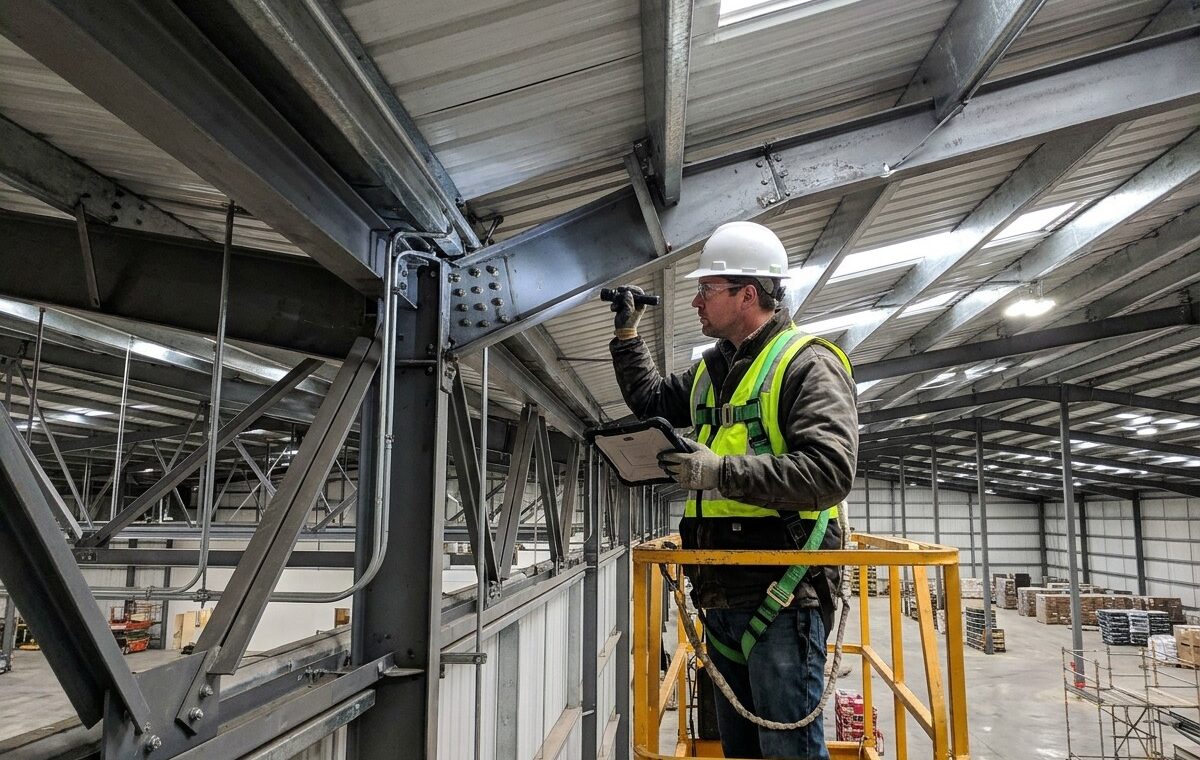
Pre-engineered steel buildings need very little maintenance compared to timber or masonry, but zero maintenance is a myth ([WeDoSpace Steel Building Guide]). Three simple checks once a year prevent 99% of structural decay.
First, clear choked eave gutters and downspouts before the monsoon or winter freeze. When dead leaves and plastic wrap plug a gutter box, rainwater backs up over the interior lip and drips constantly down the unpainted inside flange of the eave strut and column top. Second, walk the floor with a cold-galvanizing zinc spray can and a pot of two-part epoxy touch-up paint to seal forklift bumper scrapes and shipping chain scratches before surface rust pits the web. Third, check concrete column pedestals where washdown hoses or floor scrubbers splash dirty water against the base plates; keeping anchor bolt pockets dry and free of piled dirt stops base-plate corrosion cold.
Frequently Asked Questions (FAQ)
Q1: How long does a prefabricated steel building last before rusting?
A: A properly shot-blasted (Sa2.5) and epoxy-painted inland steel frame lasts 15 to 20 years before needing a cosmetic topcoat refresh, while a hot-dip galvanized structural frame lasts 40 to 50+ years with minimal upkeep.
Q2: What does Sa2.5 shot-blasting mean in steel structure fabrication?
A: Sa2.5 is an international surface preparation standard (ISO 8501-1) where high-velocity steel shot strips away 95% of mill scale, rust, and welding slag, leaving a rough matte grey steel surface that grips primer permanently.
Q3: How do you repair scratches on painted steel beams after ocean shipping?
A: Wire-brush or sand the scratched spot to remove any orange flash rust, wipe away dust with solvent, and brush on two coats of zinc-rich epoxy touch-up primer followed by the matching polyurethane topcoat.
Q4: Should I choose painted or hot-dip galvanized steel for a building near the sea?
A: Within 3 to 5 kilometers of salt water, always specify hot-dip galvanized primary beams (65-85 microns zinc) or a heavy C4/C5 marine three-coat epoxy/polyurethane paint system (total dry film thickness >= 240 microns).
Q5: Do galvanized C and Z purlins ever rust inside a warehouse?
A: Standard Z275 galvanized purlins stay rust-free for decades in dry warehouses. They only corrode prematurely if roof leaks trap wet insulation against the metal or if corrosive chemical fumes condense on the ceiling.