A single-skin 0.5mm corrugated steel roof sheet costs around $4 to $6 per square meter. An insulated sandwich roof panel costs between $9 and $19 per square meter depending on the core. Looking only at the material invoice, single-skin metal looks like an easy win.
Then the first rainy season starts. And the complaints begin.
| Roofing Factor | Single-Skin Metal Sheet (0.5mm) | Insulated Sandwich Roof Panel (50–100mm) |
| Thermal Transfer (U-Value) | 5.80 W/m²·K (No thermal barrier) | 0.21 – 0.64 W/m²·K (PIR, PU, Rock Wool, EPS) |
| Indoor Rain Noise Level | 75 – 82 dB (Drums loudly in storms) | 38 – 42 dB (Core absorbs rain impact) |
| Condensation Dripping | Sweats heavily on humid mornings | Zero sweating (Inner skin stays warm) |
| Safe Purlin Span (1.0 kN/m²) | 1.2 – 1.5 m (Needs dense purlins) | 2.0 – 4.5 m (Cuts roof purlin steel) |
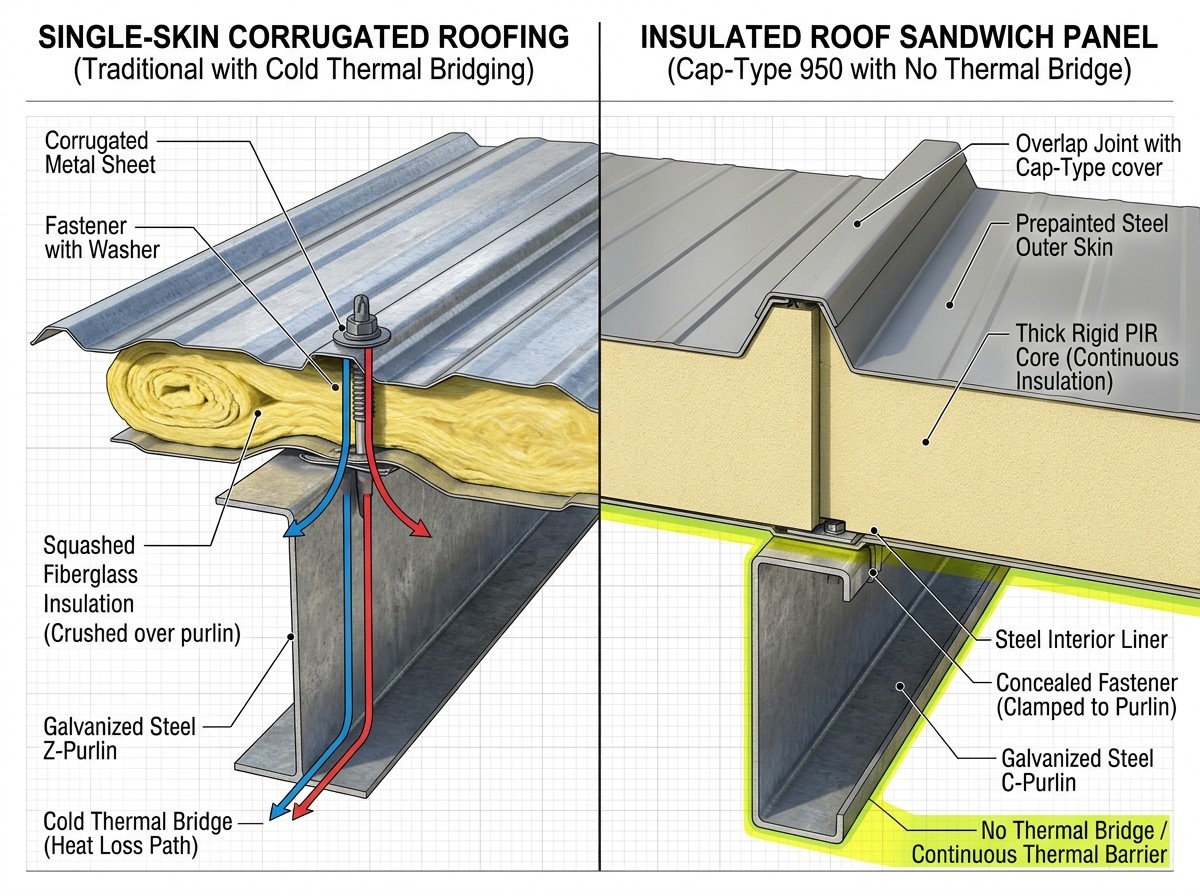
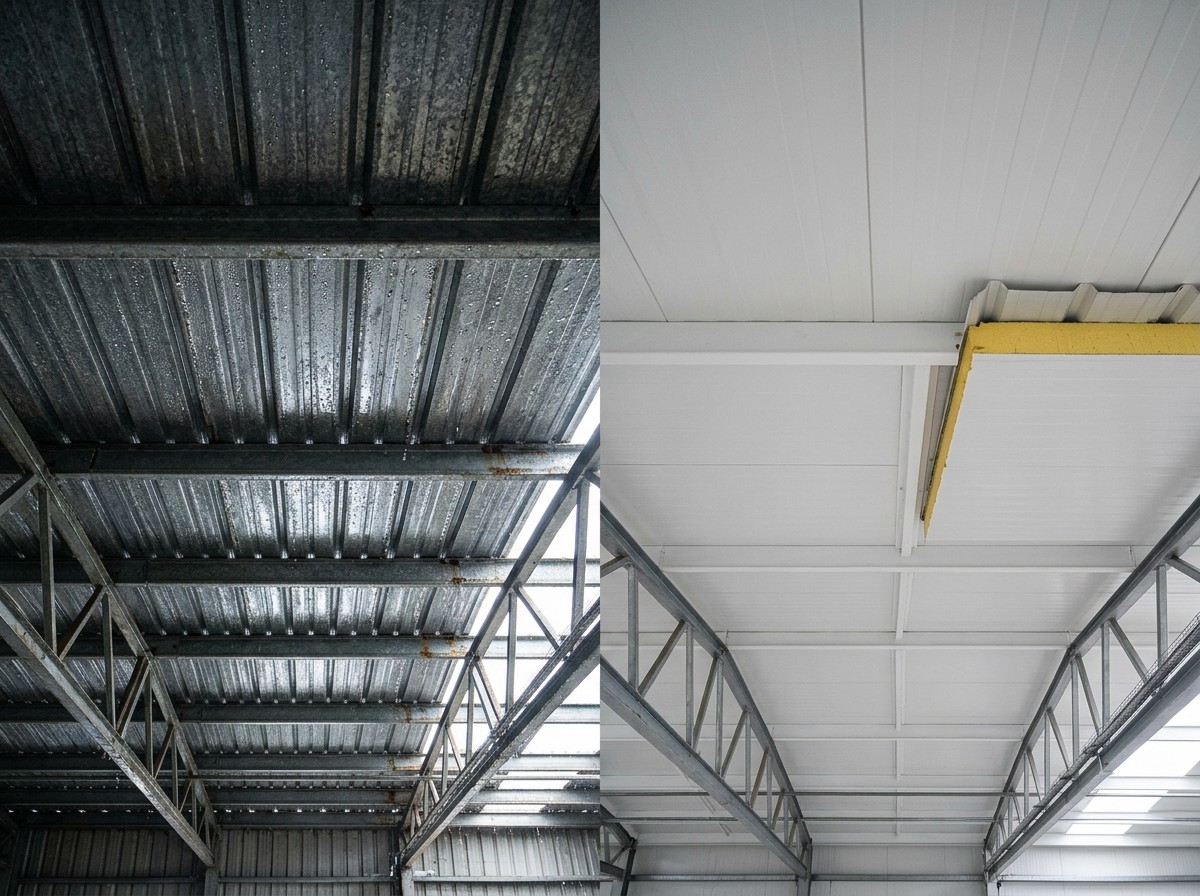
Bare metal sheets have almost zero thermal resistance. When afternoon sun hits an uninsulated steel roof, heat radiates straight down onto the shop floor. Worse, when the roof cools down at night and warm indoor air rises, water vapor condenses on the underside of the steel sheet and drips onto cardboard boxes, steel coils, or machinery below. Stretching loose fiberglass rolls over wire mesh underneath the sheet rarely fixes it for long, because the blanket gets squashed flat over every Z-purlin and tears open within three years.
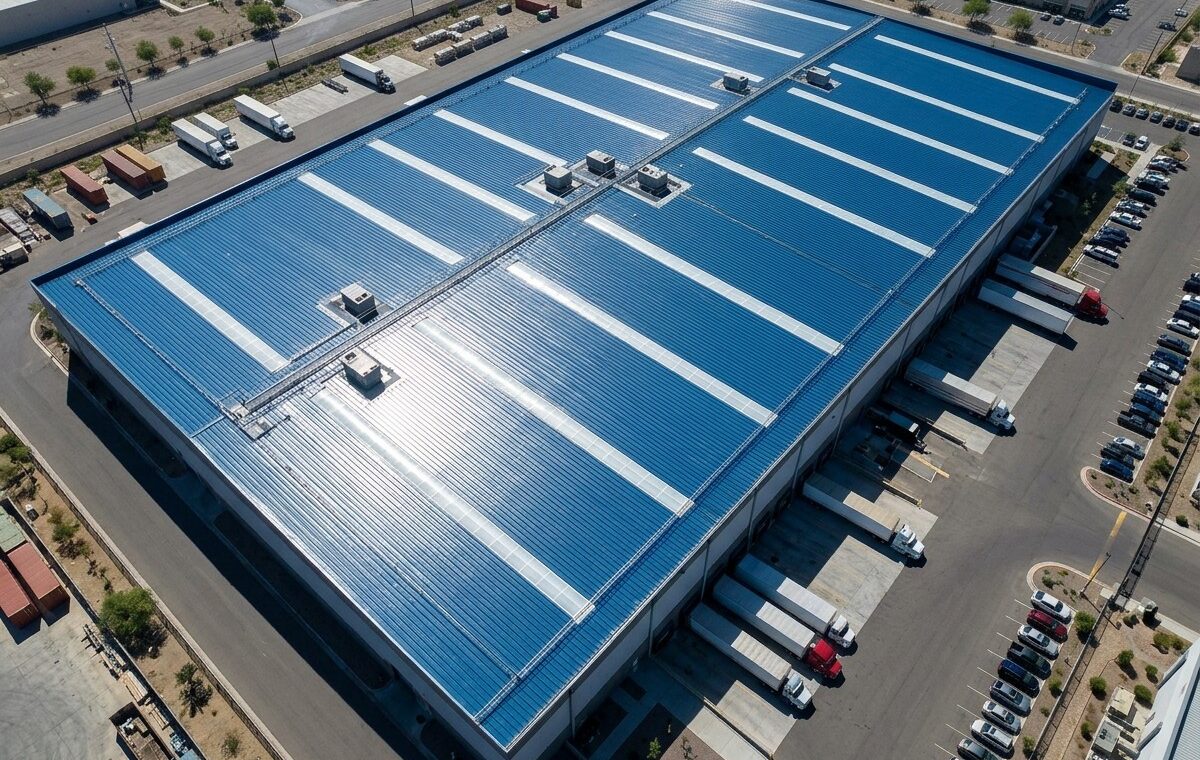
An insulated roof panel bonds two profiles of color-coated steel directly to a rigid core of PIR foam, PU foam, rock wool, or EPS on a continuous double-crawler press. Because there is no air pocket between the top steel sheet and the insulation, moisture cannot condense inside the roof. At Hihsteel, we roll roof boards in Cap-Type 950 profiles (where a snap-on steel cap covers the top fasteners) and Overlap-Type 950/980 profiles with high 35mm to 40mm ribs so heavy monsoon water drains off fast.
Which roof should you actually buy? If you are covering an open-sided tractor shed, a coal yard, or an unheated bulk storage barn where dripping water and rain noise do not matter, single-skin corrugated steel sheets do the job for less money. For any enclosed workshop, food plant, logistics hub, or commercial building, a 75mm or 100mm sandwich roof panel pays back the price difference in two to three summers of lower air-conditioning bills.
Frequently Asked Questions (FAQ)
Q: Why does a single-skin metal roof drip water inside the building even when there are no roof leaks?
A: Warm indoor air holds moisture. When that air touches a bare metal roof sheet cooled by night air or rain, the metal drops below the dew point and turns water vapor into liquid droplets. An insulated sandwich roof panel keeps the bottom steel sheet close to room temperature, stopping condensation.
Q: Can I install insulated roof panels on a low-slope factory roof?
A: Yes. High-rib 3-wave sandwich roof panels with Cap-Type or standing-seam joints can be installed on roof slopes as low as 3% to 5% (roughly 2 to 3 degrees), provided the end laps are sealed with double butyl tape.
Q: Which core material is best for an insulated factory roof: EPS, rock wool, or PIR?
A: Use EPS (50mm to 100mm) for budget dry-goods warehouses; choose PU-side-sealed rock wool (75mm to 100mm) when local fire codes require a Class A non-combustible roof; and pick PIR (75mm to 150mm) for cold storage or air-conditioned workshops.
Q: Do insulated sandwich roof panels require fewer roof purlins than single-skin sheets?
A: Yes. A single-skin 0.5mm sheet needs a steel C or Z purlin every 1.2 to 1.5 meters to prevent sagging. A 75mm or 100mm sandwich roof panel acts as a rigid composite beam and safely spans 2.0 to 3.0 meters between purlins.
Q: How do you bring natural daylight into a warehouse roof built with sandwich panels?
A: We supply double-skin insulated FRP (fiberglass reinforced plastic) or polycarbonate skylight panels rolled to match the exact rib profile of our 950/980 roof sandwich panels, so they drop right into the roof run without special curb flashing.