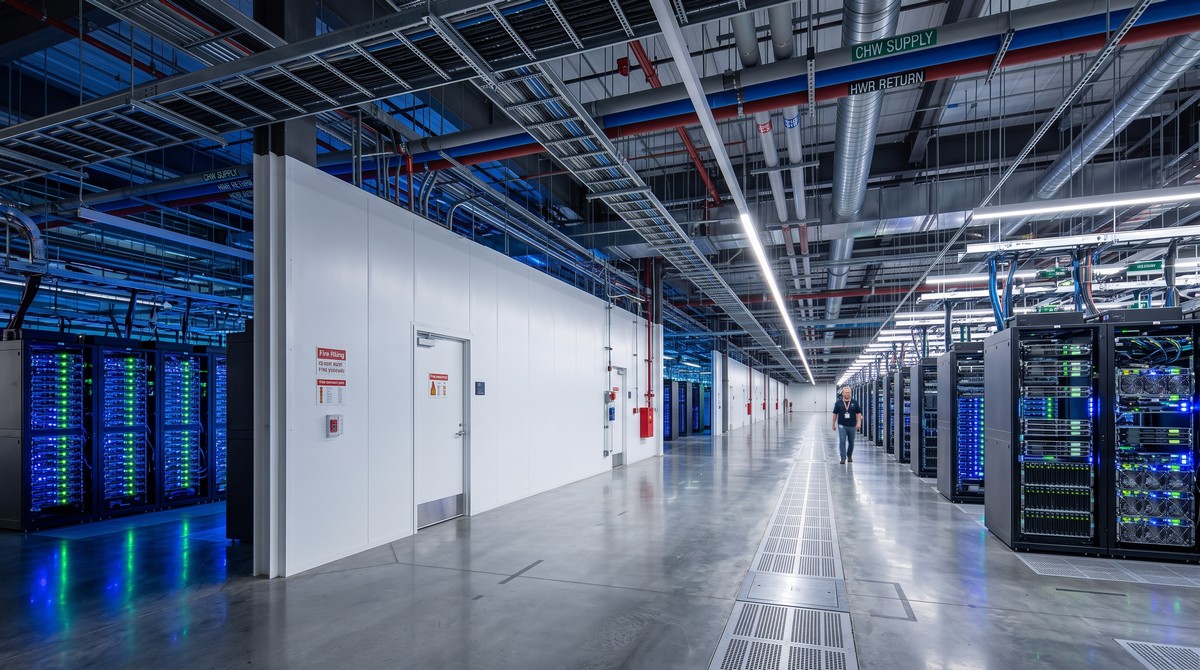
The global explosion of artificial intelligence, high-performance computing (HPC), and cloud hyperscale architectures is sparking the largest specialized data center construction surge in history. According to comprehensive market intelligence released in September 2026 by Mordor Intelligence (https://www.mordorintelligence.com/industry-reports/sandwich-panels-market) and industrial development data from EIN News (https://www.einnews.com/pr_news/938982252/sandwich-panel-market-to-grow-from-usd-17-68-billion-in-2026-to-usd-28-58-billion-by-2035-at-5-48-cagr), hyperscale data center construction has emerged as one of the single most powerful growth drivers in the global sandwich panel market, accelerating the industry toward $28.58 billion. AI server racks now generate power densities exceeding 40 to 100 kW per rack, demanding aggressive containment of ambient exterior heat gains to keep facility Power Usage Effectiveness (PUE) strictly below 1.2.
| Data Center Envelope Parameter | Traditional Concrete & Masonry Cladding | Pre-Engineered PIR & Rock Wool Composite System |
| Envelope Thermal R-Value | R-10 to R-15 (Severe thermal bridging) | R-30 to R-45 (Continuous PIR λ ≤ 0.020 W/m·K) |
| Air Leakage Rate (ASTM E283) | 0.20 – 0.40 cfm/ft² (High HVAC parasitic load) | < 0.01 cfm/ft² (Factory-compressed dual gaskets) |
| Structural Fire Separation | Heavy concrete walls add immense floor load | Class A1 non-combustible rock wool (2 to 4 hr fire) |
| Speed of Construction Delivery | 10 – 14 Months (Slow on-site wet curing) | 3 – 5 Months (Turnkey pre-engineered dry erection) |
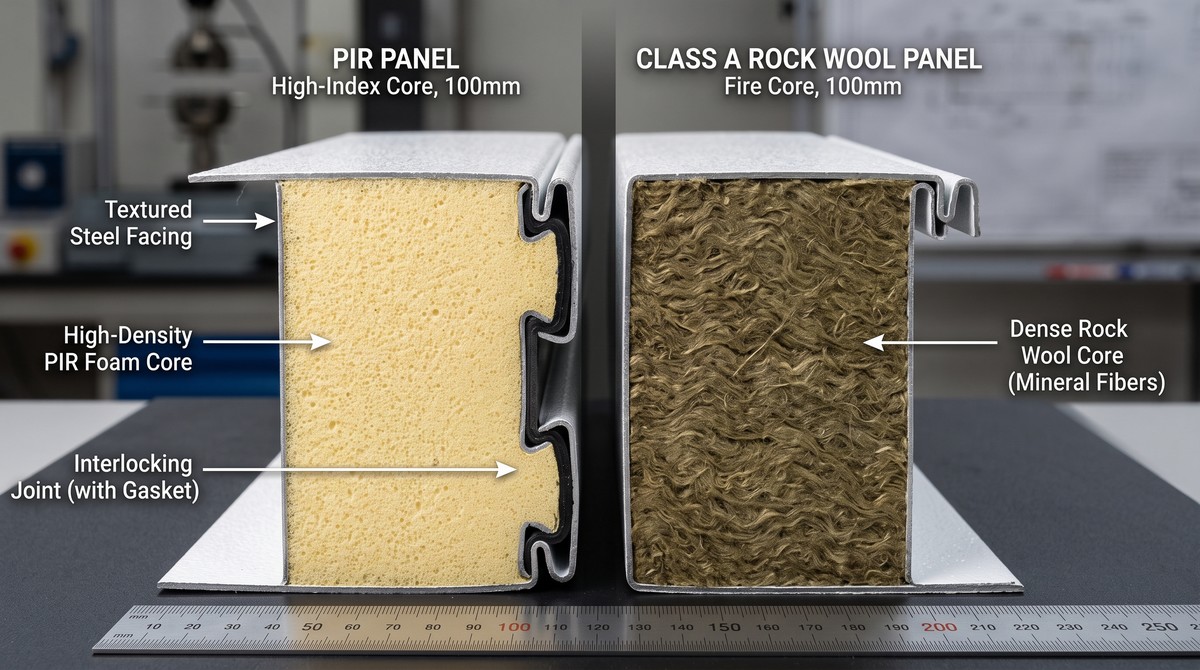
In hyperscale computing facilities, the exterior building envelope is no longer a passive architectural skin; it operates as an active thermal shield. Uncontrolled solar radiation and hot ambient summer air penetrating the facade force chilled-water cooling loops, liquid-to-chip heat exchangers, and CRAH (Computer Room Air Handler) units to consume millions of kilowatt-hours in parasitic power. Traditional tilt-up concrete panels or masonry cavity walls suffer from pervasive structural thermal bridging at steel column junctions, allowing heat to bleed directly into server halls.
Engineered Polyisocyanurate (PIR) sandwich wall panels Panelseliminate this thermal bypass. Utilizing automated continuous n-pentane foaming technology, high-index PIR cores achieve ultra-low thermal conductivity (λ ≤ 0.020 W/m·K). Continuous interlocking tongue-and-groove joints with pre-compressed elastomeric silicone gaskets create an impenetrable airtight barrier, reducing building air infiltration to near-zero levels (< 0.01 cfm/ft²). This hermetic envelope stabilizes indoor humidity and minimizes the cooling kilowatt-hours required per teraflop of compute power.
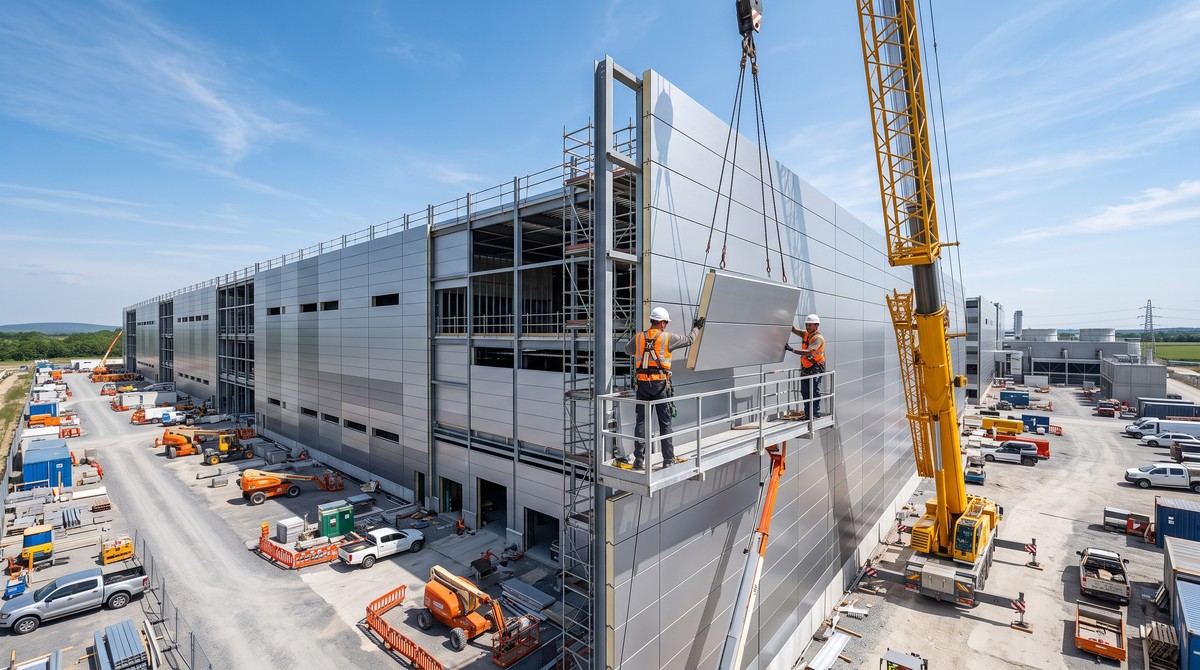
Equally critical in mission-critical data infrastructure is compartmentalized fire protection. Lithium-ion UPS battery rooms, high-voltage transformers, and multi-megawatt backup generator bays present severe thermal runaway fire risks. To isolate these hazard zones from expensive GPU server clusters, hihsteel.com Sandwich Roof Panels (https://hihsteel.com/category/product/metal-cladding-systems/sandwich-roof-panels/) and internal partition systems deploy high-density basalt rock wool cores (density ≥ 120 kg/m³ with vertical slit-fiber orientation). Delivering certified 2-to-4-hour Class A fire barriers with a melting point above 1000°C, these pre-engineered composite panels ensure that localized thermal events are contained without threatening live hyperscale operations.
Frequently Asked Questions (Top 5 Google Search Q&As):
Q: Why do AI and hyperscale data centers require insulated sandwich panels instead of traditional concrete walls?
A: Traditional concrete walls suffer from pervasive thermal bridging at steel column junctions and have high air leakage rates (up to 0.40 cfm/ft²). In contrast, high-index PIR insulated sandwich panels deliver continuous insulation (R-30 to R-45) with thermal conductivity as low as λ ≤ 0.020 W/m·K. Their precision tongue-and-groove joints reduce air infiltration to < 0.01 cfm/ft², drastically cutting parasitic HVAC cooling loads and enabling facilities to achieve Power Usage Effectiveness (PUE) below 1.2.
Q: What is the recommended fire rating for sandwich panels in data centers housing lithium-ion battery UPS systems?
A: Lithium-ion battery rooms, backup generator bays, and high-voltage transformer suites present severe thermal runaway risks. Data center fire safety standards mandate minimum 2-hour to 4-hour Class A fire barriers. High-density basalt rock wool core panels (density ≥ 120 kg/m³ with vertical slit-fiber orientation and melting point > 1000°C) comply with ASTM E119 / GB/T 9978, containing localized fires and protecting adjacent live GPU clusters.
Q: What panel thickness is recommended for hyperscale data center building envelopes?
A: For exterior wall envelopes in extreme climates, 100mm to 150mm PIR panels (achieving U-values of 0.13 to 0.19 W/m²K) are standard to minimize solar heat gain. For internal firebreak partitions separating server halls from utility rooms, 100mm to 150mm structural rock wool sandwich panels provide certified 2-to-4-hour non-combustible fire protection.
Q: How do insulated metal panels prevent indoor condensation and humidity fluctuations in server halls?
A: Hyperscale computing requires tight relative humidity control (40%–60% RH) to prevent electrostatic discharge (ESD) and electronic corrosion. Insulated metal panels feature continuous hot-dip galvanized steel facings (0.6mm–0.8mm) that act as an impermeable Class I vapor retarder (perm rating < 0.01 Perms), while factory-compressed elastomeric silicone gaskets prevent outdoor humidity migration.
Q: Can insulated sandwich panel roofs support heavy rooftop chillers, CRAH units, and solar arrays?
A: Yes. Heavy-duty 3-wave trapezoidal sandwich roof panels with high-density cores distribute uniform rooftop loads effectively. For heavy concentrated mechanical units (such as dry coolers, chillers, and solar arrays), loads are anchored through engineered structural curbs directly into primary roof steel trusses, preserving the weather-tight integrity of the panel joints.