Clean rooms are among the most energy-intensive industrial facilities on earth, consuming between 20 to 50 times more electricity per square foot than standard commercial buildings. According to HVAC engineering benchmarks published by international authority Cleanroom Technology (https://cleanroomtechnology.com/what-is-happening-with-the-cleanroom-market-in), up to 80% of total cleanroom power consumption is driven by continuous heating, ventilation, and air conditioning (HVAC) operation. Maintaining required room air changes (often 30 to 600 ACH depending on ISO classification) demands massive fan motor loads. However, facility managers frequently overlook the primary source of energy waste: parasitic air leakage through porous wall partitions and unsealed panel joints.
| Cleanroom Energy Metric | Traditional Drywall Assembly | hihsteel.com Airtight Modular System |
| Air Permeability Rate | > 0.40 m³/(h·m²) at 50 Pa | < 0.05 m³/(h·m²) at 50 Pa (Class 4) |
| Differential Pressure Loss | High parasitic bleed through seams | Zero loss, stable pressure cascade |
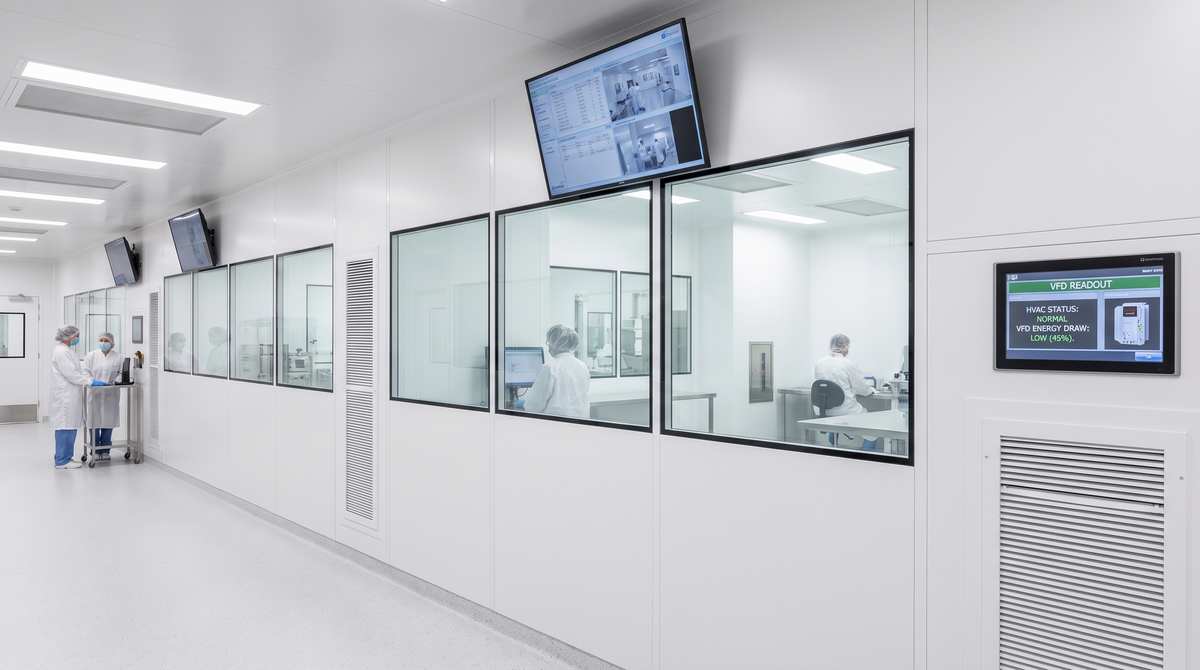
| HVAC Fan Motor Frequency | Constant 100% full capacity drive | Modulated VFD speed (15-20% savings) |
| Annual Energy Savings (kWh) | Baseline reference | 15% – 22% overall facility reduction |
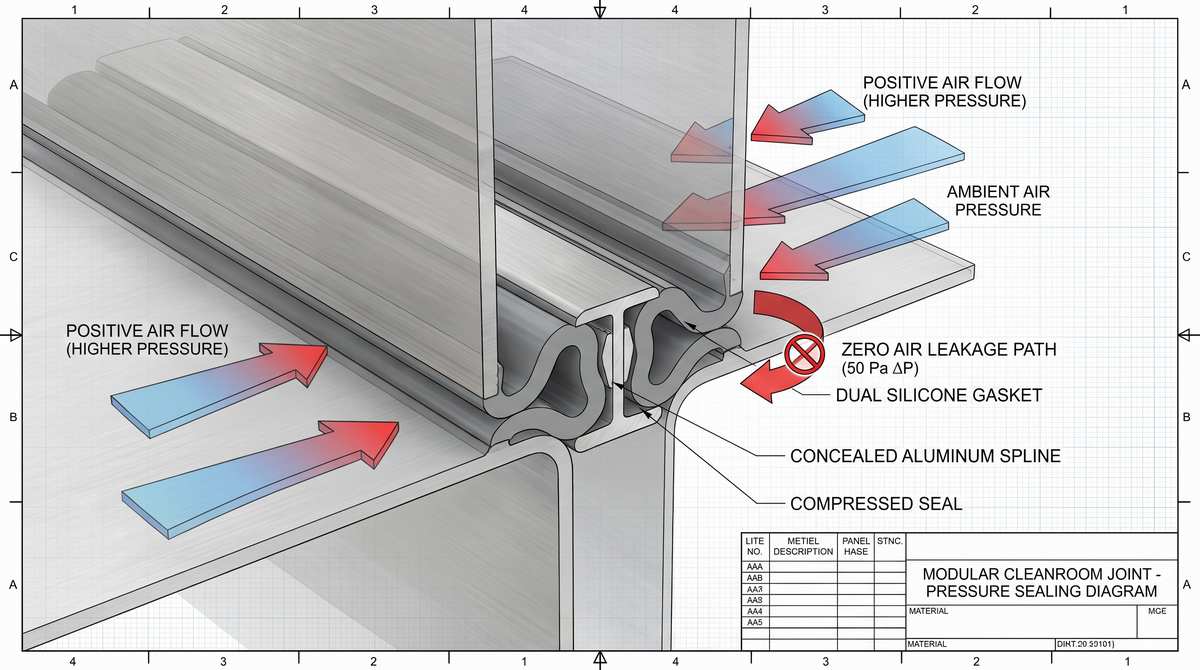
The thermodynamic cost of clean air is extraordinary. Every cubic meter of conditioned clean room air must be drawn from outside, pre-filtered, chilled, dehumidified, reheated, and pushed through terminal HEPA or ULPA filters. When wall assemblies are built using traditional drywall, leaky joint compounds and porous ceiling transitions allow pressurized, conditioned air to escape continuously into unclassified ceiling plenums or interstitial utility chases. To compensate for this invisible leakage and maintain mandatory positive pressure differentials (typically 10 to 15 Pa between suites), HVAC make-up air fans must spin continuously at peak capacity, burning thousands of unnecessary kilowatt-hours each month.
Engineered modular cleanroom envelope systems manufactured by hihsteel.com Clean Room Series resolve this through precision joint hermeticity. Unlike field-caulked drywall seams that shrink and fissure over time, pre-engineered modular panels utilize precision-milled aluminum extruded framing integrated with continuous closed-cell silicone or EPDM compression gaskets. As panels are interlocked during mechanical dry assembly, the dual-gasket tracks compress under calibrated pressure, establishing an airtight structural seal tested to exceed ISO 14644-3 envelope tightness criteria (leakage rates below 0.05 m³/(h·m²) at 50 Pa).
Furthermore, thermal conductivity of the wall envelope dictates latent and sensible cooling loads. Facilities manufacturing sensitive microelectronics or moisture-sensitive pharmaceuticals require tight temperature control (±0.5°C) and relative humidity below 30%. Utilizing insulated metal cleanroom sandwich panels with high-density rock wool or aluminum honeycomb cores insulates clean zones from ambient building thermal swings. Sourcing factory-direct modular panel kits ensures precision factory-milled penetrations for return air grilles and HEPA terminal housings, preventing field-cut air leaks and delivering rapid return on investment (ROI) within the first two years of operation.