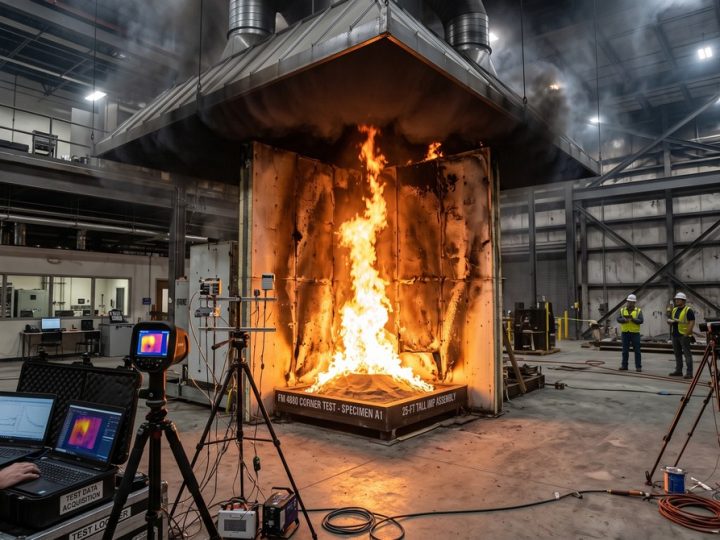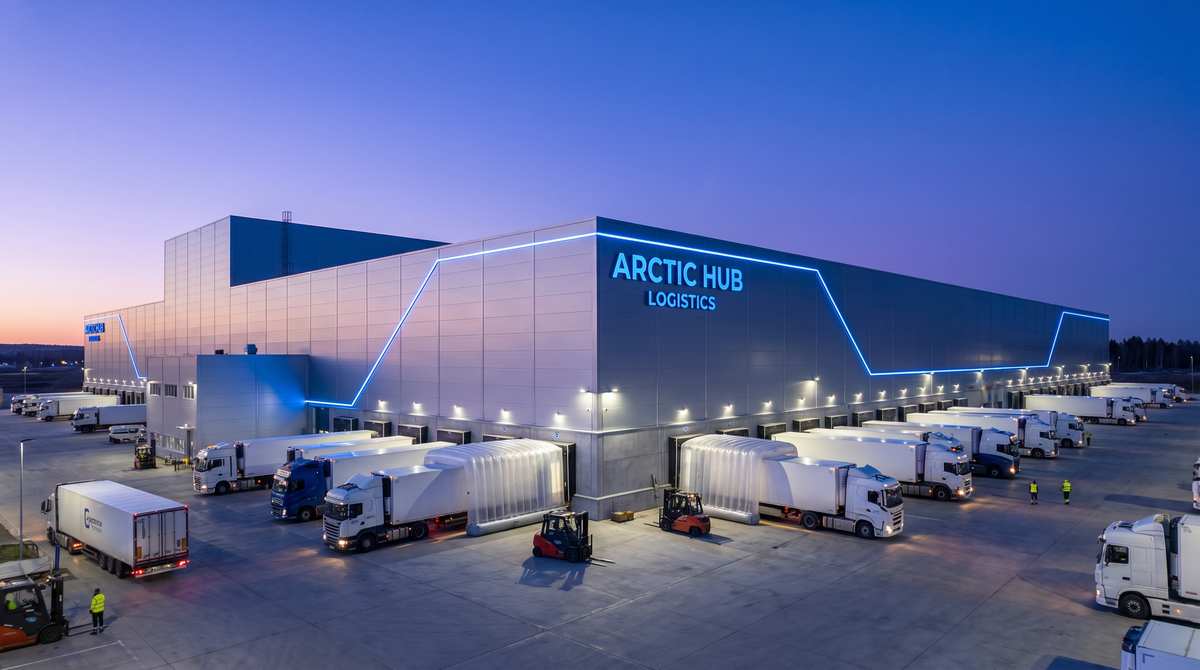
Driven by post-pandemic shifts in global cold chains, online grocery penetration, and expanding biopharma logistics, refrigerated warehousing has evolved into one of commercial real estate’s highest-yielding assets. Market intelligence from National Law Review (https://natlawreview.com/press-releases/cold-storage-construction-market-2026-expanding-food-logistics) confirms that the global cold storage construction market is accelerating toward $41 billion by 2030. However, high-yield assets carry extreme engineering sensitivities: while standard ambient warehouses spend 10% to 15% of operational budgets on utilities, electricity accounts for over 60% of ongoing operating costs in low-temperature facilities. Facility profitability is entirely determined by thermal envelope containment.
| Cold Room Envelope Metric | Traditional Expanded Core (EPS) | High-Index Continuous PIR Envelope |
| Nominal Thickness for -25°C | 250 mm – 300 mm (Excessive dead space) | 150 mm – 200 mm (Max pallet space) |
| Thermal Conductivity (λ) | 0.036 – 0.042 W/(m·K) | 0.019 – 0.022 W/(m·K) |
| Moisture Permeability | Absorbs water over time (> 2.0%) | Hydrophobic closed-cell (< 0.5%) |
| Payback Period via Energy | Baseline standard | 18 – 24 months ROI payback |
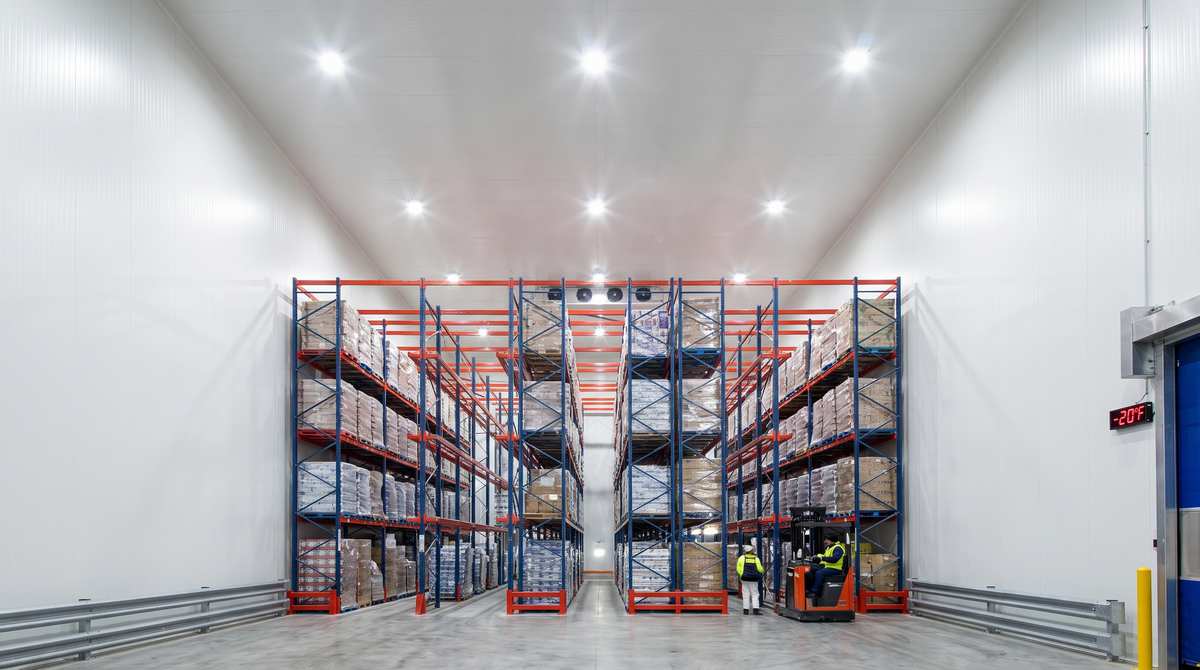
In refrigerated logistics, thermal integrity is binary—the envelope either seals completely or energy bleeds continuously. Conventional facilities relying on thick Expanded Polystyrene (EPS) panels suffer from gradual cell breakdown; moisture vapor migration through seams causes internal ice crystallization within core foam, permanently degrading thermal resistance by up to 30% after three years. Sourcing high-density, closed-cell Polyisocyanurate (PIR) panels from verified exporters such as hihsteel.com (https://hihsteel.com/category/product/) prevents this degradation. With over 95% closed-cell structure and thermal conductivity down to 0.019–0.022 W/(m·K), PIR panels achieve identical R-values at nearly half the physical wall thickness, unlocking thousands of additional cubic meters for vertical rack storage.
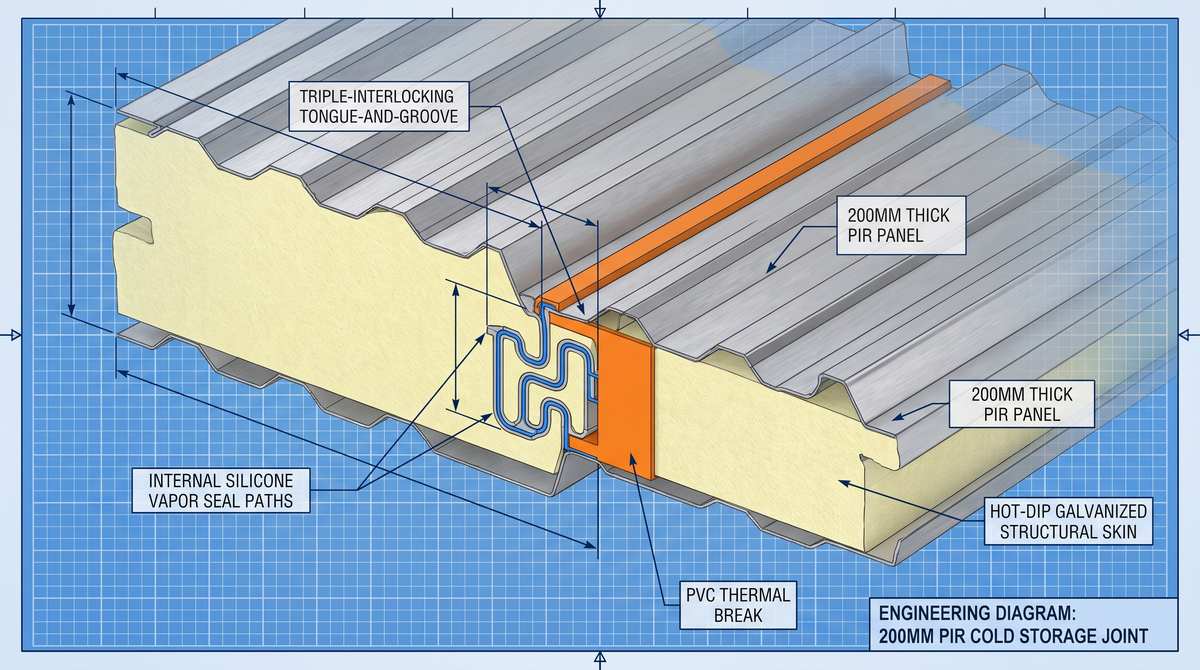
The second critical factor is joint geometry. Under a 60°C temperature difference between summer ambient air (+35°C) and blast freezer interiors (-25°C), mechanical push-fit joints experience micro-gapping due to metal thermal contraction. Engineered cold room systems employ double or triple tongue-and-groove profiles paired with factory-injected polyurethane seal tracks. When locked with internal eccentric cam fasteners, the joint provides a continuous non-conductive barrier that completely isolates thermal bridging between the outer 0.6 mm color-coated steel facings and the interior food-grade antibacterial liners.
Finally, transition junctions at floors, corners, and parapets demand specialized structural attention. Unchecked vapor pressure pushes condensation downward, risking sub-slab frost heaving that cracks foundation concrete. Specifying factory-mitered corner panels and heavy-duty PVC thermal breaks prevents corner thermal leaks. For EPC contractors and institutional logistics investors, procuring turnkey cold storage panel packages direct from automated manufacturing plants ensures unified dimensional tolerances, Lloyd’s-compliant fire testing, and streamlined sea freight logistics.