
⚠️ Chile Earthquake Fact File
📍 Location: Northern Chile (Atacama region, Antofagasta)
🎚️ Magnitude: Constant subduction threat frequently exceeding Mw 7.4+ (e.g., July 2024 Antofagasta quake).
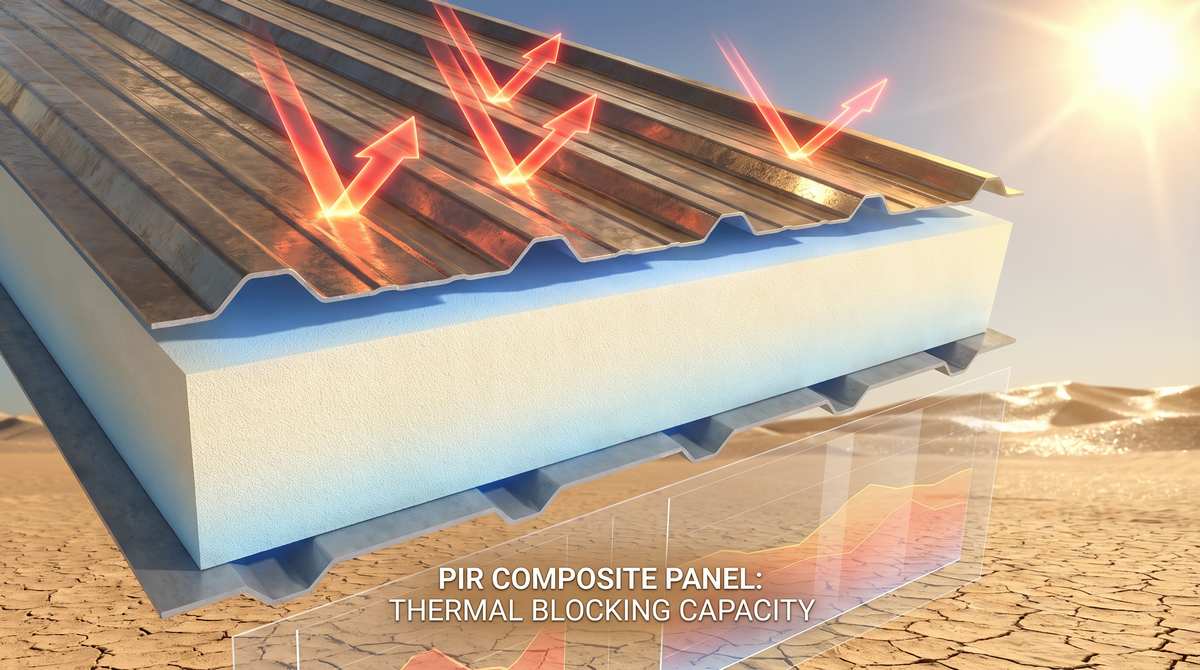
⏱️ Climate Constraints: The Atacama Desert features some of the highest solar radiation levels on Earth, paired with drastic day-to-night temperature swings (35°C shifts).
💥 Impact: Severe cyclical shaking violently jeopardizes heavy copper mining processing plants and logistics hubs. Rapid thermal shock aggressively degrades standard building materials.
🏚️ Failure Mode: Low-quality structural connections fail under long-duration megathrust friction. Furthermore, standard metal roofs buckle and tear continuously due to extreme diurnal thermal expansion in the deep desert.
🏗️ Reconstruction: Total compliance with Chile’s rigorous NCh433 code utilizing heavy-duty steel structures. The enclosure must use high-R-value PIR composite sandwich panels to buffer extreme thermal shock and keep interiors cool without adding destructive seismic dead-weight.
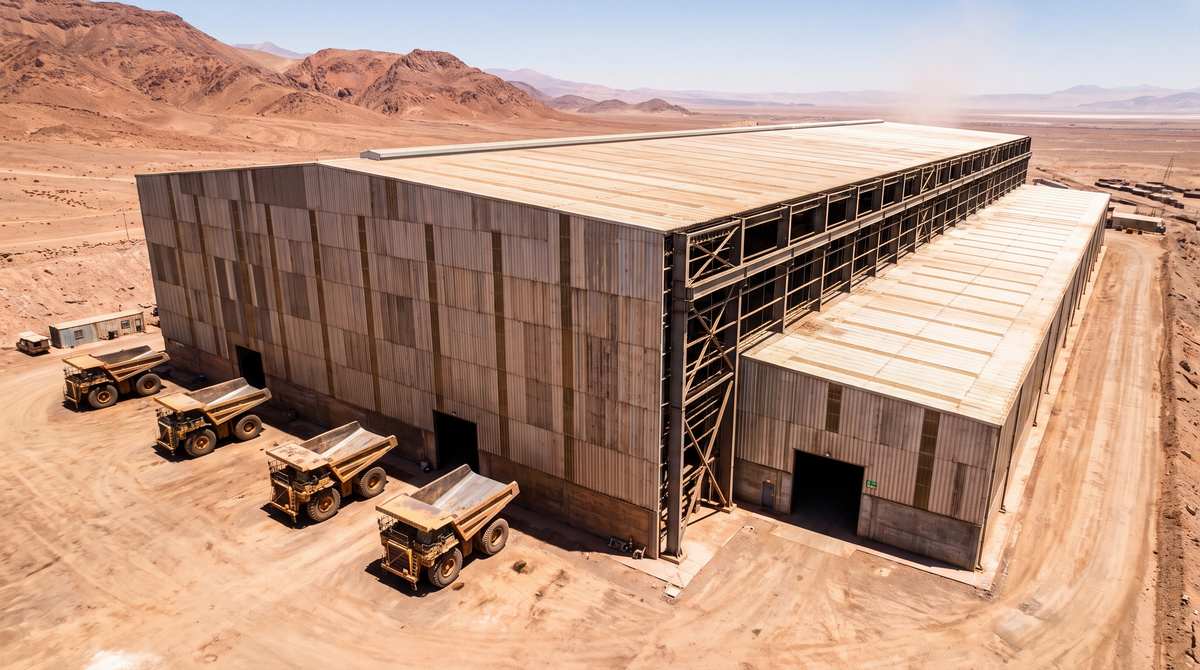
Chile is universally recognized by civil engineers as the absolute global benchmark for extreme seismic demands. Positioned directly along the violently active convergent boundary where the Nazca Plate subducts beneath the South American Plate, the northern mining corridors from Antofagasta through the Atacama frequently experience powerful megathrust seismic events, regularly exceeding Mw 7.4.
Under Chile’s notoriously stringent seismic building codes (NCh433 and NCh2369 for industrial facilities), structures must withstand extreme horizontal ground accelerations while maintaining 100% operational continuity. For vital copper mining operations and port logistics centers, standard “life-safety” building survival alone is insufficient. The building envelope must physically survive the shaking while effortlessly handling the extreme thermal shock of the Atacama Desert.
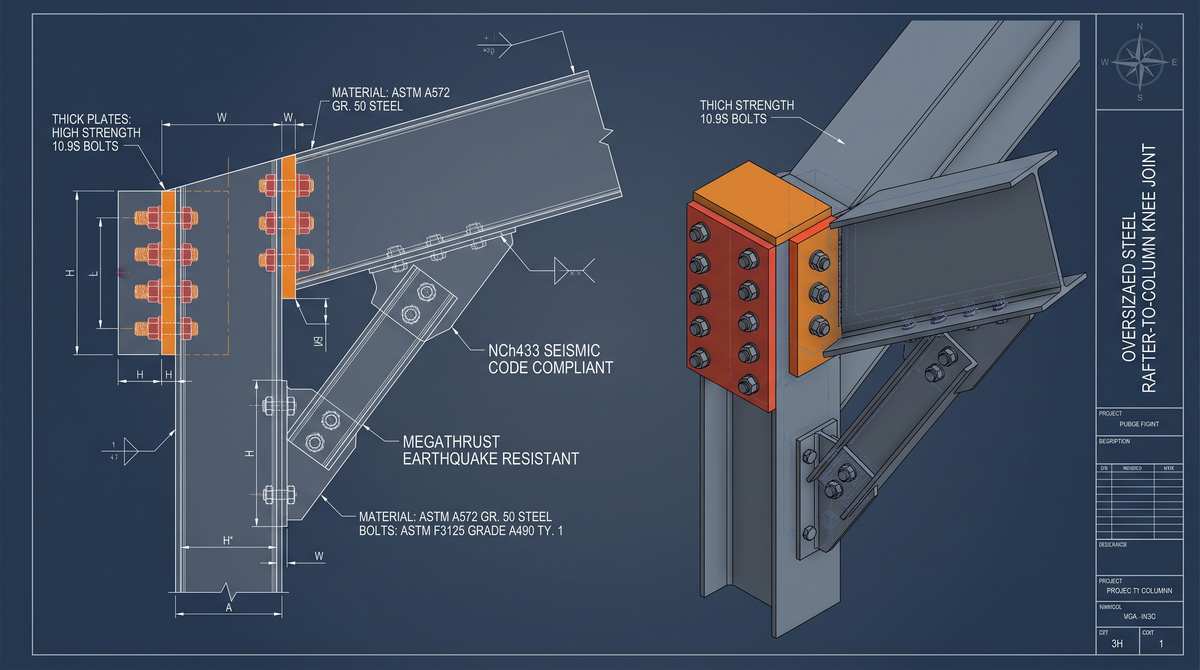
We supply heavy-duty Pre-Engineered Steel Building solutions specifically engineered to satisfy extreme NCh2369 seismic standards. Our structural designs utilize premium high-strength structural steel plates (Q345B) fabricated into immensely robust tapered columns and rafters. Primary knee splices feature heavy, oversized end plates securely fastened by Grade 10.9S large hexagon high-strength bolts. This precise configuration provides substantial rotational ductility under the violent cyclic reverse-bending moments typical of long-duration subduction earthquakes.
However, the Atacama Desert brutally pairs extreme seismic activity with severe environmental exposure. Facilities face drastic day-to-night temperature swings spanning 35°C, exposing standard single-skin metal sheets to aggressive thermal expansion that ruthlessly shears fastener screws off their purlins.
To permanently overcome this, we highly mandate integrating Polyisocyanurate (PIR) Composite Sandwich Panels for both the roof and walls. PIR currently represents the absolute apex of thermal insulation technology. The rigid PIR core prevents thermal bridging entirely, dead-stopping the blistering desert heat from penetrating the warehouse and completely neutralizing drastic nocturnal temperature drops.
Crucially for high-risk earthquake zones, PIR composite panels are exceptionally lightweight yet incredibly rigid. They do not add the massive, top-heavy dead load that concrete or thick masonry would, significantly reducing the effective base shear during a megathrust quake. Coated with premium anti-corrosion prepainted galvanized steel (PPGI) or stainless steel skins, these PIR sandwich panels easily resist both severe seismic flexing and the harsh, highly abrasive mineral-dust-laden environment of Chilean mining operations.