
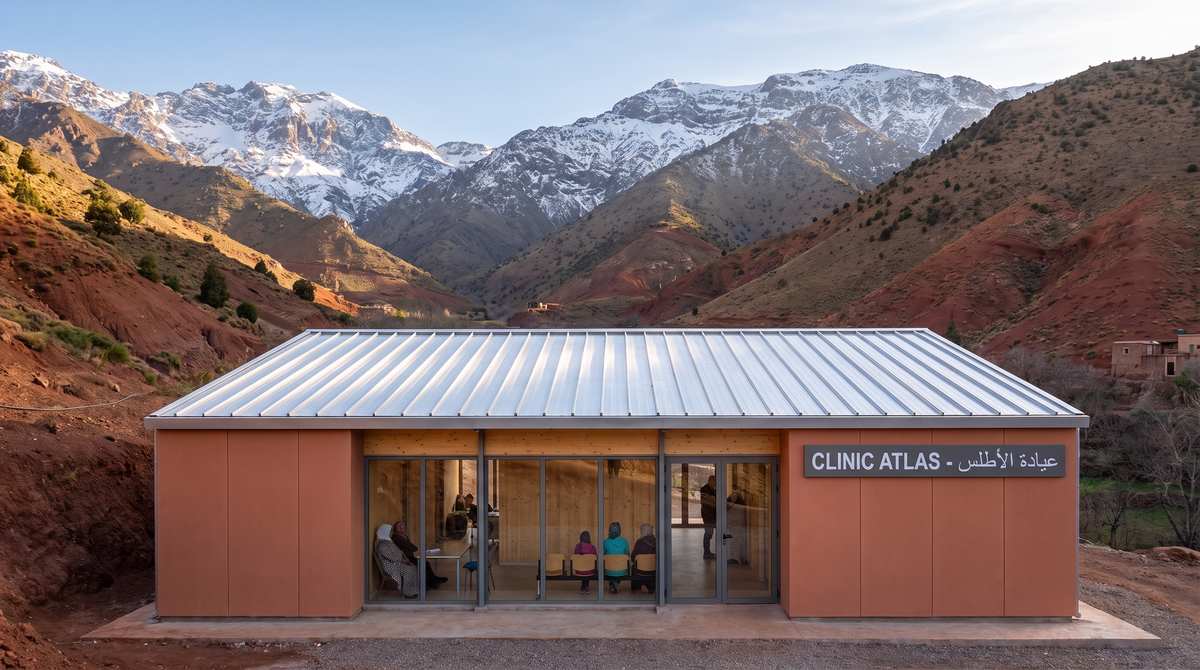
⚠️ Morocco Earthquake Fact File
📍 Location: High Atlas Mountains (Al Haouz province, Amizmiz, Asni), Morocco
🎚️ Magnitude: Mw 6.8 (Shallow source)
⏱️ Date & Climate: September 8, 2023. Mountainous regions feature extreme diurnal temperature shifts, oscillating between blistering daytime heat and freezing alpine nights.
💥 Impact: Nearly 3,000 fatalities. Traditional adobe (mud-brick) and heavy stone masonry buildings completely pulverized under intense shear forces.
🏚️ Failure Mode: Ancient adobe construction has zero tensile ductility and extreme structural weight. When shaken, the heavy roofs collapsed entirely, instantly burying occupants in dense rubble.
🏗️ Reconstruction: A mandatory shift away from heavy earth and stone. The new standard demands lightweight, modular steel frameworks transportable by small mountain trucks, combined with high-insulation composite paneling to survive high-altitude climates without adding dangerous seismic mass.
The catastrophic Mw 6.8 earthquake that struck the Al Haouz province in Morocco’s High Atlas Mountains in September 2023 caused widespread destruction across mountain villages such as Amizmiz, Ijoukak, and Talat N’Yaaqoub. Forensic structural analysis highlighted a tragic reality: nearly 90% of casualties resulted directly from the collapse of traditional adobe, rammed earth, and unreinforced stone masonry buildings.
These ancient building methods, while providing reasonable thermal mass against desert temperatures, possess virtually zero tensile ductility and extreme gravitational weight. When shaken violently by shallow tectonic crustal shifts, the massive stone walls and thick clay mud roofs pulverized into deadly debris. Rebuilding vital infrastructure like schools, community clinics, and municipal depots in the Atlas range requires an absolute, permanent departure from heavy masonry toward lightweight, transport-friendly Pre-Engineered Steel Buildings (PEB).
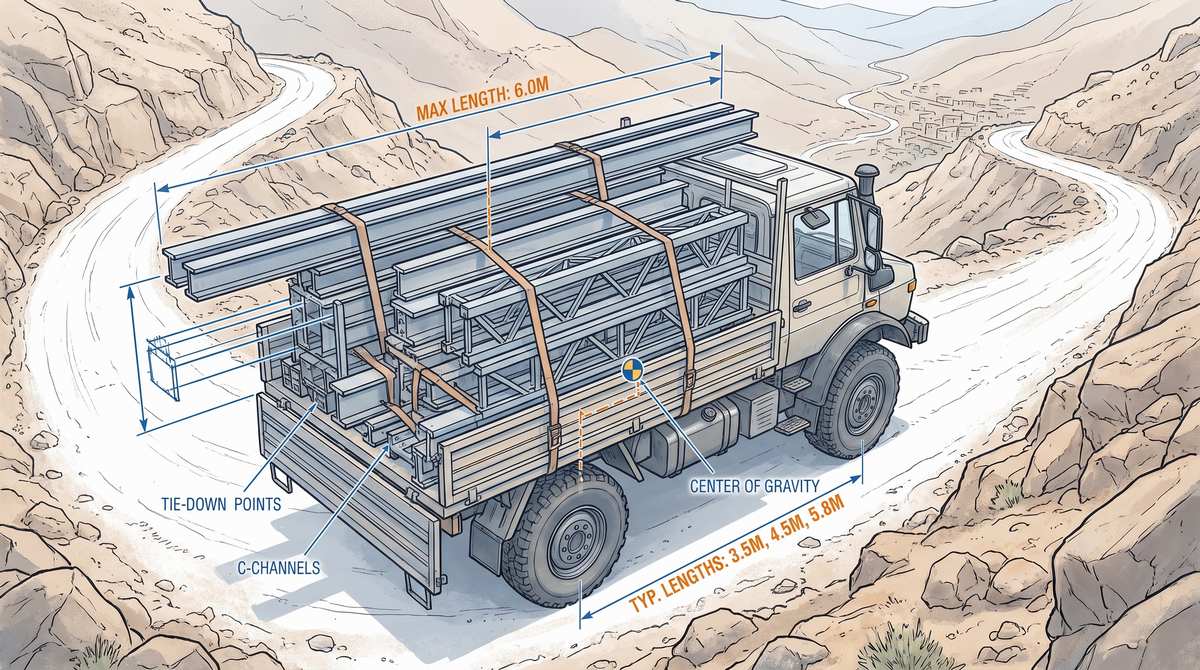
We manufacture modular, ultra-lightweight PEB structural systems tailored specifically for remote high-altitude deployment. In mountainous reconstruction, the primary engineering constraint is logistics: winding mountain switchbacks and washed-out dirt bridges prevent the transit of standard 40-foot flatbed semi-trailers. Our engineering team meticulously optimizes portal frames into sectioned modular members (L ≤ 6.0 m) that can be easily transported on standard 5-ton mountain utility trucks and rapidly assembled on site. Fabricated from Q345B high-tensile steel, these rigid portal frames weigh less than 20% of an equivalent stone masonry envelope while providing vastly superior resistance against seismic lateral forces.
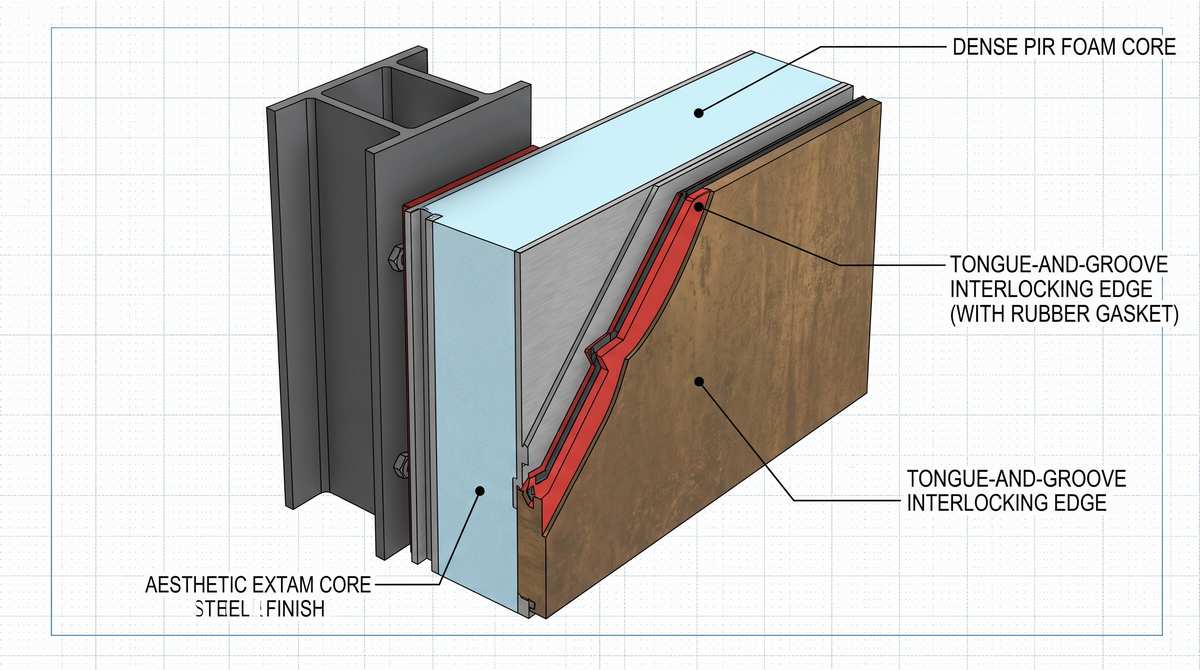
In addition to seismic safety, the High Atlas Mountains present brutal climatic dualities: blistering summer heat and harsh sub-zero winter blizzards at elevations exceeding 1,500 meters. Building massive stone walls for insulation is no longer a structurally safe option. Instead, we integrate high-performance Polyisocyanurate (PIR) core composite sandwich panels for the exterior walls. PIR core panels offer the highest thermal resistance (R-value) per inch of any commercial building material, delivering exceptional temperature control while adding virtually zero seismic mass to the steel frame.
For the roof, the high-rib continuous welded standing seam system is paired with a heavy-duty double-layered sub-purlin thermal blanket. The outer weather skin consists of 0.6mm ferritic 445J2 or austenitic 304 stainless steel panels featuring 75mm tall ribs. Interlocked with a 360-degree mechanical double lock and fully welded across peak interfaces, this roof completely prevents dense snowmelt dams and driving mountain gales from penetrating the building interior. By replacing brittle mountain masonry with agile steel framing and advanced PIR composite insulation, Moroccan communities can rebuild high-performance, earthquake-proof infrastructure that endures for generations.