
⚠️ Greece Earthquake Fact File
📍 Location: Arkalochori, Crete Island, Greece
🎚️ Magnitude: Mw 6.0
⏱️ Date: September 27, 2021 (Followed by an intense swarm of aftershocks)
💥 Impact: 80% of Arkalochori buildings damaged. Over 5,000 old structures and 40 schools compromised.
🏚️ Failure Mode: A shallow crustal fault shattered rigid, heavy unreinforced stone and masonry walls due to extreme high-frequency ground acceleration.
🏗️ Reconstruction: A mandatory shift away from heavy stone towards lightweight, high-ductility Class DCM steel structures strictly complying with Eurocode 8 (EN 1998-1).
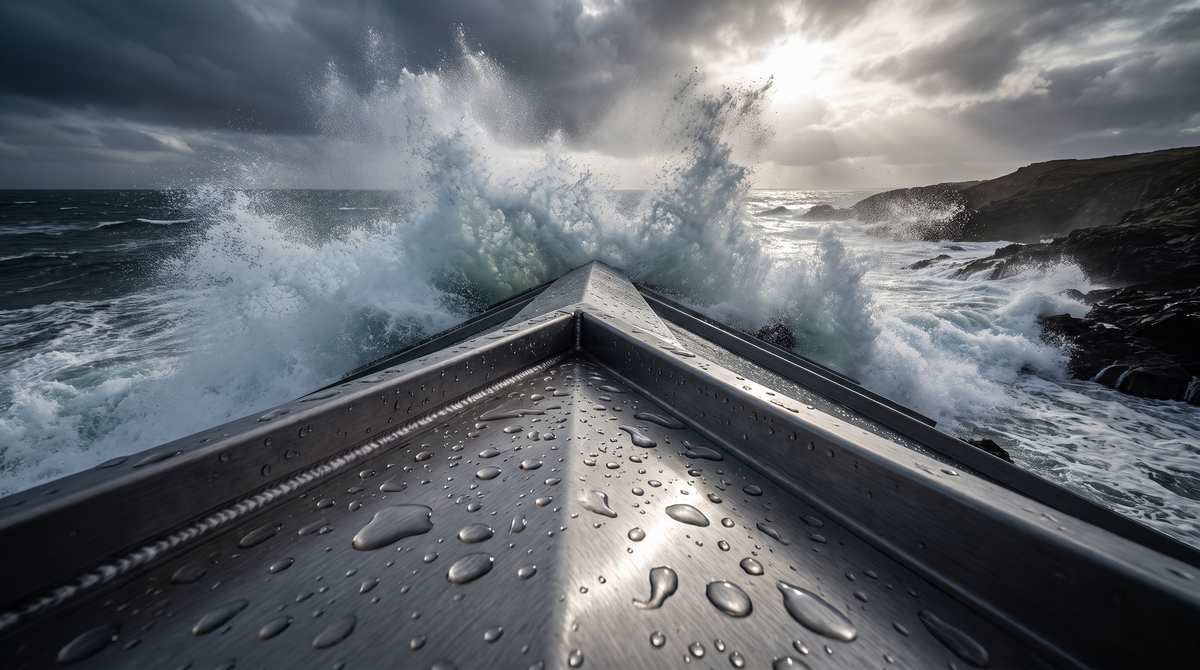
The Aegean region represents Europe’s most seismically active zone, driven by the Hellenic Subduction Arc. Recent destructive events, including the Mw 6.0 Arkalochori earthquake on Crete, devastated conventional reinforced concrete structures and rigid masonry commercial hubs. On Greek islands like Crete, Rhodes, and the Cyclades, commercial developers face a brutal dual challenge: surviving extreme ground acceleration under Eurocode 8 (EN 1998-1) mandates, and defeating severe coastal atmospheric corrosion driven by summer “Meltemi” winds blasting salt-saturated air.
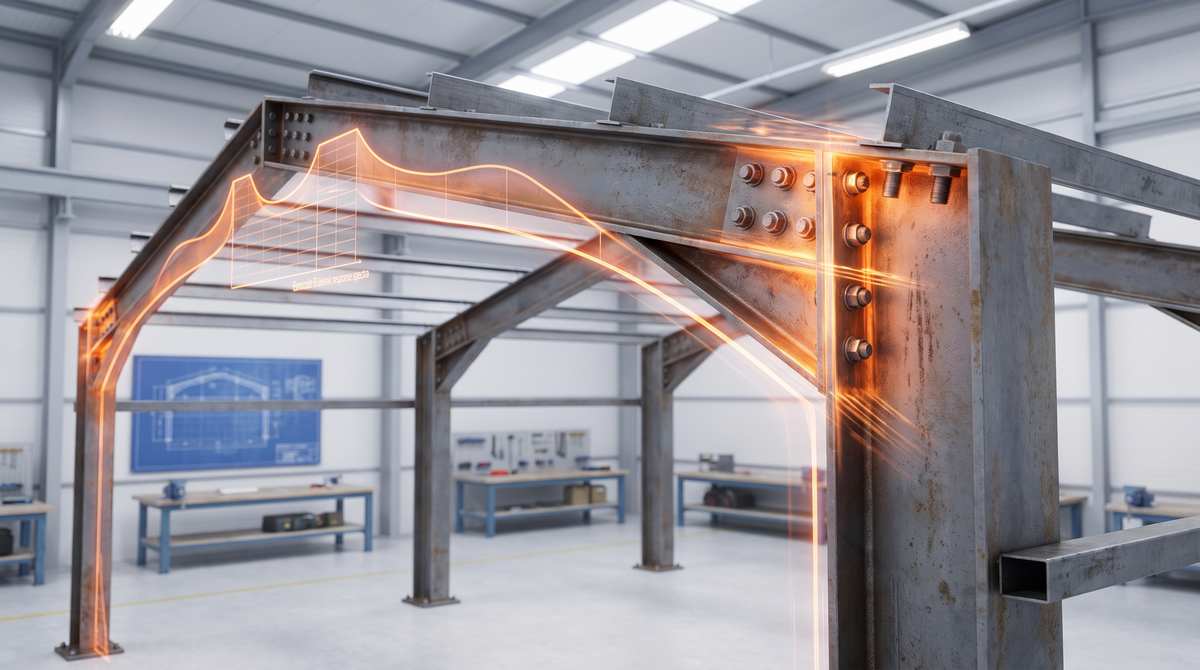
To meet the rigorous safety and economic demands of Aegean industrial development, we supply CE-certified Pre-Engineered Steel Buildings engineered in strict compliance with Eurocode 3 (Steel Design) and Eurocode 8 (Seismic Resistance). Our structural framing uses certified S355/Q345B steel, detailed for Medium Ductility Class (DCM) with a behavior factor of q = 4.0. Primary portal frames incorporate optimized tapered rafters connected to columns via Grade 10.9S high-strength pre-tensioned bolts. Under dynamic cyclic seismic loading, these connections provide controlled hysteretic energy dissipation through plastic hinge formation. This prevents catastrophic frame collapse while keeping structural inter-story drift within strict Eurocode limits (≤ 0.010 h).
While the primary frame absorbs seismic shocks, the building envelope must withstand the highly corrosive Aegean marine environment. Standard coated galvanized sheets rapidly suffer cut-edge corrosion and fastener rusting when exposed to continuous marine salt spray. Within a few years, penetrative screw holes corrode and fail, creating severe leak paths during winter storms.
The continuous welded stainless steel roofing system solves this coastal challenge permanently. Roll-formed from marine-grade 316L stainless steel (EN 1.4404) containing 2-3% molybdenum, the material forms an electro-chemically stable, self-passivating chromium-molybdenum oxide surface that is completely impervious to airborne marine chlorides.
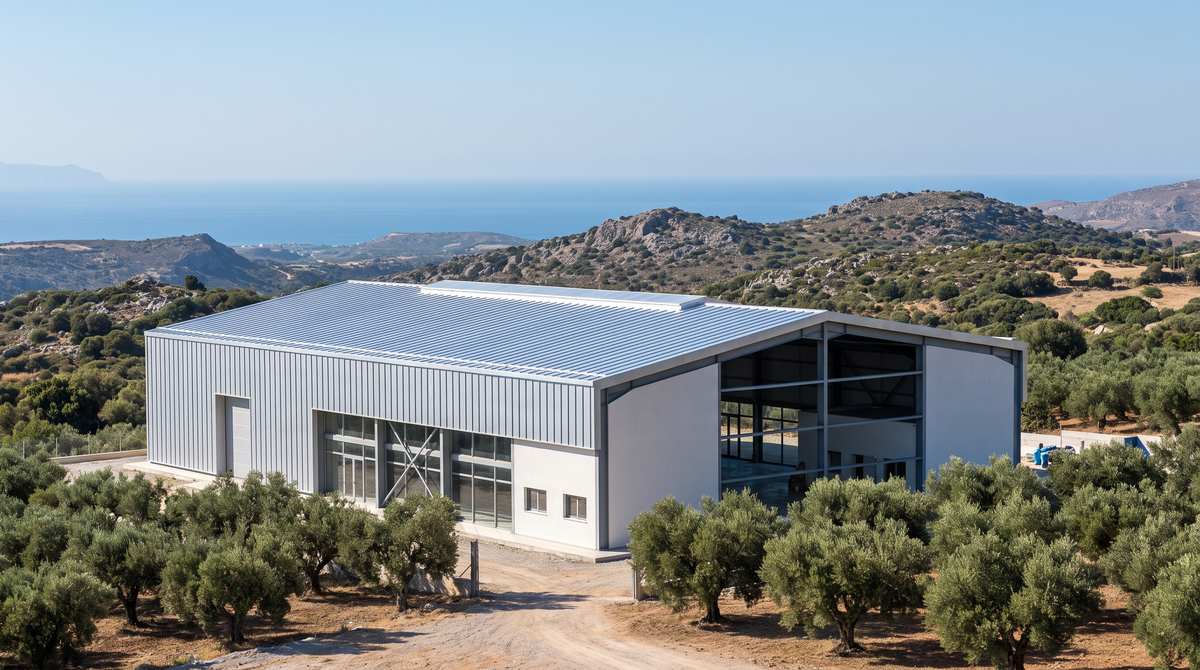
The system features an expansive 75mm tall vertical standing rib, locked mechanically to 360 degrees and continuously sealed with mechanized longitudinal welding. This creates a puncture-free, unified metallic skin that eliminates the thousands of loose, leaking screws typical of traditional industrial roofs.
Tested to resist extreme negative wind uplift pressures of up to -13.3 kPa, this system easily withstands gale-force Meltemi wind gusts. Supported by movable stainless steel sliding clips with polymer thermal isolation pads that absorb thermal expansion over a ±32 mm stroke, this roof provides lasting, leak-proof protection for Greek logistics hubs, wineries, and marine industrial facilities.