Level 1 Damage: Fixing Surface Scratches Without Creating an Ugly Paint Halo
Even with careful crane slings, a stray buckle or dropped tool occasionally scratches through the paint on a brand-new panel. Leave bare steel exposed and red rust stains will bloom within two rainy weeks; grab a wide rattle-can spray and you will leave a cloudy overspray halo that looks ten times worse than the scratch.
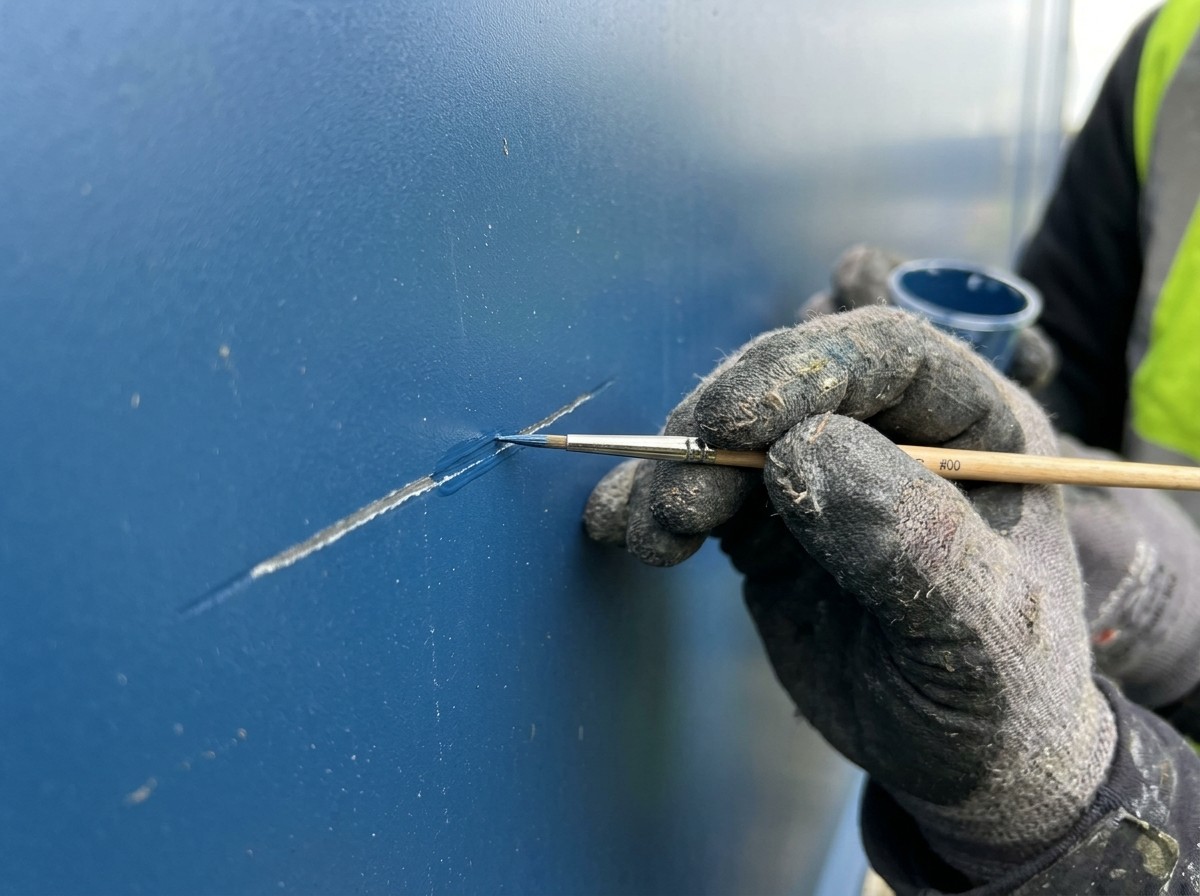
For minor surface scratches that did not dent the metal, clean the scratch with isopropyl alcohol or mild mineral spirits, dab a pinpoint coat of zinc-rich epoxy primer strictly inside the bare metal groove using a fine artist’s brush, and follow up with exact RAL-matched air-dry touch-up paint supplied with your sandwich wall panels. Never spray-paint large areas with aerosol cans because air-dried touch-up resin ages at a slightly different rate than oven-baked coil paint, keeping the touch-up line razor-thin makes the repair invisible from three meters away.
Level 2 D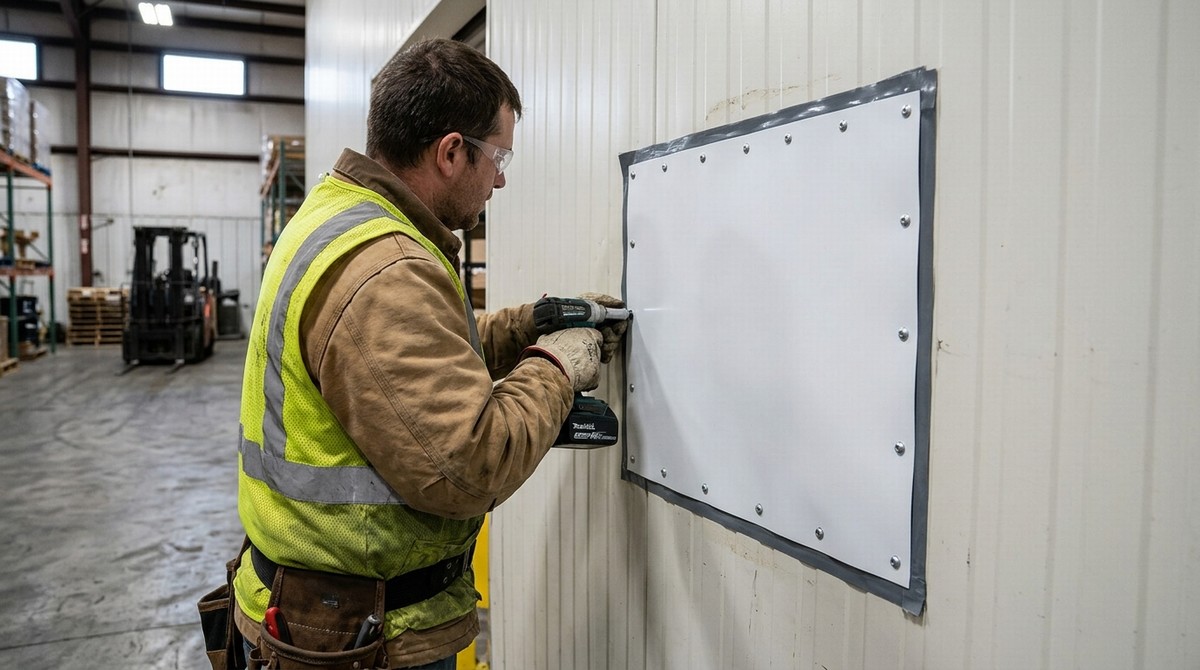 amage: Patching Forklift Punctures and Deep Dents
Forklift masts are the number-one predator of warehouse cladding and cold room walls. When a forklift tine punches a 15-centimeter hole through the inner or outer skin, you must restore both thermal continuity and the vapor seal before moisture ruins the core.
First, trim ragged curled steel edges flat with aviation tin snips and scrape out any crushed loose foam. Second, inject low-expansion two-part polyurethane foam into the cavity, let it cure for 30 minutes, and shave the hardened foam flush with the steel face using a sharp utility blade. Third, shear a clean rectangular patch from matching 0.5mm color-coated steel flashing (overlapping the hole by at least 50mm on all four sides), run a continuous perimeter bead of neutral silicone or butyl mastic around the back edge, and secure the patch cleanly with color-matched waterproof pop rivets every 100mm. Inside a sub-zero cold storage warehouse, taping the patch perimeter with reinforced aluminum vapor-barrier tape first ensures zero ice buildup inside the wall.
Level 3 Damage: Replacing an Entire Crushed Panel in the Middle of a Wall
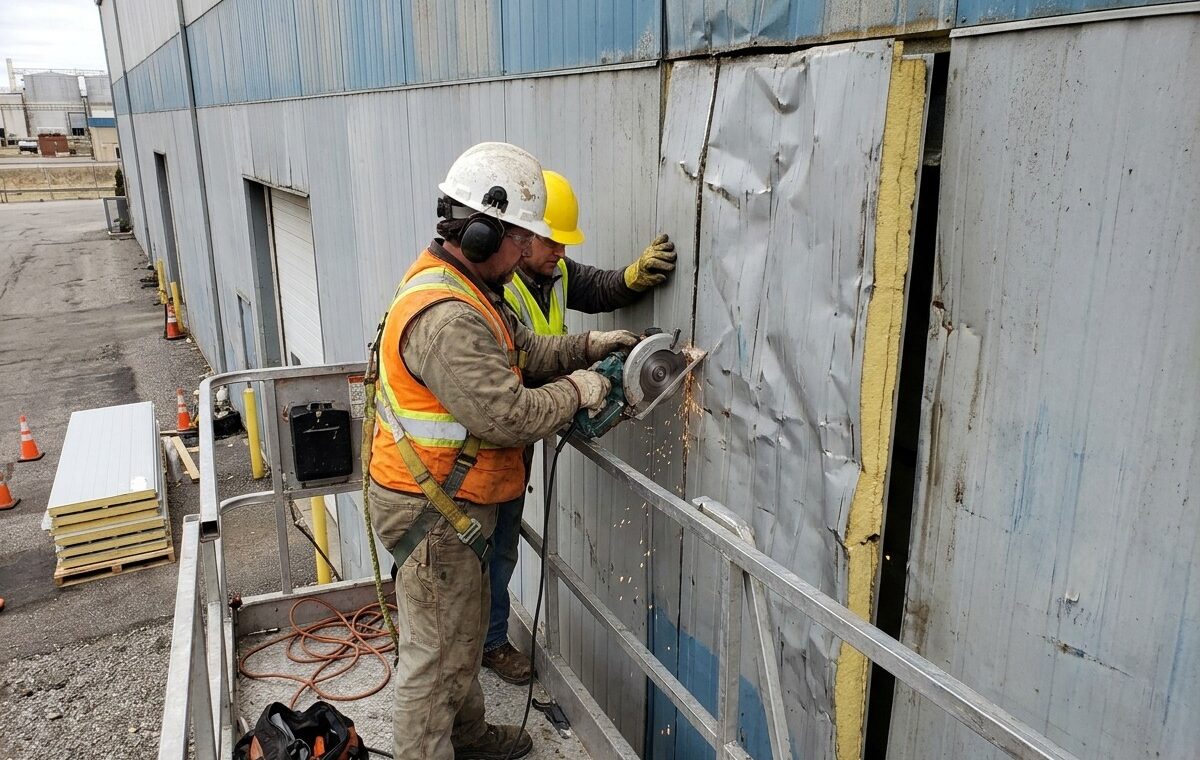
If a reversing delivery truck buckles a full 8-meter panel across two girts, patching will not restore structural wind resistance. To swap one board out of a finished wall without stripping the whole facade, workers run a low-RPM metal circular saw along the vertical edge of the crushed board to release the interlocking tongue, unbolt its screws, pry out the damaged sections, trim the inner lock lip off a brand-new replacement panel, slide it cleanly into the opening, and cap the vertical seam with a color-matched flat cover flashing riveted down into butyl sealant. Every project we ship can include 2% spare panels and matched touch-up kits arranged through our after-sales support.
Frequently Asked Questions (FAQ)
Q1: Should I use an aerosol spray can to touch up scratches on PVDF sandwich panels?
A: No. Spray cans create wide overspray halos that weather differently from factory oven-cured PVDF paint. Always apply RAL-matched liquid touch-up paint strictly inside the scratch groove with a fine-tip brush.
Q2: Can you repair a punctured cold room sandwich panel without shutting down the freezer?
A: Small punctures can be temporarily sealed with low-temperature aluminum foil vapor tape and polyurethane foam, though permanent silicone patching bonds best when the localized surface is warmed and wiped completely dry.
Q3: How do you fix a minor hail or boot dent on a sandwich panel without cutting the skin?
A: Shallow smooth dents on walls can be filled with flexible automotive two-part epoxy body filler, sanded flush, primed, and painted, while roof dents should be leveled with self-leveling polyurethane roof sealant so rainwater cannot pond.
Q4: Do you supply matching RAL touch-up paint bottles with export sandwich panel orders?
A: Yes. Upon request, we pack color-matched 1-liter touch-up paint tins and spare 0.5mm flat flashing coils in the exact same RAL color batch inside your container.
Q5: How can I protect lower warehouse sandwich walls from forklift impacts in the first place?
A: Install galvanized steel W-beam crash barriers or concrete-filled yellow steel pipe bollards bolted 200mm in front of interior loading dock walls and cold room doorways.