Why Standard Painted Steel Roofs Rot From the Inside Out in Livestock Barns
Walk into a broiler chicken house or hog barn that used ordinary galvanized roof panels, and look straight up. The outside roof still shines in the sun, yet the inside steel skin is blistering and peeling away in rusty flakes within four years.
Manure, urine, and daily chemical disinfection release a brutal cocktail of ammonia gas (NH3), hydrogen sulfide (H2S), and 85% indoor humidity. Those corrosive vapors rise directly to the ceiling underside, condense along panel joints and screw heads, and chew straight through normal polyester backer paint and even aluminum-zinc coatings. To build a long-life agricultural steel facility, you must protect the interior face of the panel, not just the sunny outside face.
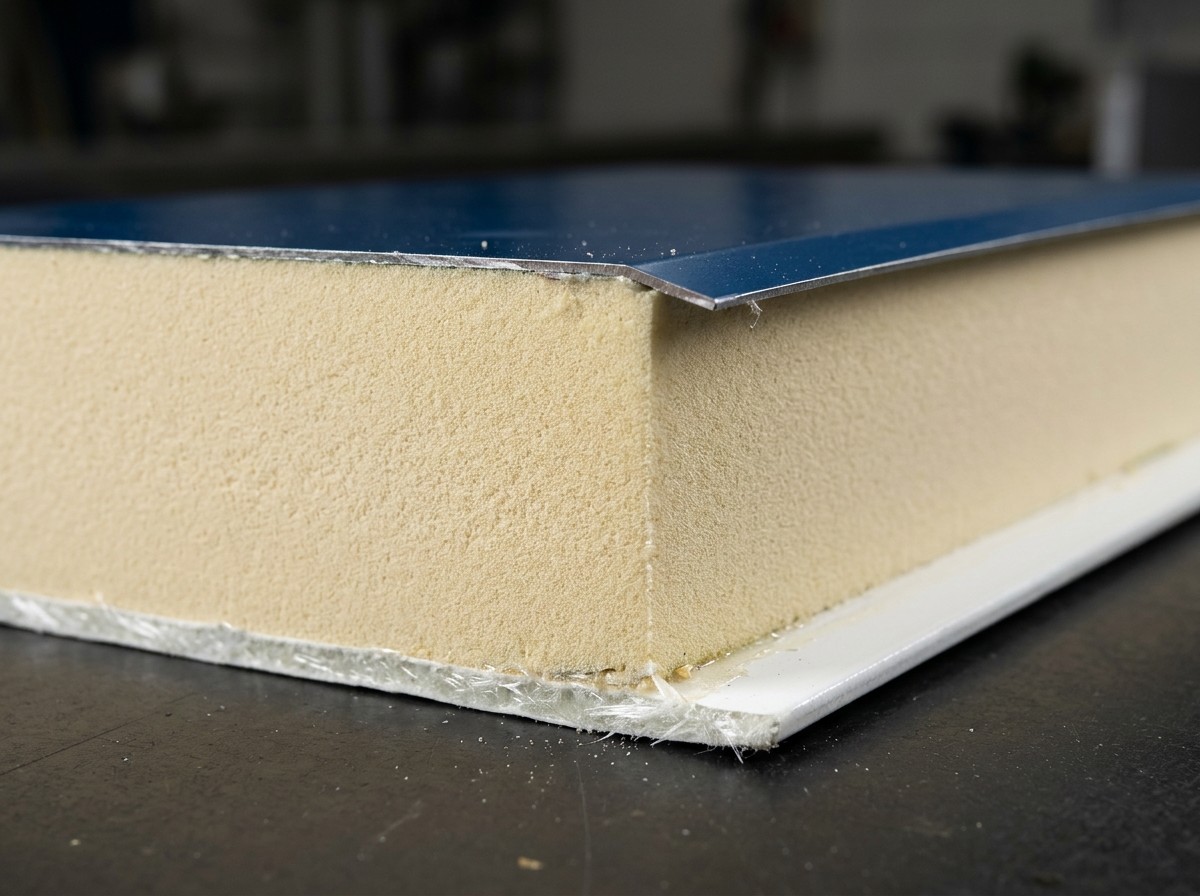
FRP Fiberglass and PVC-Laminated Undersides: The Ammonia-Proof Solution
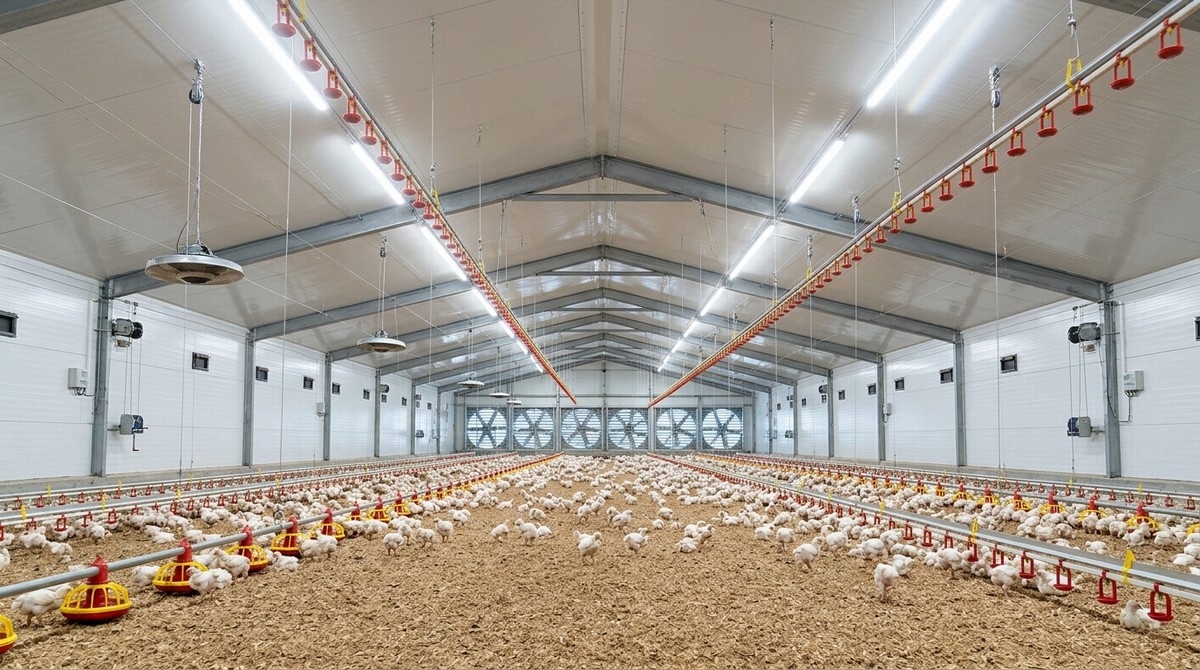
Yes, insulated sandwich panels are the gold standard for tunnel-ventilated commercial poultry houses, because keeping indoor temperature steady within plus or minus 2°C directly boosts feed conversion ratios and cuts chick mortality.
Instead of putting vulnerable steel sheet on the ammonia-exposed interior side, we manufacture dedicated livestock sandwich roof panels and wall boards featuring a 0.5mm PVDF or HDP steel outer sheet, a 50mm to 75mm closed-cell PIR/PU foam insulation core (0.022 W/m·K), and a 1.0mm to 1.5mm white gel-coated FRP (Fiberglass Reinforced Plastic) sheet or food-grade PVC-laminated steel sheet on the interior animal side. FRP fiberglass is 100% immune to ammonia, manure acids, and daily high-pressure hot-water bleach washdowns, delivering a 20-year rust-free interior ceiling.
Sealing Joints Against Beetles, Rodents, and High-Pressure Washdowns
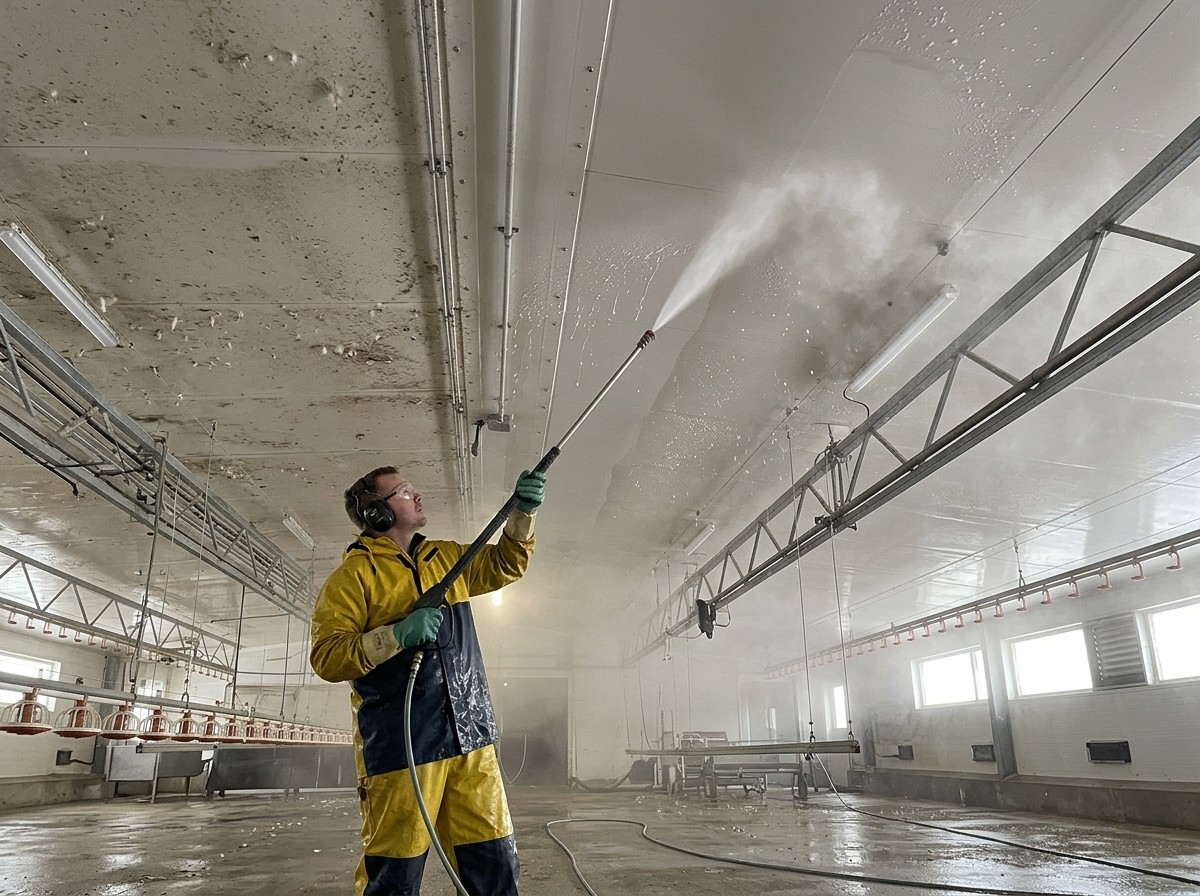
Darkling beetles love tunneling into exposed EPS foam edges inside chicken coops. Using dense 40 kg/m³ closed-cell PIR foam, stainless steel 304 interior fasteners, and full silicone-sealed base channels keeps pests out and lets farm crews pressure-wash the entire barn between flocks without soaking the insulation core.
Frequently Asked Questions (FAQ)
Q1: Why do poultry farms prefer FRP-backed PIR sandwich panels over steel-both-sides panels?
A: Ammonia and hydrogen sulfide rising from poultry litter rapidly corrode standard interior painted steel sheets from the underside. An FRP (fiberglass) interior skin is 100% non-metallic and immune to ammonia gas and bleach washdowns.
Q2: What sandwich panel thickness is best for a tunnel-ventilated broiler poultry house?
A: Most commercial poultry houses use 50mm to 75mm PIR or PU sandwich panels for walls and 75mm to 100mm for roofs to hold indoor temperatures steady during +45°C summers and freezing winters.
Q3: Can I use PPGL (Galvalume) panels inside a pig or chicken barn?
A: Avoid bare or thinly backed PPGL on the interior side of livestock barns because alkaline ammonia fumes attack the 55% aluminum coating rapidly. Use FRP-backed panels or heavy PVC-film-laminated galvanized steel instead.
Q4: How do you stop darkling beetles and rodents from eating barn insulation?
A: Use high-density 40 kg/m³ closed-cell PIR foam rather than soft EPS beads, seal all bottom wall edges inside stainless or heavy PVC U-tracks on a 300mm concrete curb, and caulk every panel seam.
Q5: Can translucent skylight strips be installed in a poultry barn sandwich panel roof?
A: In blackout tunnel-ventilated broiler houses where lighting hours are strictly controlled by LED timers, owners omit roof skylights. In natural-light dairy cattle barns, double-layer FRP daylight panels match the roof rib profile cleanly.