Using the Natural Stack Effect: Low Wall Louvers Plus High Ridge Vents
Try cooling a 5,000-square-meter metal stamping or welding workshop with conventional split air conditioners, and your monthly electricity bill will eat your net profit alive. Smart industrial engineers let physics do the heavy lifting for free.
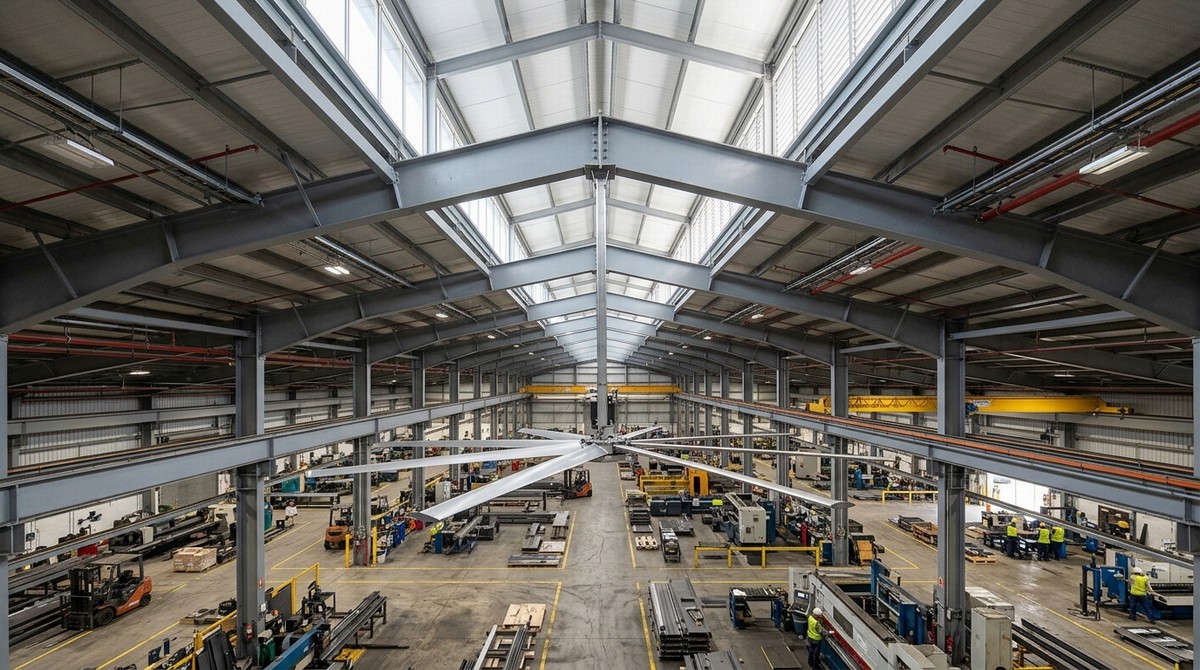
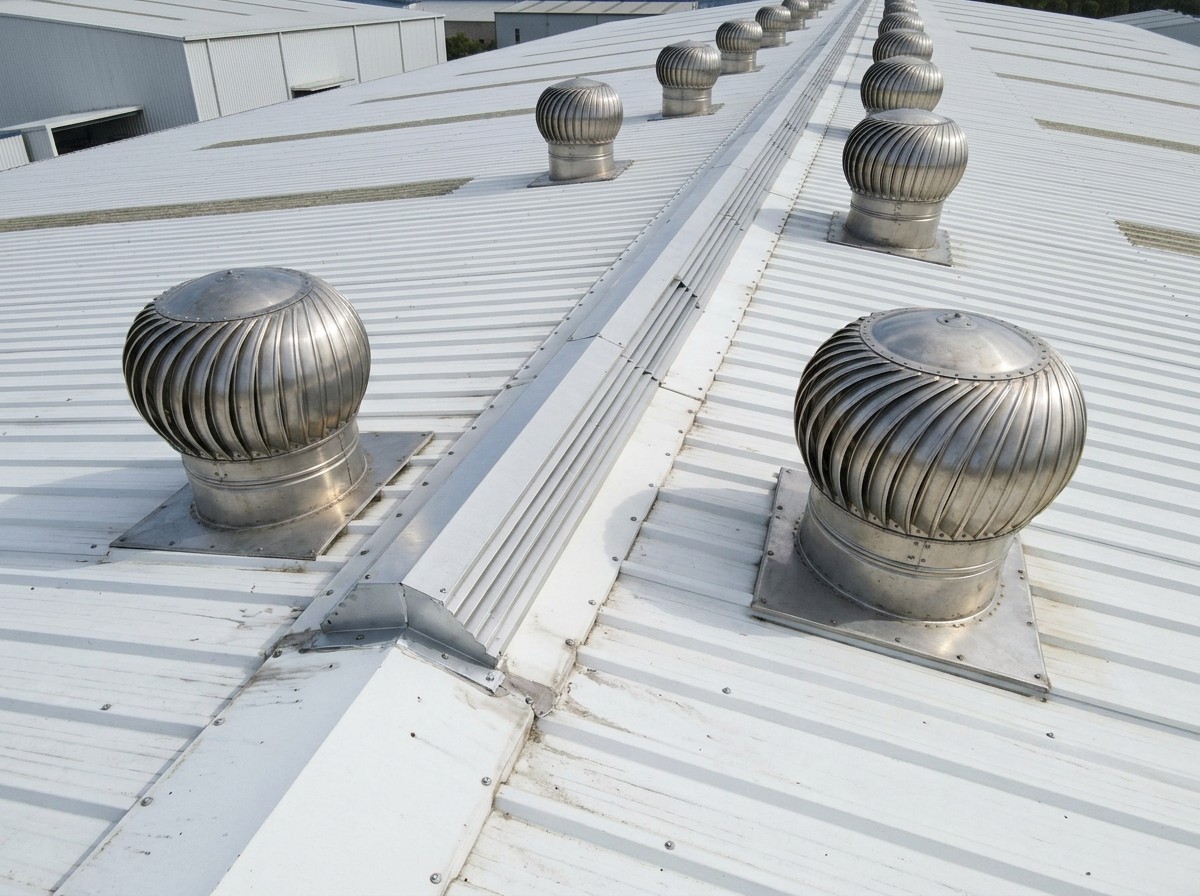
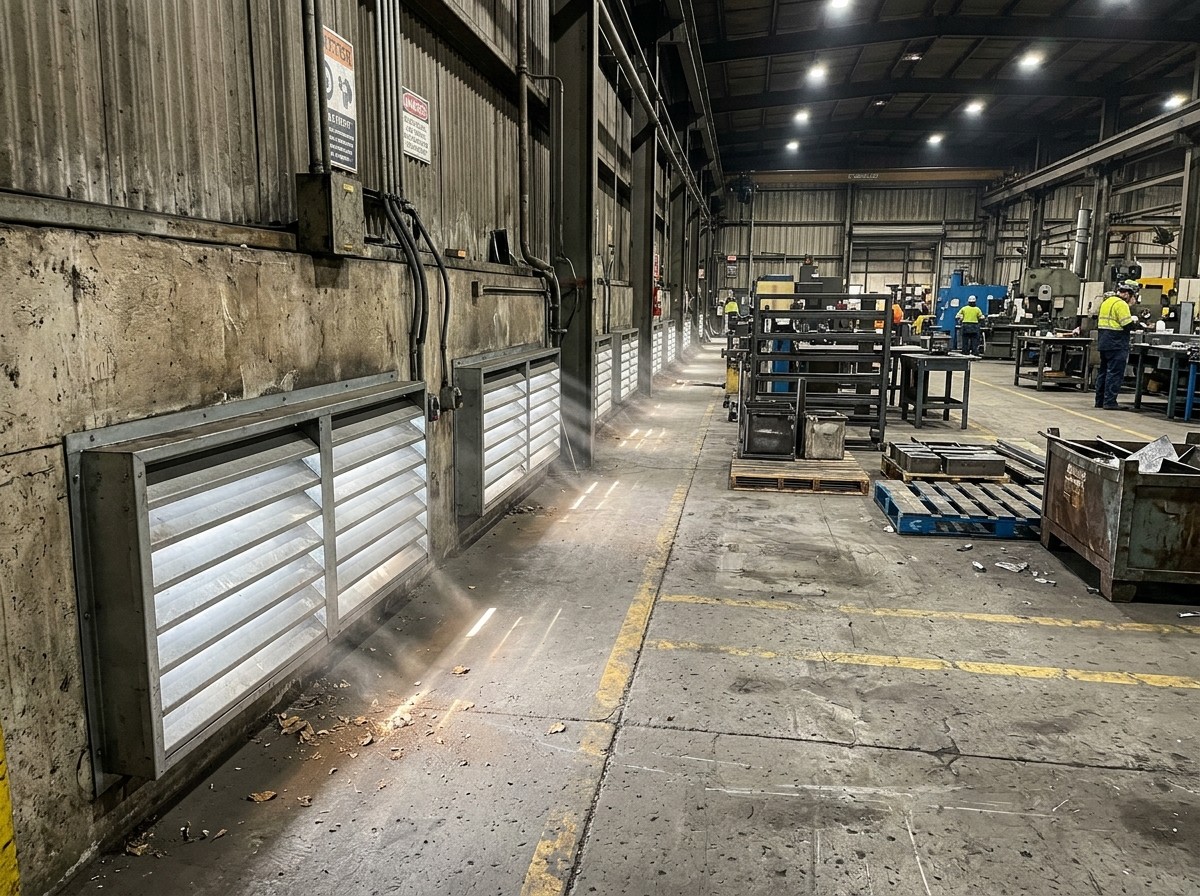
Hot air rises naturally toward the roof peak, creating a superheated blanket 8°C to 14°C warmer than the factory floor. If you bolt fixed weatherproof intake louvers low along the exterior sidewalls (1 to 2 meters above the floor) and open a continuous gravity ridge vent or raised roof monitor along the peak, cooler outside air rushes in at worker height and pushes stale heat and welding fumes straight out the top. This zero-electricity chimney flow is called the stack effect. On our prefabricated steel building packages, we fabricate rain-baffled roof ventilators right into the steel roof purlin framing so storm rain never blows down the throat.
Roof Wind Turbines vs HVLS Ceiling Fans: What Each System Actually Solves
Unpowered stainless steel roof turbines (‘whirlybirds’) spin whenever a 5 km/h breeze crosses the roof, continuously pulling stagnant humidity and ceiling heat out of dry storage warehouses with zero wiring. However, wind turbines alone cannot blow a cooling breeze down onto workers standing 10 meters below.
That is where 7.3-meter (24-foot) High-Volume, Low-Speed (HVLS) industrial ceiling fans shine. Drawing just 1.5 kilowatts of power (less than a household hairdryer), a single HVLS fan hung from the main steel rafters sweeps gentle air across 1,200 square meters of floor space, creating an evaporative wind-chill effect that makes workers feel 4°C to 6°C cooler. Combining insulated sandwich roof panels to block radiant heat with ridge vents and HVLS fans drops summer shop-floor temperatures dramatically.
Sizing Air Changes per Hour (ACH) Before Punching Roof Openings
Dry pallet warehouses only need 2 to 4 air changes per hour (ACH), while hot injection-molding halls, foundries, and high-heat chemical plants demand 10 to 20 ACH using powered axial exhaust fans paired with evaporative wet-pad cooling walls. Always finalize your ventilator throat locations before panel fabrication so structural trimmers and waterproof steel roof curbs arrive pre-cut from the factory.
Frequently Asked Questions (FAQ)
Q1: How many wind-driven roof turbine ventilators does a 1,000 sqm warehouse need?
A: A dry 1,000 sqm warehouse with 6m eave height typically uses 10 to 14 stainless steel 600mm-throat turbine ventilators spaced evenly along the upper roof slope for 4 to 6 air changes per hour.
Q2: Do continuous steel ridge vents leak during heavy tropical rainstorms?
A: No. Engineered continuous ridge monitors feature internal curved rain baffles, bird-proof mesh screens, and bottom drainage slots that channel wind-driven raindrops back onto the exterior roof sheets.
Q3: Can steel roof rafters safely support heavy HVLS ceiling fans?
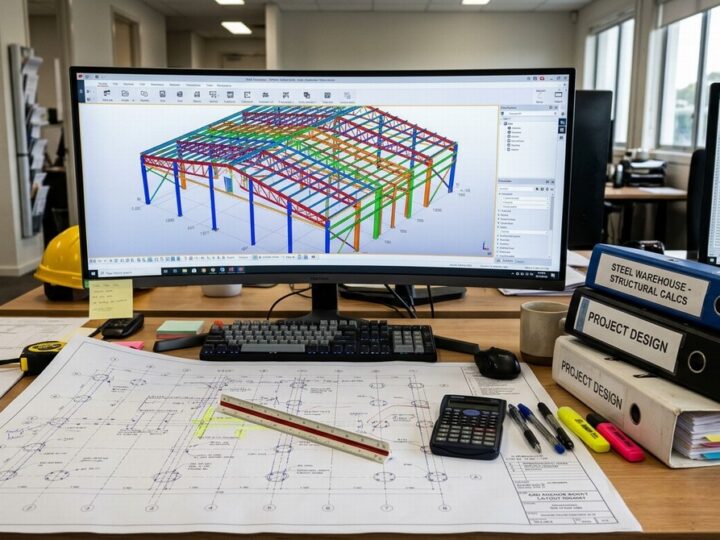
A: Yes, provided you specify the fan locations during structural design. A 7.3m HVLS fan weighs roughly 120 to 150 kg and exerts dynamic torque, so engineers add a braced sub-frame between adjacent steel rafters or purlins.
Q4: Why do exhaust fans fail to cool a warehouse when all doors and windows are closed?
A: Exhaust fans cannot pull hot air out unless equal fresh makeup air can enter. Always size sidewall intake louvers to at least 1.2x to 1.5x the total exhaust throat area.
Q5: Is insulating the roof more effective than adding extra exhaust fans?
A: Both work together, but adding 75mm PIR or rock wool roof insulation stops 85% of downward solar radiant heat first, cutting the total heat load that ventilation fans have to remove.