The Overlapping Sleeve Trick That Makes Z-Purlins 20% Stronger on Roofs
Put a 200mm C-purlin and a 200mm Z-purlin of the exact same 2.0mm steel thickness side by side on a scale, and they weigh the exact same amount. Bolt them across a 60-meter warehouse roof, and the Z-purlin carries 20% more snow load.
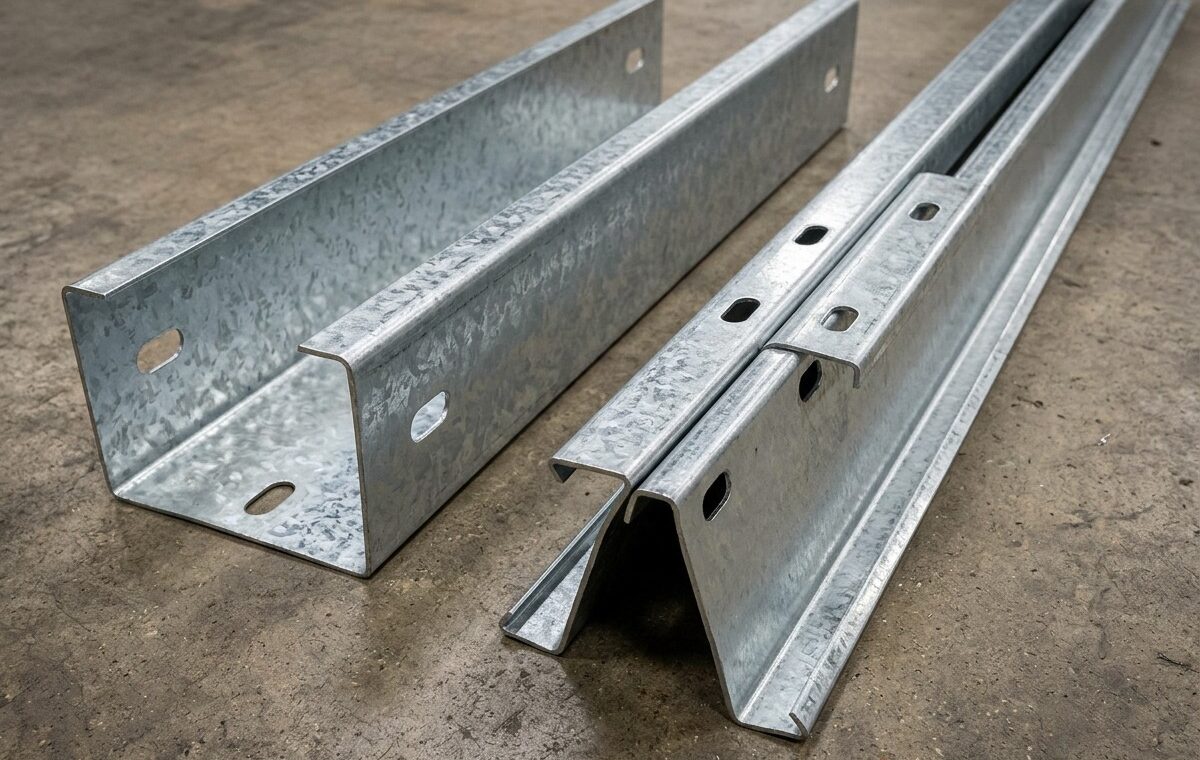
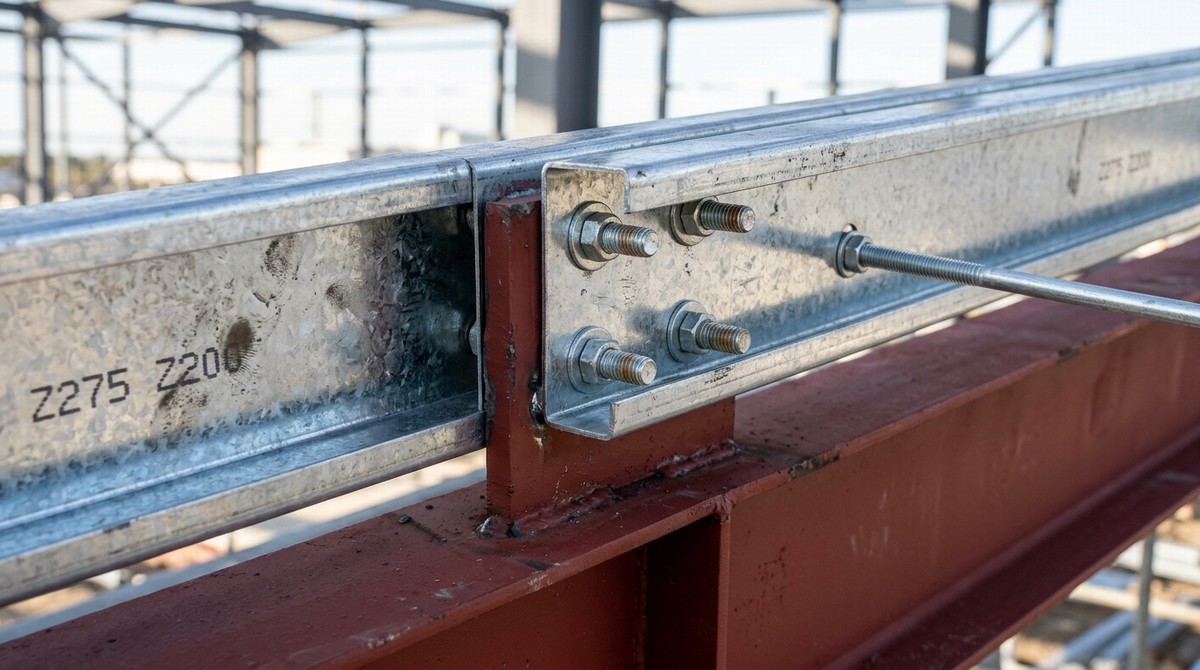
Why does the letter Z beat the letter C on long roofs? Continuity. Because a C-purlin’s flanges face the same direction, two C-purlins meeting over a roof rafter have to butt end-to-end as independent simple-span beams, letting the center of every 7.5-meter bay sag freely. A Z-purlin’s top and bottom flanges point in opposite directions, allowing installers to nest the end of one purlin directly inside the next purlin over every interior rafter by 600mm to 1,000mm. Bolting that nested double-thickness overlap turns separate bars into one continuous multi-span beam across the entire roof length. On our galvanized C and Z purlins roll-forming line, choosing overlapped Z-purlins on roofs with 6m to 9m bay spacing cuts secondary steel tonnage by 15% to 20%.
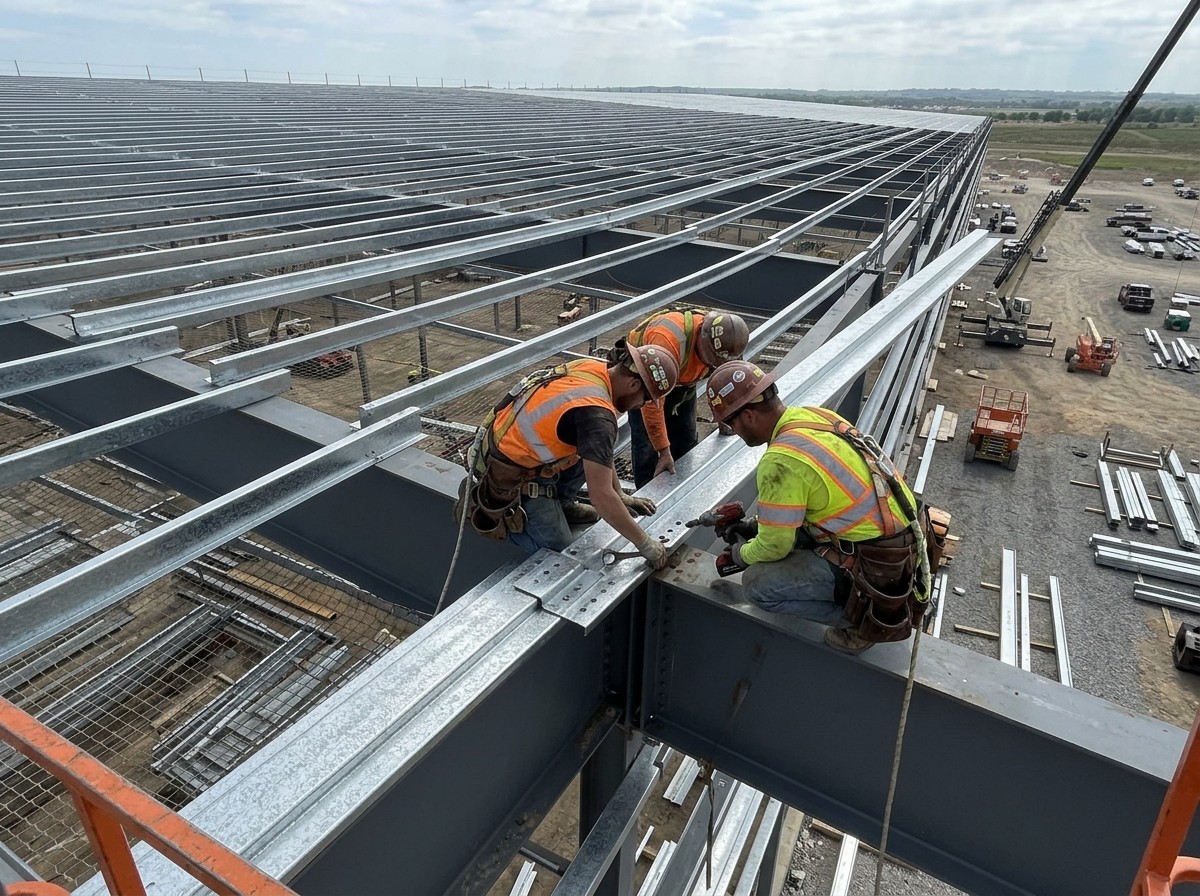
Why C-Purlins Remain the Undisputed King of Wall Girts and Door Jambs
If Z-purlins are stronger on roofs, why do we still roll thousands of tons of C-purlins every month? Geometry and flat mounting.
Around vertical warehouse walls, window headers, eave struts, and rolling shutter door frames, a symmetrical C-channel sits dead-flat against steel column brackets and leaves a clean, square inside corner for trimming interior partitions. Also, on steep roofs (slope > 15%), Z-purlins align their principal bending axis closer to vertical gravity loads, whereas on low-slope sheds (< 10% pitch) with short 6-meter spans, simple-span C-purlins bolt up slightly faster with zero lap-sleeve alignment work. Every purlin leaves our CNC line pre-punched for M12 sag rods and bolt holes from our structural hardware kit so crews never drill steel in mid-air.
Locking In S350GD Yield Strength and Z275 Galvanizing on Purlin Orders
Never let a broker substitute soft Q235B (DX51D) black-painted channels when your engineering calculation calls for cold-formed galvanized purlins. High-tensile S350GD (350 MPa) Z275 galvanized steel coil delivers 48% higher yield capacity than Q235B and never needs repainting inside dusty industrial ceilings.
Frequently Asked Questions (FAQ)
Q1: How much should Z-purlins overlap at each steel roof rafter?
A: Standard structural overlap length is typically 10% to 15% of the bay span (for example, 600mm to 900mm total lap centered over the rafter on a 6m to 7.5m bay), bolted with four to six M12 or M16 Grade 8.8 bolts.
Q2: What steel thickness is most common for warehouse C and Z roof purlins?
A: Most pre-engineered warehouses use 1.8mm, 2.0mm, or 2.5mm thick Z275 S350GD galvanized steel in 160mm to 250mm web depths, stepping up to 3.0mm in heavy snow zones.
Q3: Can I use Z-purlins as horizontal wall girts?
A: Yes, Z-purlins can serve as overlapped wall girts on wide 8m to 9m column bays with high wind loads, though C-purlins are easier to frame around wall doors and windows.
Q4: Why do galvanized C and Z purlins fit more efficiently in shipping containers than hot-rolled channels?
A: Cold-formed Z-purlins nest tightly together like stacked spoons, packing 22 to 25 metric tons densely into one 40HQ container with minimal wasted airspace.
Q5: Should Z-purlins on a sloped roof face upslope or downslope?
A: Always install the top flange of a Z-purlin pointing upslope toward the roof ridge so the purlin web resists twisting down the slope and makes overlapping sleeves align naturally.