Why Undersizing Cold Storage Panels Costs 5x More in Electricity
Trying to save $6 per square meter by putting 75mm panels on a -20°C meat freezer is the most expensive shortcut in cold-chain engineering. Your compressors will run 22 hours a day, and condensation will drip down the outside walls every humid afternoon.
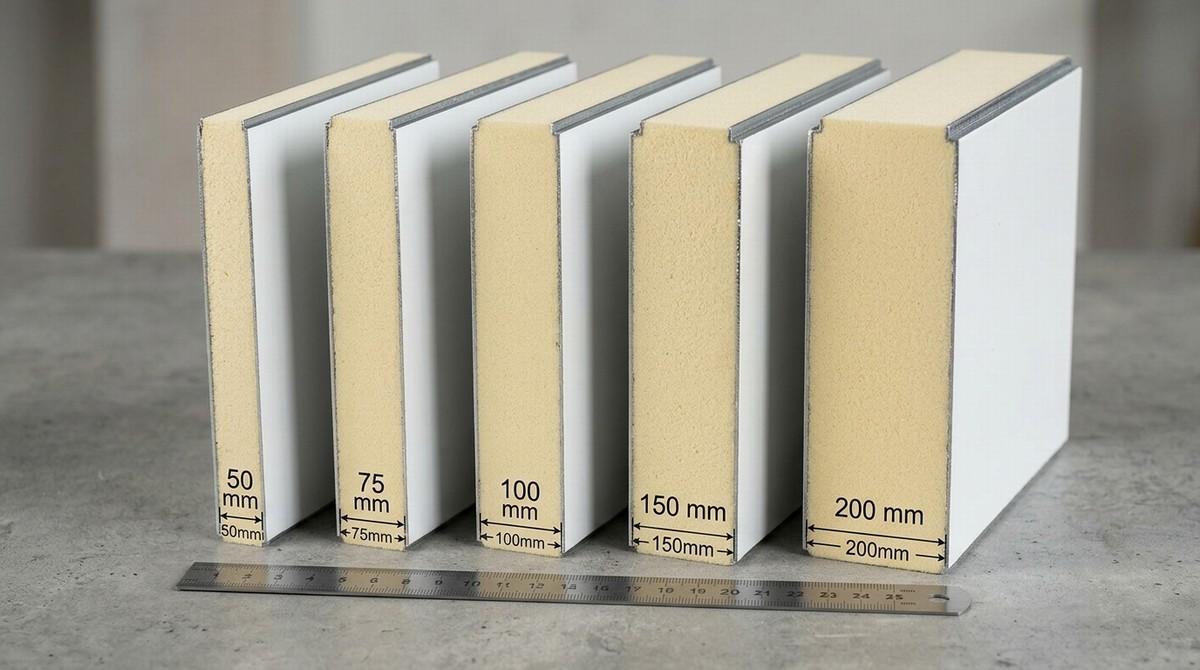
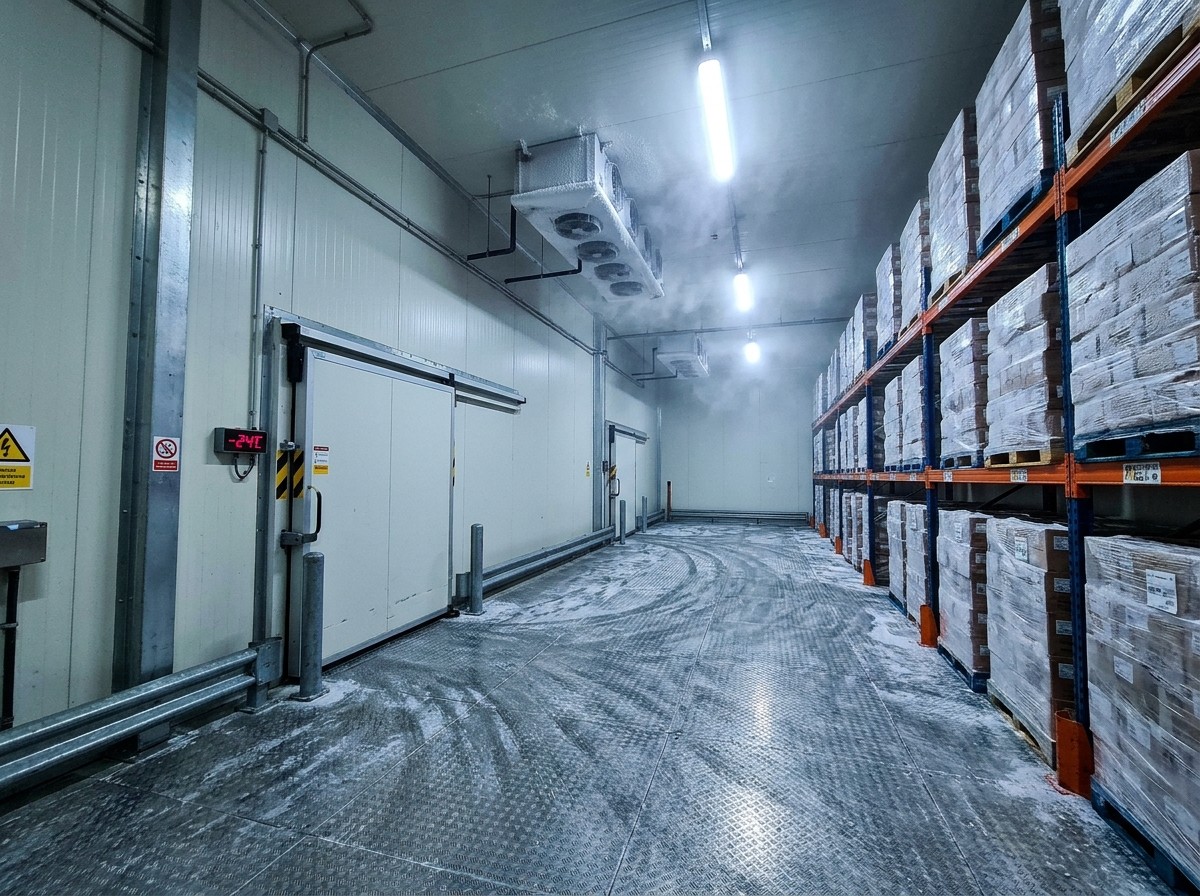
In refrigeration engineering, panel thickness is calculated to keep heat infiltration below 6 to 8 watts per square meter and hold exterior skin temperature safely above ambient dew point. For fresh produce chillers running at +2°C to +8°C, 100mm PIR cold room systems hit the sweet spot. Once storage temperatures drop to -18°C to -25°C, step up to 120mm or 150mm PIR panels; for -35°C to -45°C blast freezers, specify 180mm to 200mm panels. The extra upfront foam cost pays back in reduced refrigeration power bills within 14 to 18 months.
| Building & Temp Target | Recommended PIR/PU Depth | Recommended Rock Wool Depth | Approx. PIR U-Value | 40HQ Container Capacity |
|---|---|---|---|---|
| Dry Ambient Warehouse (+15 to +35C) | 50 mm | 50 mm – 75 mm | 0.42 W/m2K | ~1,100 – 1,250 sqm (50mm) |
| Climate-Controlled Factory (+18 to +24C) | 75 mm | 100 mm | 0.28 W/m2K | ~780 – 850 sqm (75mm) |
| Fresh Chiller Cold Room (0C to +8C) | 100 mm | Not recommended (Moisture) | 0.21 W/m2K | ~600 – 650 sqm (100mm) |
| Frozen Logistics Depot (-18C to -25C) | 120 mm – 150 mm | Not recommended | 0.14 – 0.17 W/m2K | ~400 – 480 sqm (150mm) |
| Blast Freezer Tunnel (-35C to -45C) | 180 mm – 200 mm | Not recommended | 0.11 W/m2K | ~290 – 320 sqm (200mm) |
50mm vs 75mm vs 100mm for General Industrial Warehouses and Factories
Dry warehouses do not need 150mm freezer walls, yet 50mm is often too thin in extreme climates.
In mild temperate regions where a steel shed only needs basic rain protection and noise damping, 50mm EPS, PIR, or rock wool sandwich wall panels work cleanly and maximize 40HQ container loading at over 1,100 square meters per box. However, in +48°C Middle Eastern deserts or -20°C northern winters, upgrading roof boards from 50mm to 75mm or 100mm PIR cuts rooftop solar heat gain by 38% and allows wider roof purlin spacing. Always keep roof panels at least 25mm thicker than wall panels because roofs absorb three times more direct solar radiation.
Checking Total Thickness vs Core Thickness on Supplier Quotations
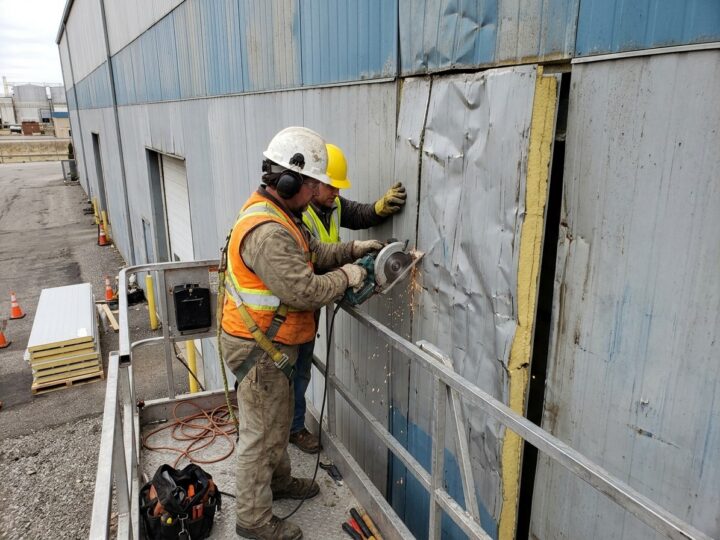
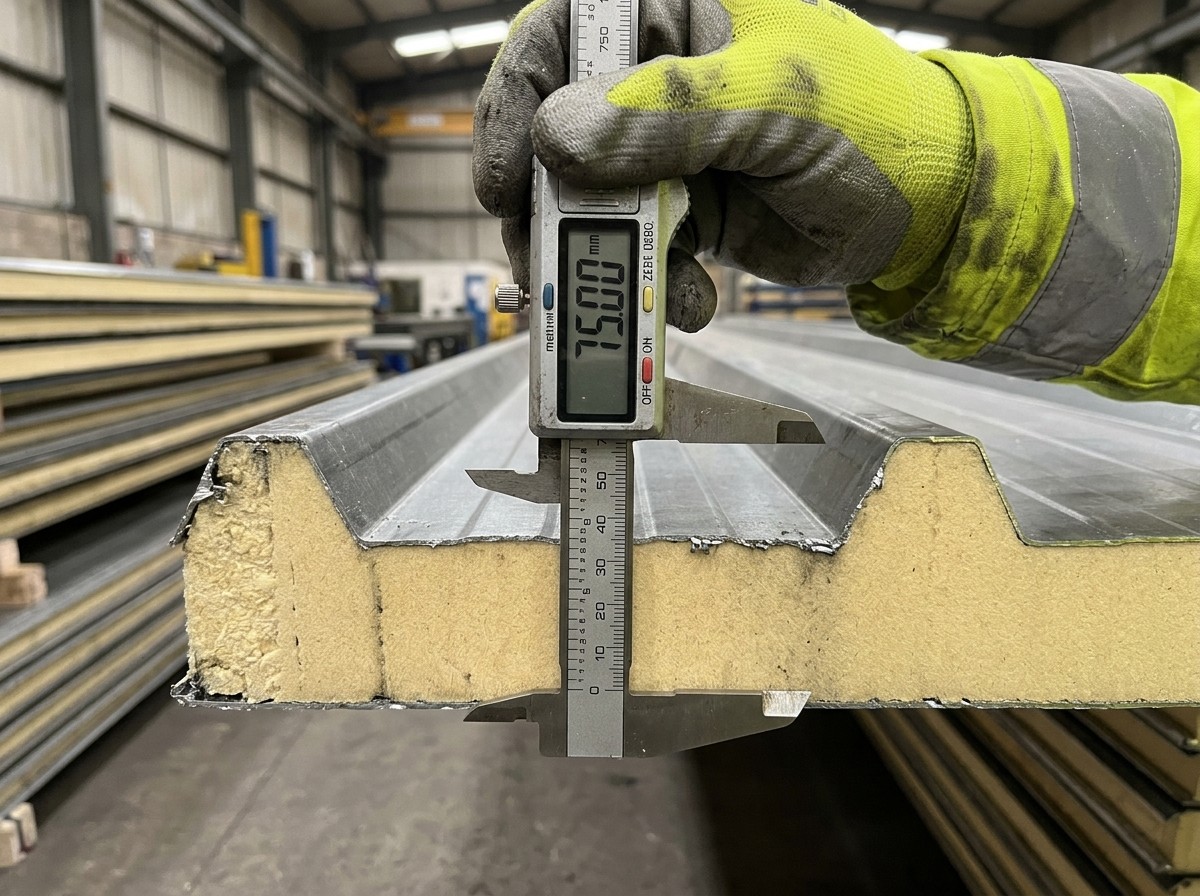
Here is a sneaky trick some low-ball trading companies pull on corrugated roof panels: they measure from the bottom sheet to the top of the 38mm raised trapezoidal rib and call a 50mm flat-core panel an ’88mm roof panel.’
Always verify that your purchase contract defines thickness as the net flat valley insulation core depth (for example, 75mm flat core + 38mm rib height = 113mm overall height) on all sandwich roof panels.
Frequently Asked Questions (FAQ)
Q1: What is the most popular sandwich panel thickness for standard factory warehouses?
A: 50mm and 75mm are the two most widely ordered thicknesses for general industrial walls and roofs, balancing thermal comfort, structural span, and high 40HQ shipping efficiency.
Q2: Can I use 100mm PIR panels for a -20°C cold room?
A: Only in cool temperate climates for small walk-in boxes. In warm or humid regions (+35°C to +45°C ambient), a -20°C freezer requires 120mm to 150mm PIR panels to prevent outside wall sweating and excessive compressor wear.
Q3: Should roof sandwich panels be thicker than wall sandwich panels?
A: Yes. Because roofs face direct overhead sun in summer and lose rising heat in winter, engineers routinely pair 75mm or 100mm roof panels with 50mm or 75mm wall panels.
Q4: Does thicker insulation make a sandwich panel stronger against wind and snow?
A: Yes. Increasing PIR core depth from 50mm to 100mm more than doubles the panel’s section modulus and bending stiffness, allowing wider purlin spacing without sagging.
Q5: What thickness of rock wool panel is needed to achieve a 2-hour fire rating?
A: A 100mm to 120mm high-density (120 kg/m³) basalt rock wool sandwich panel with 0.5mm steel skins typically achieves 120 minutes (EI 120) of fire integrity and insulation.