Decoding 0T, 1T, 2T, and 3T in the PPGI T-Bend Test
Every roll-forming factory manager has lived through this nightmare: you load a 5-ton coil of shiny blue steel onto the decoiler, run it through the 18-station roofing rollers, and find flaky paint powder snowing onto the shop floor along every rib bend.
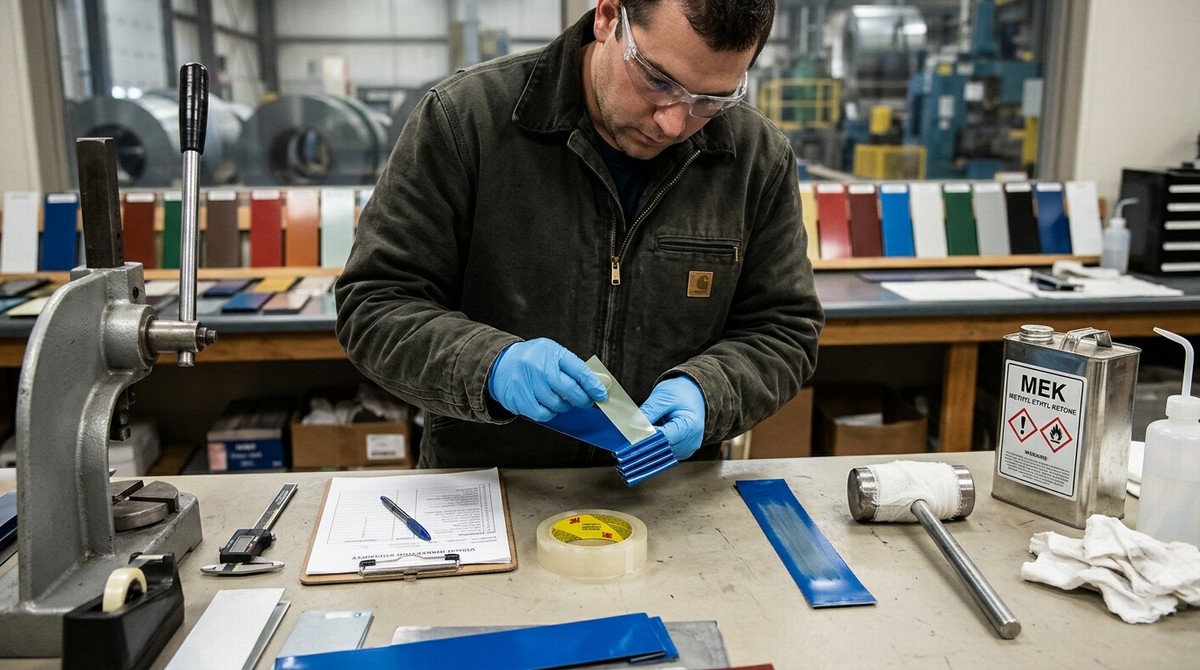
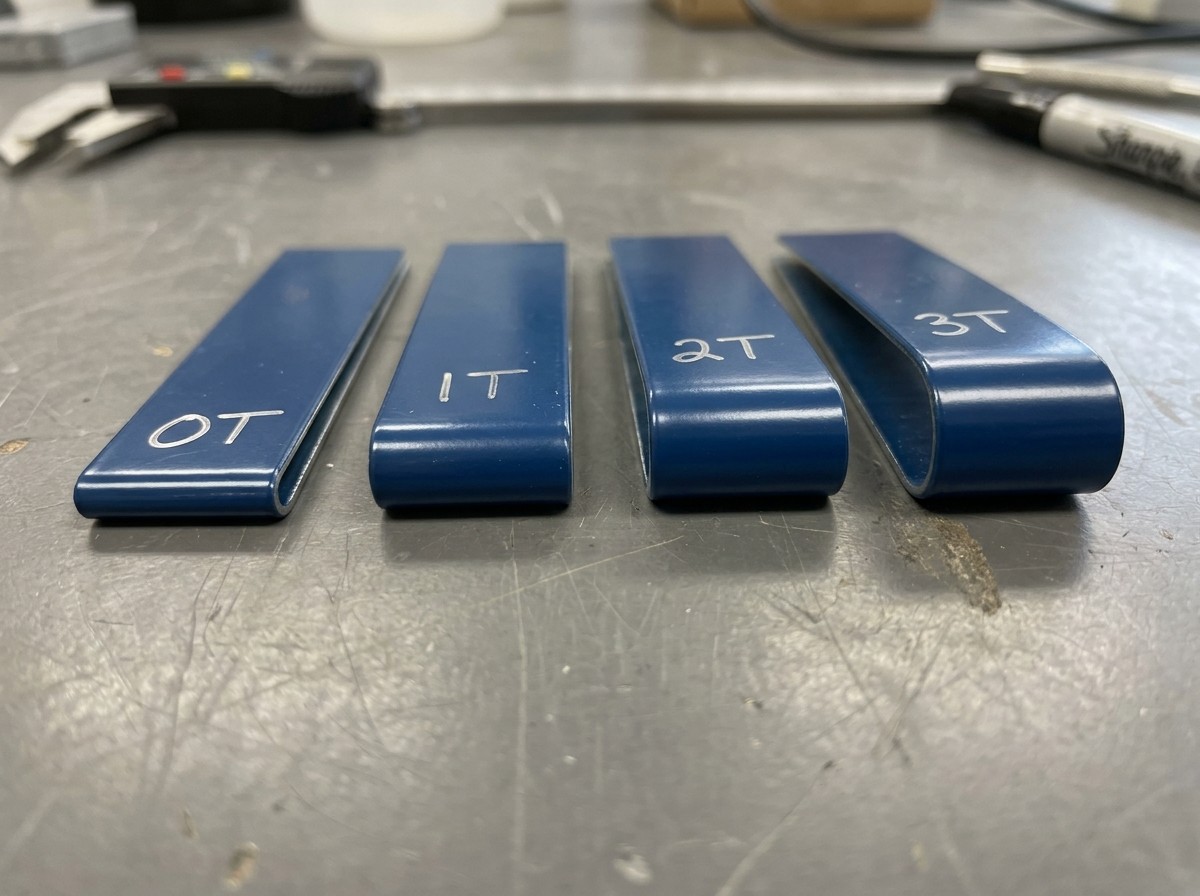
Why did the paint crack? Either the coating mill skipped chemical pre-treatment on the zinc surface or over-baked the primer until it turned brittle. Before any PPGI steel coil leaves our coating line, lab technicians shear a sample strip and fold it 180 degrees flat onto itself in a hydraulic vise. Folding the metal completely flat with zero spacer inside is a 0T bend. Wrapping the sheet around one layer of its own thickness is 1T; around two layers is 2T; around three layers is 3T. After each fold, the inspector presses 3M 610 Scotch tape firmly across the bent ridge and rips it off. Under EN 13523-7 and ASTM D4145, structural roofing and sandwich panel coils must pass 2T to 3T with zero paint pick-off on the tape.
| Inspection Test | Standard Method | Pass Benchmark (PE / HDP / PVDF) | What Failure Looks Like | Field Risk If Ignored |
|---|---|---|---|---|
| T-Bend Adhesion | ASTM D4145 / EN 13523-7 | <= 2T to 3T (Zero tape peel) | Paint flakes off on Scotch tape at bend | Ribs crack and rust within 6 months of roll-forming |
| MEK Double Rub | ASTM D5402 / EN 13523-11 | >= 100 Double Rubs (No bare primer) | Cloth strips color down to primer in 30 rubs | Under-baked resin chalks and fades in 2 summers |
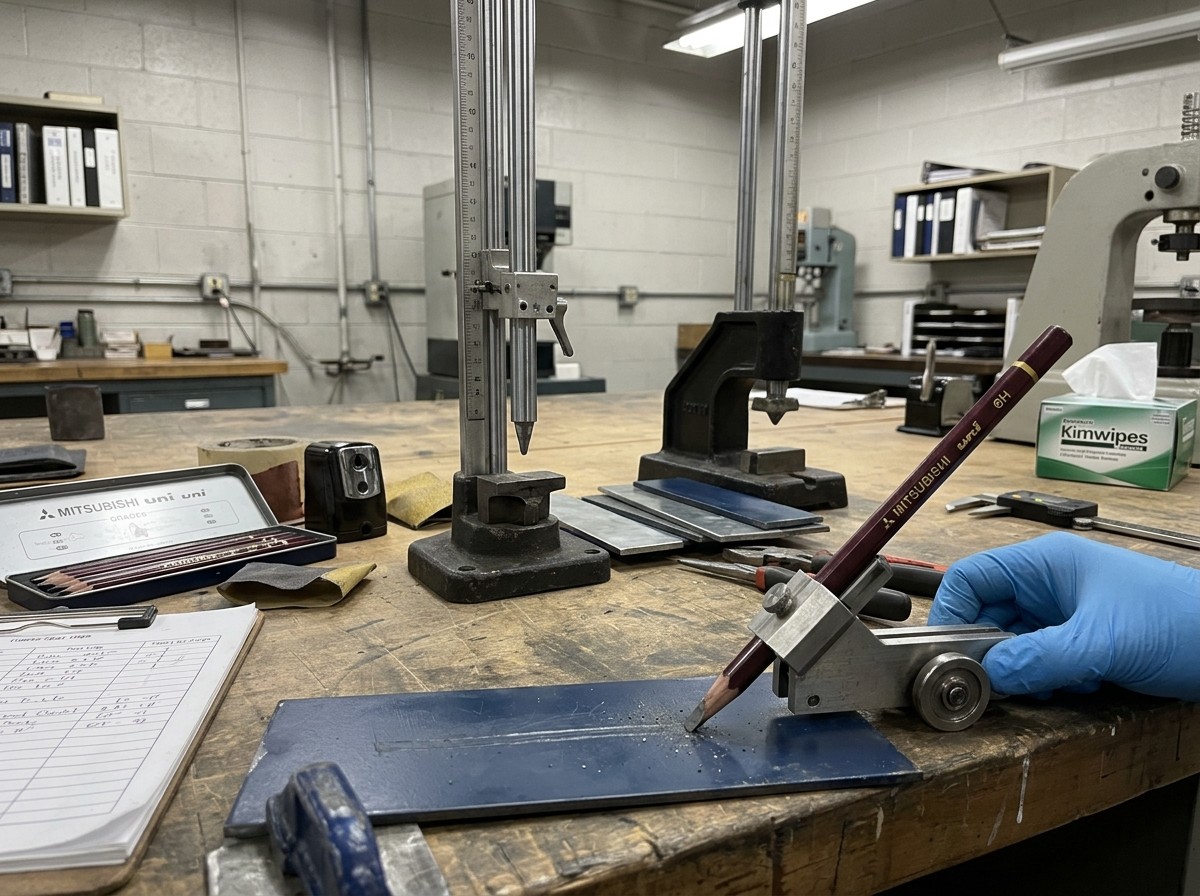
| Pencil Hardness | ASTM D3363 (Mitsubishi Pencil) | H to 2H (PE/HDP), HB to H (PVDF) | F or HB pencil gouges through topcoat | Roll-forming rollers leave deep scratches along sheets |
| Reverse Impact | ASTM D2794 (Falling Dart) | >= 9 J to 18 J (No cracking) | Star-shaped paint cracks on dome bump | Hailstones and screw guns chip paint around fasteners |
Why the MEK Solvent Double-Rub Test Catches Under-Cured Ovens
Passing a T-bend test alone does not guarantee your paint will survive ten years of sunlight. In fact, an under-baked paint film bends easily because it is still soft and gummy.
To verify that the polyester, HDP, or PVDF resin cross-linked properly inside the 224°C to 249°C curing oven, we run the Methyl Ethyl Ketone (MEK) double-rub test. A technician wraps cheesecloth around a 1-kilogram rounded hammer head, soaks it in pure MEK solvent, and rubs forward and backward across the painted strip 100 times (one forward-and-back stroke equals one double rub). If the curing oven ran too fast or too cold, the solvent dissolves the uncross-linked polymer chains and exposes the grey epoxy primer after 25 rubs. Properly cured export coils survive 100+ MEK double rubs with zero primer exposure during our T-Bend test and lab verification.
Matching Pencil Hardness and Coating Thickness to Your Profile Machine
Hardness and flexibility pull in opposite directions. Push a polyester paint coat to 3H pencil hardness and it resists scratches, but it will micro-crack on a tight lock-forming seam.
For deep trapezoidal roof sheets and concealed-fix wall panels, we balance pencil hardness at H to 2H over a 5-to-7-micron epoxy or polyurethane primer and a 20-to-25-micron topcoat. That balanced cure lets the sheet glide through high-speed rollers without galling and backs up our 20-year UV warranty on PVDF architectural orders.
Frequently Asked Questions (FAQ)
Q1: What T-bend rating is required for PPGI coil used in sandwich panels and roofing?
A: A T-bend rating of <= 2T to 3T (no tape peel) is the industry standard for corrugated roofing sheets and sandwich panel skins, while deep-stamped lock seams require 1T to 2T.
Q2: What does 100 MEK double rubs mean on a PPGI Mill Test Certificate?
A: It means the painted steel surface withstood 100 back-and-forth strokes with a cloth soaked in Methyl Ethyl Ketone solvent under 1 kg pressure without rubbing through the topcoat to the primer, proving 100% oven curing.
Q3: Why does PPGI paint peel at the cut edges after roll-forming?
A: Edge peeling happens when the galvanizing line skipped chromate/chromate-free chemical conversion coating before priming, or when dull slitting knives left a heavy burr that tore the primer film.
Q4: Why should T-bend testing be done at least 20mm away from the coil edge?
A: Coil edges experience slight work-hardening during rotary slitting. Testing at least 20mm inward from the edge gives the true adhesion performance of the strip body.
Q5: Does PVDF paint have a higher pencil hardness than PE paint?
A: No. Because PVDF (70% fluorocarbon resin) is formulated for extreme flexibility and 25-year UV stability, its standard pencil hardness is slightly softer (HB to H) than rigid polyester PE (H to 2H), while offering far better T-bend flexibility (0T to 1T).