Why Closed-Cell Foam Panels Bounce Noise While Basalt Rock Wool Drinks It?
Put a diesel standby generator or a high-speed metal stamping press inside a warehouse clad in cheap EPS or rigid PU foam panels, and the whole building rings like a steel drum. Neighbors three blocks away will call the city noise inspector on your first night shift. Why do rigid foam panels struggle with low-frequency machinery roar? Lightweight closed-cell foams have high stiffness and low mass, so airborne sound waves hit the inner steel sheet and vibrate right through the rigid core. In contrast, our high-density basalt rock wool panels pack 100 to 140 kg/m³ of tangled volcanic stone fibers between two 0.5mm or 0.6mm steel skins. When sound waves enter that open-fiber mineral labyrinth, air friction converts acoustic energy into harmless trace heat. A standard 100mm solid-skin rock wool wall board delivers an airborne sound reduction index (Rw / STC) of 32 to 35 decibels, cutting perceived exterior factory noise by more than 75% .
Upgrading to Micro-Perforated Acoustic Panels for Compressor and Turbine Halls
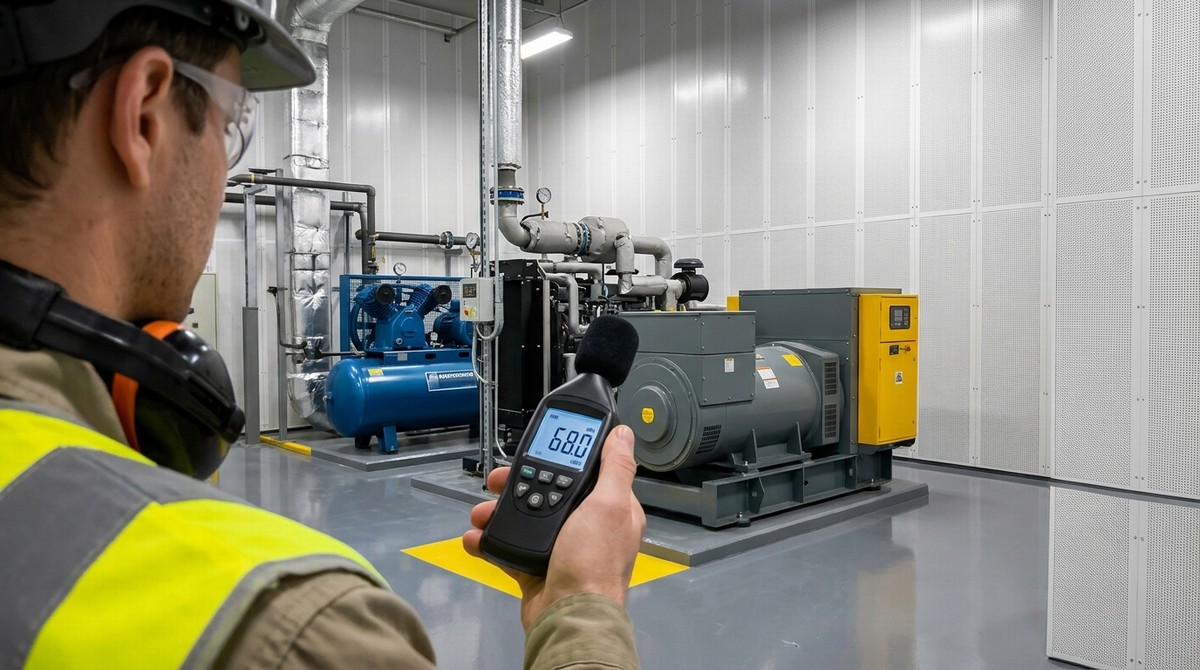
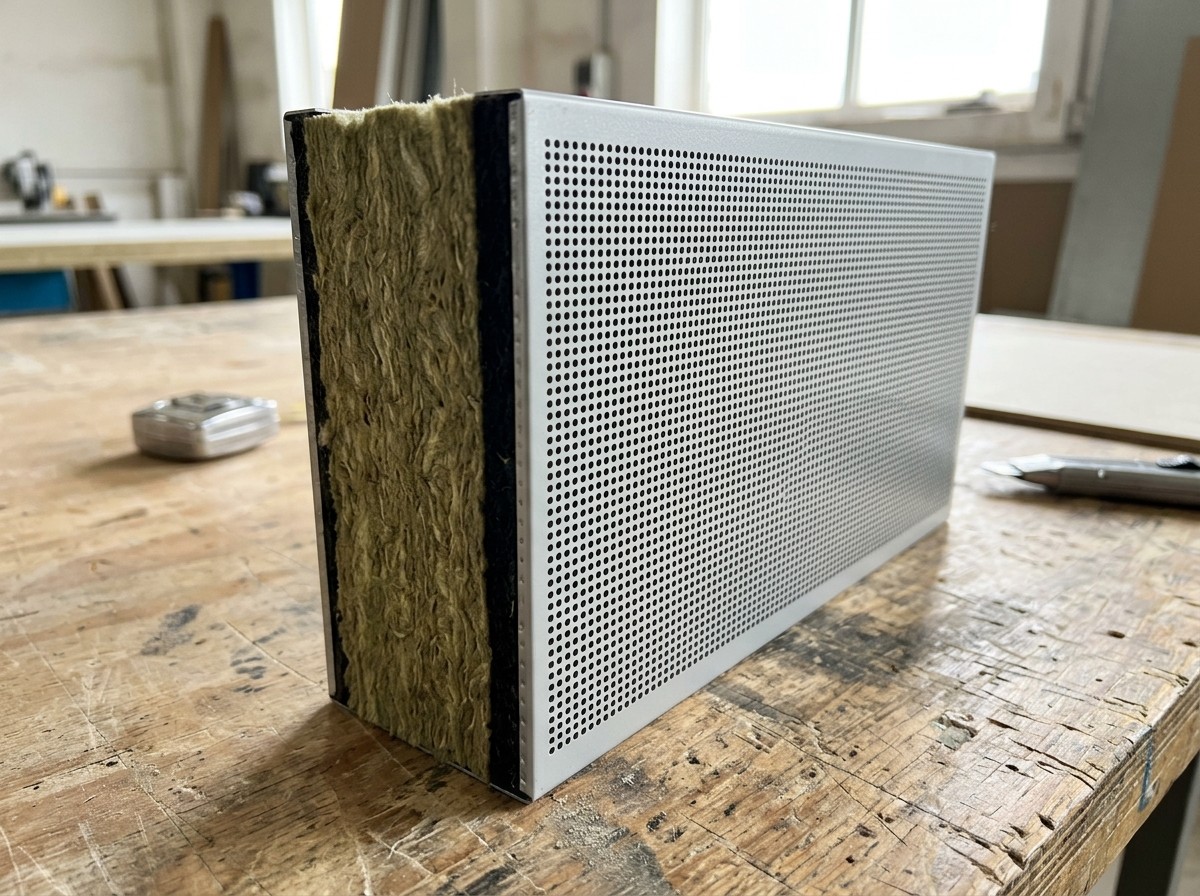
Blocking sound from escaping outdoors is only half the battle. If two solid steel skins reflect 95% of noise back into the room, reverberation inside the workshop climbs past 95 dBA and damages worker hearing. For compressor rooms, chillers, and precision electronics factory buildings, we punch the interior steel face with 2.5mm micro-perforations covering 23% to 30% of the surface area and bond a black non-woven acoustic fiberglass veil between the perforated steel and the 120 kg/m³ rock wool core. Instead of bouncing off flat steel, shop noise passes through the tiny holes and gets trapped inside the basalt wool, pushing the Noise Reduction Coefficient (NRC) to 0.80 and raising total wall transmission loss to 38–42 dB.
Sealing Acoustic Leaks Around Doors, Louvers, and Tongue-and-Groove Joints
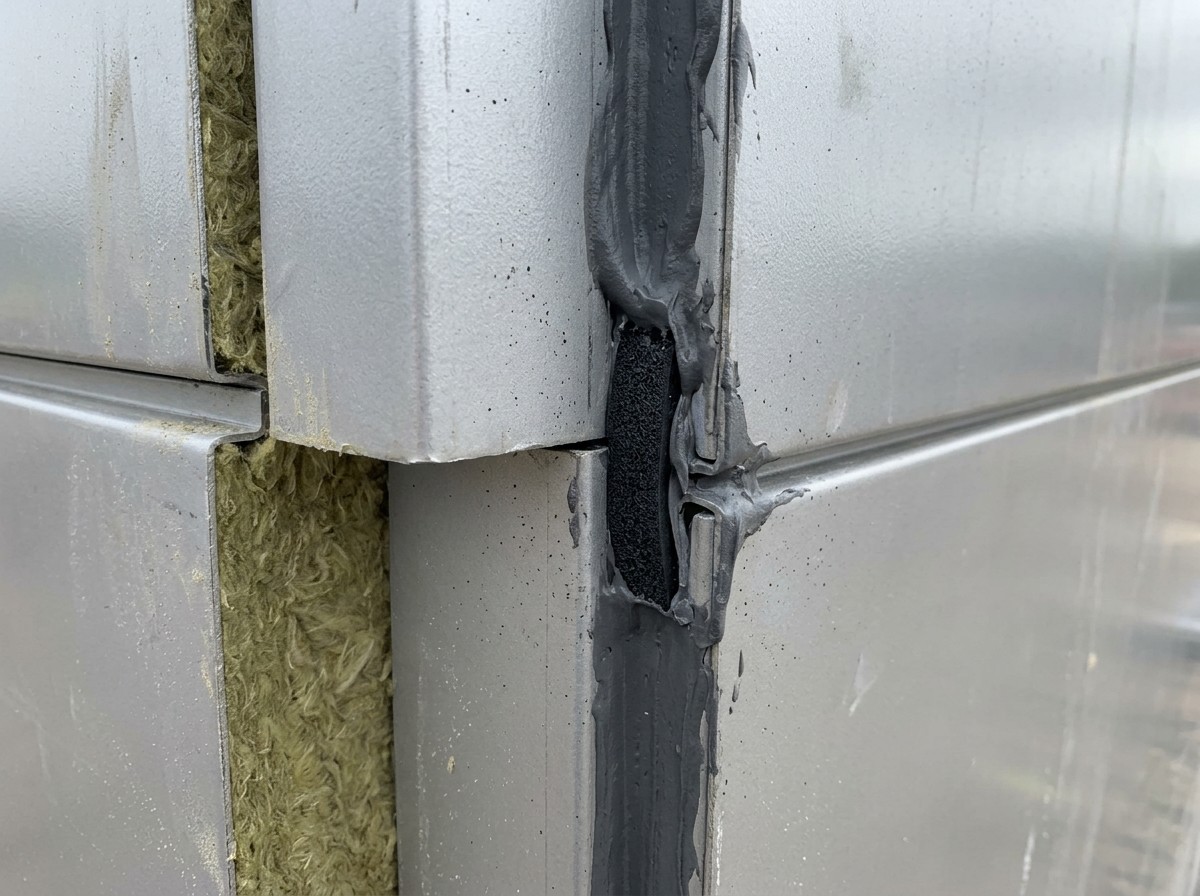
Sound behaves just like water under pressure. Leave a 2-millimeter unsealed crack along the floor track and a 38 dB acoustic wall drops to 22 dB in field testing. To preserve lab-rated decibel performance on site, installers compress dual strips of closed-cell EPDM acoustic tape inside every tongue-and-groove vertical joint, bed the bottom U-channel in flexible polyurethane acoustic sealant, and stagger electrical conduit boxes so back-to-back outlets never punch a direct hole through the wall. Every export batch ships with an acoustic and fire test report backed by our CE certificate.
Frequently Asked Questions (FAQ)
Q1: How many decibels (dB) does a 100mm rock wool sandwich panel reduce?
A: A standard double-skin 100mm rock wool sandwich panel (120 kg/m³ density) achieves a weighted sound reduction index (Rw) of 32 to 35 dB, while a micro-perforated acoustic version reaches 38 to 42 dB.
Q2: Is rock wool or polyurethane (PIR/PU) better for soundproofing a factory?
A: Rock wool is far superior for soundproofing. A 100mm rock wool panel blocks 7 to 10 dB more low- and mid-frequency industrial noise than an equal thickness of rigid PIR or EPS foam.
Q3: Can micro-perforated acoustic rock wool panels be used on exterior walls?
A: Yes, because only the interior-facing steel sheet is perforated to absorb indoor reverberation; the exterior-facing steel sheet remains 100% solid and weatherproof with PVDF or HDP coating.
Q4: Why is there a black non-woven fleece behind the holes of perforated rock wool panels?
A: The ultra-thin acoustic fiberglass fleece stops fine basalt mineral wool dust from drifting out through the 2.5mm holes while allowing sound waves to pass freely into the core.
Q5: What rock wool density gives the best acoustic insulation in sandwich panels?
A: A core density between 110 kg/m³ and 140 kg/m³ paired with 0.6mm steel face sheets provides the optimal balance of mass law transmission loss and porous sound absorption.