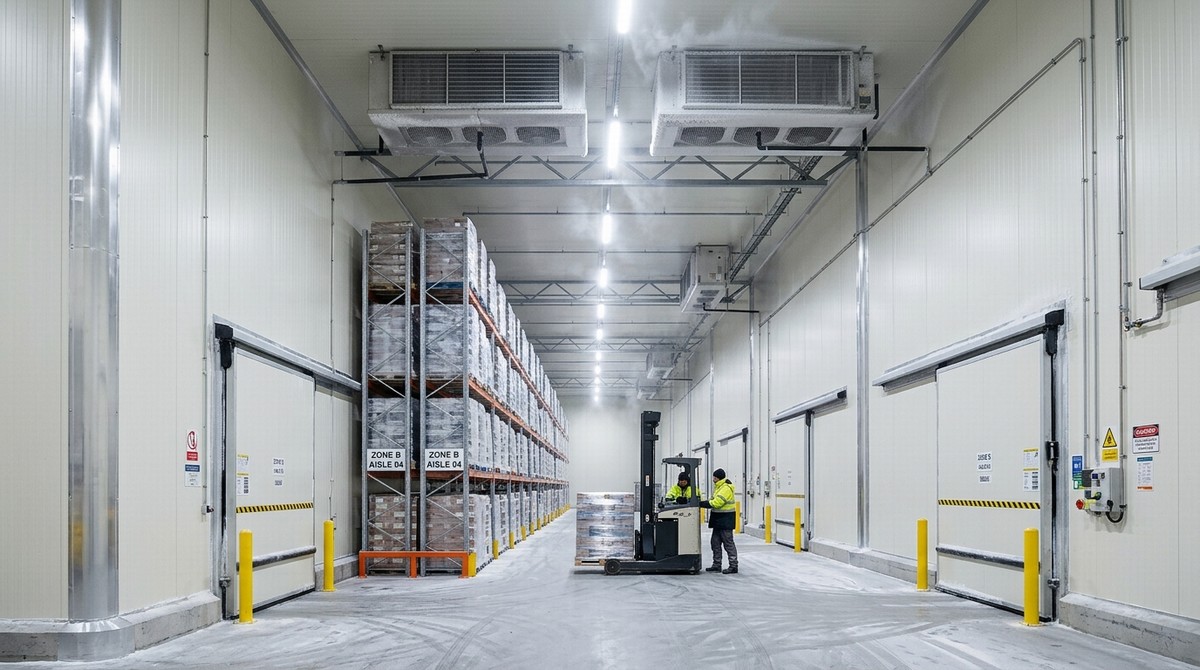
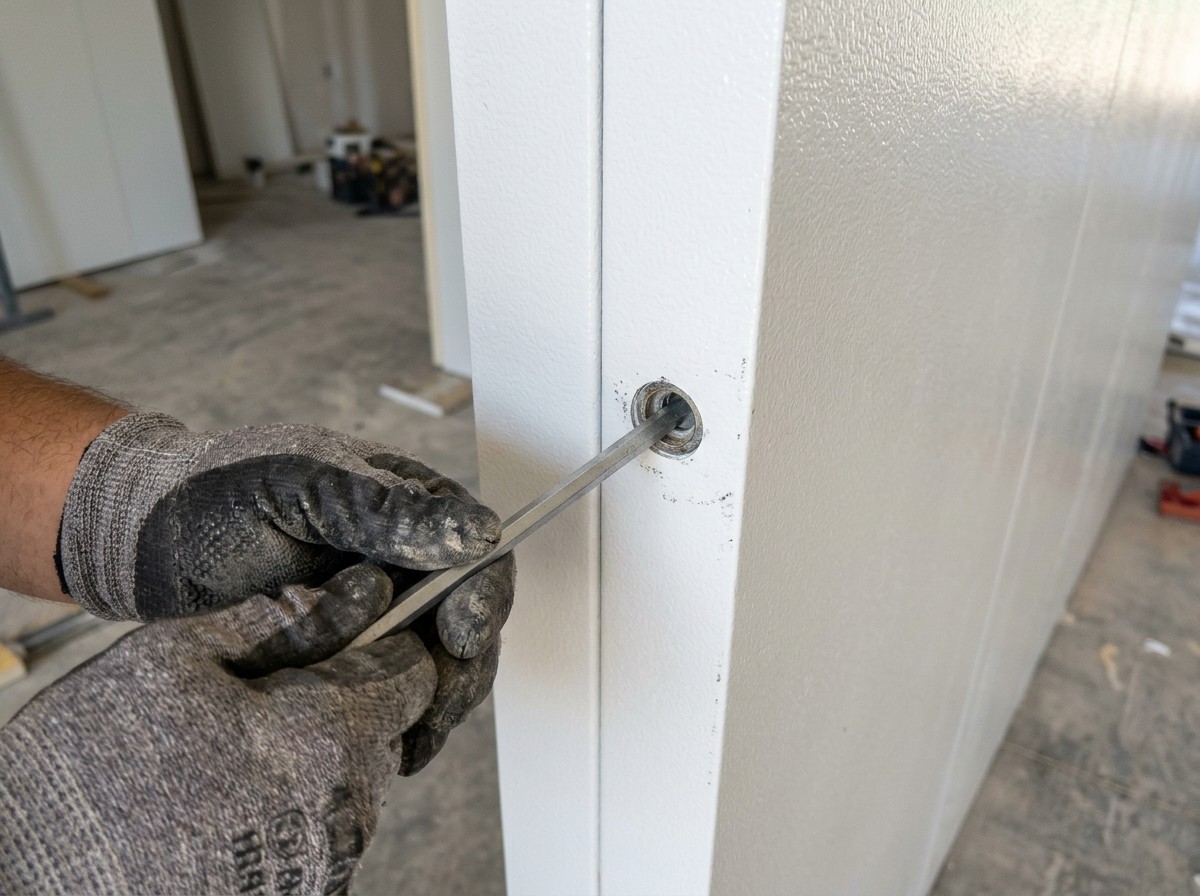
What Is the Difference Between Cam-Lock and Continuous PIR Cold Room Panels? When to Use Cam-Lock Boards vs Continuous-Line Plug-In Panels Walk-in restaurant coolers and 20-meter-tall cold chain distribution centers both use polyurethane insulation, yet they rely on completely different panel joints. Pick the wrong system and you either overpay by 30% on panel foaming or spend weeks wrestling 12-meter boards. Discrete cam-lock panels are moulded one board at a time inside a stationary hydraulic press. Before injecting high-pressure PU foam, workers pre-embed male-and-female steel cam locks every 600 to 1,000 millimeters along the panel edges. On site, two technicians assemble a 50-square-meter modular walk-in chiller in one afternoon using nothing more than a 10mm hex Allen wrench to twist the eccentric cams tight. However, batch presses limit panel length and run slower. For large industrial freezers over 500 square meters, we run high-speed continuous laminators that extrude 100mm to 200mm PIR cold storage panels up to 16 meters long with precision double-labyrinth C-type plug-in joints.
| Cold Room Temp Range | Storage Application | Recommended PIR Thickness | Target U-Value (W/m2K) | Best Panel Joint System |
|---|---|---|---|---|
| +2 C to +8 C | Fruit, vegetable & dairy chillers | 75 mm – 100 mm | 0.22 – 0.28 W/m2K | Cam-Lock (small rooms) or Continuous Plug-In |
| -18 C to -25 C | Frozen meat & seafood logistics | 120 mm – 150 mm | 0.14 – 0.18 W/m2K | Double Labyrinth Tongue-and-Groove PIR |
| -35 C to -45 C | Blast freezers & tuna cold rooms | 180 mm – 200 mm | 0.11 – 0.12 W/m2K | 200mm Heavy PIR or Staggered Double-Layer |
Why -25°C Freezers Demand PIR Foam Density of 40–42 kg/m³
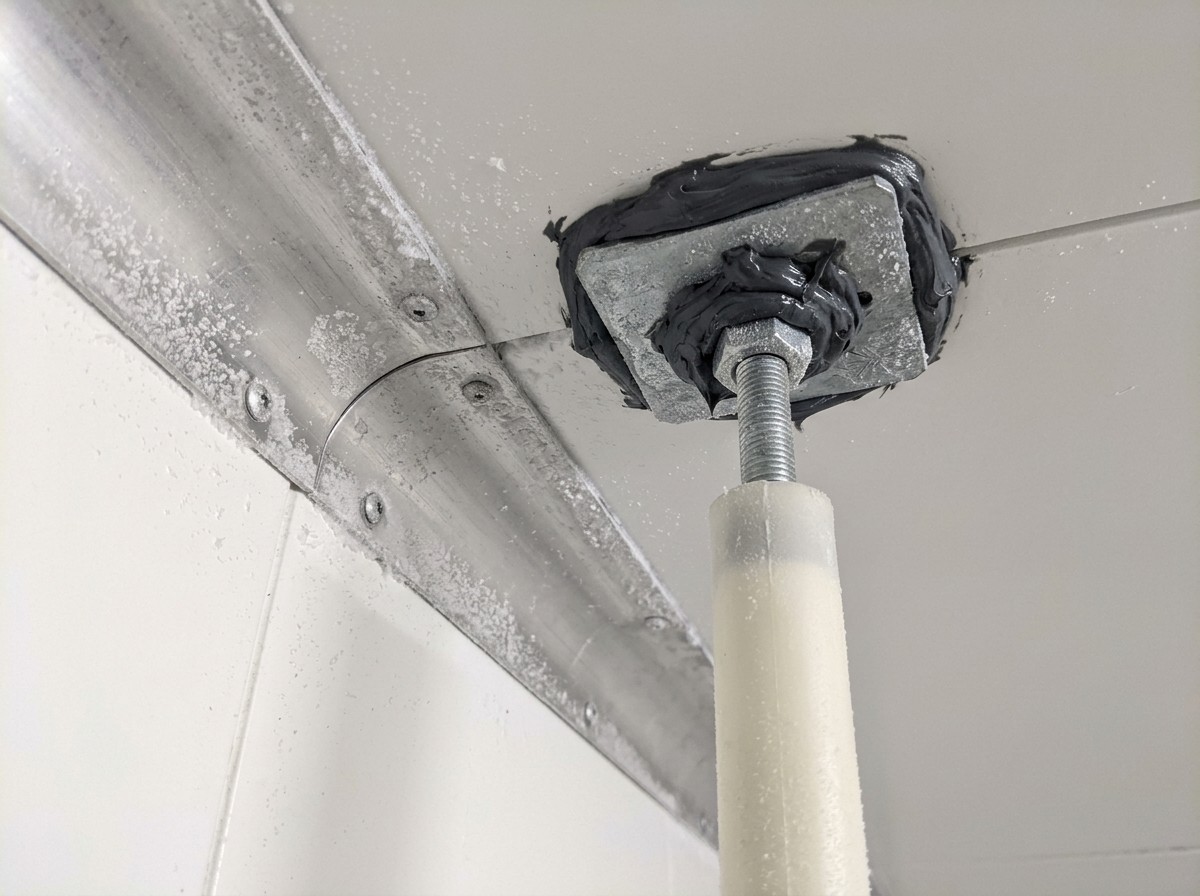
At minus 25 degrees Celsius inside a frozen meat depot, warm outside humidity pushes relentlessly against the exterior wall skin with strong vapor pressure. Any micro-gap in the joint turns into a solid block of ice within three months. On continuous cold room lines, we formulate pentane-blown polyisocyanurate (PIR) at a core density of 40 to 42 kg/m³ with a closed-cell ratio above 93% and thermal conductivity down to 0.021 W/m·K. Unlike standard PU foam that chars late in a fire, PIR forms a stable carbonaceous char shield that earns Euroclass B-s1,d0 fire certification required by cold storage insurers. Inside a hygiene-critical food processing warehouse, we laminate the interior face with 0.5mm food-grade white PE, PVDF, or 304 stainless steel sheet so high-pressure washdowns never corrode the wall. Stopping Thermal Bridges at Suspension Rods and Floor Channels Ice stalactites hanging from a freezer ceiling rarely come from bad foam. They grow right on the steel suspension bolts. When ceiling panels hang from overhead steel roof purlins via M12 threaded steel rods, bare metal conducts summer attic heat straight into the -25°C freezer box. To break that thermal bridge, installers sleeve every M12 suspension rod inside a non-conductive nylon thermal-break tube, cut a thermal break slot in the outer metal skin at wall-to-ceiling corners, inject two-part PU foam into the cavity, and seal every labyrinth joint with low-temperature butyl mastic and sanitary aluminum coving from our fasteners and sealants kit.
Frequently Asked Questions (FAQ)
Q1: When should I choose cam-lock panels instead of continuous-line PIR panels?
A: Choose cam-lock panels for small modular walk-in coolers and freezers under 200 sqm or rooms that may need to be disassembled and moved later. For large warehouses above 500 sqm, continuous-line plug-in PIR panels are 15% to 25% more economical and faster to clad.
Q2: What thickness of PIR panel is required for a -20°C cold room?
A: A -18°C to -25°C frozen storage room requires 120mm to 150mm thick PIR sandwich panels to keep heat flux below 6 to 8 W/m² and prevent exterior surface condensation.
Q3: Do continuous-line cold room panels use cam locks?
A: No. Continuous-line cold room panels use precision-milled double or triple tongue-and-groove (plug-in) labyrinth joints secured to the steel structure with concealed clamping plates and thermal-break fasteners.
Q4: How do you insulate the concrete floor of a -25°C cold room?
A: Install 150mm of high-density extruded polystyrene (XPS) or rigid PU floor slabs over a polyethylene vapor barrier and under-floor glycol or electric anti-frost heating loops before pouring the top reinforced concrete wearing slab.
Q5: Why do cold rooms need a pressure relief valve on the wall panel?
A: When freezer doors open and close, warm air enters and rapidly cools, shrinking in volume and creating a strong vacuum inside the sealed box. Heated pressure-relief port valves equalize air pressure so panels do not implode or jam the doors.