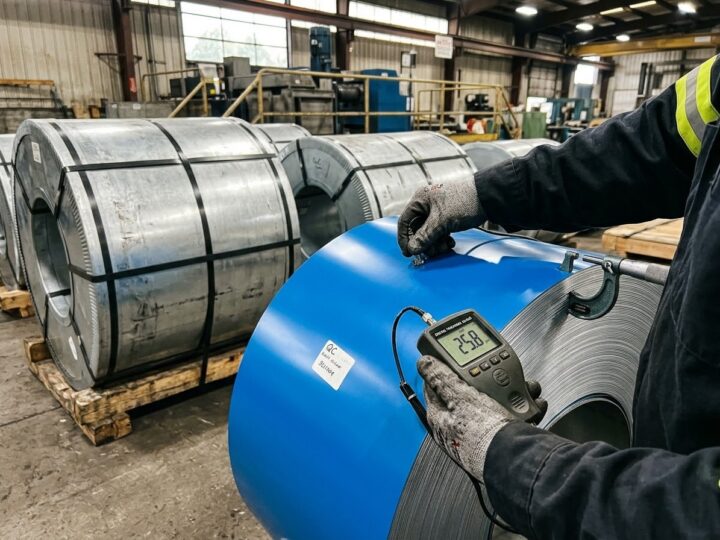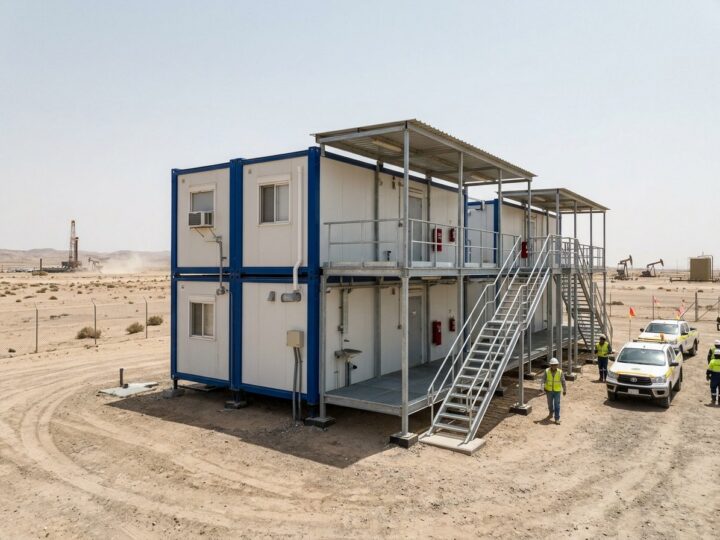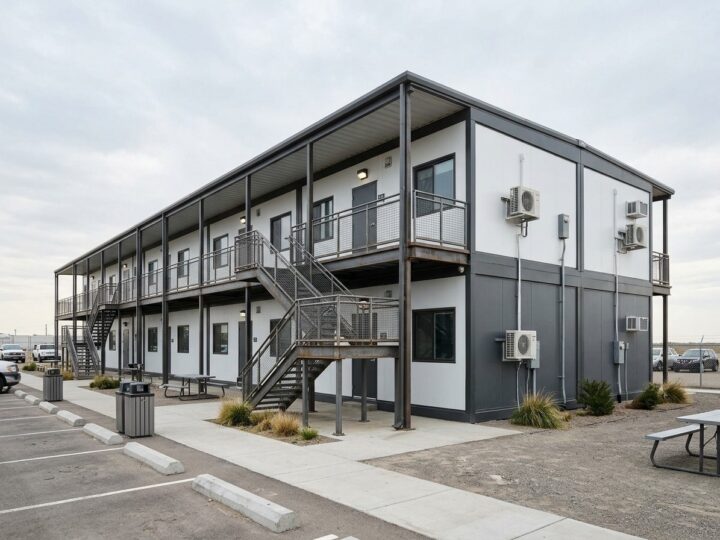
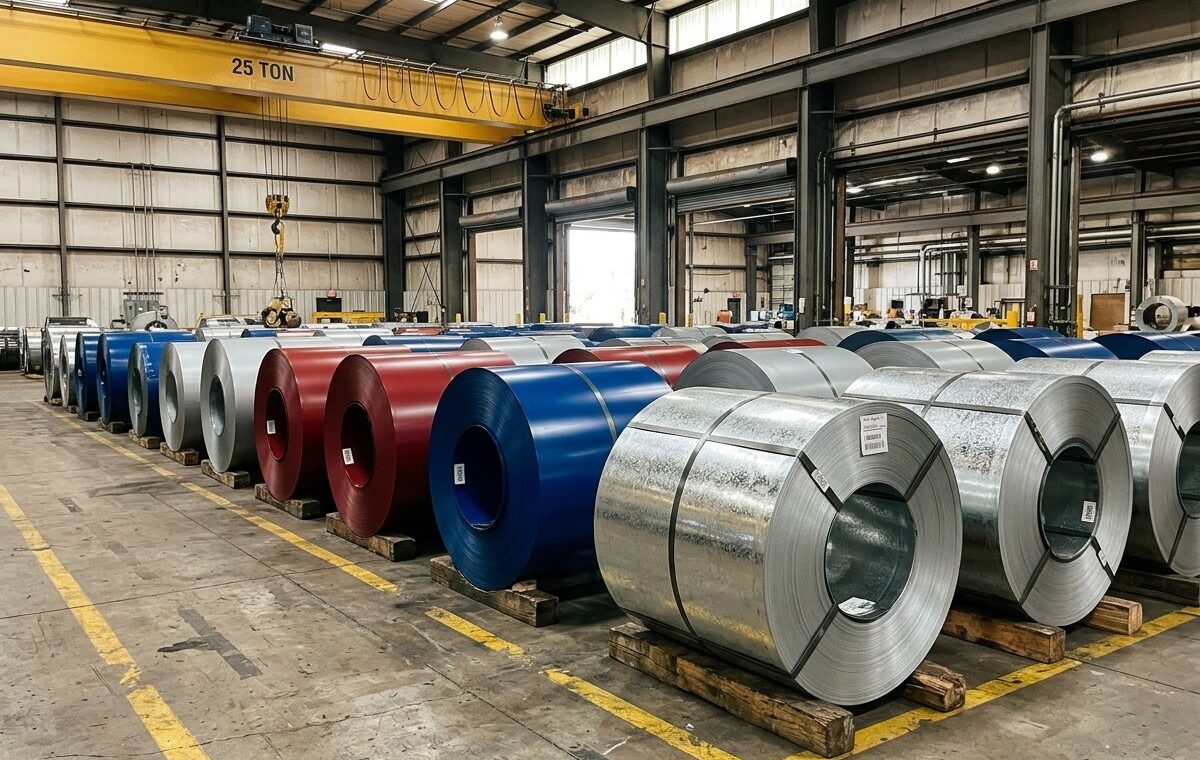
Every sandwich panel, corrugated roof sheet, and roll-formed garage door starts its life as a 5-ton roll of color-coated steel coil. When importers and roll-forming factories send inquiries to our coil lines in Boxing County, Shandong, China’s largest color-coated steel trading and manufacturing hub, the first question is almost always the same: should we book PPGI or PPGL coils?
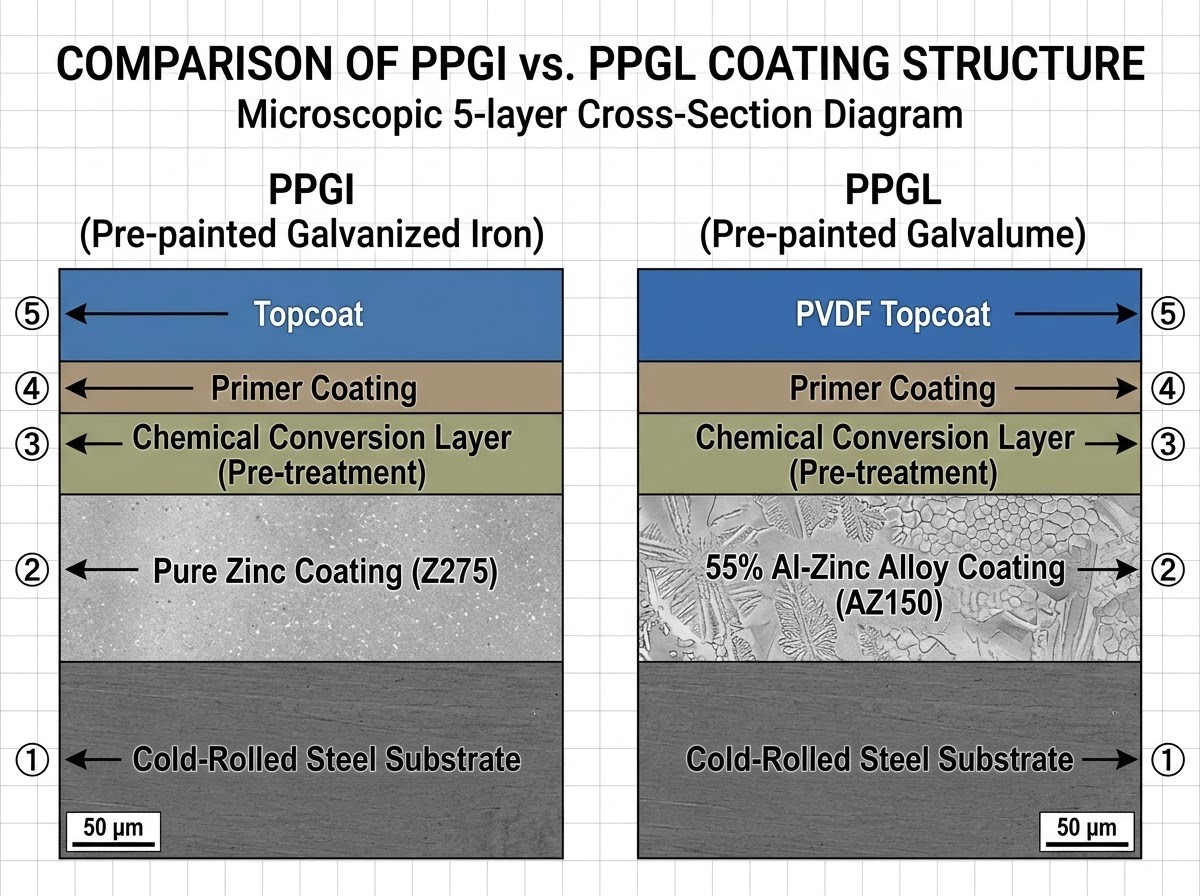
The two letters at the end stand for the metallic layer underneath the paint. PPGI (Pre-Painted Galvanized Iron) coats the cold-rolled steel strip in 100% molten zinc. PPGL (Pre-Painted Galvalume Steel) coats the strip in a ternary alloy of 55% aluminum, 43.4% zinc, and 1.6% silicon.
| Coil Specification | PPGI (Pre-Painted Galvanized) | PPGL (Pre-Painted Galvalume) |
| Metallic Substrate Coating | 100% Pure Zinc (Z60 to Z275 g/m²) | 55% Aluminum, 43.4% Zinc, 1.6% Silicon (AZ70–AZ150) |
| Corrosion Service Life | 10 – 20 Years (Good in inland & mild zones) | 20 – 35+ Years (2–3x longer in humid/coastal air) |
| Max Heat Reflectivity & Temp | Handles up to ~200°C | Handles up to 315°C (High solar reflection) |
| Per-Ton Coil Price Difference | Baseline price (Lower initial cost/ton) | +5% to +8% per ton (Higher yield area per ton) |
Why does adding 55% aluminum change how the steel ages? Pure zinc protects steel by sacrificing itself. It corrodes first so the iron underneath stays safe. That works well for cut edges and scratches, but in hot, humid, or salty coastal air, pure zinc gets eaten away fairly fast. In a PPGL Galvalume coating, the aluminum forms a dense, microscopic honeycomb barrier of aluminum oxide that blocks oxygen and moisture from reaching the steel, while the remaining zinc still protects the sheared edges. In salt-spray and outdoor exposure tests, an AZ150 PPGL coil lasts two to three times longer than a Z150 PPGI coil.
Here is a financial detail many coil buyers miss: aluminum is much lighter than zinc. Because the 55% Al-Zn alloy has roughly half the density of pure zinc, one metric ton of 0.50mm PPGL coil gives you about 1% to 3% more linear meters of steel sheet than one metric ton of PPGI coil at the same coating thickness. Even though PPGL costs 5% to 8% more per ton on the mill invoice, you actually stamp out more roof sheets or sandwich wall panels from every coil.
Are there places where PPGI is actually better than PPGL? Yes. Aluminum reacts poorly with strong alkaline materials like wet cement, lime mortar, and animal manure. If you are roll-forming floor decking that sits in wet concrete, or building livestock pig and poultry barns where ammonia gas is high, stick with heavy Z275 PPGI.
Frequently Asked Questions (FAQ)
Q: What does Z275 on a PPGI coil vs AZ150 on a PPGL coil actually mean?
A: Z275 means 275 grams of pure zinc per square meter of steel (total on both sides, roughly 19 to 20 microns per side). AZ150 means 150 grams of 55% Aluminum-Zinc alloy per square meter (both sides combined). Because aluminum is lighter and more corrosion-resistant than zinc, AZ150 offers better atmospheric rust protection than Z275.
Q: Why should you avoid PPGL Galvalume steel in wet concrete or livestock barns?
A: The 55% aluminum in a PPGL coating corrodes rapidly when exposed to high-pH alkaline substances like wet concrete mortar or concentrated ammonia vapors from animal waste. For concrete floor decks and livestock roofs, pure-zinc PPGI/GI (Z180 to Z275) is the right choice.
Q: What thickness and width of PPGI and PPGL coils do you supply?
A: We supply thicknesses from 0.14mm up to 1.50mm (with 0.40mm to 0.80mm standard for sandwich panels and roofing sheets) and widths from 600mm to 1,250mm (1,000mm and 1,200mm are the most common export widths).
Q: What is the standard weight of a single export steel coil?
A: Standard export coils are slit and wound to 3 to 5 metric tons per coil (with an internal diameter ID of 508mm or 610mm) so they match standard factory decoilers and load safely at 4 to 5 coils per 20ft container.
Q: Can we order matching PPGI/PPGL coils together with finished sandwich panels?
A: Yes. Many overseas contractors order finished sandwich roof and wall panels alongside 1 or 2 matching RAL-colored steel coils so their local sheet-metal brake shop can bend custom flashings, gutters, and louvers on site with zero color mismatch.