Most factory brochures talk about pre-engineered steel buildings (PEBs) and sandwich panels as if they have zero downsides. Any general contractor who has actually built ten of them knows better. Every building system is a trade-off. If you know what sandwich panels do well and where they struggle before you sign the structural drawings, you save yourself a lot of expensive field fixes.
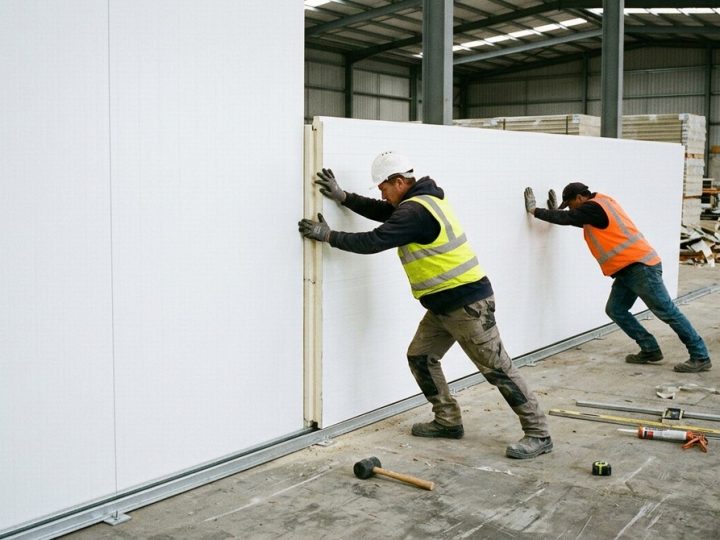
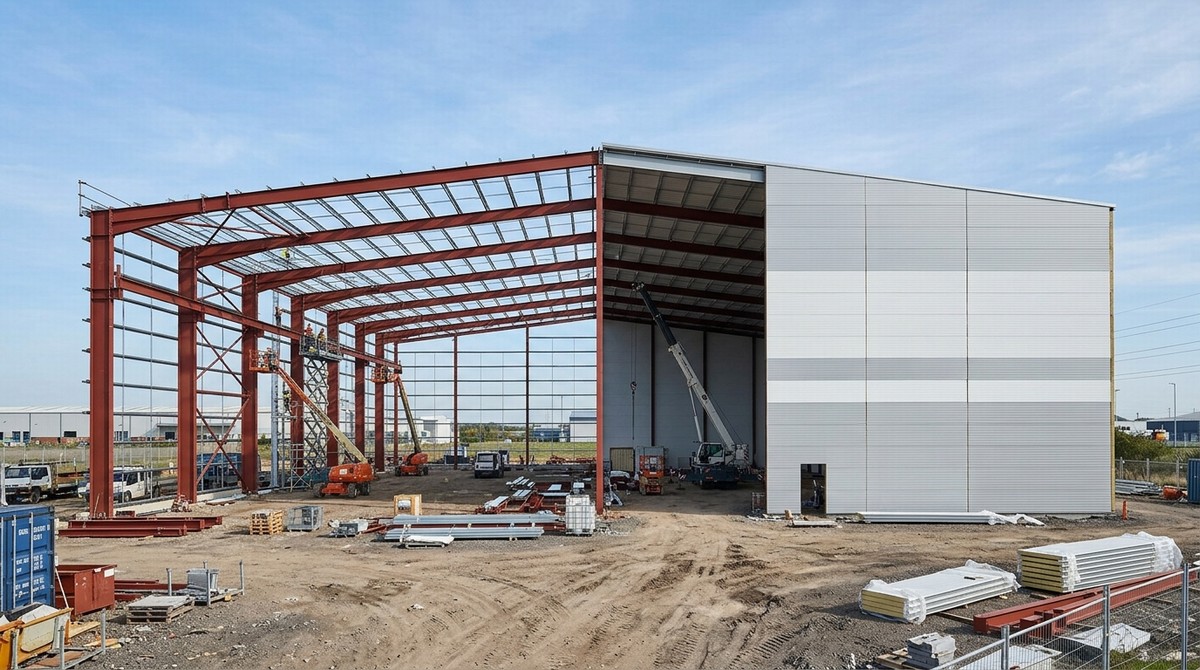
Let’s start with why 80% of modern warehouses, factories, and cold storage hubs use PEB steel frames wrapped in sandwich wall panels and roof panels. First, speed and dry construction: while the concrete crew pours the slab on site, the steel columns and panels are already being fabricated at the factory. Once the steel frame is bolted up, a crew can sheet the walls and roof at 500 to 800 square meters a day. Second, foundation savings: a steel frame with 15 kg/m² panels weighs a fraction of a concrete building, which saves a fortune when building on soft coastal soil. Third, thermal efficiency: continuous PIR, PU, or EPS cores wrap the outside of the steel frame with very few thermal bridges.
Now let’s look at the honest cons, and how we engineer around them on site.
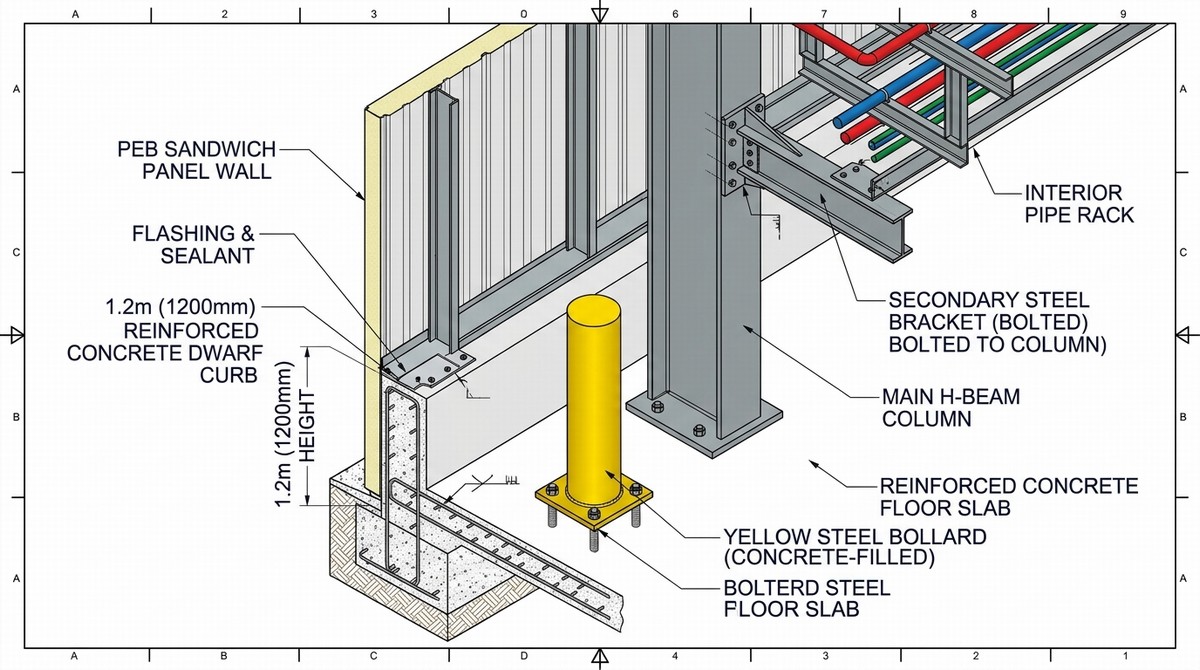
Con 1: Low resistance to heavy vehicle impacts. A 0.5mm steel sheet backed by foam will dent if a 3-ton forklift backs into it on the loading dock. You cannot treat a sandwich panel like a 200mm poured concrete wall. The fix: pour a 1.2-meter concrete curb wall along loading bays, or bolt yellow steel pipe bollards in front of high-traffic aisles.
Con 2: Thermal bowing on dark exterior walls. If an architect specifies jet-black or dark charcoal-grey PIR wall panels on a west-facing wall in the Middle East or Australia, the outer steel sheet can heat up to +75°C while the inside stays at +20°C. The outer metal expands more than the inner metal, causing long panels to bow outward slightly at noon. The fix: choose lighter reflective RAL colors (white, silver, light grey, or beige) for hot climates, or shorten the girt span and use expansion-slotted clips.
Con 3: Heavy point loads cannot hang directly from the panel skin. You cannot bolt a 500 kg crane rail, heavy pipe rack, or large exhaust fan straight into the thin sheet metal of a sandwich roof panel . All heavy mechanical loads must pass through the panel and bolt directly to the main structural steel H-beams or purlins. When we design complete PEB + panel packages at Hihsteel, our engineers weld those extra mounting brackets onto the steel rafters at the factory so the site crew never has to improvise.
Frequently Asked Questions (FAQ)
Q: What are the main disadvantages of using sandwich panels on industrial buildings?
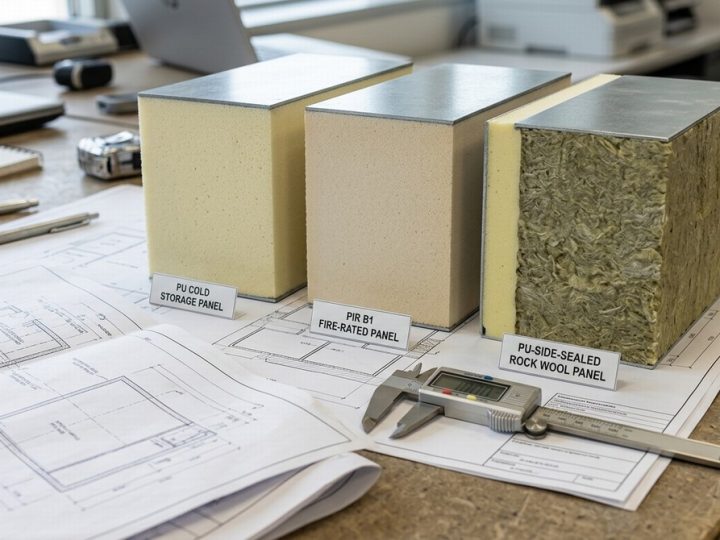
A: The three main limitations are: (1) susceptibility to forklift dents at floor level without bollards or curb walls; (2) inability to hang heavy machinery directly from the thin 0.5mm–0.6mm sheet metal skins without secondary steel brackets; and (3) fire risk if cheap non-rated B3 foam is used instead of Class A1 rock wool or Class B1 PIR.
Q: Why do dark-colored sandwich wall panels sometimes bow or ripple in strong sunlight?
A: This is called the bi-metallic thermal effect. Dark paint absorbs solar heat up to +75°C, making the outer steel sheet expand several millimeters more than the cool inner sheet. Using light RAL colors, specifying micro-ribbed profiles, and limiting single continuous spans prevents visible bowing.
Q: Are pre-engineered buildings (PEB) with sandwich panels safe in earthquakes and typhoons?
A: Yes. Steel portal frames paired with lightweight sandwich panels perform better in earthquakes than brittle brick walls because low building mass reduces seismic inertia forces, and bolted joints flex without collapsing.
Q: How do you cut window, door, and exhaust fan openings in sandwich panel walls?
A: Small openings can be cut on site with a nibbler or fine-tooth metal saw (never use an abrasive grinding wheel, as red-hot sparks burn the paint coating and cause rust spots). Large doors and windows are framed with secondary steel C-channels and sealed with folded steel C-trims.
Q: Is it cheaper to buy the PEB steel structure and the sandwich panels from the same factory?
A: Yes. Buying both from a single manufacturer like Hihsteel eliminates engineering coordination fees between two suppliers, guarantees purlin spacing matches panel span tables, and lets you pack heavy steel and light panels together to cut shipping container counts.