When buyers request a quote for cold storage panels, the first question our engineering desk asks is not how many square meters they need. We ask three operational questions: what is the lowest temperature inside the room, how many years do you plan to run this building, and what fire grade does your local municipality or insurance company require?
Those three answers narrow your panel choice down immediately.
| Core Parameter | PU Sandwich Panel | PIR Sandwich Panel | PU-Sealed Rock Wool |
| Service Temp Range | -50°C to +80°C | -100°C to +120°C | Up to +650°C – 800°C |
| Thermal Conductivity | 0.022 – 0.025 W/(m·K) | 0.020 – 0.022 W/(m·K) | 0.040 – 0.044 W/(m·K) |
| Fire Retardant Grade | Class B2 | Class B1 (Self-extinguishing) | Class A1 (Non-combustible) |
| Expected Service Life | 8 – 15 Years | 15 – 25 Years | 20 – 25+ Years |
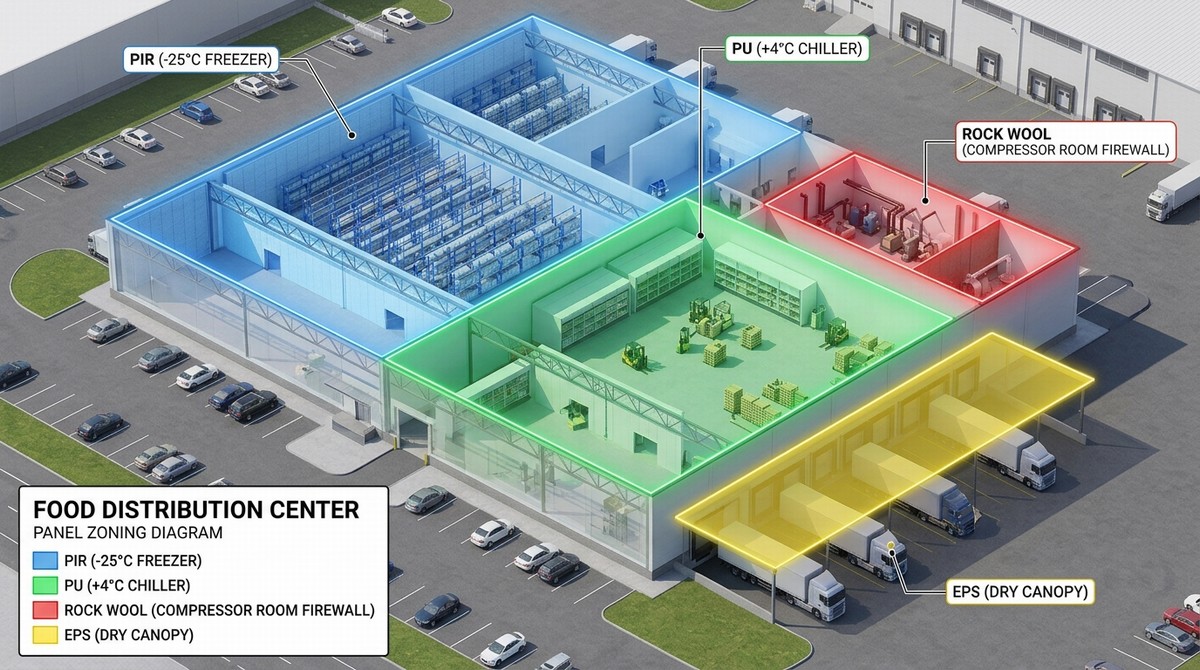
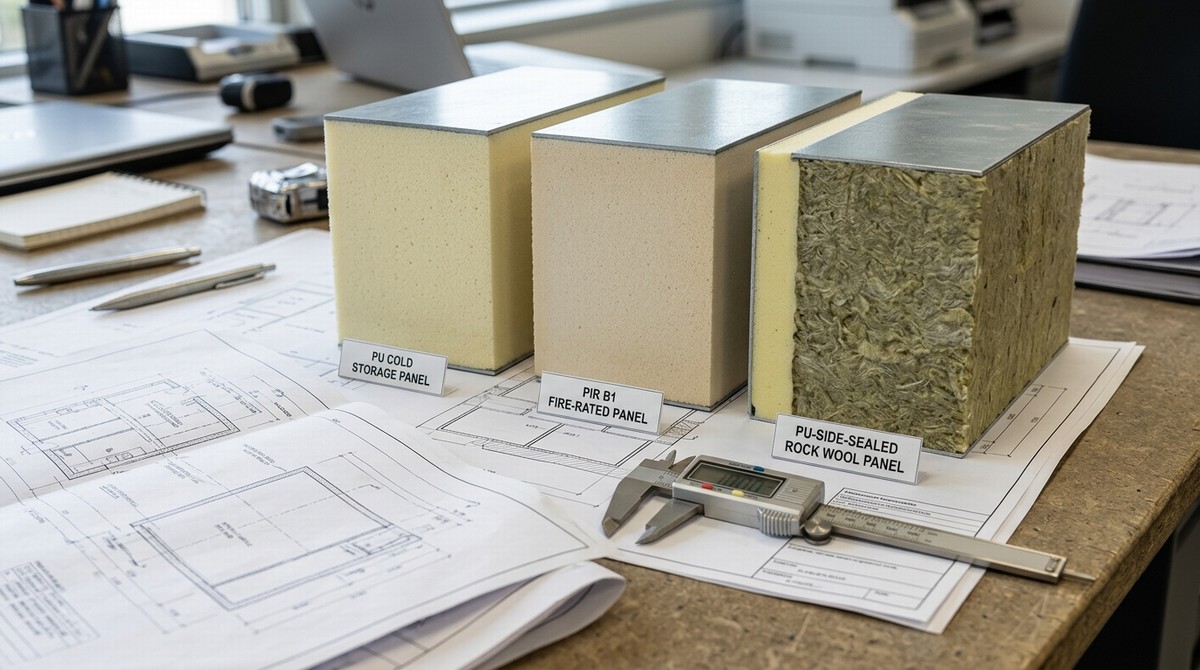
If you are building a standard medium-temperature cooler (0°C to +10°C), an indoor walk-in refrigerator, or a short-term leased cold room where local rules allow a B2 fire rating, standard Polyurethane (PU) panels give you strong thermal control at a lower upfront invoice price. PU operates reliably between -50°C and +80°C with a thermal conductivity of 0.022 to 0.025 W/(m·K) and a typical service life of 8 to 15 years.
If you are building a permanent logistics cold hub, a hospital storage vault, a pasteurization plant, or a deep freezer running for 15 to 25 years, Polyisocyanurate (PIR) is worth the 8% to 12% price step-up. PIR extends the usable temperature window from -100°C to +120°C, resists ultraviolet and humid-heat aging better than PU, and reaches a strict Class B1 flame-retardant grade with an oxygen index above 32% to 35%.
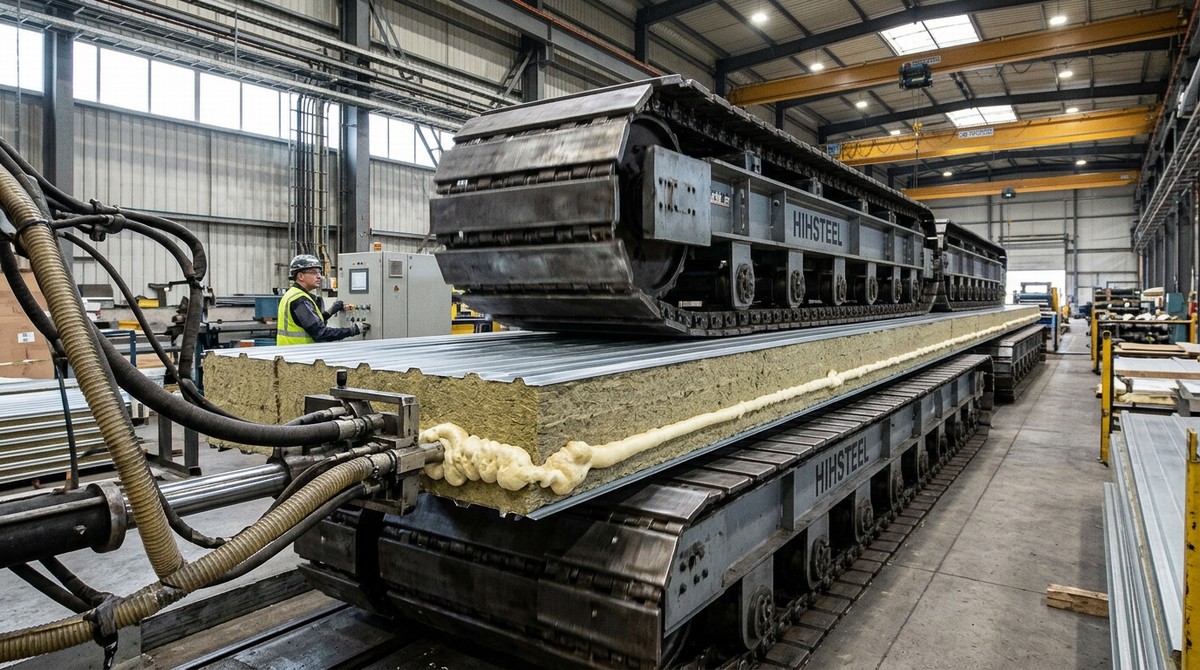
Where fire codes forbid any foam core, such as firewall partitions separating ammonia compressor rooms, electrical switchgear bays, or dry loading docks, buyers specify rock wool exterior wall panels or PU-side-sealed rock wool roof panels. Because rock wool has a higher thermal conductivity (around 0.040 to 0.044 W/m·K), it is not used for -25°C freezer walls, but its Class A non-combustibility protects the building perimeter. For dry ambient canopies or temporary worker housing outside the cold zone, standard EPS panels remain the lowest-cost option.
Frequently Asked Questions (FAQ)
Q: When should I pick PU panels instead of PIR panels for a cold room?
A: Choose PU panels when building indoor medium-temperature coolers (+0°C to +10°C), temporary cold storage rooms (8–15 year horizon), or projects in regions where municipal fire codes do not require Class B1 certification and upfront budget is tight.
Q: Why does PIR last longer (15–25 years) than standard PU (8–15 years)?
A: PIR has a ring-shaped isocyanurate molecular structure with stronger chemical bonds than linear PU. That ring structure resists thermal cycling fatigue, humid-heat aging, and core shrinkage much better over two decades of operation.
Q: What is a PU-side-sealed rock wool sandwich panel?
A: It is a hybrid panel with a Class A non-combustible rock wool center and 50mm of closed-cell polyurethane foam injected along both tongue-and-groove side edges. You get the fire rating of rock wool plus rigid, waterproof joints that do not wick rainwater.
Q: How do I match steel skin coatings to my cold storage environment?
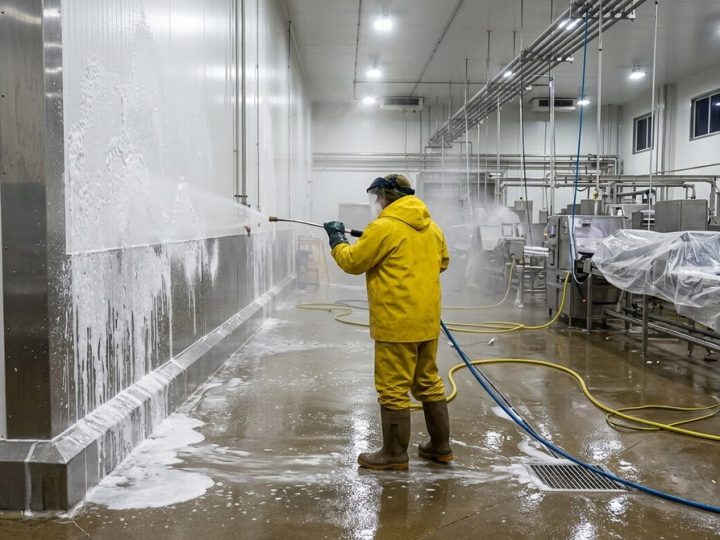
A: Use standard PE or HDP pre-painted galvanized steel (0.5mm–0.6mm) for dry indoor warehouses; upgrade to PVDF fluorocarbon paint for outdoor sun and coastal ports; and use 304/316L stainless steel for wet meat, seafood, or salted food rooms.
Q: Can Hihsteel supply sample blocks of PU, PIR, and rock wool panels before we place a bulk order?
A: Yes. We regularly courier 200mm x 200mm sample cuts via DHL or FedEx so your engineering team and fire inspector can test the steel gauge, paint finish, joint profile, and foam fire behavior firsthand.