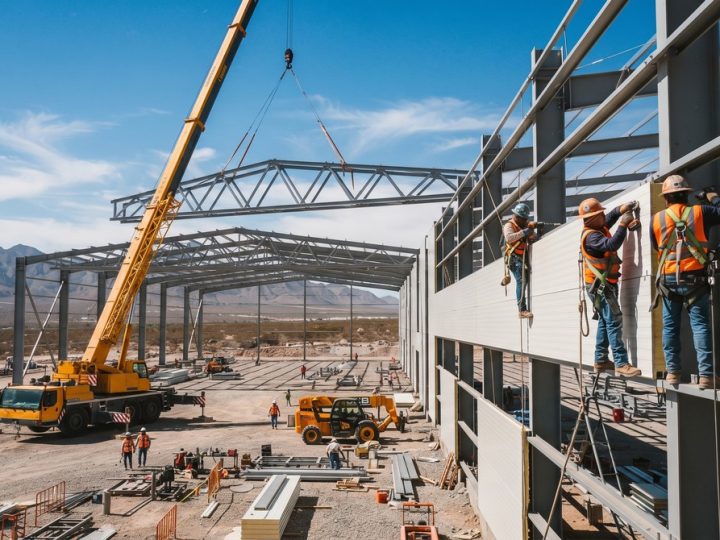
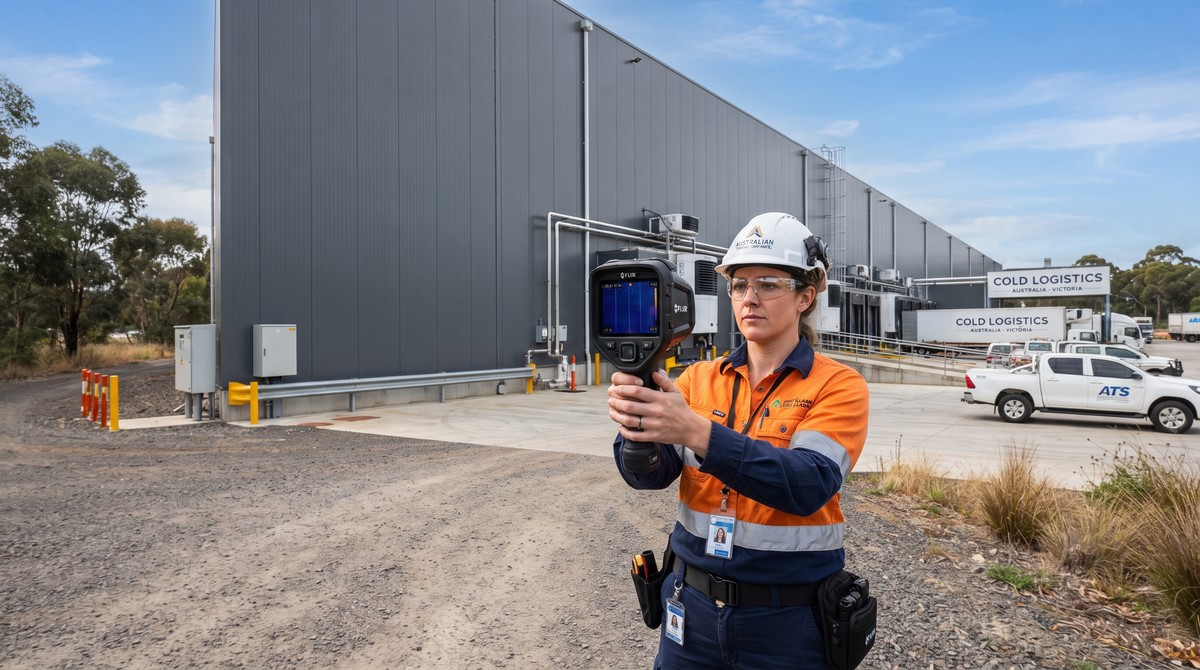
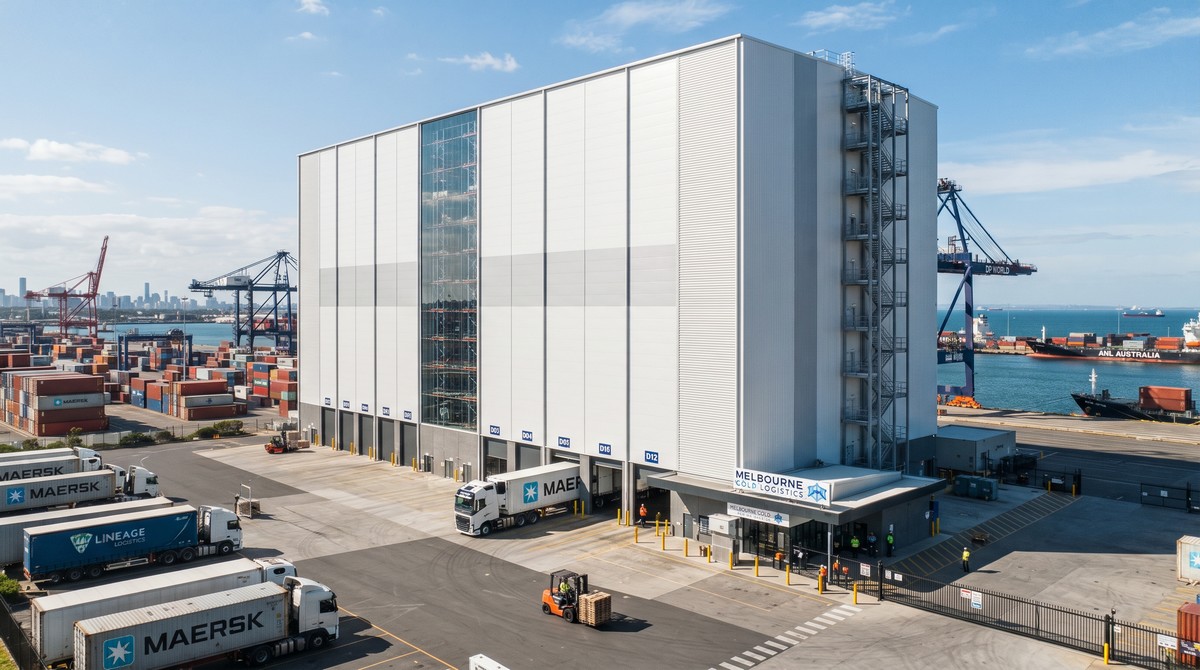
The Port of Melbourne and the surrounding logistics corridors of Victoria, Australia, represent the Southern Hemisphere’s busiest refrigerated food and agricultural export gateway. To optimize soaring urban land values and serve surging fresh dairy, beef, and seafood cold chains, logistics operators are transitioning rapidly from sprawling single-story cold rooms to colossal 40-meter-tall Automated Storage and Retrieval System (ASRS) rack-supported high-bay freezers operating at continuous temperatures between -20°C and -28°C. However, according to Australian commercial cold chain analyses published by the Global Cold Chain Alliance (GCCA) (https://www.gcca.org/magazine-article/driving-the-cold-chain/), engineering these 40-meter-high freezer towers demands overcoming two severe challenges: strict thermal compliance under the Australian National Construction Code (NCC 2025/2026 Section J) and aggressive coastal marine atmospheric corrosion from Port Phillip Bay.
| Cold Storage Engineering Metric | Standard Assembled Freezer Cladding | hihsteel.com Heavy-Duty High-Bay PIR Envelope |
| Australian NCC Section J Compliance | Struggles to meet mandatory R-5.5+ thermal barrier | Exceeds thermal mandates (Continuous R-6.0 to R-8.5) |
| Seam Vapor Barrier Continuity | Prone to joint vapor leaks & ceiling icicles | Deep double tongue-and-groove + dual butyl seals |
| Coastal Marine Corrosion (Port Philip) | PE coating chalks & rusts within 3 – 5 years | Heavy-duty 70% Kynar 500 PVDF (C4/C5 marine rated) |
| 40m High-Bay Cladding Deflection | Excessive wind flutter & joint shearing | High compressive modulus engineered for tall ASRS |
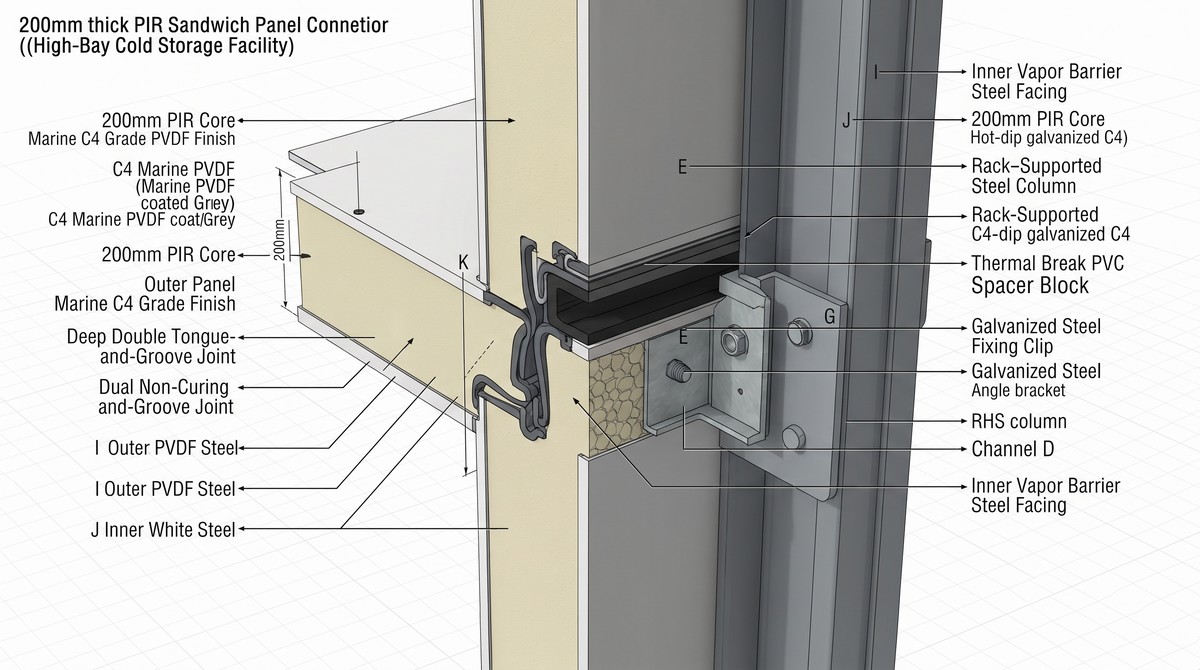
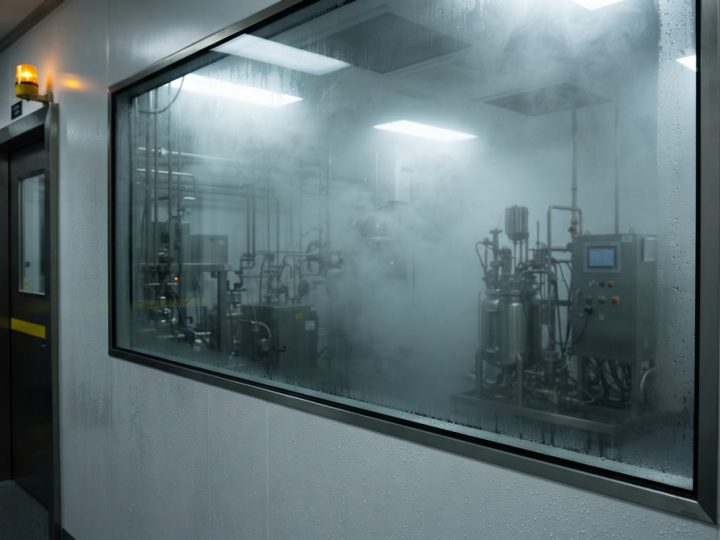
In automated high-bay freezers, thermal integrity is an extreme mechanical challenge. Because interior racking towers reach heights of 30 to 40 meters, the thermal stack effect generates intense interior air pressure differentials against wall tops. If envelope panel tongue-and-groove joints have minor geometric misalignments, warm humid maritime air from Melbourne’s coastal environment infiltrates continuously. Upon hitting sub-zero temperatures, water vapor instantly flash-freezes into massive icicles along ceiling suspension tracks and blankets automated robotic crane rails in ice, causing system halts and catastrophic inventory spoilage.
Continuous Polyisocyanurate (PIR) Cold Storage Panels deliver total hermetic containment for Australian high-bay facilities. Formulated with high-index closed-cell PIR cores (closed-cell ratio ≥ 95%, thermal conductivity λ ≤ 0.020 W/m·K), panel thicknesses of 150mm to 200mm effortlessly surpass NCC Section J thermal resistance requirements, delivering continuous, unbroken thermal performance exceeding R-7.5 (m²·K/W). Each panel features factory-formed deep double tongue-and-groove interlocking profiles pre-injected with continuous non-curing butyl vapor seals and elastomeric gaskets, achieving an impenetrable moisture vapor barrier under ASTM E96 standards.
Long-term durability against coastal salt spray is guaranteed by specialized coil coating engineering. Cladding erected near the Port of Melbourne faces ISO 12944 C4 (High) to C5 (Very High) marine corrosivity. Panels manufactured by hihsteel.com are specified with heavy-duty 70% Kynar 500 PVDF fluorocarbon coatings over hot-dip galvanized steel (zinc mass ≥ Z275 or zinc-aluminum-magnesium alloy). In ASTM B117 salt spray testing, panels surpass 1,500 hours without blistering, guaranteeing 25+ years of corrosion-free performance. By providing custom containerized lengths, factory cam-lock mechanisms, and third-party FM-compliant fire testing, hihsteel.com provides the definitive envelope solution for Australian cold chain infrastructure.
Frequently Asked Questions (Top 5 Google Search Q&As):
Q: What thermal R-value does the Australian National Construction Code (NCC Section J) require for cold storage facilities?
A: Under NCC 2025/2026 Section J energy efficiency provisions, refrigerated building envelopes must meet stringent thermal resistance standards depending on operating temperatures. For -20°C to -28°C commercial freezers, designers must achieve total continuous R-values between R-5.5 and R-7.5 (m²·K/W), which requires 150mm to 200mm high-density PIR panels.
Q: How do 40-meter-tall rack-supported freezers (ASRS) in Melbourne prevent ceiling joint icing?
A: Tall high-bay freezers suffer from intense internal stack pressure. To prevent warm humid air infiltration, panels utilize deep double tongue-and-groove joints injected with two continuous beads of non-curing butyl mastic and EPDM compression gaskets. Non-conductive PVC thermal break spacers decouple the exterior panels from interior steel racking, eliminating thermal bridges.
Q: How do cold storage panels withstand Melbourne’s coastal marine salt spray (Port Phillip Bay)?
A: Port environments are classified under ISO 12944 as C4 (High) corrosivity. Standard polyester paints blister and rust within a few years. Panels must be specified with heavy-duty 70% Kynar 500 PVDF fluorocarbon coatings or thick plastisol finishes over high-mass zinc (≥ Z275) or zinc-aluminum-magnesium steel substrates, ensuring 25+ years of rust-free life.
Q: What joint tolerance is mandated to prevent thermal bypass in sub-zero cold rooms?
A: In sub-zero freezer construction, joint gap tolerance between adjacent tongue-and-groove panels must remain strictly under 2.0mm (and under 1.0mm for non-cold storage), with inter-panel surface step misalignment under 1.0mm. This tight tolerance ensures continuous mechanical compression of vapor seals, preventing cold air bleed.
Q: Are PIR sandwich panels compliant with Australian AS 1530 fire testing and insurance standards?
A: Yes. Modern rigid Polyisocyanurate (PIR) cores are formulated with high-index isocyanurate ring chemistry. Under fire exposure, the core chars to form a protective carbonaceous shield, achieving self-extinguishing B1 classification under GB8624 and passing Australian AS 1530 fire tests as well as international FM 4880 approval.