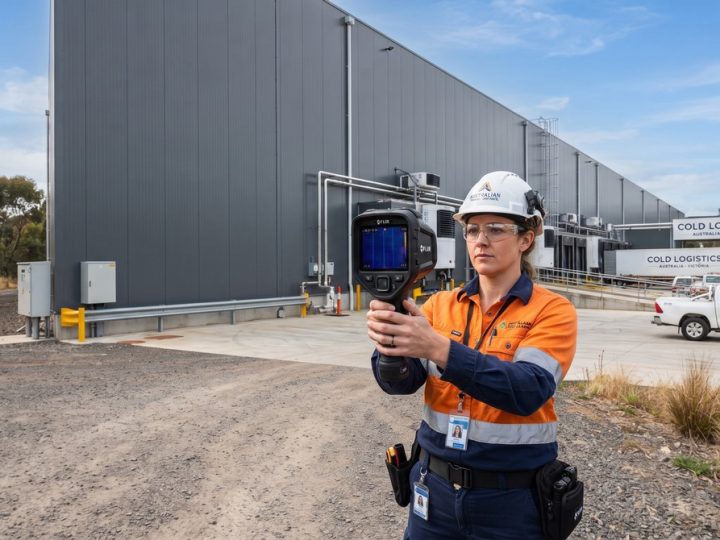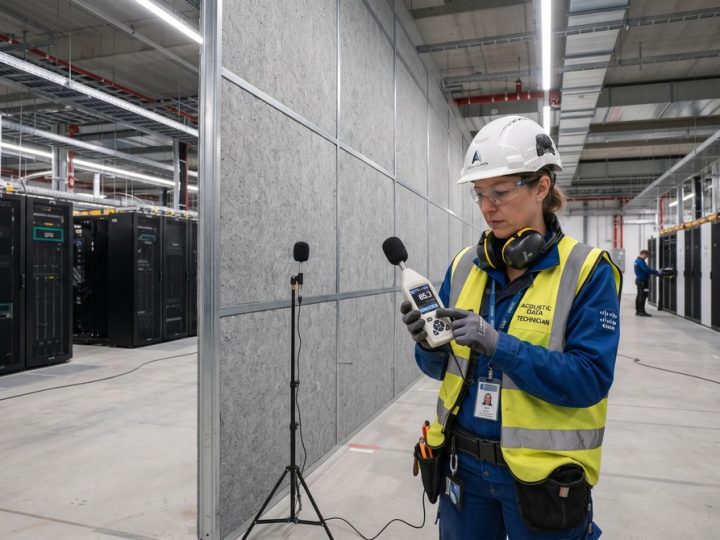
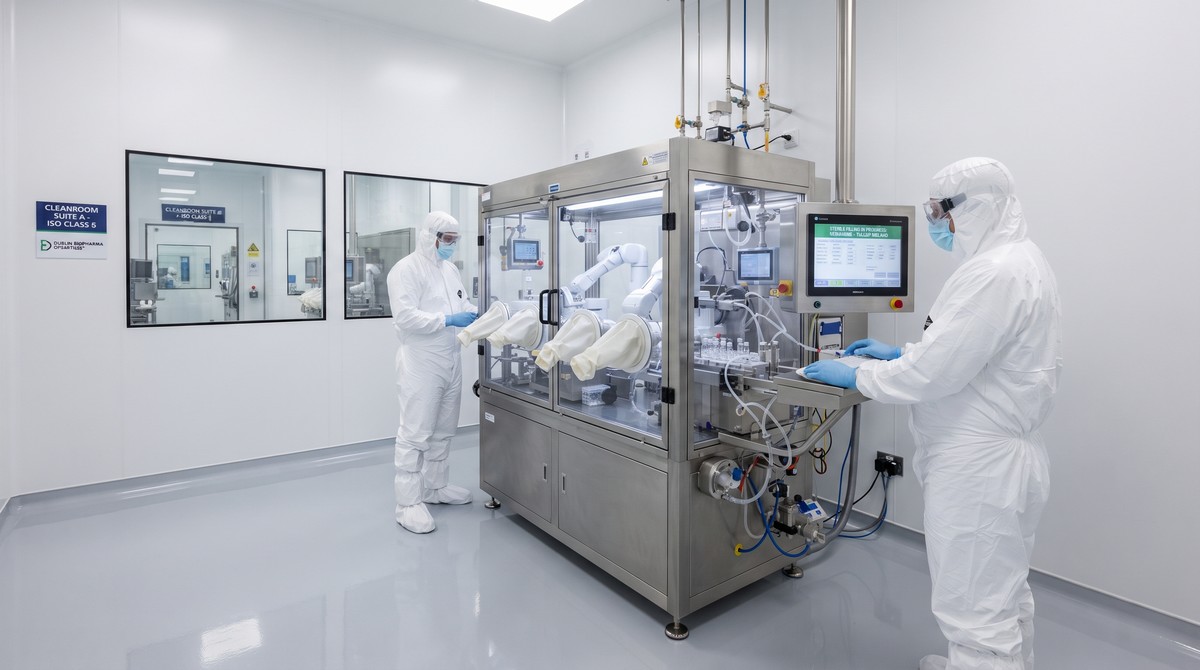
The Republic of Ireland—anchored by the prolific pharmaceutical manufacturing corridors of Greater Dublin, Cork, and the Shannon region—stands as the premier global production hub for sterile biologics, monoclonal antibodies, and next-generation GLP-1 peptide weight-loss therapies. Hosting operations for nine of the world’s top ten pharmaceutical conglomerates, Ireland has seen an unprecedented wave of multi-billion-euro sterile filling suite expansions. According to European healthcare facility market reports from Data Bridge Market Research (https://www.databridgemarketresearch.com/reports/europe-cleanroom-technology-market), complying with revised EU GMP Annex 1 mandates requires total elimination of particulate shedding, zero air leakage, and complete chemical resilience during automated terminal bio-decontamination.
| Pharma Cleanroom Metric | Traditional Drywall with Field Epoxy | hihsteel.com Modular Prefabricated System |
| EU GMP Annex 1 Flush Compliance | Ledges and sealant fissures collect bacteria | 100% Coplanar flush windows, doors & corners |
| Chemical Resistance to VHP Gassing | Epoxy paint blisters within 12 – 24 months | 70% Kynar 500 PVDF coating (15+ yrs inert) |
| Wall Impact & Cart Collision Resistance | Dents easily from heavy mobile autoclaves | Halogen-free MOS & Double-Glass MGO armor |
| Project Validation & IQ/OQ Speed | 12 – 16 Months on-site dusty wet fit-out | 4 – 6 Months clean modular dry installation |
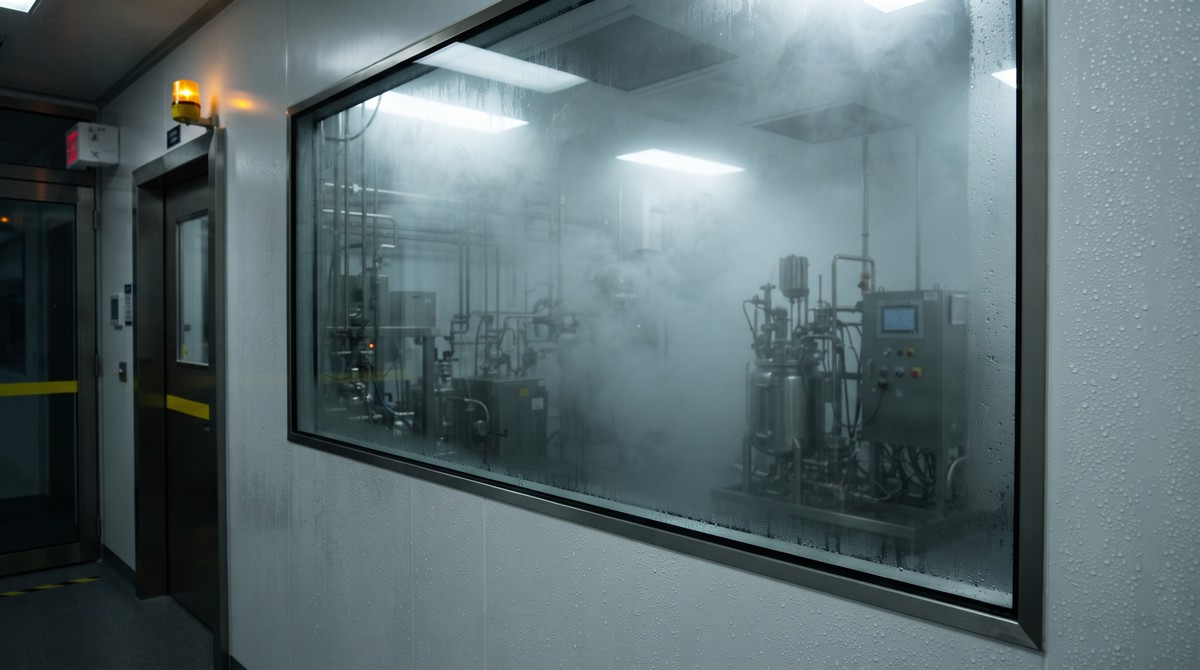
In aseptic formulation and sterile syringe filling suites (Grade A and Grade B zones), building envelope failure directly threatens patient safety. Traditional field-built drywall assemblies coated with liquid epoxy resins fail rapidly under modern pharmaceutical protocols: the intense vibration of high-speed filling equipment induces hairline micro-cracking in drywall tape seams. Even more catastrophic, the industry-standard practice of routine room bio-decontamination utilizing high-concentration Vaporized Hydrogen Peroxide (VHP) breaks down epoxy resin polymer chains, causing surface yellowing, peeling, and the release of microscopic paint flakes into sterile air streams.
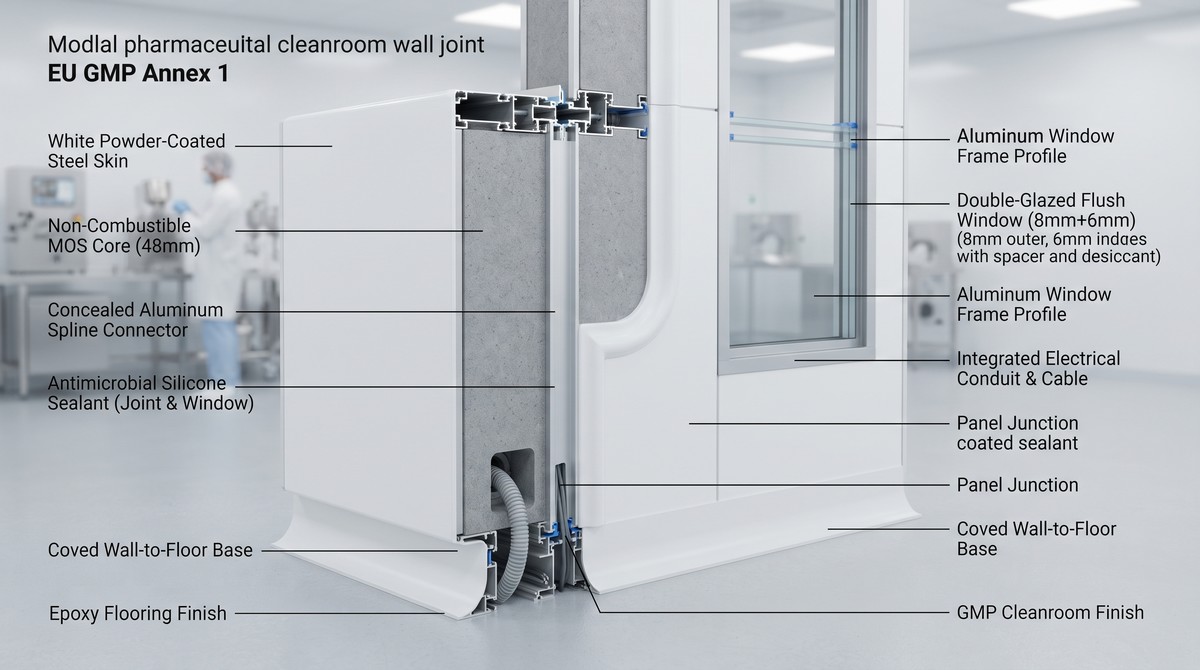
Modular Prefabricated Cleanroom Panels deliver validated cGMP compliance for Irish pharmaceutical hubs. Featuring double-sided continuous galvanized steel skins coil-coated with 70% Kynar 500 PVDF (Polyvinylidene Fluoride) fluorocarbon resins, the non-porous finish provides total chemical inertness against concentrated VHP gas, quaternary ammonium, and sodium hypochlorite wipe-downs. The finished envelope maintains pristine gloss retention and zero micro-crazing over decades of validated operation.
Sterile architectural integration is engineered down to the sub-millimeter. Panels connect via precision-machined concealed aluminum splines with recessed antimicrobial silicone joints, ensuring a 100% coplanar flush wall plane. Flush-mounted double-glazed tempered glass observation windows (featuring internal silica desiccant bars) and stainless steel hermetic cleanroom swing doors integrate seamlessly with zero ledges or dust traps. Backed by non-combustible, moisture-proof Magnesium Oxysulfate (MOS) or high-density basalt rock wool cores, hihsteel.com delivers turn-key IQ/OQ testing documentation, BIM layout models, and export packaging that cuts validation schedules by months.
Frequently Asked Questions (Top 5 Google Search Q&As):
Q: What specific envelope requirements does EU GMP Annex 1 enforce for biopharma cleanrooms in Ireland?
A: Revised EU GMP Annex 1 strictly mandates that all internal surfaces in Grade A and B sterile manufacturing zones must be smooth, impervious, unbroken, and completely flush, with zero ledges, open screw heads, or unsealed joints where viable microorganisms could accumulate. All windows, doors, and electrical panels must be completely coplanar with cleanroom wall panels.
Q: How do cleanrooms in Dublin and Cork prevent wall coating failure during frequent VHP decontamination?
A: Sterile facilities prevent coating failure by replacing site-applied epoxy paint with factory-applied 70% Kynar 500 PVDF fluorocarbon coatings or DuPont Tedlar PVF film. These fluoropolymers feature exceptionally strong carbon-fluorine bonds that provide total chemical inertness against high-concentration Vaporized Hydrogen Peroxide (VHP) vapors.
Q: Why is Magnesium Oxysulfate (MOS) preferred over traditional MGO board in Irish pharma suites?
A: Traditional MGO boards use magnesium chloride, which absorbs moisture and sweats corrosive brine droplets that attack metal backings. Magnesium Oxysulfate (MOS) replaces chloride with sulfate, forming a stable 5-1-7 crystal phase that is 100% halogen-free, moisture-proof, and will never weep or corrode steel skins while providing Class A1 fire resistance.
Q: What air tightness and pressure decay standards must cleanroom panels achieve in Ireland?
A: Aseptic cleanroom suites operate under differential room pressures (typically 10 to 15 Pa between cascade zones) to prevent cross-contamination. Modular cleanroom panels with concealed aluminum splines and dual-gasket seals are tested to achieve zero measurable air leakage under ISO 14644-3 pressure decay and leak testing criteria.
Q: How does pre-engineered modular clean room construction accelerate HPRA and FDA drug validation?
A: Modular panels arrive on-site pre-finished, cleaned, and with factory-embedded conduits, eliminating on-site drywall sanding that contaminates HVAC filters. Complete factory material test reports, dimensional certificates, and fire ratings provide standard documentation that expedites Installation Qualification (IQ) and Operational Qualification (OQ) audits.