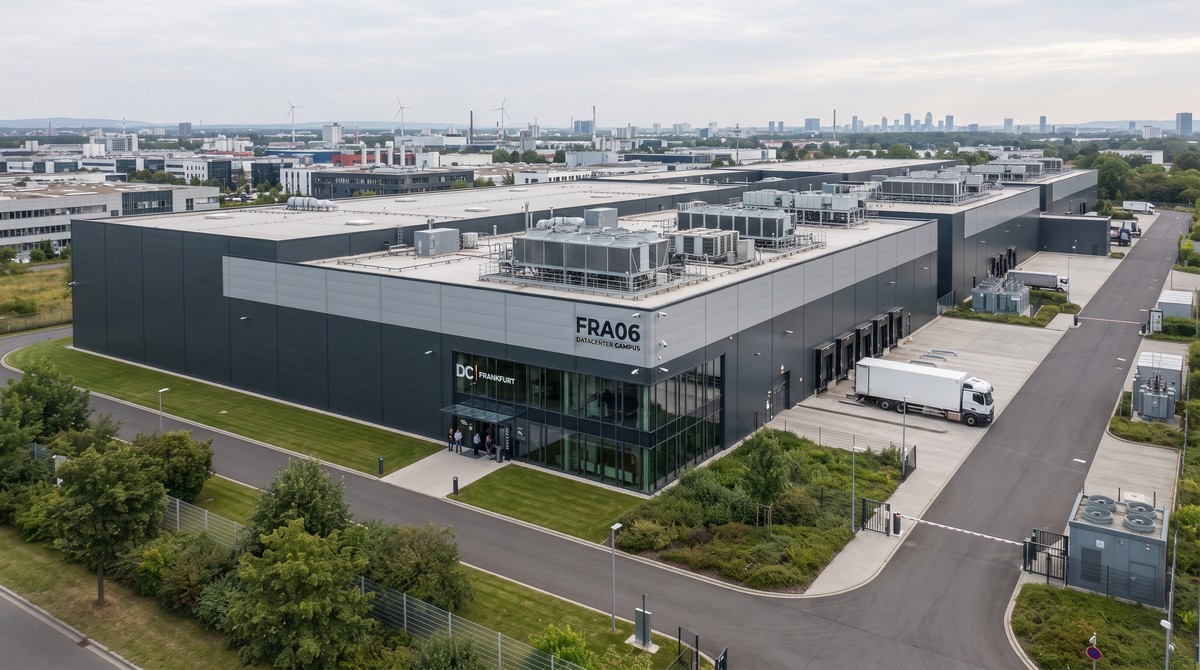
The Frankfurt Rhine-Main metropolitan area in Germany stands as the uncontested digital infrastructure heart of continental Europe. Anchoring the elite ‘FLAP-D’ market (Frankfurt, London, Amsterdam, Paris, Dublin), Frankfurt hosts the world’s highest interconnection bandwidth at DE-CIX. However, expanding hyperscale computing in Hesse requires navigating the strictest regulatory regime in the world: the German Energy Efficiency Act (Energieeffizienzgesetz – EnEfG) mandates that newly constructed data centers operate with an annual average PUE below 1.2, while municipal building codes enforce uncompromising DIN EN 13501-1 fire compartmentation.
| German Data Center Standard | Standard Commercial Panel Cladding | hihsteel.com Certified European System |
| Reaction to Fire (DIN EN 13501-1) | B-s2, d0 (Combustible smoke rating) | A2-s1, d0 / A1 (Non-combustible basalt) |
| German GEG Envelope Thermal U-Value | U = 0.28 – 0.35 W/m²K (Standard code) | U ≤ 0.16 – 0.20 W/m²K (Passes Net-Zero EnEfG) |
| Acoustic Sound Insulation (Rw) | Rw ~ 28 – 32 dB (Exceeds noise ordinance) | Rw ≥ 42 – 45 dB (Dense mineral fiber matrix) |
| FM 4880 / 4881 Fire Approval | Uncertified / Local assessment only | Compliant with international FM Global criteria |
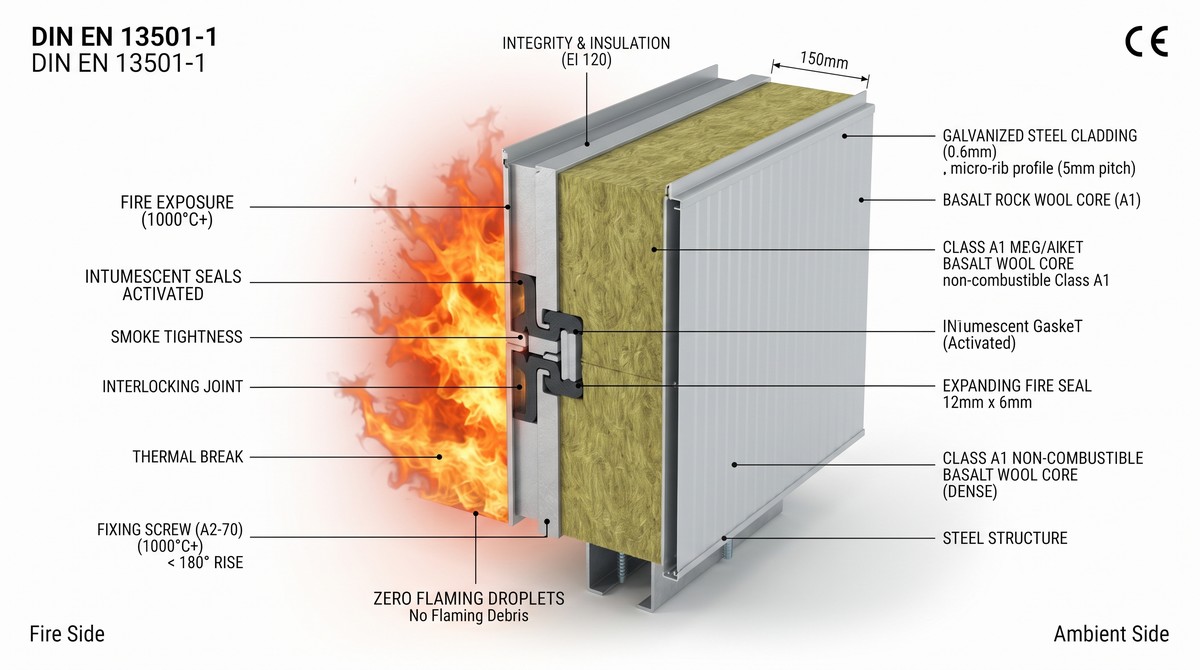
In Germany, fire safety is non-negotiable. Building insurance syndicates and local fire protection authorities (Feuerwehr) mandate that high-capacity UPS battery suites, standby diesel generation rooms, and multi-tenant computing halls be segregated by non-combustible Class A1 or A2-s1, d0 structural fire barriers. Substandard combustible panels that generate smoke (s2 or s3) or flaming droplets (d1 or d2) are strictly barred. Furthermore, strict German municipal noise immission directives (TA Lärm) dictate that backup cooling plants cannot transmit noise into surrounding commercial or residential buffer zones.
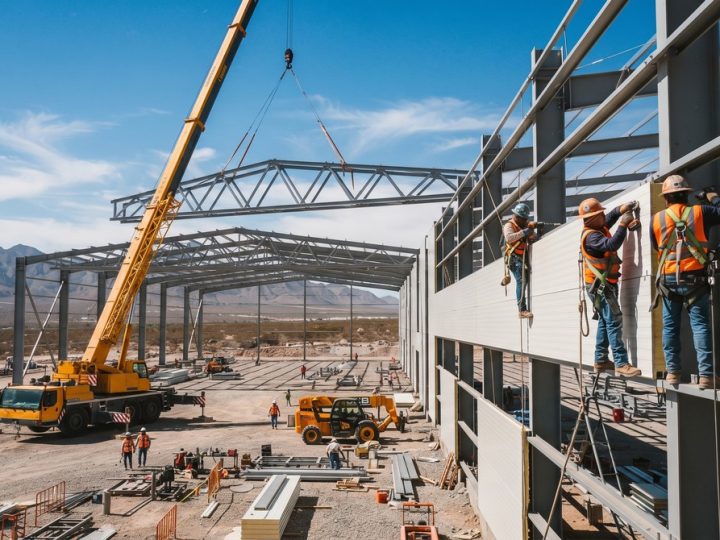
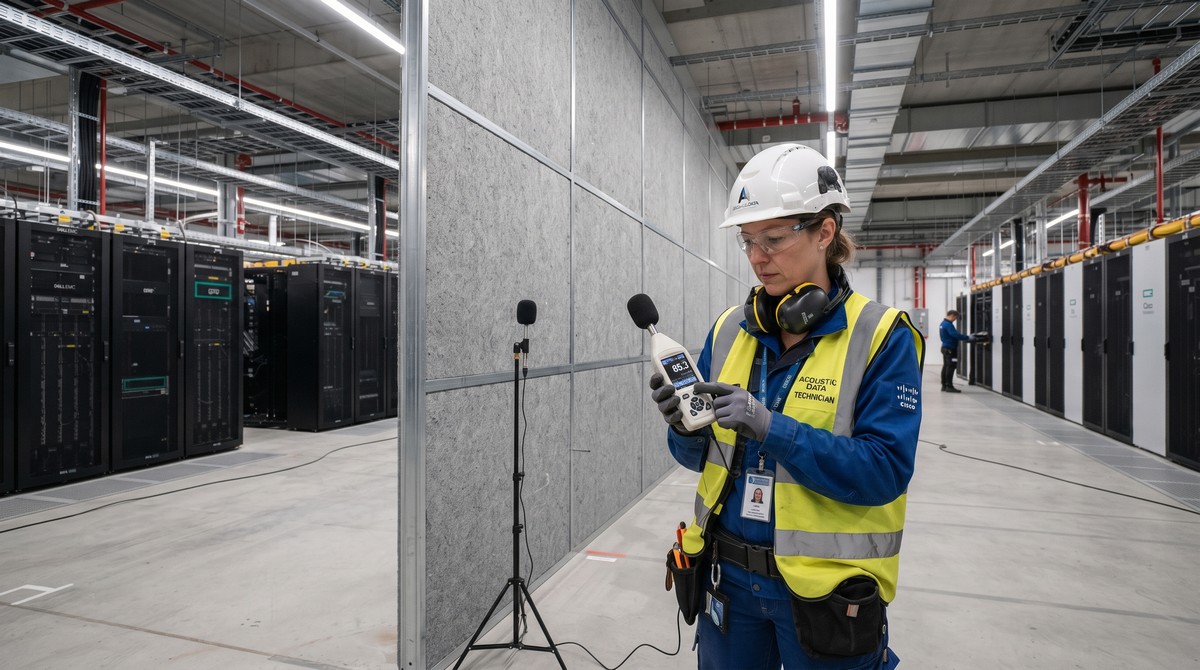
Structural Basalt Rock Wool Sandwich Panels deliver certified German code compliance. Featuring natural volcanic basalt cores with an acidity coefficient MK ≥ 1.8 and a density of 120 kg/m³, the panels achieve up to 4 hours of certified fire resistance (EI 120 to EI 240) with a fiber melting point exceeding 1000°C. Vertically oriented slit fibers eliminate core delamination while providing superior acoustic insertion loss (Rw ≥ 42 dB), dampening mechanical compressor and transformer hum.
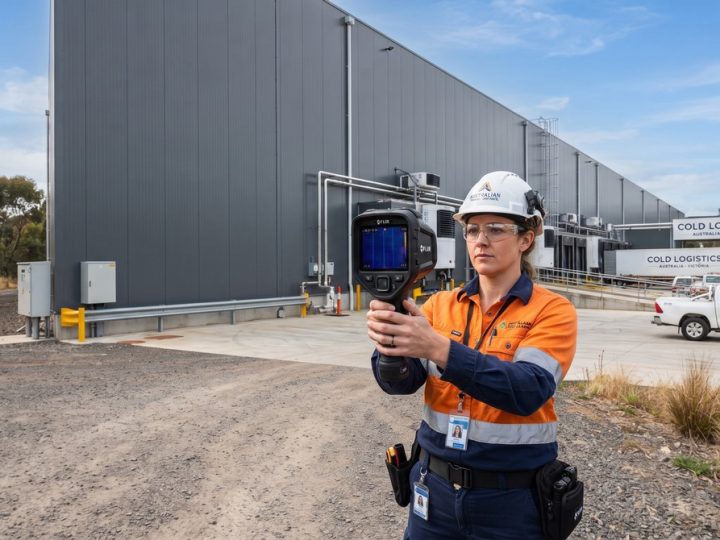
Thermal compliance under Germany’s Building Energy Act (Gebäudeenergiegesetz – GEG 2024–2026) is secured through HIH Sandwich Roof Panels Incorporating continuous high-index PIR or hybrid PIR-edge-sealed rock wool assemblies (thickness 120mm to 160mm), the roof envelope achieves thermal transmittance values as low as U = 0.14 W/m²K. Precision-formed standing-seam joints prevent cold bridging and thermal air leakage, enabling hyperscale operators to secure BREEAM Excellent, DGNB Gold certifications, and rapid municipal building permit approvals.
Frequently Asked Questions (Top 5 Google Search Q&As):
Q: What fire safety classification is required for data center sandwich panels in Germany under DIN EN 13501-1?
A: Data centers in Germany require internal firewalls and exterior envelopes to achieve Class A1 or Class A2-s1, d0 non-combustible ratings under DIN EN 13501-1. This ensures that panels do not ignite, generate minimal smoke (s1), and produce zero burning droplets (d0). Basalt rock wool panels with melting points > 1000°C provide the required 2-to-4-hour fire resistance (EI 120 to EI 240).
Q: How does the German Energy Efficiency Act (EnEfG) impact building envelope requirements in Frankfurt?
A: Germany’s EnEfG mandates that all new data centers constructed from 2026 onward must achieve an annual average PUE ≤ 1.20 and implement waste heat recovery. To meet this aggressive target, the building envelope must achieve U-values ≤ 0.16–0.20 W/m²K with near-zero air leakage, preventing summer heat gain and winter heat loss from straining facility chillers.
Q: Why is rock wool preferred over polyurethane foam for German data center partitions?
A: While polyurethane (PIR) offers superior thermal resistance for cold storage, German building insurance and municipal fire authorities require non-combustible inorganic materials for high-density electrical infrastructure. Basalt rock wool cannot burn, will not feed electrical fires, and provides superior acoustic sound attenuation (Rw ≥ 42 dB) required under German noise abatement laws (TA Lärm).
Q: What thermal U-value is required for industrial walls and roofs under Germany’s GEG 2024–2026?
A: Under the latest Gebäudeenergiegesetz (GEG), commercial and industrial envelopes must meet maximum U-values of 0.20 W/m²K for roofs and 0.28 W/m²K for exterior walls. For hyperscale data centers seeking Green Building certifications (DGNB or LEED), developers routinely specify U-values as low as 0.14 to 0.18 W/m²K using 120mm–160mm sandwich panels.
Q: Can pre-engineered sandwich panels contribute to DGNB Gold and LEED Platinum certification in Germany?
A: Yes. Factory-manufactured sandwich panels with low embodied carbon, certified Environmental Product Declarations (EPDs), zero-ODP blowing agents, and high recyclable steel content directly contribute credits toward DGNB (German Sustainable Building Council) and LEED green building certification frameworks.