
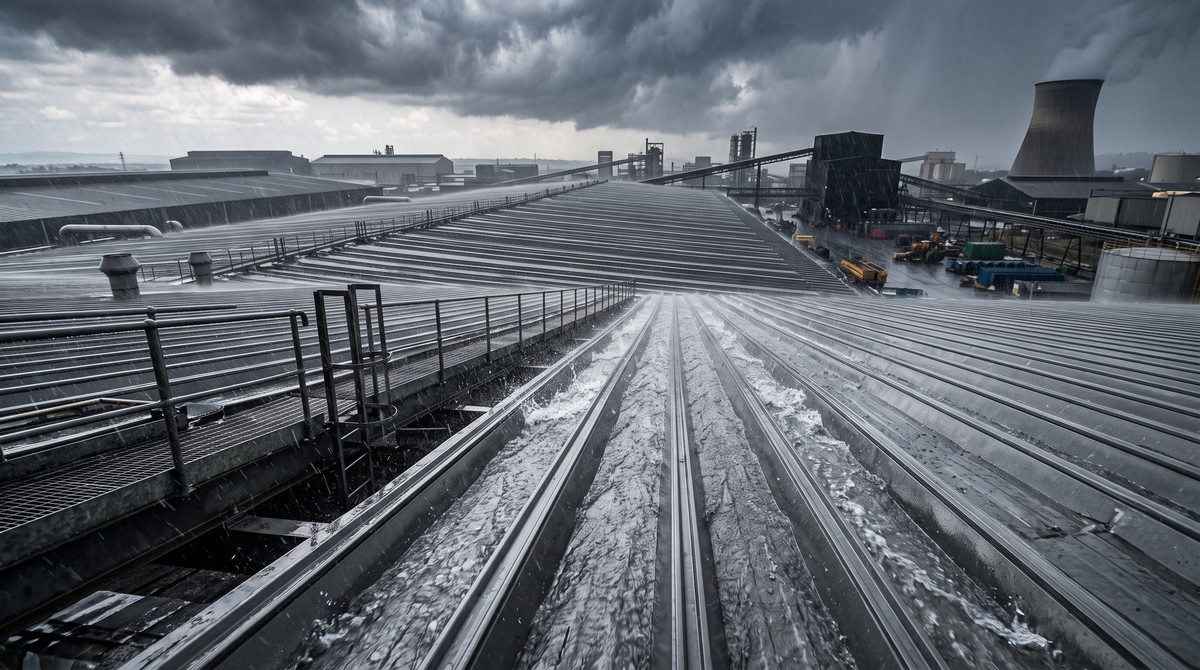
Water leaks on low-slope industrial steel roofs are notoriously difficult to trace. Facility managers frequently blame degraded fastener washers or flashing joints, only to find leaks persisting after expensive patch repairs. In over 80% of unexplainable metal roof leaks during wind-driven storms, the true physical mechanism is not hole penetration, but capillary siphoning occurring at longitudinal sheet side laps.
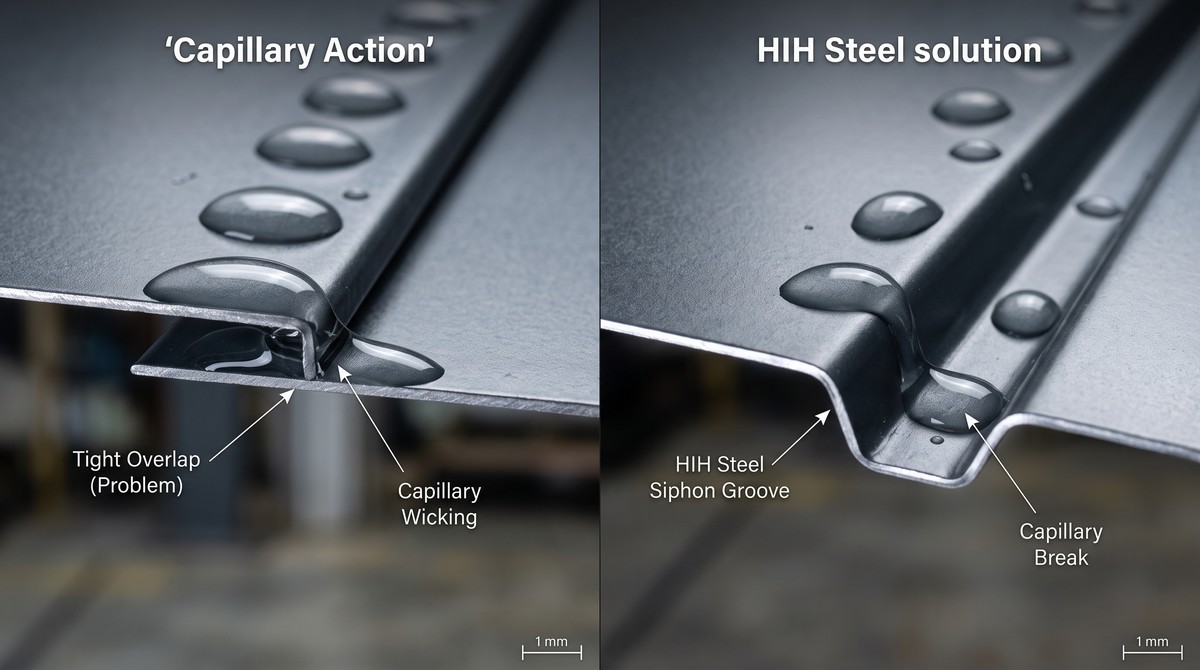
As structural roofing fluid dynamicists at here explain, capillary action is governed by the Young-Laplace equation and fluid surface tension. When two sheets of pre-painted steel overlap tightly with a narrow clearance of less than 0.5mm, rainwater caught in the seam creates a concave liquid meniscus. Driven by adhesive intermolecular forces between water and metal, water is drawn vertically upward against gravity—climbing over the crest rib and draining into the interior insulation core. During torrential typhoons, external wind pressure amplifies this siphoning effect, forcing hundreds of liters of water directly into ceiling plenums.
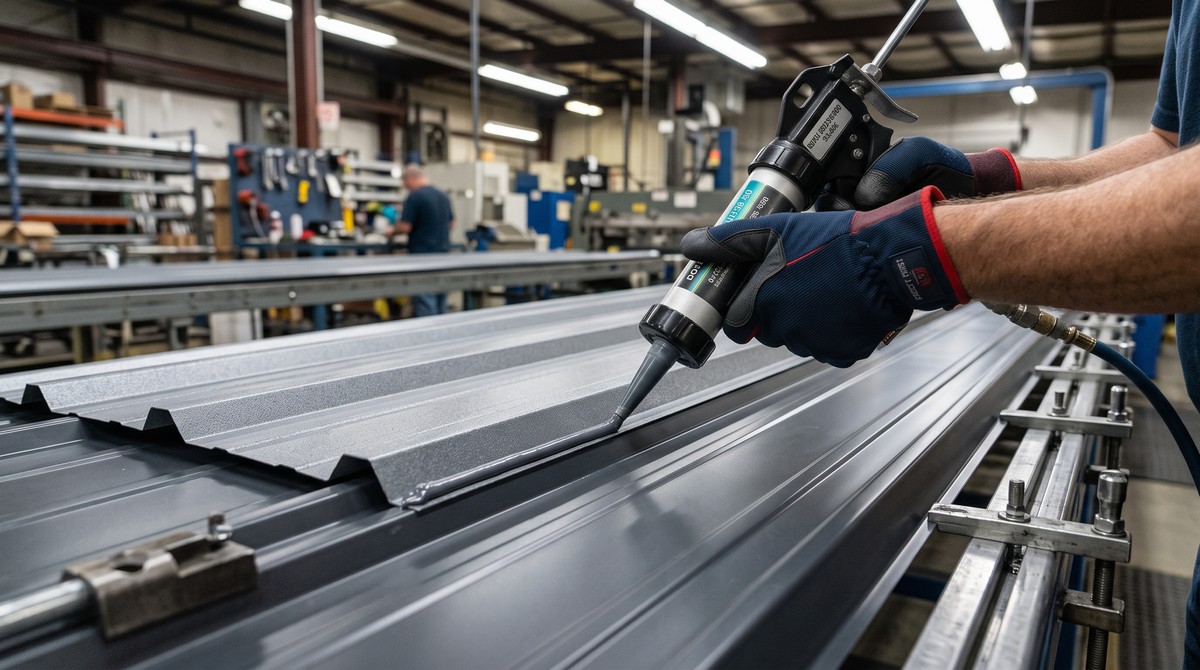
The definitive engineering solution is an integrated anti-siphon air break groove. HIHSteel roof sandwich panels feature a cold-roll-formed continuous siphon channel running along the interior overlapping male crest. By introducing an expanded air chamber (typically 8mm wide by 4mm deep) within the overlap, the capillary meniscus is abruptly broken because the gap dimensions exceed the critical meniscus formation threshold. Without contact surfaces to maintain surface tension, water droplets fall harmlessly into the drainage trough and discharge down the roof slope.
To provide multi-barrier watertight redundancy, HIH Steel pairs the anti-siphon groove with high 35mm to 40mm trapezoidal corrugation crests and factory-applied synthetic butyl sealing ribbons. The high ribs lift sheet overlap seams well above the maximum sheet-flow water drainage depth—even during rare 100-year storm events producing precipitation rates of 150 mm/hour. Consequently, HIH Steel roof panels safely support
slopes down to 3% (1:33 pitch) without risking back-water ponding or lateral capillary creeping.
HIH Steel manufactures composite roof panels in rock wool, PIR, and glass wool cores, complete with heavy-gauge EPDM-bonded saddle washers and concealed clip options that prevent roof skin thermal expansion fatigue. Eliminate costly interior inventory water damage by reviewing our watertight roofing engineering guides at hihsteel.com.
Roof Watertight Architecture: Conventional Laps vs. HIH Steel Anti-Siphon Engineering
| Design Element | HIH Steel High-Rib Anti-Siphon Panel | Conventional Metal Roof Lap | Waterproofing Performance Advantage |
| Anti-Siphon Air Cavity | Engineered 8mm x 4mm continuous air break | Flat metal-to-metal tight overlap | Breaks capillary surface tension instantly, preventing water climb |
| Trapezoidal Crest Height | 35mm – 40mm high-strength rib profiles | Low 15mm – 20mm corrugations | Keeps overlap seam elevated above heavy storm deluge waterlines |
| Allowable Minimum Roof Slope | Down to 3% (1:33 slope gradient) | Requires > 7% – 10% steep slope | Reduces building height, steel framing weight, and HVAC volume |
| Factory-Applied Butyl Seal | Automated hot-melt elastomeric butyl tape | Messy, erratic manual on-site caulking | Provides 25-year non-curing flexible weatherproofing seal |
| Wind-Driven Rain Resistance | Tested under ASTM E1646 & ASTM E331 | Prone to high-wind pressure infiltration | Resists typhoon-force gale pressures up to 2.5 kPa without leakage |
| Fastener Protection | Heavy-gauge color-matched saddle caps + EPDM | Exposed bare self-drilling screw heads | Shields screw holes from UV degradation and thermal expansion rust |